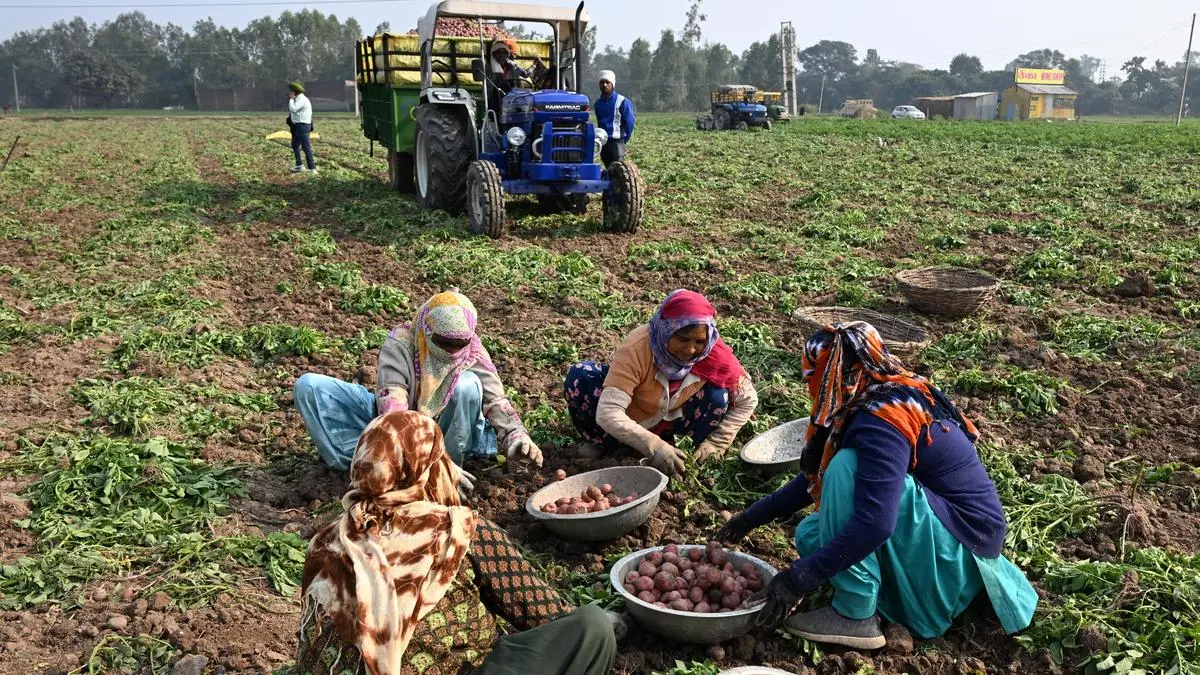
India’s potato industry stands at a crucial juncture. As the nation transitions from a volume-driven production model to a quality-led, value-added future, the spotlight is now constantly shifting to the most fundamental and often overlooked element of the entire value chain – the seed.For India’s potato farmer, seed is not merely an input. It is the fundamental determinant of an entire season’s harvest. While India is the world’s second-largest potato producer, it faces a significant productivity gap. Average yields range around 28-30 tonnes per hectare, which is about half of what is achieved in global hubs like The Netherlands and the US.This is not a limitation or reflection of our soil or climate. It is instead a clear view of the challenges that are embedded in our current seed landscape.The success of a potato crop is hard-wired at the point of sowing. While soil, irrigation and crop protection are important, the genetic potential and health of the seed tuber are the primary determinants of yield, quality and financial outcome.Yet, for all its importance, the potato seed ecosystem in India has historically operated as one of the most fragmented and undervalued links in the agricultural value chain.As India’s potato industry transitions from a volume-driven model to a quality-led, value-added future, the need for a robust, organized seed marketing system has never been more urgent. This shift is not merely about distribution; it is about building a bridge between cutting-edge genetic innovation and the millions of smallholder farmers who drive the industry.The seed paradox: overcoming the informal trapDespite India being the world’s second-largest potato producer, it faces a significant productivity gap. A primary driver of this disparity is the Seed Replacement Rate (SRR)—the ratio of truthful label seed to farm-saved seed.The country’s potato productivity gap is driven by a low Seed Replacement Rate of 25- 30 per cent, as farmers often rely on saved tubers that harbor diseases. While this practice is traditional, it creates a compounding cycle of varietal degeneration, disease buildup and reduced crop vigour.Transitioning to a robust, quality-assured seed marketing system is therefore essential to breaking this cycle.Redefining the marketing system: From transaction to transformationAn organised seed marketing system needs to be more than just a delivery network. It needs to function as an integrated advisory and supply ecosystem.With India’s potato landscape diversifying, there is a need to prioritise variety-to-market alignment. The growth of frozen foods, Quick Service Restaurants (QSRs) and sophisticated retail markets, all mean the old “one size fits all” approach is fast becoming obsolete.A modern marketing system helps farmers choose the right variety for their specific agro-climatic zone and their target market, moving them from volatile mandi prices into more stable, contract-based earnings.Additionally, the modern seed marketing system is powered by “Digital Intelligence” integrating mobile-based advisories, providing real-time crop monitoring, nutrient management and pest diagnostics.This turns the seed purchase into a long-term relationship where the farmer enjoys continuous access to agronomic expertise.The socio-economic dividendFor the Indian potato farmer, the benefits of transitioning to an organized seed marketing system are tangible and immediate.When farmers gain access to high-quality, truthful label seed seeds through structured channels, they mitigate their biggest risk: crop failure. High-vigour seeds ensure better germination and uniform growth, reducing the need for excessive chemical inputs and lowering the cost of cultivation. Furthermore, by aligning with a system that offers traceability and transparency, farmers can move away from the asymmetry that often plagues agricultural supply chains.The road ahead: Consistency as the new currencyIndia has already demonstrated its ability to produce potatoes at scale. The next phase of our growth will be defined not by volume alone, but by our ability to consistently deliver the right potato for the right market.The question is no longer whether India can produce enough potatoes; it is whether it can build the seed ecosystems required to support its ambitions. An organised seed marketing system is the foundation of this next-generation potato value chain. By focusing on scientific seed multiplication, digital agronomy, and processor-aligned variety selection, we can create a supply chain that is predictable, sustainable, and highly profitable.The author is is Chief Executive Officer, HyFarPublished on July 25, 2026
Cultivating prosperity: Why a robust potato seed ecosystem is the foundation for the future of India’s farming
Explore how a strong potato seed ecosystem can transform India's farming landscape into a sustainable and profitable future.
688 words~3 min read