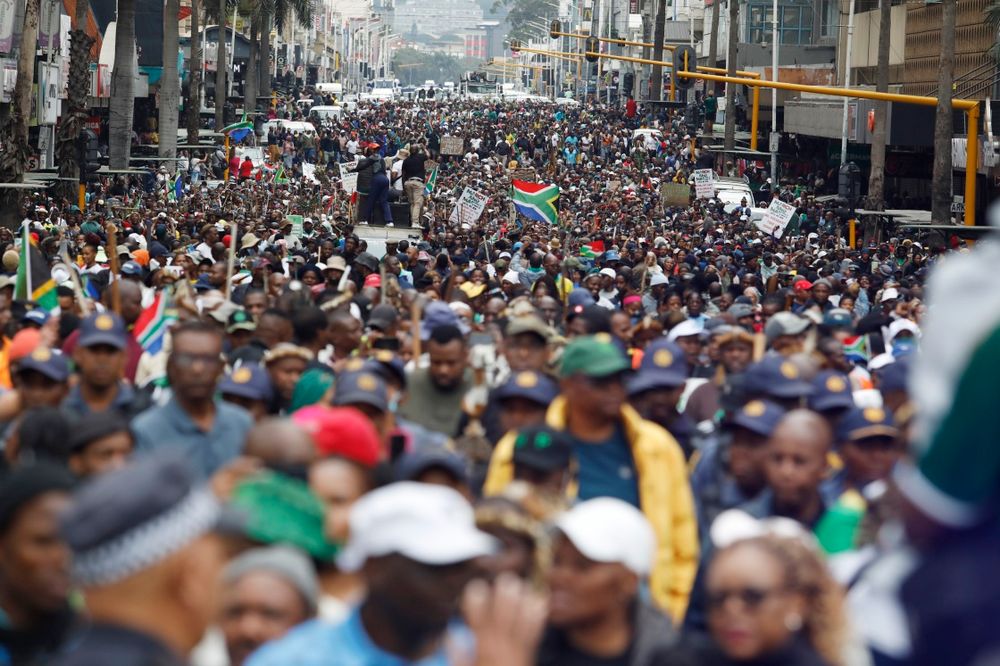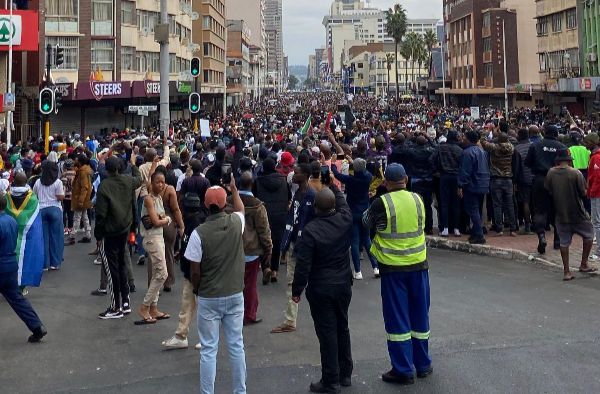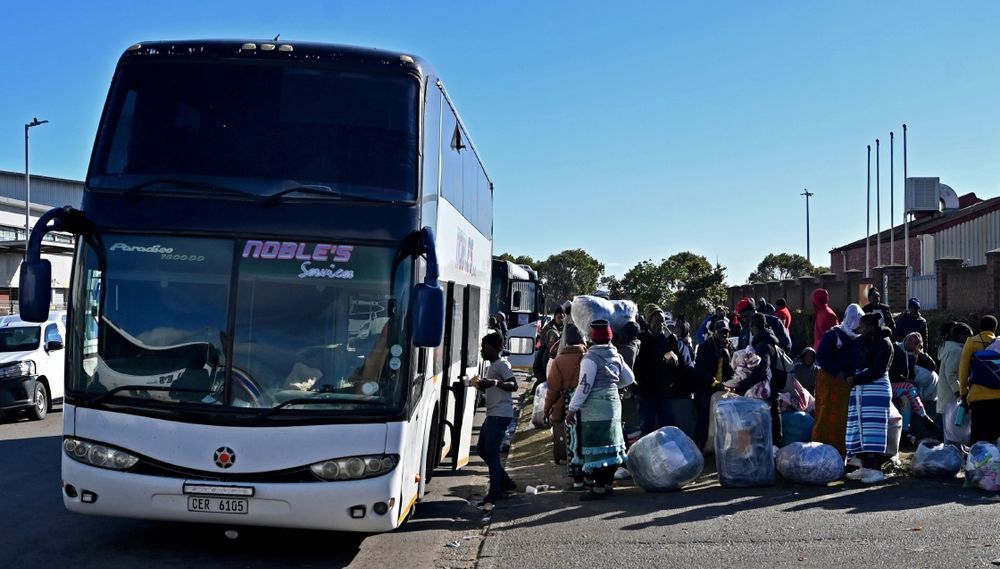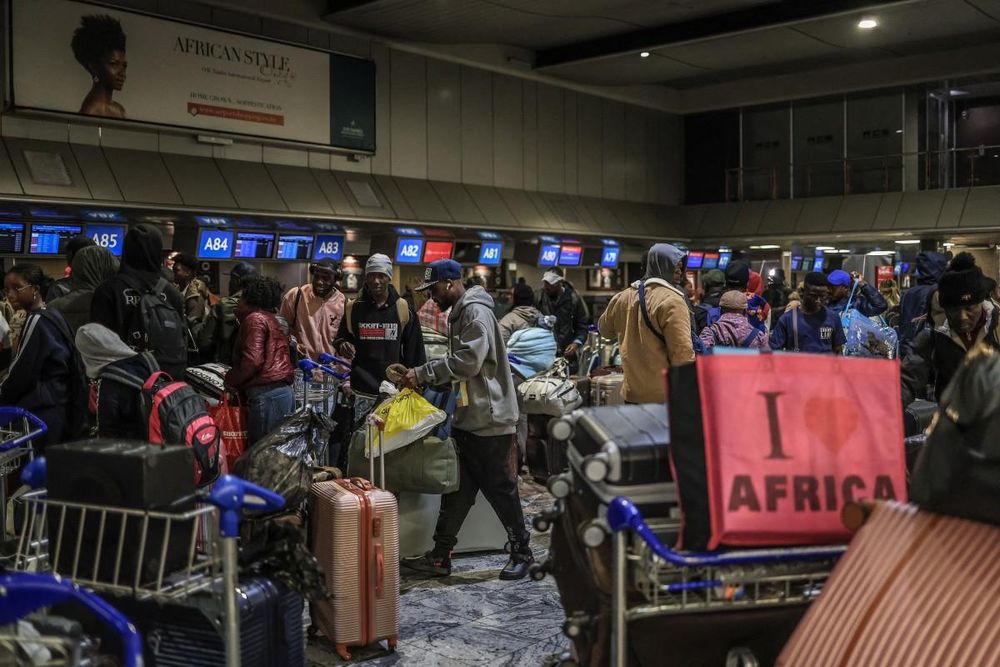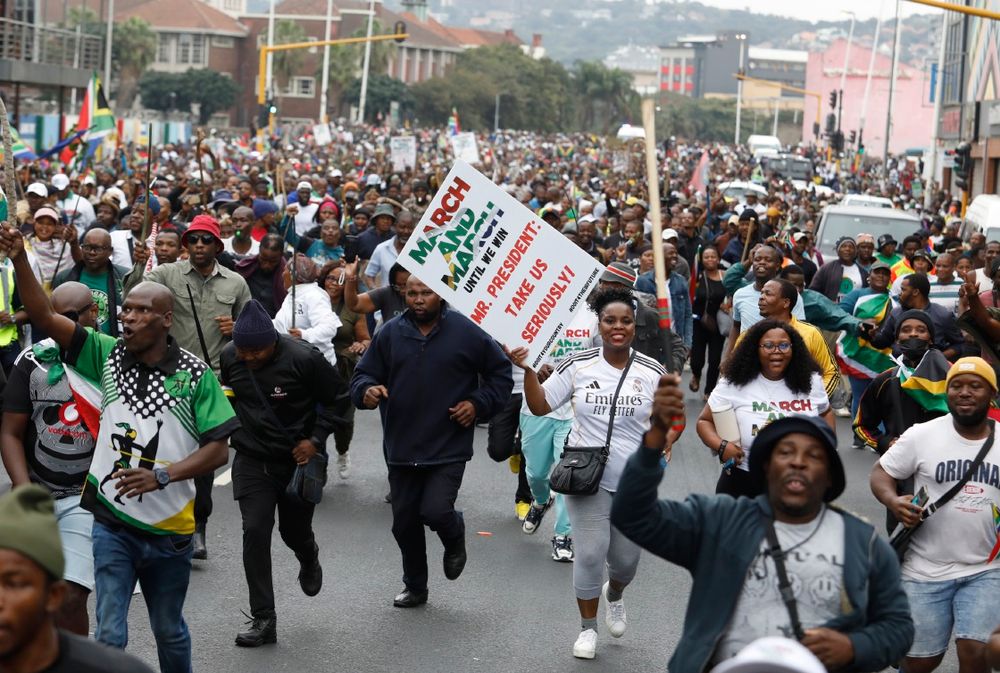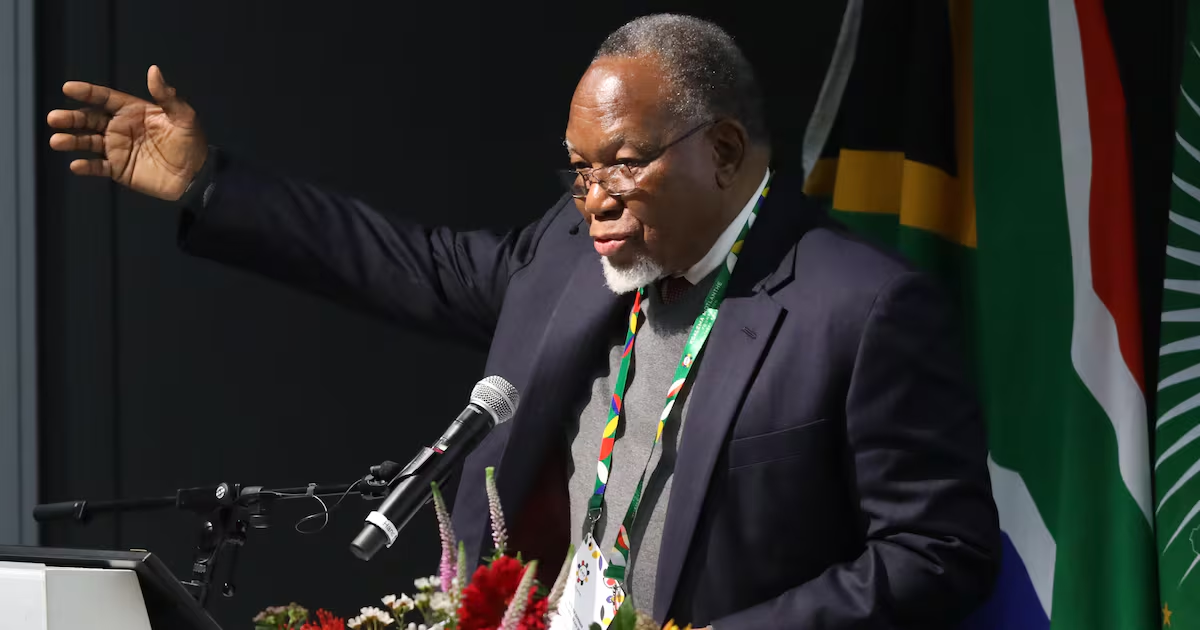
The events surrounding the June 30 safety stayaway have come and gone, and the placards have been packed away. But for how long? South Africa stands at a moment of profound choices, and it is time for decisive and honest leadership. As Somali/British poet Warsan Shire put it: “No-one leaves home unless home is the mouth of a shark and chases you.” Dire circumstances necessitate this drastic measure. No one should be forced to flee their home or country because of war, poverty, climate disasters, human rights violations or conflicts.We must continue to debunk the false narratives, distortions and myths, and address the root causes of migration, like high unemployment, deep-seated poverty, inequality, war and discrimination against women and LGBT communities that result in Afrophobic prejudice and violence and a scramble for limited resources. Government, too, must acknowledge what millions of South Africans already know: it lost control of migration policy years ago. At the same time, economic growth has stalled, public institutions have weakened, and our refugee and asylum system is no longer fit for purpose. We cannot continue governing by denial. What South Africa requires is something far more difficult — and far more courageous. We require an honest dialogue beyond a national conversation. We cannot avoid talking about these things. My starting point is simple. Migration, when properly managed, can be of great economic benefit. Throughout history migration has contributed to building civilisations. South Africa today is a product of migration. Our foreign policy is Pan-African, rooted in solidarity and mutual co-operation. People move because they seek safety, opportunity and dignity. Legal migrants become part of a country’s formal tax base and so contribute to the social and economic fabric of a nation. But there is an equally important truth. Illegal migration undermines the rule of law. Migration, when properly managed, can be of great economic benefit. Throughout history migration has contributed to building civilisations. A credible migration policy must therefore accomplish two objectives simultaneously. It must welcome legal migration and it must effectively manage and discourage illegal migration. These are not contradictory principles, they are complementary responsibilities of a functioning state. Unfortunately, government has, at best, dealt with this issue symptomatically. Warnings accumulated. Communities became frustrated. Institutions weakened. Political leaders avoided difficult decisions. And so, migration has become one of the most emotionally charged political questions in South Africa and must be approached constructively, particularly as local government elections approach. The question is no longer whether this fire exists. The question is how we extinguish it before it engulfs our democracy. Economic growth and credible migration management are not competing priorities. They are partners. Without growth there are no jobs. Without jobs resentment builds. Without effective migration management that resentment is easily redirected towards the vulnerable — soft targets. Migration is not the disease. The deeper illness is a lack of decisive leadership, and the absence of a coherent national vision: A script. We have seen previous generations of young South Africans mobilise around noble causes like Fees Must Fall and Rhodes Must Fall. Movements that demanded justice, equality and transformation. Economic growth and credible migration management are not competing priorities. They are partnersMany of those leaders disappeared from public life. But the problems they sought to solve remain. This is precisely why this moment demands leadership. The Arab Spring did not begin because of a macroeconomic model. It began with the frustration of one young graduate denied dignity through work. In months, billionaires became millionaires, millionaires became thousandaires, and fortunes built over generations evaporated. What was carefully captured in spreadsheets was swept away by forces no spreadsheet anticipated. Our universities should not be the next frontier. We face youth unemployment approaching 50%. Overall unemployment remains among the highest in the world. That is not simply an economic statistic — it is a highly combustible social reality. It is a cocktail that can be ignited by almost anything. At the same time, identity politics has become one of the defining features of our society. Increasingly, people define themselves by what separates them rather than by what unites them. Yet we know another South Africa exists. Whenever our national teams succeed we sing together, stand behind one flag and celebrate in every language. Which brings me to the ministry of sport, arts and culture. These are three portfolios in one ministry. Sport deserves dedicated leadership to develop athletes, transform sporting codes and build international competitiveness. But arts and culture requires something equally important and even special: a leader whose primary mandate is nation-building. In a society wrestling with so much division, mistrust and identity politics, culture is not a luxury — it is an instrument of social cohesion. The challenge before us is therefore far greater than migration. It is about rebuilding the republic itself. The greatest danger facing South Africa is not a sudden collapse. It is a gradual, continuous decline. History teaches us that nations do not fail overnight. They decline slowly. Quietly. Incrementally. Until abnormal conditions become accepted as the new normal. We adapted when electricity failed, when public safety deteriorated, when municipalities stopped functioning and so on. This resilience is counterproductive because it encourages lack of accountability. Every family that pays twice — first through taxes and then through private alternatives — carries a burden that should concern every policymaker. This is how inequality deepens. Previous generations assumed these were simply functions of the state. That shift matters. People stop asking whether something is acceptable. They begin asking only whether it is survivable. That is the moment democracies become vulnerable. When citizens lose confidence that improvement is possible, they stop demanding better, and decline becomes a self-fulfilling prophecy. Corruption and officials on the take have fuelled today’s migration crisisGovernment must accept responsibility — we have the laws that govern migration — all it takes is someone to implement them. The current home affairs minister is essentially implementing what has been there since the dawn of democracy — ANC policy. The same with the minister of correctional services. They were handed platforms to act decisively. Corruption and officials on the take have fuelled today’s migration crisis. Weak administration undermined asylum processes and eroded institutional credibility. Migration should not be discussed in isolation. It intersects with unemployment. Housing, health care, crime, economic growth, regional diplomacy and national security. The African Continental Free Trade Area (AfCFTA), under the leadership of secretary-general Wamkele Mene, represents perhaps the most significant economic opportunity Africa has created for itself in decades. Yet too few South Africans understand what it is, what it means, or how it can transform our future. We are good at creating institutions but less successful at championing them. We establish them but do not push the needle or drive their impact. Leadership requires not just institution-building, but sustained commitment behind it. We still have some way to go on co-ordination. According to the latest Africa Visa Openness Index by the AU and African Development Bank, only 28% of intra-African travel is visa-free, while visas on arrival are available in 27% of travel scenarios. Nearly half of all journeys still require a pre-arranged visa. The AU continues to urge member states to ratify the Protocol on the Free Movement of Persons, adopted in 2018 to support the successful implementation of the AfCFTA. Though 32 countries have signed the protocol, only a handful have ratified it, highlighting the gap between political commitment and practical integration. The reality is uncomfortable. Many migrants travelled thousands of kilometres to reach South Africa. Many have established families here. Some countries of origin are reluctant to facilitate the return of those who are illegal. Many benefit from remittances sent home every month by their citizens working in South Africa. Billions of rand leave the economy annually through these transfers. But it is also true that many jobs in South Africa exist because South African companies do business with other African countries. Doing business across Africa has helped to create and support jobs in South Africa. The dialogue on migration must not stop until we have one Africa for all.Companies that operate in Africa where the economies are growing faster than South Africa’s economy help businesses in South Africa grow even though South Africa’s economic growth is currently slow. This is not simply South Africa’s challenge. It is a regional challenge. In fact, it extends beyond our immediate region. Mass deportation is neither financially practical nor, in many cases, legally or diplomatically straightforward, nor morally justifiable. Pretending otherwise merely postpones difficult decisions. When it comes to the multilateral financial institutions, continental trade and global partnerships, our reputation matters. Countries are not judged only by their balance sheets; they are judged by their stability, reliability, leadership and the values they demonstrate. If we retreat from Pan-African solidarity we will pay a premium and be discounted, and unfortunately future generations will inherit the cost of our inertia. The overwhelming majority of migrants do not arrive with the intention of harming South Africa. They arrive seeking precisely what our own constitution promises: dignity, opportunity and hope. At the same time, South Africans are entitled to expect that immigration laws will be respected and fairly enforced. These two principles are not mutually exclusive. A constitutional democracy is capable of defending both human dignity and the rule of law. Our greatest failure has been allowing these principles to be presented as opposites. Migration has now become fertile ground for political mobilisation. Today it is migration. Tomorrow it could be tenders. Then dysfunctional municipalities. Then elections. Political vacuums never remain empty. They are always filled. Finally, we must recognise another powerful force shaping migration. Aspiration, television, social media, media streaming platforms and digital technology. Together they project images of South Africa across the continent every hour of every day. For millions of young Africans South Africa represents possibility. The land of opportunity. Where opportunity appears visible, movement follows. Every aspiration has consequences. Government must anticipate those consequences instead of merely reacting to them. Our future will be determined by whether we rebuild institutions worthy of public trust. Whether we restore competent governance, revive economic growth, enforce the rule of law without abandoning our humanity and choose solidarity over fear. Our destiny cannot be separated from that of our region. If we fail to define our role in Africa, others will define it for us. Migration will not disappear tomorrow. It must be faced and solved by all who live in the country. We cannot sweep it under the carpet any longer. The key is building a world where migration is a choice, not a necessity, and not preserved increasingly for a minority with high skill levels and where the most vulnerable are marginalised. Civil society must understand that if we allow vigilantism to rule, we are heading towards a slippery slope.The dialogue on migration must not stop until we have one Africa for all. • Motlanthe is executive trustee of the Kgalema Motlanthe Foundation. This is an edited version of her address before the foundation’s winter seminar, held at the JSE in Sandton this week.
GUGU MOTLANTHE | Migration — a national reckoning
Unemployment, inequality and weak governance drive crisis in SA
1,845 words~8 min read