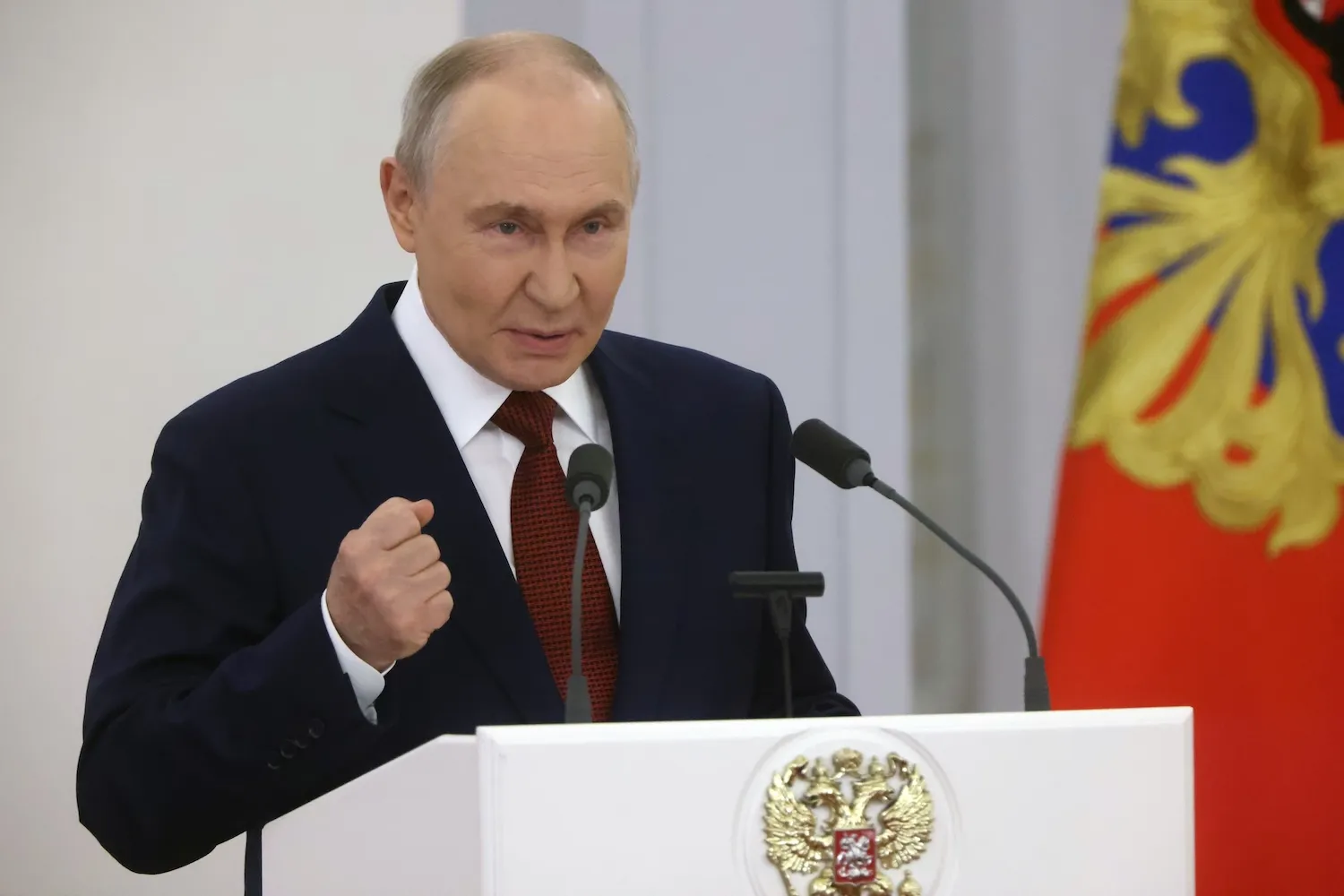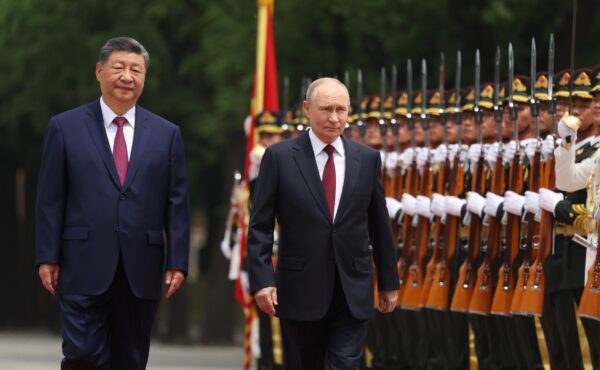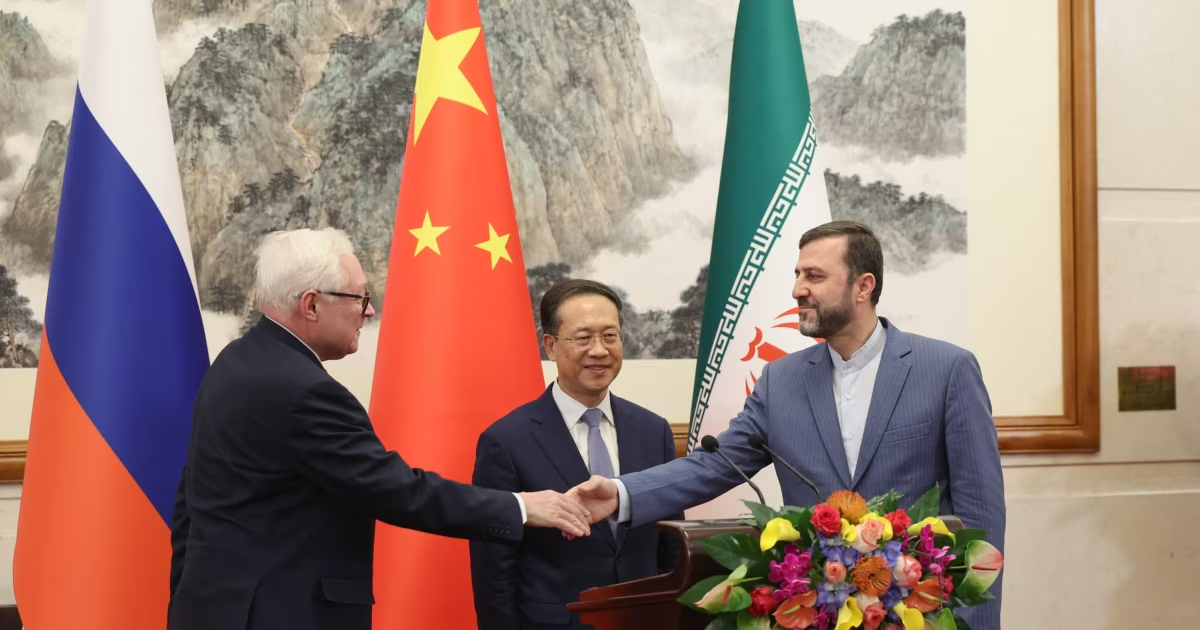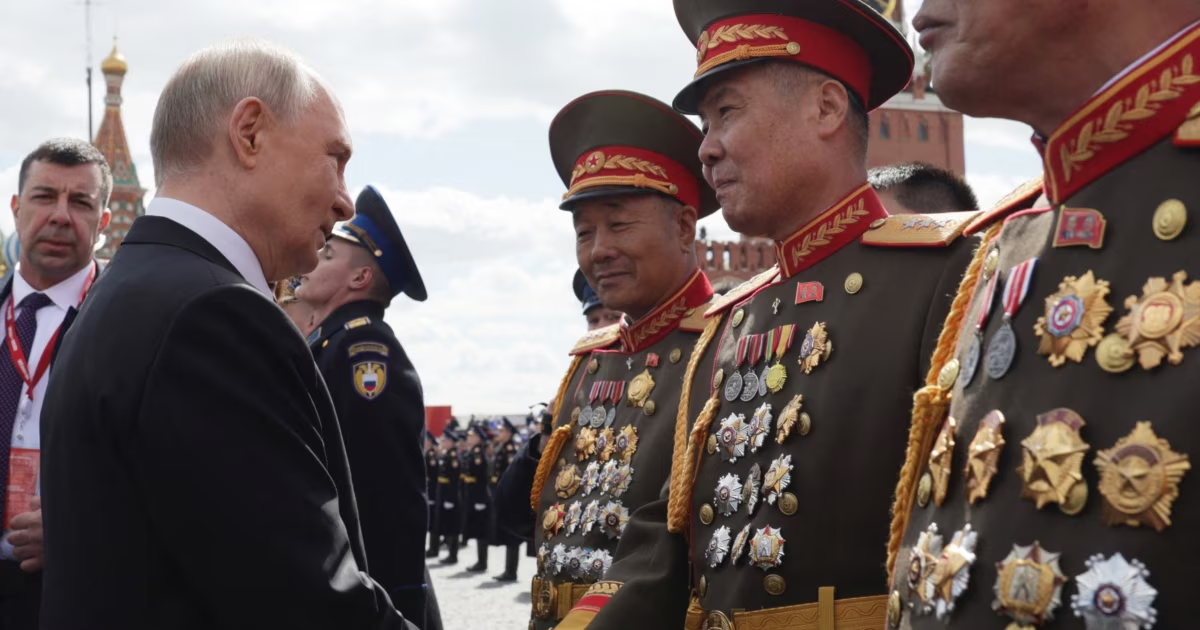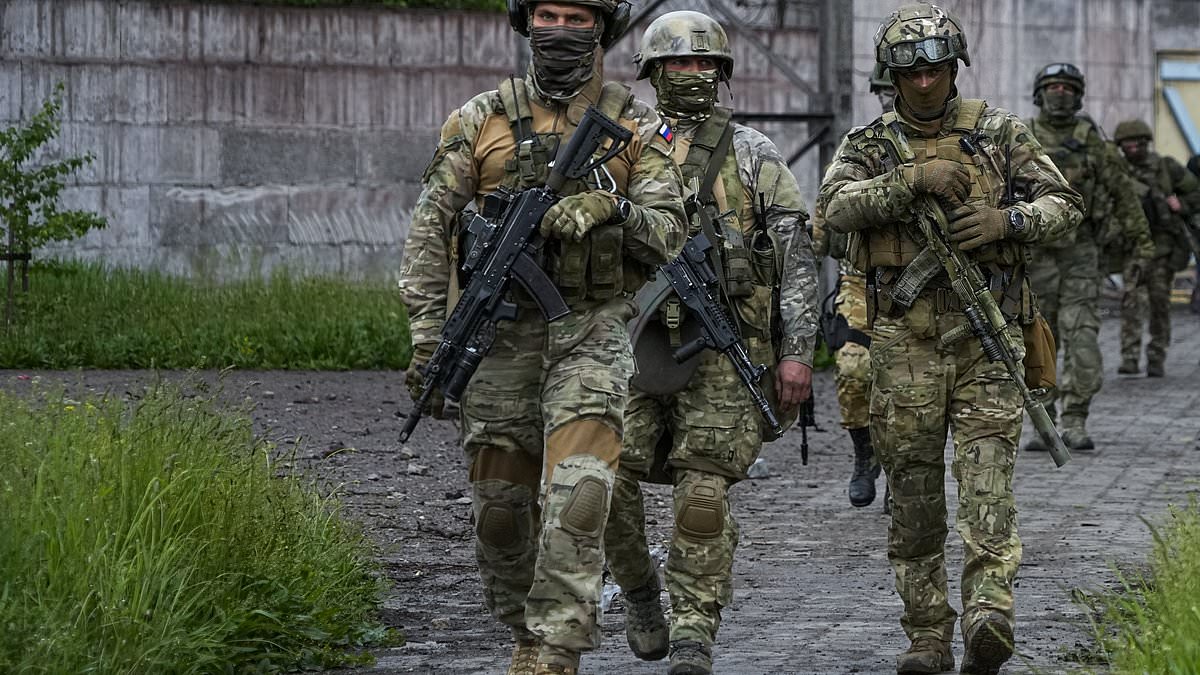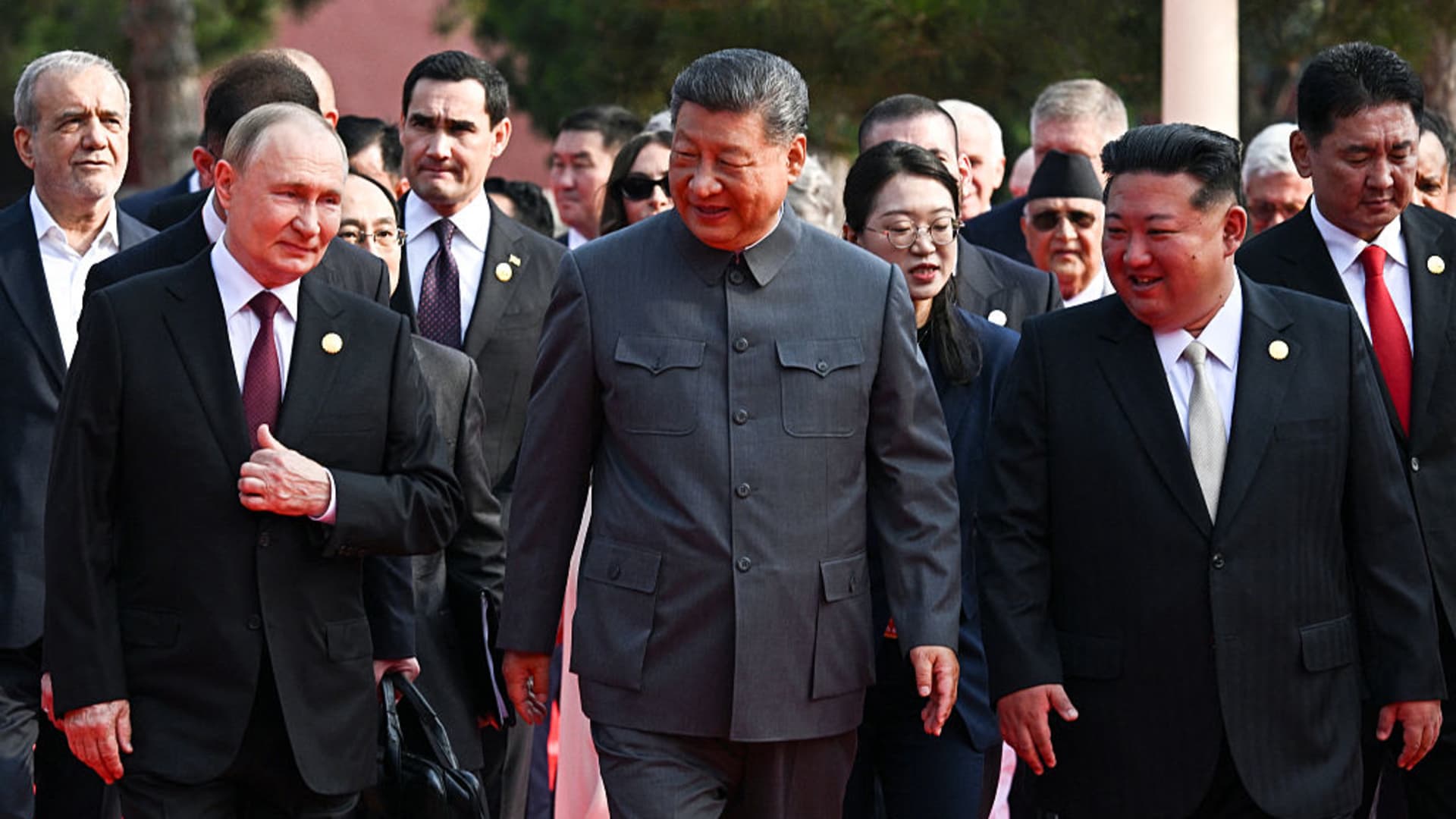
WASHINGTON -- Russia's deepening partnerships with China, Iran, and North Korea -- creating an "axis of upheaval" --represent one of the most significant geopolitical realignments driven by the war in Ukraine.Yet according to Andrea Kendall-Taylor, senior fellow and director of the Transatlantic Security Program at the Center for a New American Security (CNAS), viewing this grouping through the lens of a traditional military alliance misses the bigger picture.In an interview with RFE/RL, she explains what Moscow gains from this network designed to erode American influence, undermine Western sanctions, and secure Russia's standing in a multipolar world.The interview has been edited for clarity and length.
RFE/RL: In practical terms, what makes this dynamic network so dangerous to Western security?Andrea Kendall-Taylor: The way I summarize the impact of the axis of upheaval is that these partnerships amplify the military capabilities of all of the US' and its allies' adversaries while simultaneously diluting the foreign policy tools, such as sanctions, that we rely on to confront them.Because of their cooperation, these countries are becoming more militarily capable, while our sanctions and other forms of pressure are becoming less effective.RFE/RL: What does Vladimir Putin gain from these partnerships that Russia could not achieve alone?Kendall-Taylor: The benefits have been most visible during the war in Ukraine, which has served as a major accelerant in deepening these relationships.China, Iran, and North Korea have each enabled Russia to sustain the war in ways that simply would not have been possible without their support.North Korea has supplied vast quantities of ammunition. Even if much of it has been low quality, the sheer volume has been critical at key moments. We also know North Korea deployed troops to Russia's Kursk region and elsewhere, providing another significant form of assistance.Iran, early in the war, supplied drones and other munitions. Russia has since localized much of that production and improved the technology, but Iran's initial support represented a major battlefield advantage.China has been the most important partner overall. It has enabled Russia to bypass Western sanctions and export controls, allowing access to semiconductors, component parts, and other critical technologies needed to sustain Russia's defense industry. Equally important, China has continued purchasing large volumes of Russian oil, injecting essential revenue into the Russian economy and helping finance the war.Even after the war in Ukraine ends, I believe Russia will continue to value these relationships because its confrontation with the West -- especially the US -- is not going away. The Kremlin believes it is less isolated and less vulnerable when it operates alongside like-minded partners, and that places Russia in a stronger position for a prolonged strategic competition.RFE/RL: If these partnerships are driven more by opportunity than ideology, what actually holds them together? What could eventually pull them apart?Kendall-Taylor: The simplest answer is their shared opposition to the US and its power. All four countries believe the current international system does not provide them with the influence and status they think they deserve. Working together allows them to challenge that system more effectively.China, for example, gains from instability that distracts the West. Iran benefits by tying down American military resources in the Middle East. Collectively, they understand that coordinated pressure can overstretch the US.Over the next several years, I find it difficult to identify forces that would drive them apart. These governments increasingly view today's international environment as one in which power determines outcomes and weaker states remain vulnerable. That perception strengthens the incentives to cooperate.Their partnerships help ensure each remains influential and better positioned to compete with the US that, from their perspective, is increasingly alienating its allies. They are stronger together.