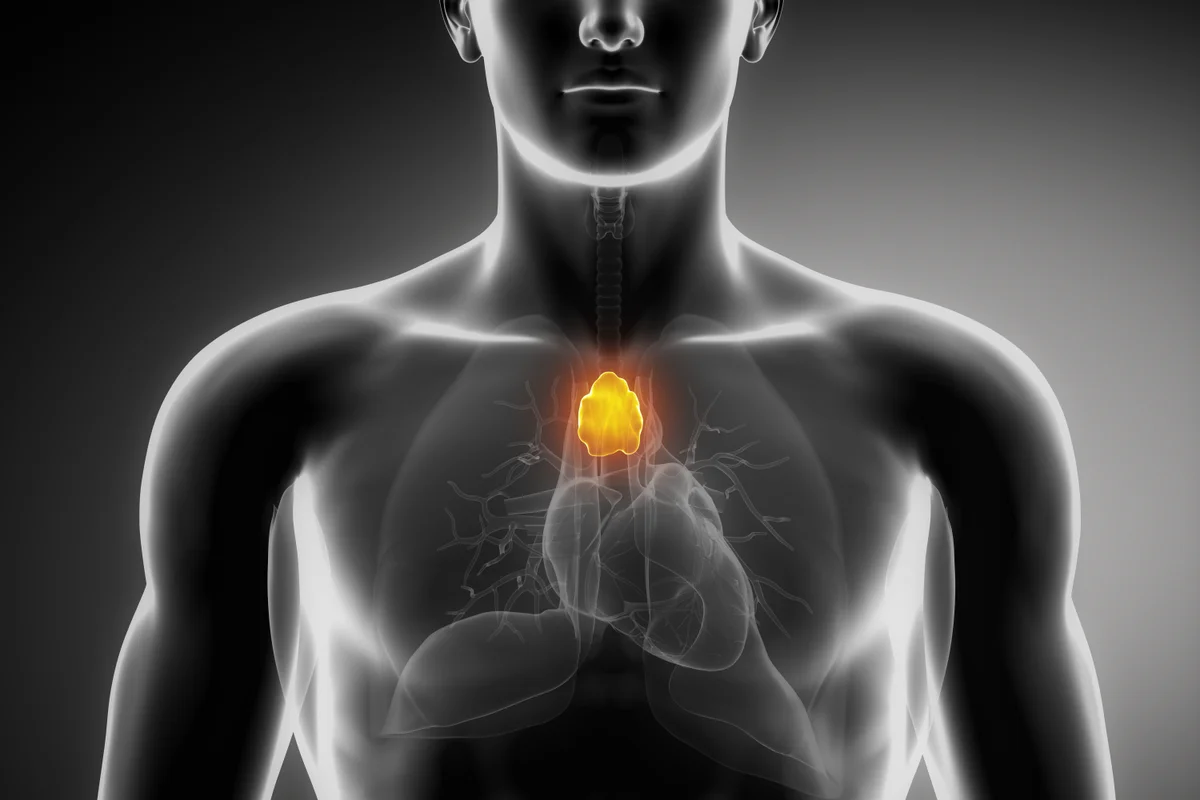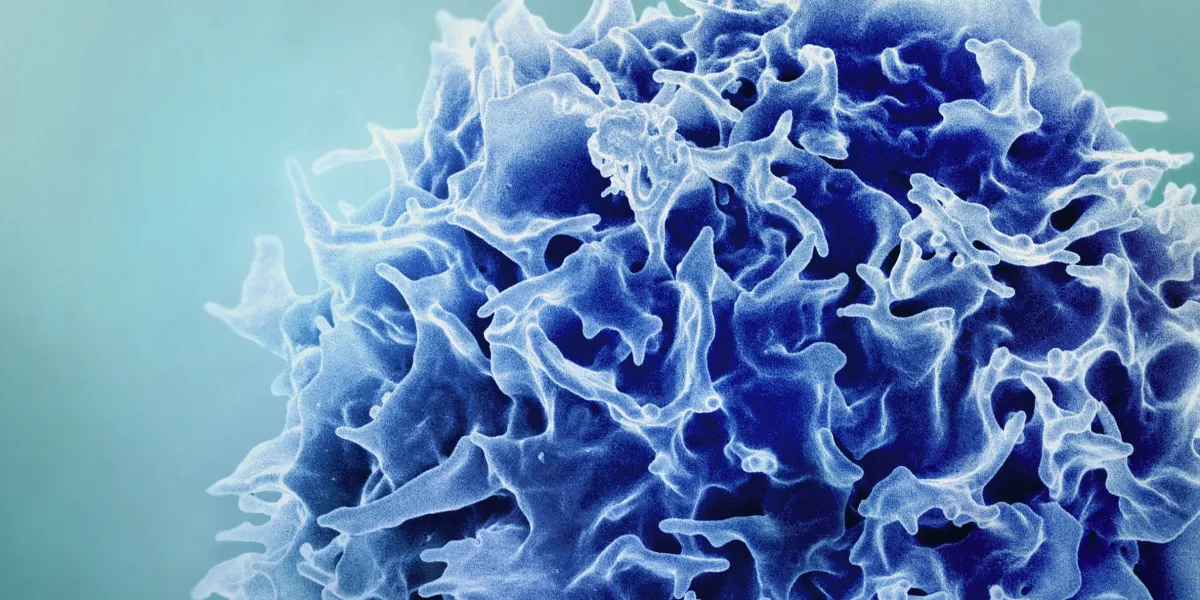
The thymus is a tiny organ near the heart responsible for generating T cells of the adaptive immune system. Thymocyte cells are made in the bone marrow, migrate to the thymus, and undergo a process of exposure and selection that leads to mature T cells. The adaptive immune system needs a supply of new cells to make up the losses incurred due to damage and the Hayflick limit on replication. Unfortunately, the thymus atrophies with age; it is one of the earliest organs to reach a significant loss of function. Most 50-year olds have little active thymus tissue left, and a sizable component of the subsequent accelerating decline of the adaptive immune system takes place because it is denied sufficient reinforcements. It becomes ever more populated by senescent, exhausted, and malfunctioning T cells.
There are strategies that will absolutely, definitely regenerate the aged thymus, well demonstrated in animal models. None of them are all that practical for widespread use in medicine, or at least not palatable to those in charge of the regulation of medicine. Upregulation of FOXN1 via gene therapy regrows the thymus, but no delivery system other than direct injection has emerged to enable sufficient delivery to such a small organ without overloading and harming other tissues. Direct injection is not palatable because any sort of introduction of a needle into the inner organs of an aged individual has a small but meaningful rate of severe complications. This also rules out the use of KGF protein therapy, shown to regenerate the thymus in animal studies, but which cannot be introduced into humans at high enough levels via intravenous injections without causing unacceptable side-effects in other tissues.