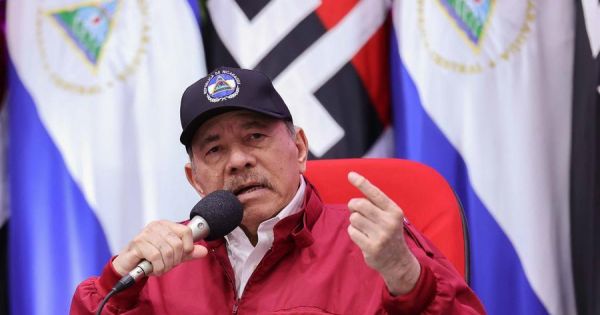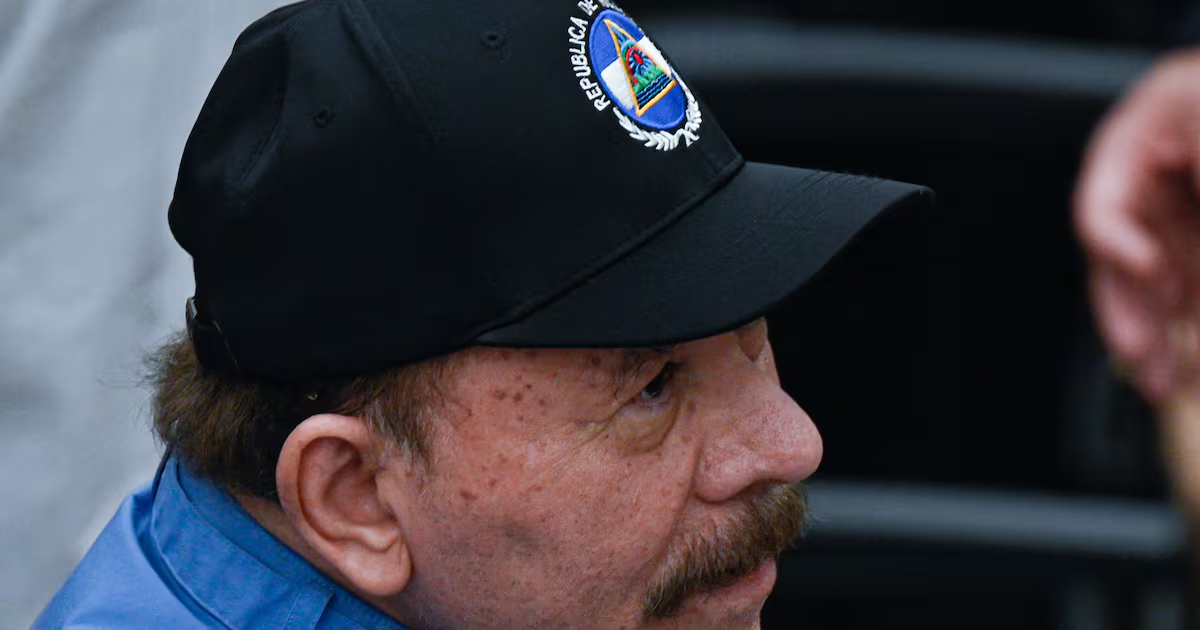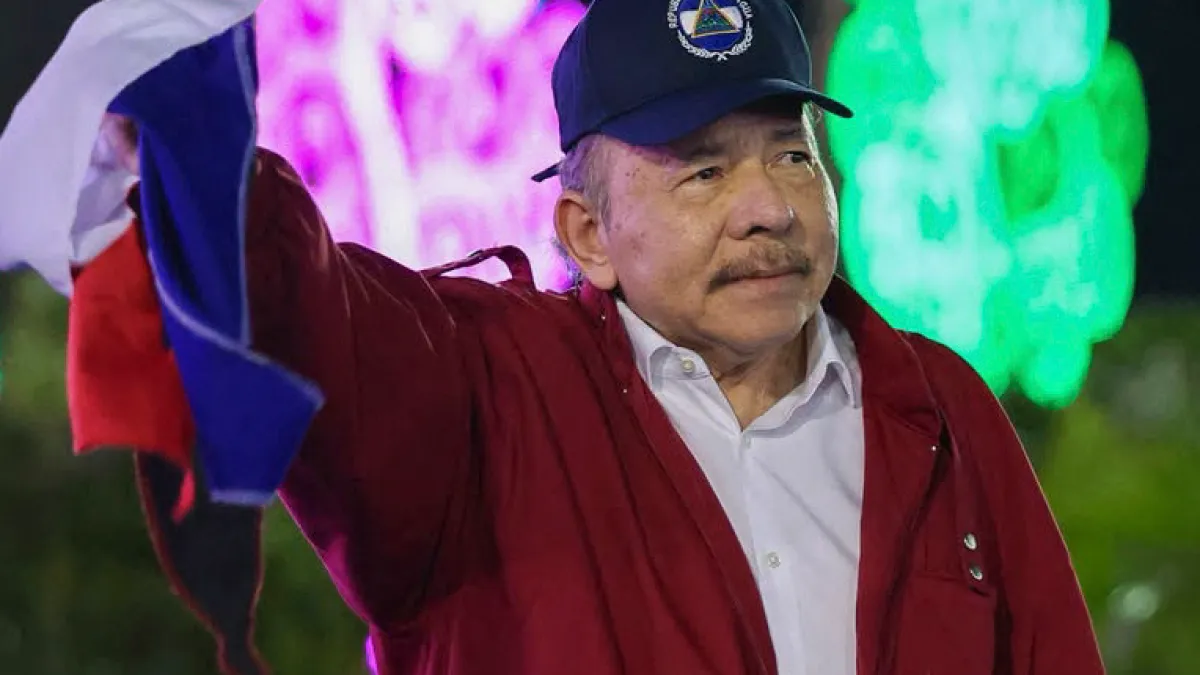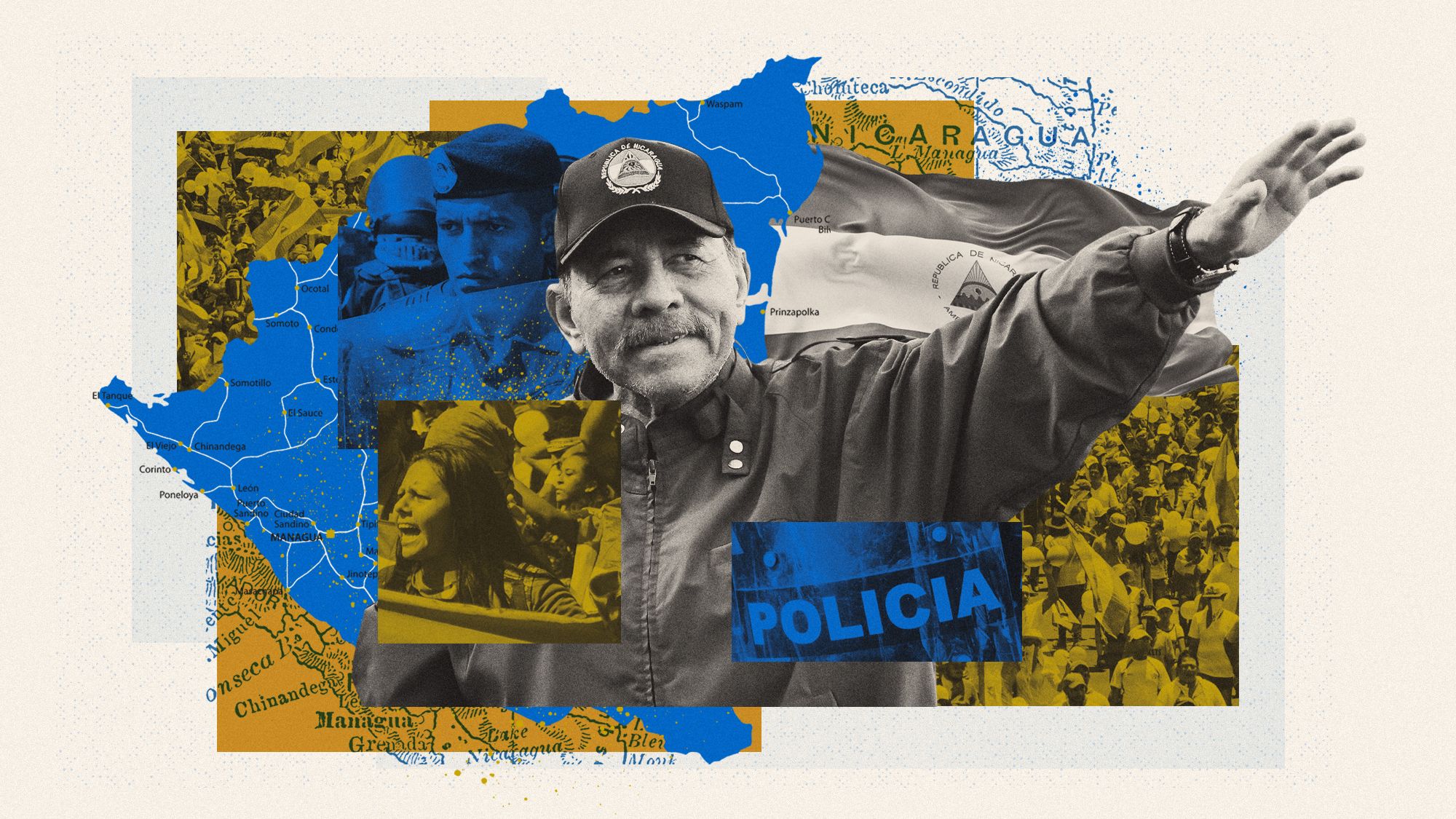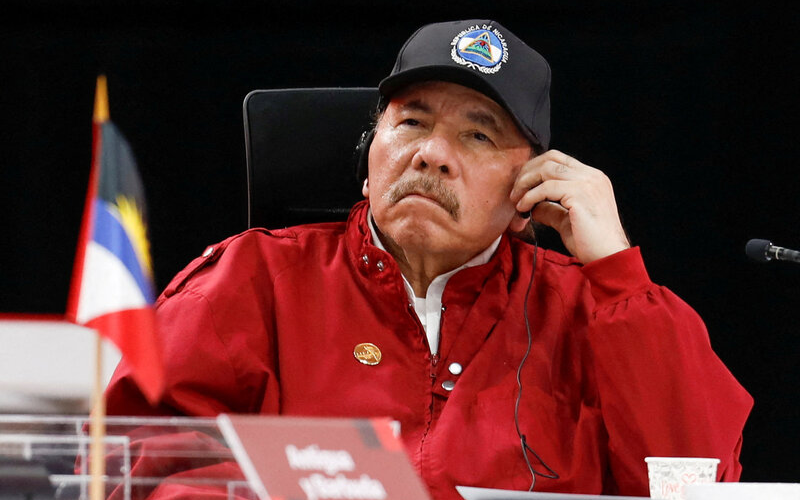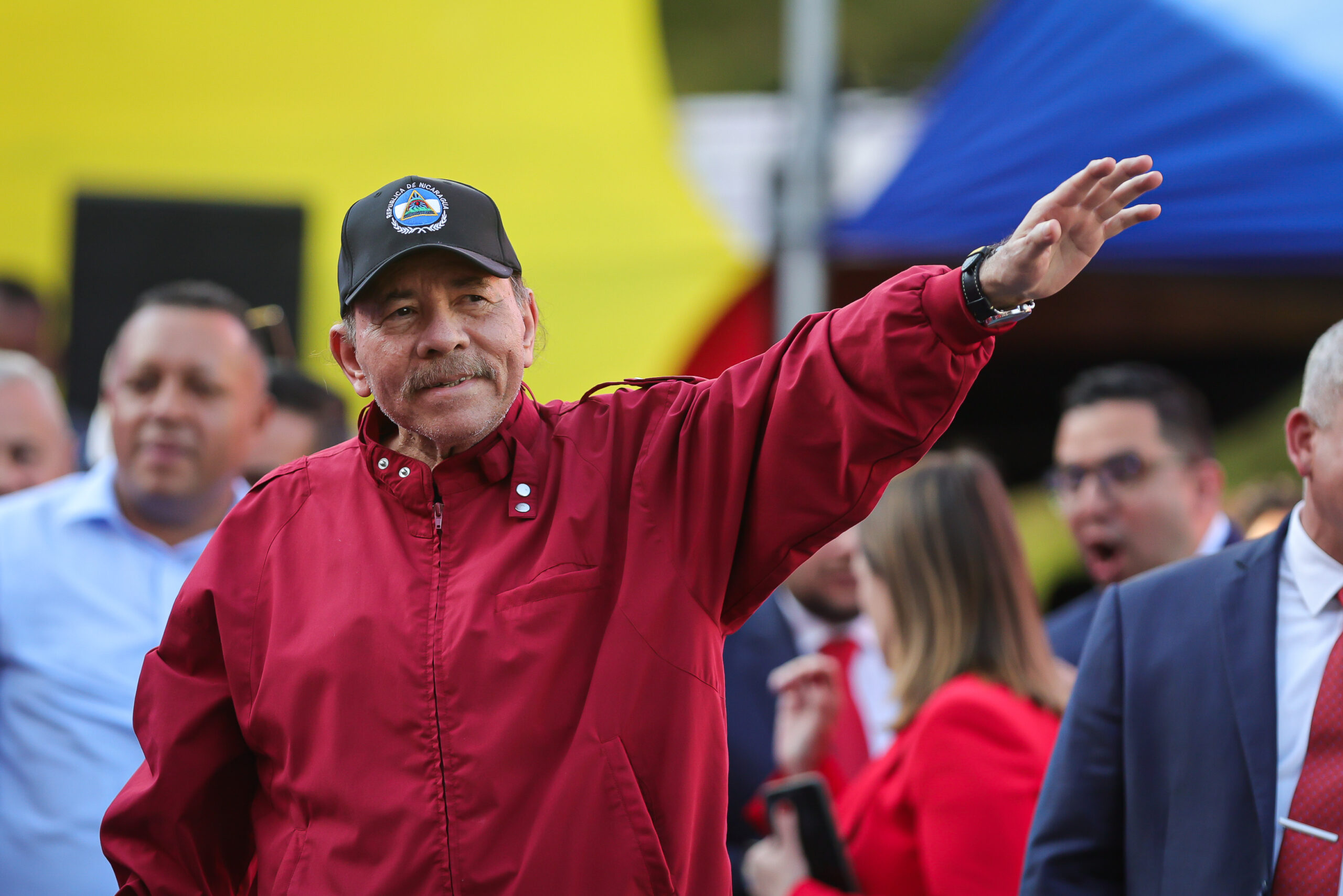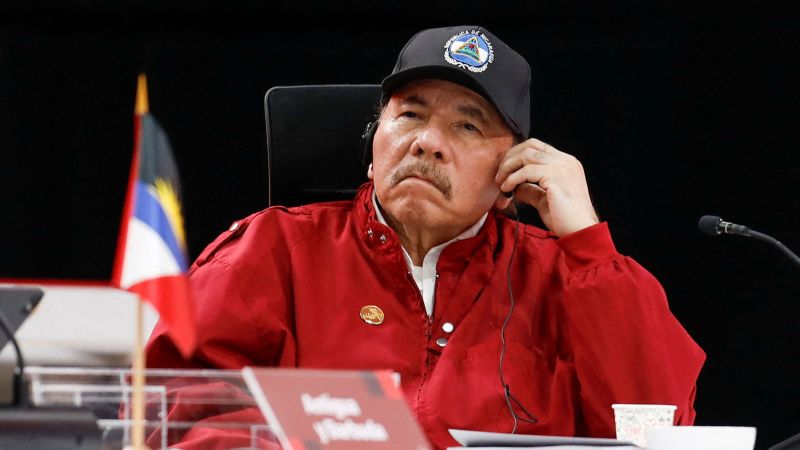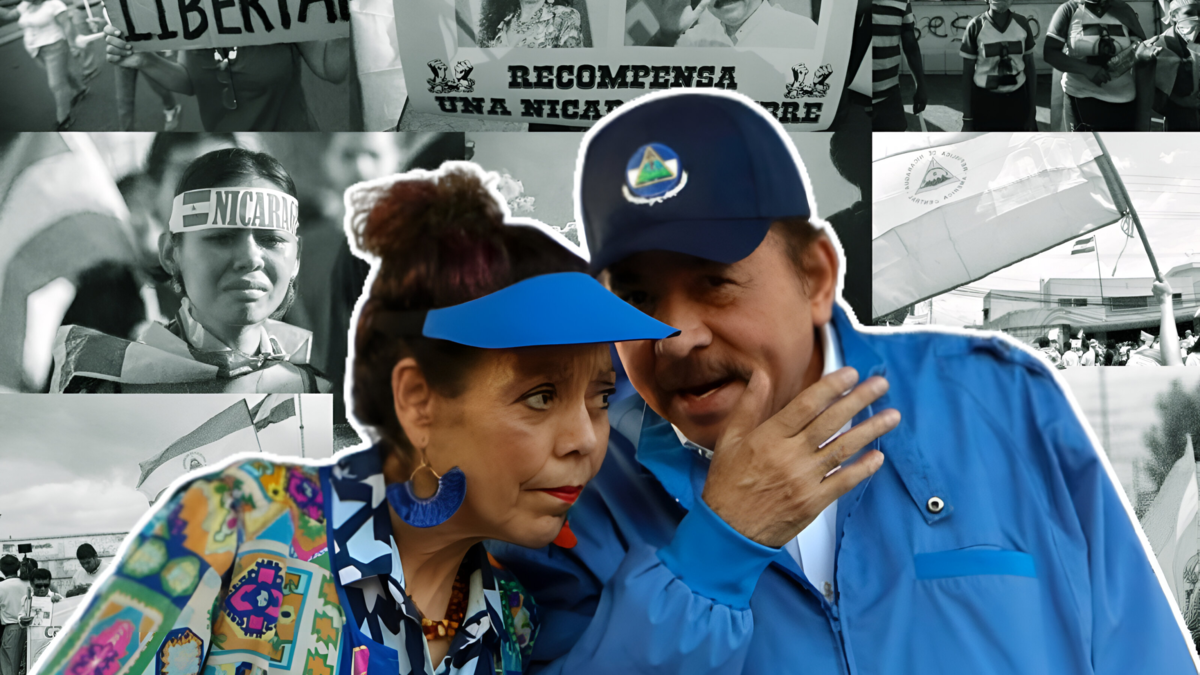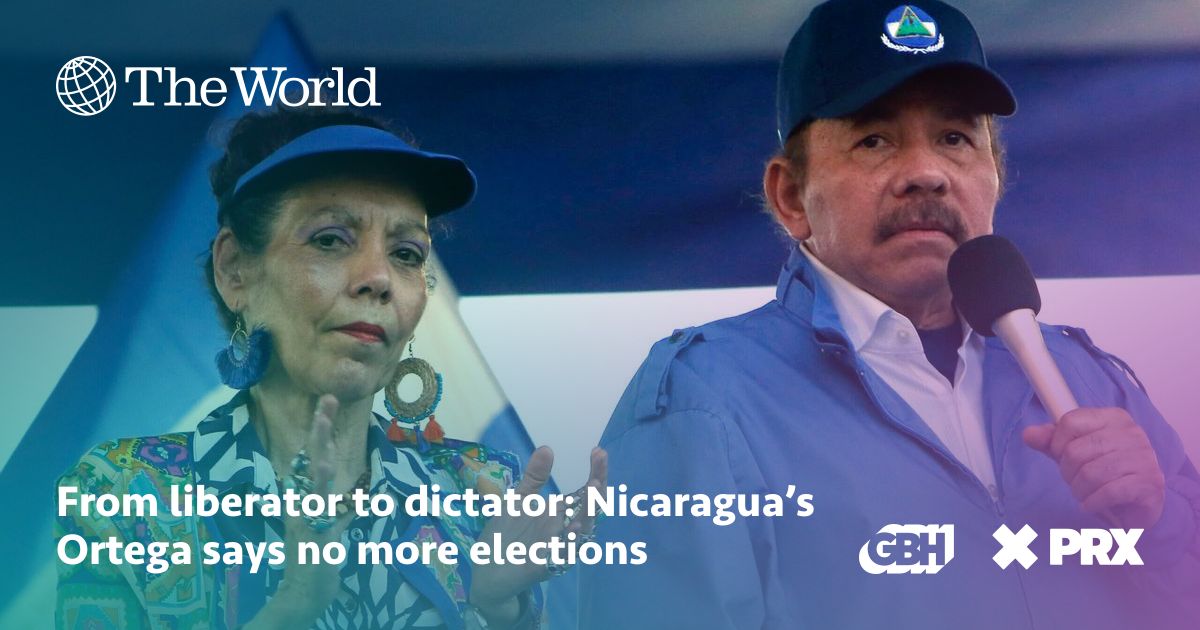
Public radio’s longest-running daily global news program.AboutContactDonateMeet the TeamPrivacyTerms of use©2026 The World from PRXPRX is a 501(c)(3) organization recognized by the IRS: #263347402.From liberator to dictator: Nicaragua’s Ortega says no more electionsSunday marked 47 years since the Sandinista National Liberation Front (FSLN) toppled Nicaragua’s dictatorship. To mark the occasion, the former leader of that guerrilla movement and now president of the country, 80-year-old Daniel Ortega, announced the country would no longer hold elections. To understand how Ortega got here and where things are headed for Nicaragua, The World’s Host Marco Werman spoke to Cindy Regidor, a Nicaraguan journalist based in Costa Rica. PoliticsJuly 24, 2026Updated: July 24, 20268:08In this Sept. 5, 2018, Nicaragua’s President Daniel Ortega and his wife, Vice President Rosario Murillo, lead a rally in Managua, Nicaragua. The European Union on Aug. 2, 2021 slapped sanctions on Nicaraguan first lady and seven other senior officials accused of serious human rights violations or undermining democracy, amid a crackdown on opposition politicians in the Central American country. Nicaragua’s President Daniel Ortega made a rare appearance on Sunday to deliver a stark message: There will be no more elections in the country — ever.Ortega made the announcement at a rally to mark the 47th anniversary of the end of an earlier dictatorship. Back then, it was Ortega’s leftist group, the Sandinistas, that brought down the former military regime. Ortega is now 80 years old and has been in power for more than two decades in what’s currently described as a co-dictatorship that he and his wife Rosario Murillo lead together.Nicaragua’s President Daniel Ortega waves after attending the inauguration of Venezuelan President Nicolas Maduro for a third term in Caracas, Venezuela, Jan. 10, 2025.Cristian Hernandez/AP/File photoTo understand how we got here and where things are headed for a country with leaders who decide to simply stop elections, The World’s Host Marco Werman spoke with Cindy Regidor, a Nicaraguan journalist currently based in San José, Costa Rica.“Now the world can see that Nicaragua is a full-on dictatorship and that even the leader, Daniel Ortega, is openly admitting it,” Regidor said. This is not the moment Nicaragua suddenly became a dictatorship. It is the moment Ortega publicly admitted that there would no longer be even a pretense of democratic alternation.”A Sandinista militiaman inspects the day’s menu in the smoky kitchen of a crude restaurant in the village of Santa Clara, Nicaragua Nov. 18, 1983. Men, women and children in uniform, armed with Soviet-made weapons, are everywhere after government mobilization of thousands to protect the year’s food crops from possible sabotage by counter revolutionists. Pat Hamilton/AP/FileWell, I think that at the beginning, they were pretending to be a democratic government and they knew that they had to play by the rules. But at the same time, they were systematically trying to co-opt all the other branches of power, the electoral authorities, the judicial system, and the electoral processes that happened during that time were not really fair. And so, the most obvious example of that was the 2021 election, when all the presidential hopefuls were either detained or banished and stripped of their citizenship. And so, what has happened is that because after the 2018 protests, they knew that they were no longer popular, they just decided to intensify repression, and they imposed a de facto police state. And so, they no longer cared about what the nation thought about them. They just knew that they needed to remain in power.In this May 26, 2018 file photo, the Spanish word for “Murderer” covers a mural of Nicaragua’s President Daniel Ortega, as part of anti-government protests demanding his resignation in Managua, Nicaragua. Ortega and his wife, Vice President Rosario Murillo, maintained the use of force was justified to fend off an attempted coup. Domestic and international human rights groups strongly disagreed. Esteban Felix/AP/FileI think Nicaragua doesn’t seem to be a priority right now, especially when you have a country like Venezuela. And Nicaragua does not have Venezuela’s oil reserves, and Nicaragua doesn’t have the same geopolitical significance as Cuba. So, at this point, there is no public indication that the United States is preparing an operation similar to the one carried out against [former Venezueland President] Nicolás Maduro. But I do think that it does have an effect on how Ortega and Rosario Murillo are now acting. And I think that it does create fear and paranoia. But the reality is that, so far, what we have seen from the United States is mainly economic sanctions, visa restrictions, trade pressure, but no more than that, so far.Nicaragua’s President Daniel Ortega speaks next to Venezuelan President Nicolas Maduro as he attends Maduro’s inauguration day for a third term at Miraflores presidential palace in Caracas, Venezuela, Jan. 10, 2025. Cristian Hernandez/APParts of this interview have been lightly edited for length and clarity.
From liberator to dictator: Nicaragua’s Ortega says no more elections - The World from PRX
Sunday marked 47 years since the Sandinista National Liberation Front (FSLN) toppled Nicaragua’s dictatorship. To mark the occasion, the former leader of that guerrilla movement and now president of the country, 80-year-old Daniel Ortega, announced the country would no longer hold elections. To understand how Ortega got here and where things are headed for Nicaragua, The World’s Host Marco Werman spoke to Cindy Regidor, a Nicaraguan journalist based in Costa Rica.
805 words~4 min read