view more
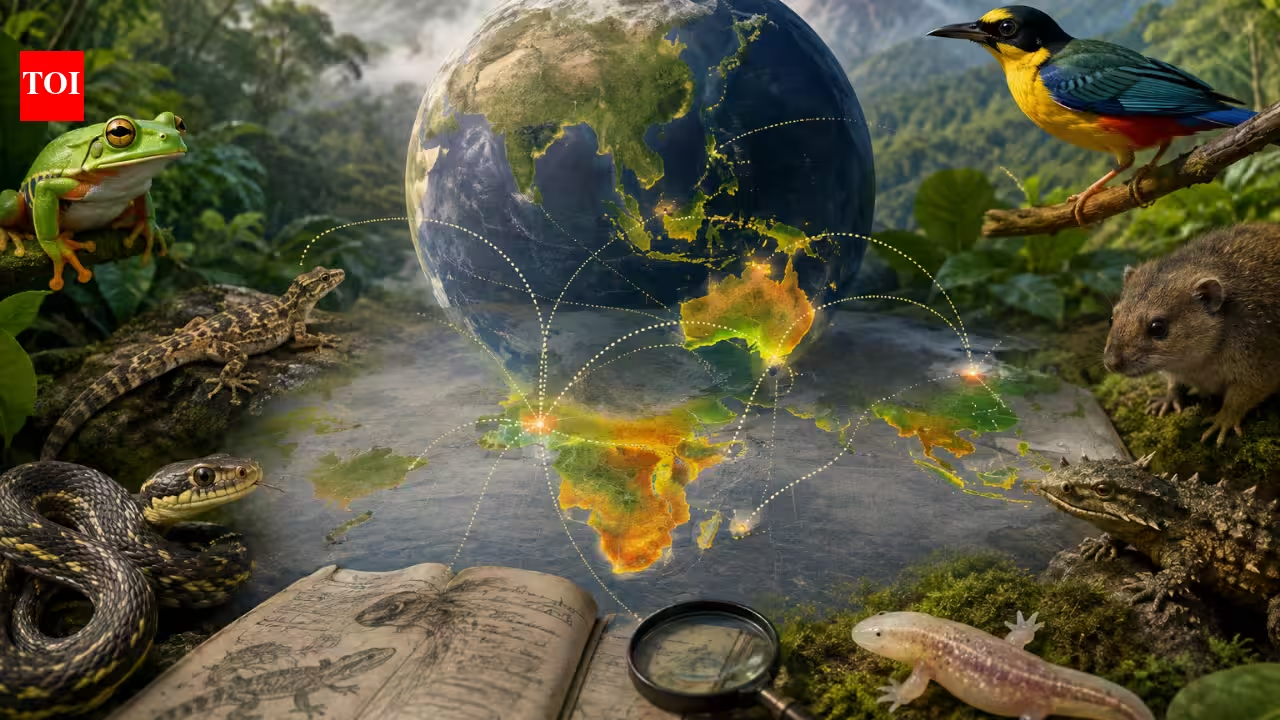
A new study reveals that human activities have fundamentally reshaped biodiversity patterns on islands across the globe, providing important implications for how scientists understand ecology, evolution and conservation.
Led by the University of Birmingham, the international team of researchers examined how species extinctions and introductions have transformed island ecosystems over a (?) millennia showing that islands have experienced a disproportionate share of global biodiversity loss.
In total, island endemic species account for around 75% of recorded anthropogenic extinctions globally, while many islands have also received large numbers of introduced species. In some cases, the number of introduced species now equals or exceeds the original native flora and fauna. For example, in the Hawaiian Islands almost all endemic species of bird have been driven extinct, with roughly the same number having been introduced from elsewhere in the world.
The study’s findings, published today (23 Jul) in Science Advances, also suggest that many biodiversity patterns observed today – such as species richness, endemism and ecological interactions – are not solely the result of natural ecological and evolutionary processes but also often reflect a long legacy of human influence.