If you have ever built a document-parsing pipeline, you know the ritual. Split the PDF into pages. Run each page through the OCR model. Stitch the outputs back together. Then write a pile of glue code to fix the tables that got cut in half at a page boundary, and the heading that lost its section, and the footnote that ended up orphaned three pages away from its reference.
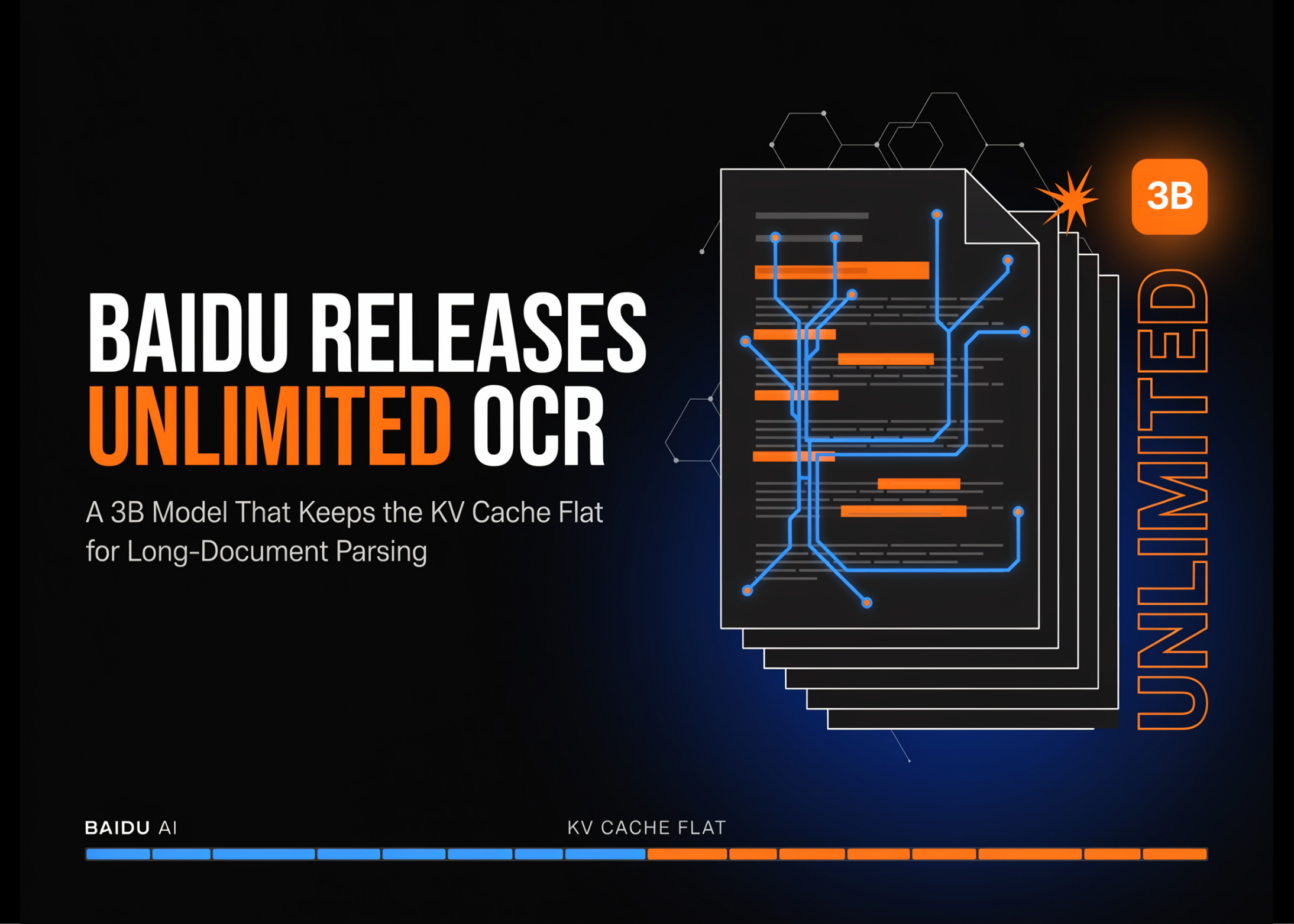
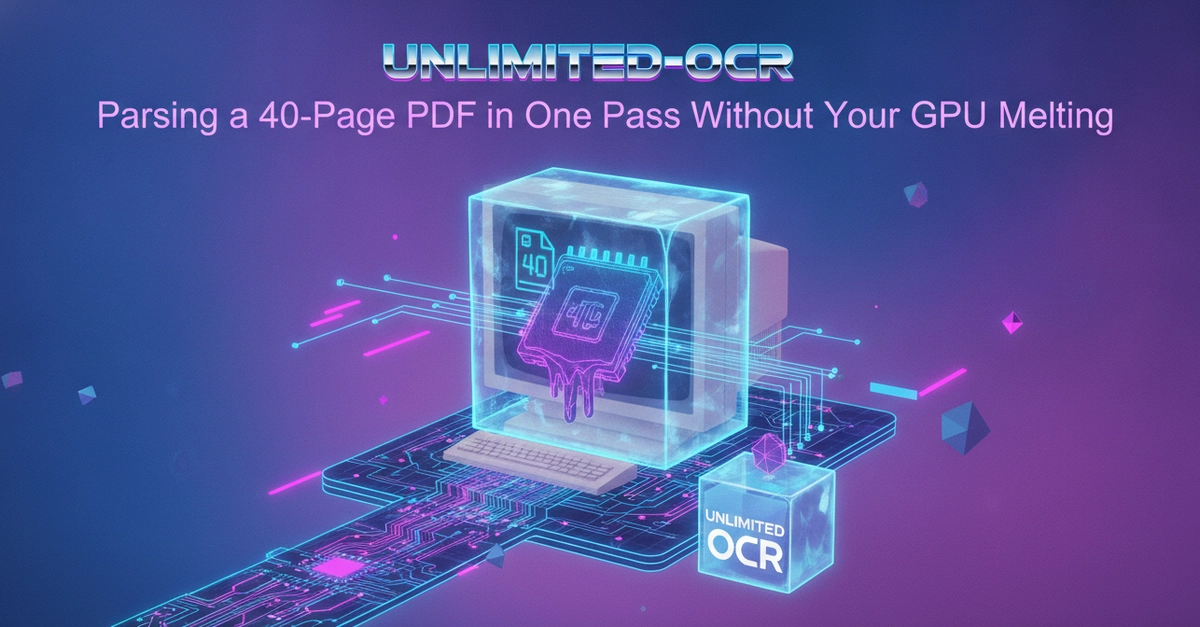
Baidu's Unlimited-OCR is a bet that you should not have to do any of that. It parses dozens of pages in a single forward pass, and it is MIT licensed.
This post covers what the model actually does differently, and then three concrete ways to get it running: a quick Transformers script, an SGLang server for real throughput, and a Docker image if you would rather not touch a Python environment at all.
The problem it solves
Standard transformer decoding has a cost that most OCR benchmarks quietly hide: the KV cache grows with every token you generate.