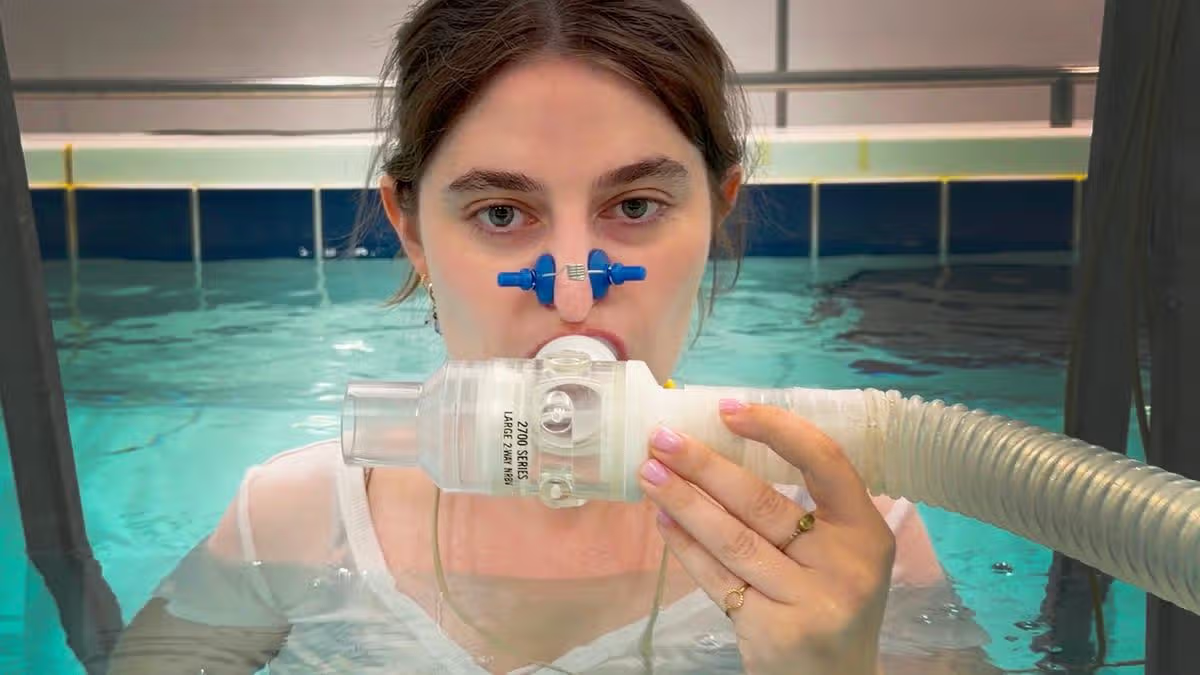
EXCLUSIVE: The Mirror visited the University of Portsmouth’s Extreme Environments Lab to learn more about the potentially deadly effects of cold water shock17:16, 24 Jul 2026Updated 17:16, 24 Jul 2026The Mirror takes a cold plunge As temperatures continue to soar this week, thousands of us will be heading to beaches, lakes and rivers to cool off.But while it’s hot on land, the water remains very cold – and can easily cause you to drown. We visited the University of Portsmouth’s Extreme Environments Lab to learn more about the potentially deadly effects of cold water shock.Wired up to a heart monitor and breathing tube, I spent 10 minutes in a specialist plunge pool set at 15C – the current, average UK sea temperature. The room was heated to 28C to mimic the heat we’re seeing during the current heatwave.Before entering the water, my gasp rate – the amount of oxygen breathed in – was a normal 0.3 litres. But on being lowered into the pool, this rocketed to 1.5 litres – which shockingly, if my face was under water, would be enough to drown me.My heart rate also shot up – going from a normal, resting, 80 beats per minute to 110. This sudden change causes the blood vessels to constrict, which can trigger a heart or cardiac arrest, even in young people. Cold water shock, causing the gasp response or heart failure, accounts for around 60% of drownings.Spending time in cold water also impacts our dexterity. Before getting in, I was able to type the text “Get me out of here” in just two seconds. But after 10 minutes in the water, it took me eight seconds to write the same message.Infrared cameras were also used to show my body heat before and after immersion. Before, I was covered in yellow, which indicates body heat, but afterwards turned almost entirely blue.I also tried out the pool’s flume feature, which creates a strong current. Despite being a regular and strong swimmer, battling against the force of the cold water for just three minutes left me exhausted and out of breath.The University of Portsmouth’s Professor Mike Tipton, the UK’s leading expert on extreme environments, said: “Cold shock is initiated by a rapid fall in skin temperature on initial immersion - this stimulates cold receptors just below the surface of the skin.“If at any time the airway is submerged when breathing is out of control people can inhale water and drown. At the same time the cold shock response includes an increase in blood pressure and cardiac workload. Cold shock also makes it hard to co-ordinate swim stroke and breathing and can lead to early swim failure.”Urging the public to stay vigilant, Prof Tipton, who began investigating cold water shock in the 1980s, added: “Swim parallel to the shore and stay in your depths, be aware that your swimming ability in a warm indoor swimming pool does not relate to your swimming ability in open cold water. Tides, currents, windage and cold can easily turn a ‘swimmer’ into a ‘non-swimmer.”Prof Tipton’s stark warning comes after at least 26 people - mainly children and young people - drowned in the heatwaves in May and June. The Mirror ’s Save Lives for Sam campaign was launched after an unprecedented 19 people lost their lives in water in May alone. We’re pushing for change in memory of 16-year-old Sam Haycock, who drowned in a reservoir in Rotherham, South Yorks, during hot weather on his last day of school in 2021.The UK is currently in the midst of its third heatwave in just two months, with temperatures set to hit 34C in some areas on Saturday. Amber heat health alerts have been issued by the UK Health Security Agency (UKHSA) for the Midlands and southern England until 9pm on Sunday. The alert means significant impacts are likely across health and social care services.The RNLI urges anyone who gets into difficulty to practice the ‘Float to Live” technique. The charity’s water safety manager Ross Macleod said: "The key thing for floating is learning to relax in the water, tilt your head back with your ears submerged, and control your breathing."Don't worry if your legs sink, as we all float differently. Practice in a supervised location to learn what floating looks and feels like for you.”If you’re on shore and see someone getting into difficulty, the National Water Safety Forum urges people to use the ‘Phone, Float Throw’ method – call the emergency services, tell the person to float and throw them something buoyant like a water bottle or life ring.Article continues belowThe Mirror has launched the Save Lives For Sam water safety campaign to tackle the UK's growing drowning crisis. Backed by MPs, Olympic champions, national water safety organisations and bereaved families, the campaign is calling for urgent action to make our waters safer.That includes compulsory water safety lessons in schools, a nationwide public awareness campaign, better lifesaving equipment at high-risk waterways, the introduction of Sam's Law, and a dedicated Minister for Water Safety. Find out more about the campaign and how you can support it here.
'I plunged into a freezing pool to find out just how deadly cold water shock is'
EXCLUSIVE: The Mirror visited the University of Portsmouth’s Extreme Environments Lab to learn more about the potentially deadly effects of cold water shock
849 words~4 min read