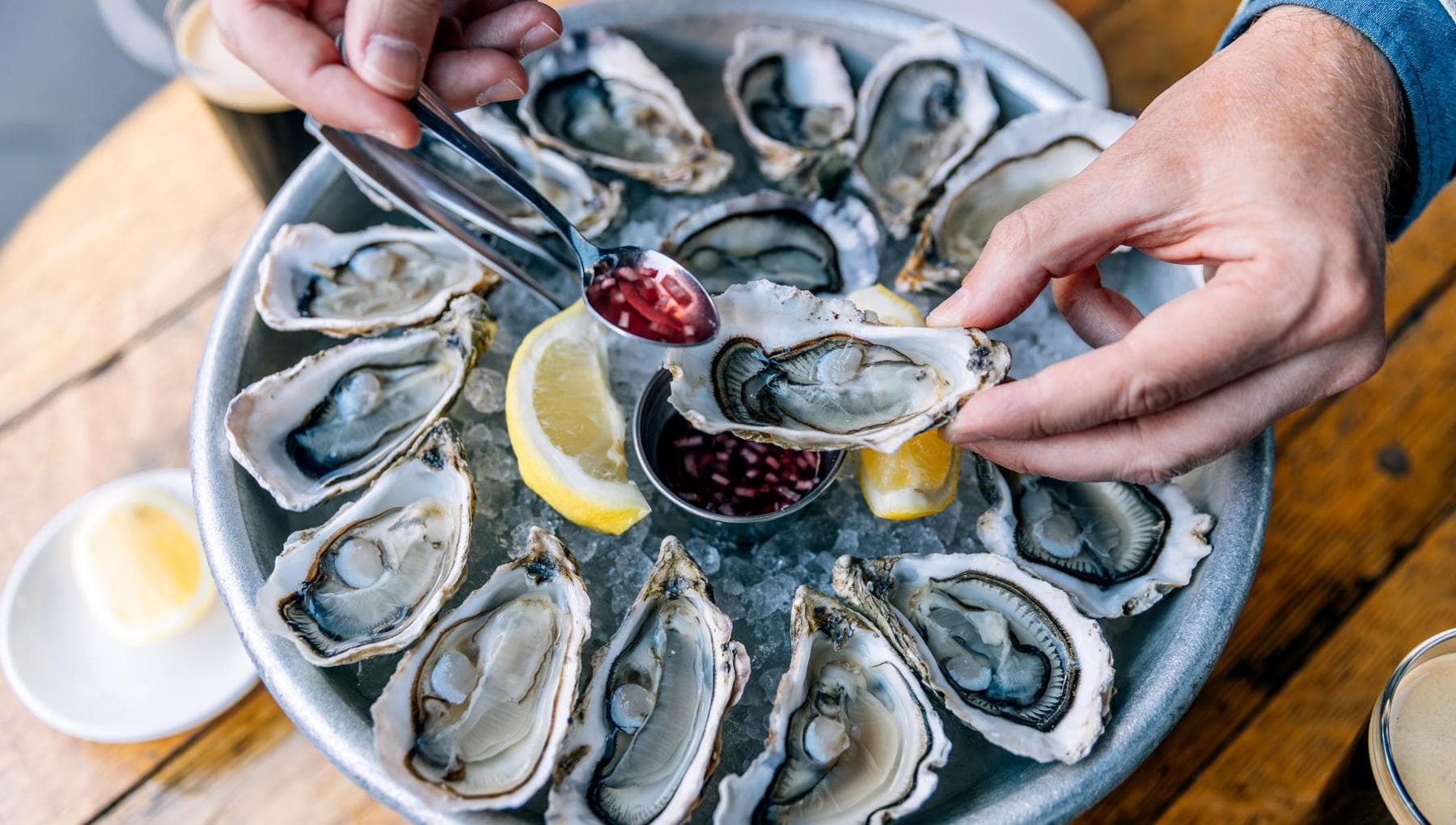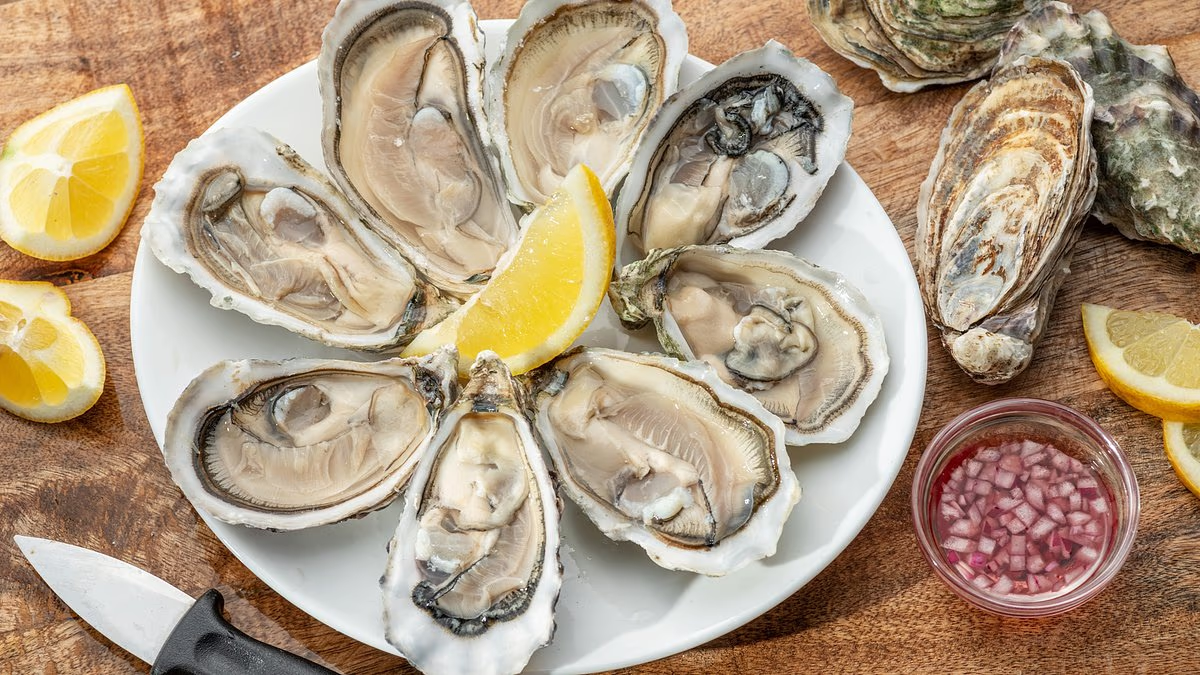
Oysters are having a moment. No longer reserved for posh dinner parties and champagne bars, the supposed aphrodisiacs have become a staple at trendy Gen Z gatherings.Restaurateurs and suppliers have reported a peak in sales, mostly driven by the under 30s they say. At the end of last year, leading merchant Wright Brothers spoke of the swathes of youngsters who attended their London pop-up stall. 'I was quite surprised by something that is perceived as a little bit kind of West End champagne Charlie being embraced so much by a younger culture,' co-founder Robin Hancock told The Times.Elsewhere, seafood firms have introduced £1 oyster happy hours to satisfy the younger clientele. Now, in what will no doubt come as welcome news to health-obsessed Gen Z, nutrition experts have hailed oysters as the latest superfood to stock up on – and not just for their effects on your sex drive.Scientists from Harvard University recently dedicated a paper to the benefits of eating oysters, hailing them as 'some of the most nutrient-rich animals on the planet'.Writing in the prestigious journal Nature, the experts from the Harvard Chan School of Public Health said oysters are, 'low in fat, high in protein and, unlike much other seafood, generally free of environmental contaminants like mercury. That’s because they’re near the bottom of the food chain and, as a rule, don’t live long'.But with some diet experts warning of serious hazards associated with the food – including potentially deadly digestive illness – do the benefits outweigh the risks? It is also possible to eat oysters cooked which experts say could reduce some risks - but not allWhat's so special about oysters?While oysters are best known for their supposed libido-boosting powers, their real nutritional appeal goes far beyond the bedroom. In fact, there's little decent evidence from human studies to support the claim that they can increase sexual desire (more on this below). Most importantly for slimmers, they're very low in calories – one oyster contains around ten to 12 calories – and saturated fat. However, they pack a punch when it comes to energy, supplying around 10g of lean protein in a typical serving of around two or three. That's only a little bit less of the muscle-boosting nutrient that you'll find in one egg. But that's not all. Oysters' main benefit is their punch of the essential micronutrient zinc. Just a couple will provide around eight times the recommended daily intake for women recommended daily intake and six times as much for men.It's the seafood's zinc content that's responsible for its supposed role as an aphrodisiac, as the mineral is vital for the production of testosterone and sperm in men, as well as the sex hormone oestrogen in women.
Why oysters are the 'most nutritious animal' - but there's risks
Long celebrated as nature's answer to Viagra, oysters have more recently been recast as a nutritional 'superfood' - praised for their high levels of zinc, vitamin B12 and omega-3 fatty acids.
997 words~5 min read