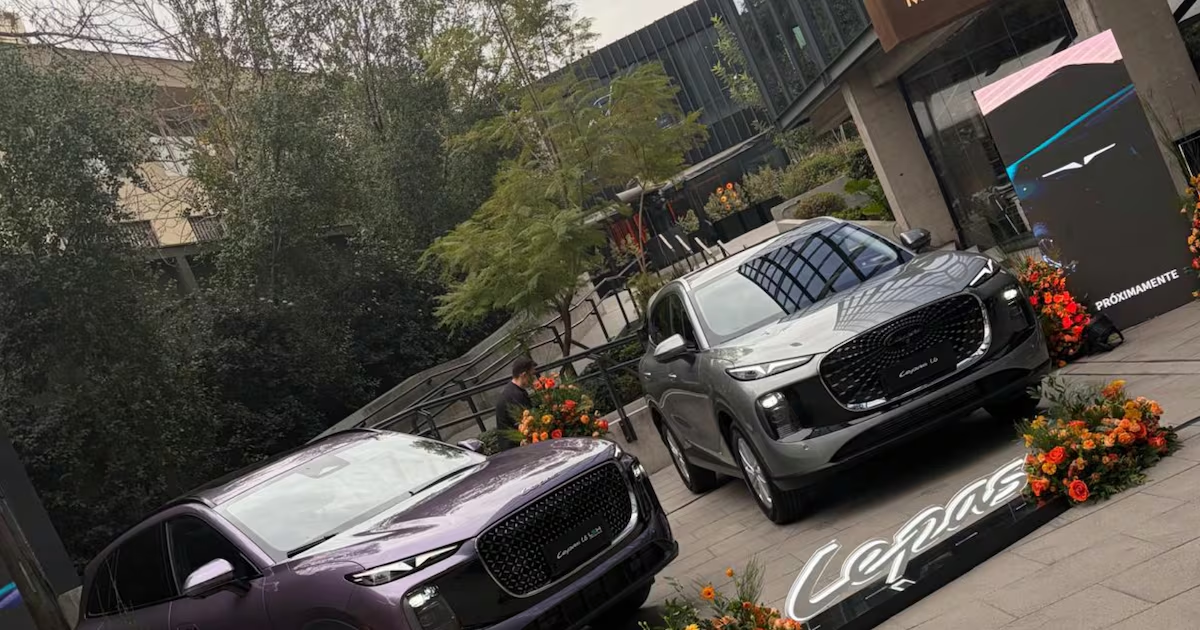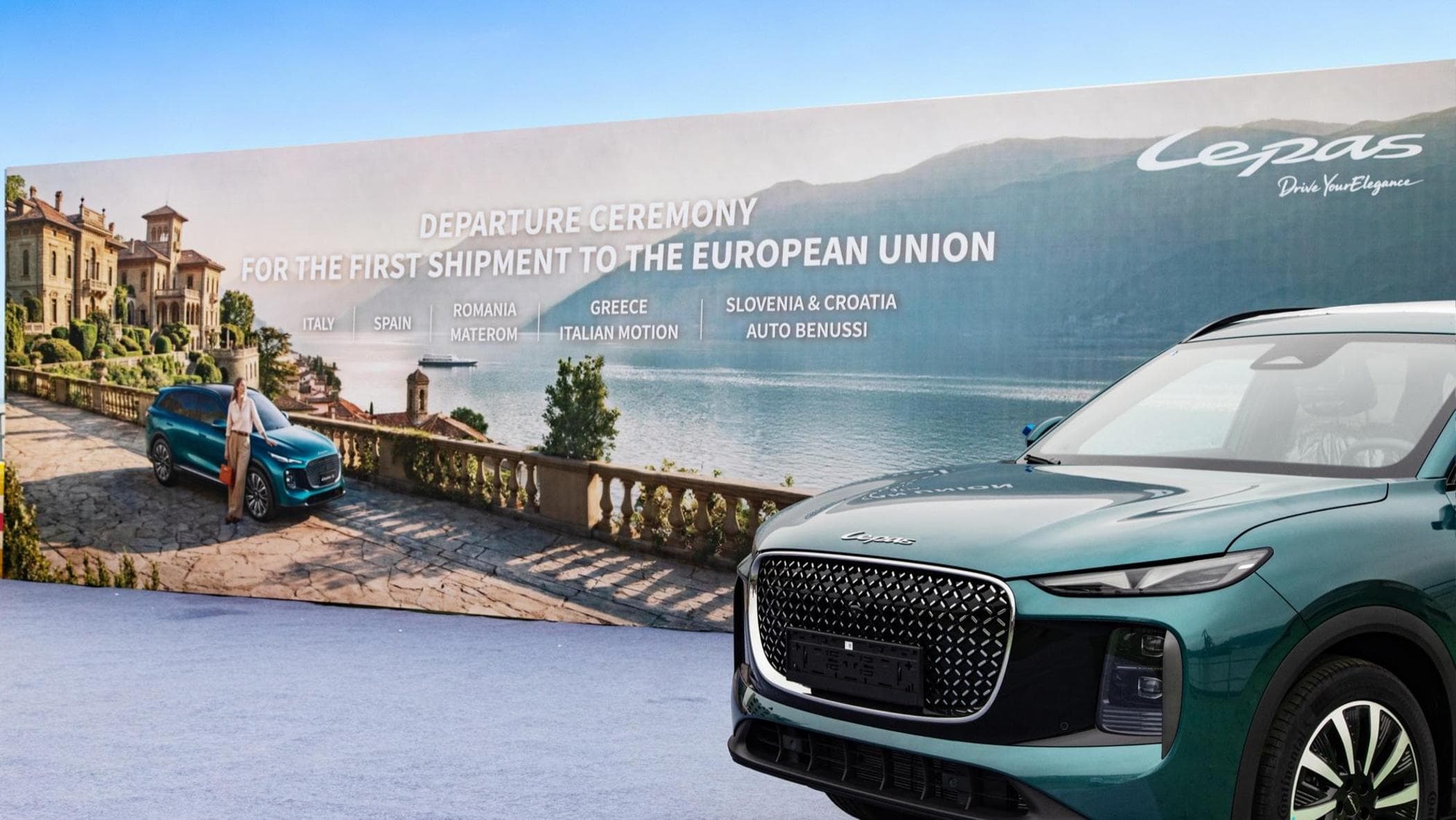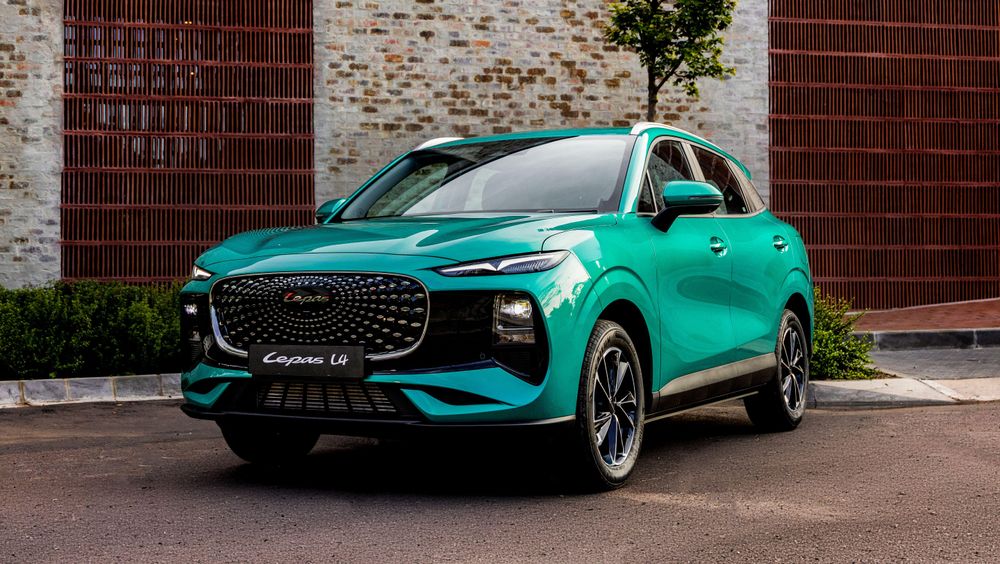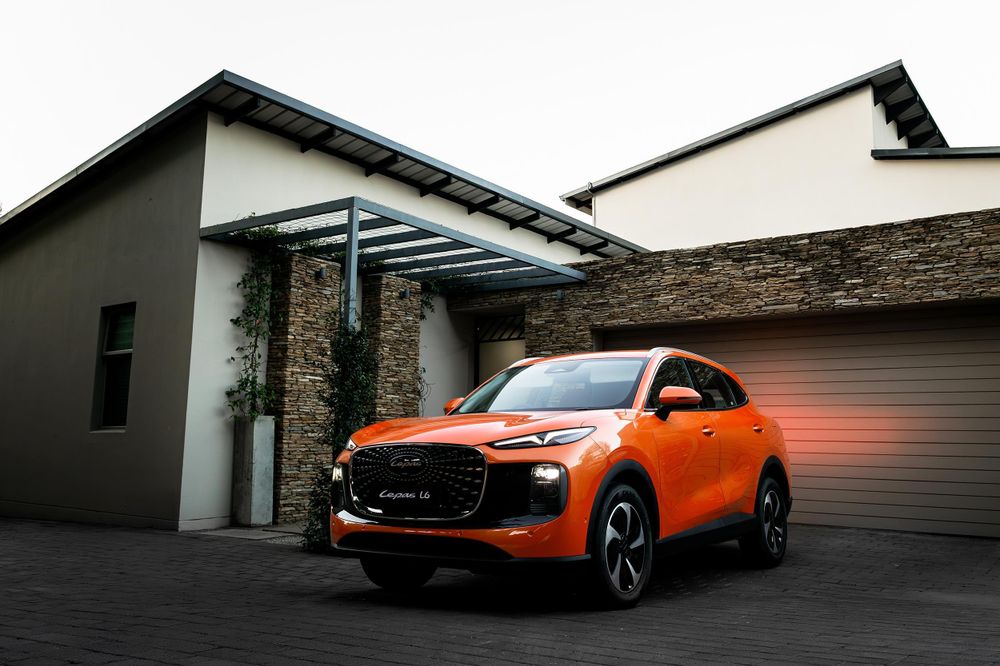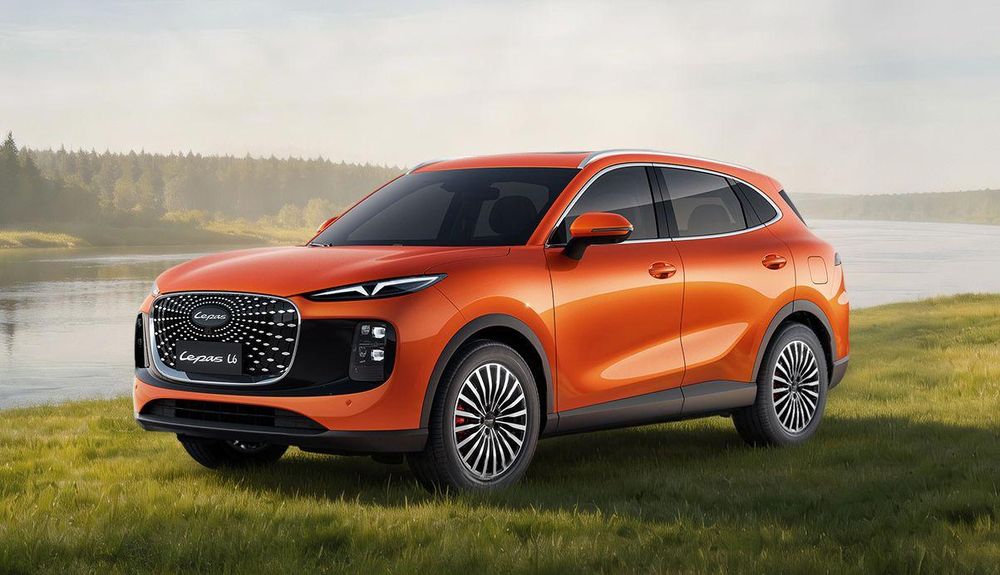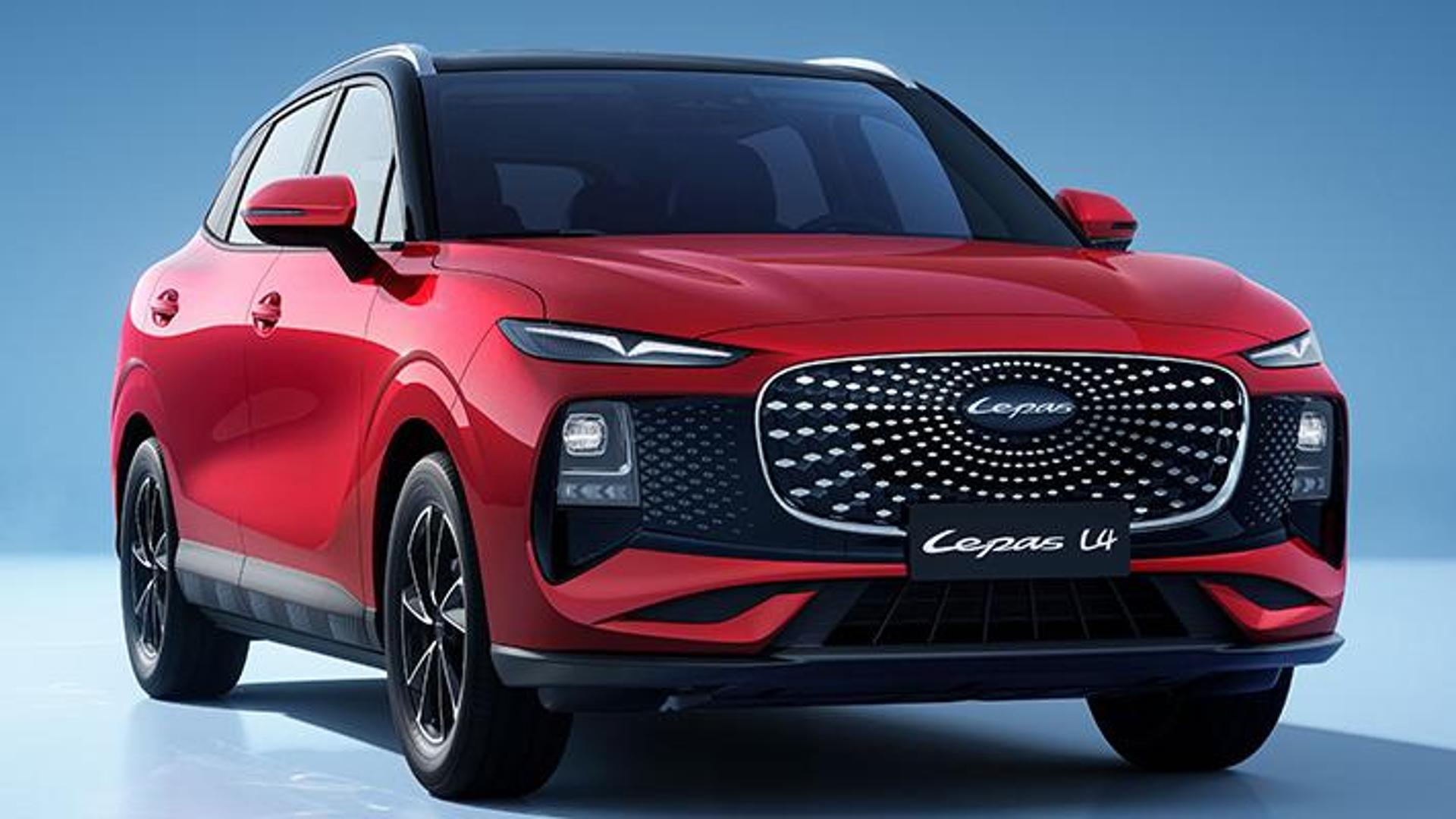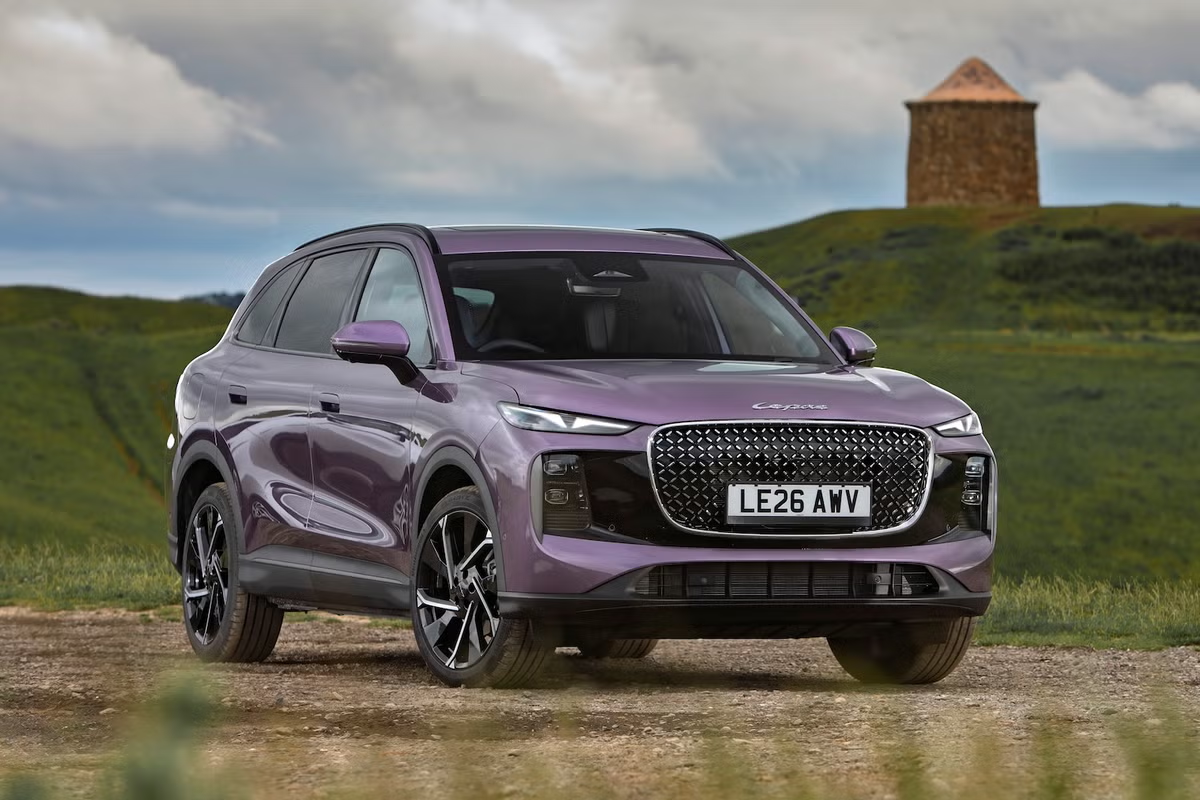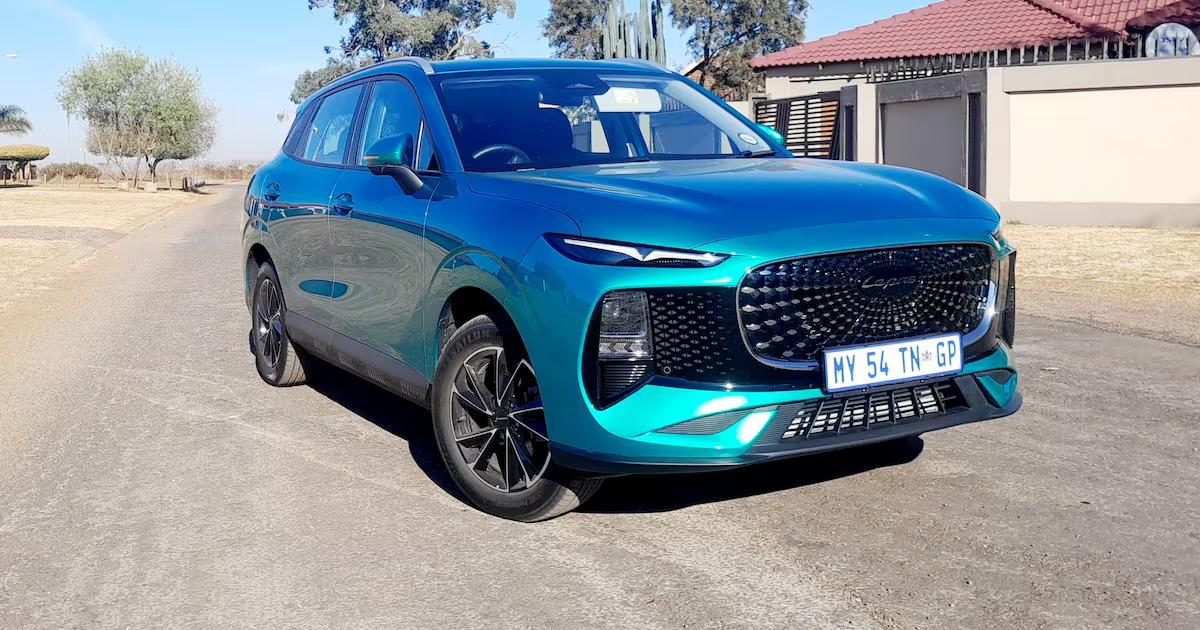
Lepas is one of the new Chery Group subsidiaries. The L4 is the range that was launched here in March to compete against more than 50 alternatives in the sub-R500,000 compact crossover fray. Three trims are on sale and comprise the entry-level Amur, mid-tier Javan and the Pantera range-topper that’s on test here, priced at R419,900. Direct competitors by way of price are the Volkswagen T-Cross 1.0 TSI Auto, Tata Curve 1.2 Creative and Toyota Corolla Cross 1.8Xi, with more alternatives available for more or less the ballpark figure.The 4,406mm length makes the Lepas L4 among the roomiest in its segment, a boon to those who seek space ahead of anything else. But it’s more than just about functionality. The Lepas L4 is a fashion statement that’s available in bright colours, narrow LED headlamps and rear light clusters, and a gaping front grille filled with black meshing and shiny flourishes. It reminds me of a mini Jaguar F-Pace. It’s spacious enough to fit four or five passengers and their luggage inside the 458l boot. The foldable rear seats increase loading capacity. The cabin has a large and colourful central display, digital driver’s cluster and few buttons, though the Lepas L4 separates itself from its Chery cousins with varied graphics. The execution of the cabin in general isn’t peerless, just sufficiently well-built. The driver’s instrument binnacle is a step back with its plain text and no active graphics. The function stalks, too, have a feebleness in texture and operation.A touch-operated main display screen with menus and many features, a voice-activated AI assistant, leather and cloth upholstery, ventilated power front seats, climate control, sunroof, wireless mobile phone charger, Apple CarPlay and Android Auto connection are part of a generous features list. The usual Chinese car minimalism of a large screen dominating the cabin. (PHUTI MPYANE) The Lepas L4 Pantera and Javan models are powered by 1.5l turbo petrol four-cylinder engines producing 108kW and 225Nm, one of the more powerful alternatives in the class. This is paired with six-speed dual-clutch automatic transmissions driving the front wheels. The more affordable entry-level Amur makes do with a naturally aspirated 1.5 motor with less power and hooked to a five-speed manual instead.The turbo motor doesn’t display foibles such as hesitant or peaky power delivery. It’s largely hushed in operation, too, with linear delivery over the power band, plus it averaged 6.5l/100km, another welcome discovery that betters the claimed 7.0l/100km. Lepas claims a driving range of 739km, and I believe it can achieve that mark. The Lepas L4 has a refined ride quality. The damping is spot-on and absorbs road imperfections well with no rattles emanating. The steering wheel response, too, is well balanced for softness at slow and high speeds and the handling is poised even at high speeds. Safety and driver assistance systems include active cruise control, automatic high-beam assist, lane change assist, blind spot monitor and more. VerdictThe general takeaway is positive. The old-style driver information fonts and stalks are niggles that take little away from the appeal of Lepas L4. There’s no arguing with the styling, practicality, price and especially the drive train refinement and frugality. Family functionality is assured with space for five and a capacious boot. (PHUTI MPYANE) The coherence of the Lepas L4 mechanicals is very near the benchmarks of the Korean and Japanese competition. It appeals as a usable urban fashionista for families.Lepas L4 vs key rivalsMahindra XUV 3XO 1.2T AX7L, 82kW/200Nm — R409,699GWM Ora 5 1.5T Ultra Luxury, 105kW/210Nm — R409,900Volkswagen T-Cross 1.0 TSI Auto, 85kW/200Nm — R418,200Lepas L4 1.5T Pantera, 108kW/225Nm — R419,900Tata Curvv 1.2T Creative, 88kW/170Nm — R419,900Toyota Corolla Cross 1.8 Xi, 103kW/172Nm — R424,900Omoda C5 1.5T 230T Lux, 115kW/230Nm — R425,900Business Day
REVIEW | Lepas L4 delivers style and economy in a competitive class
Refined ride and efficient engine boost the appeal of Chery’s new brand
617 words~3 min read