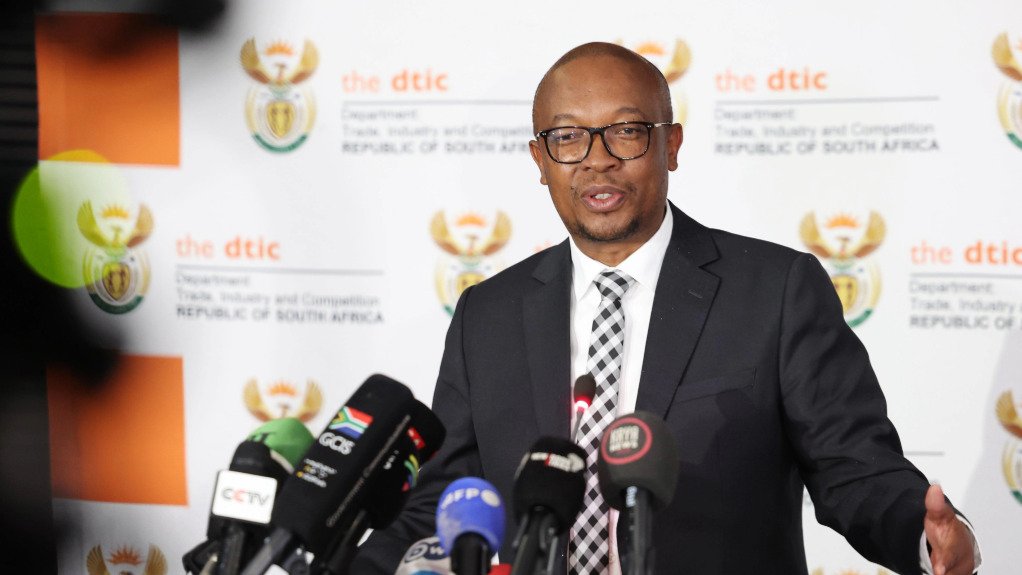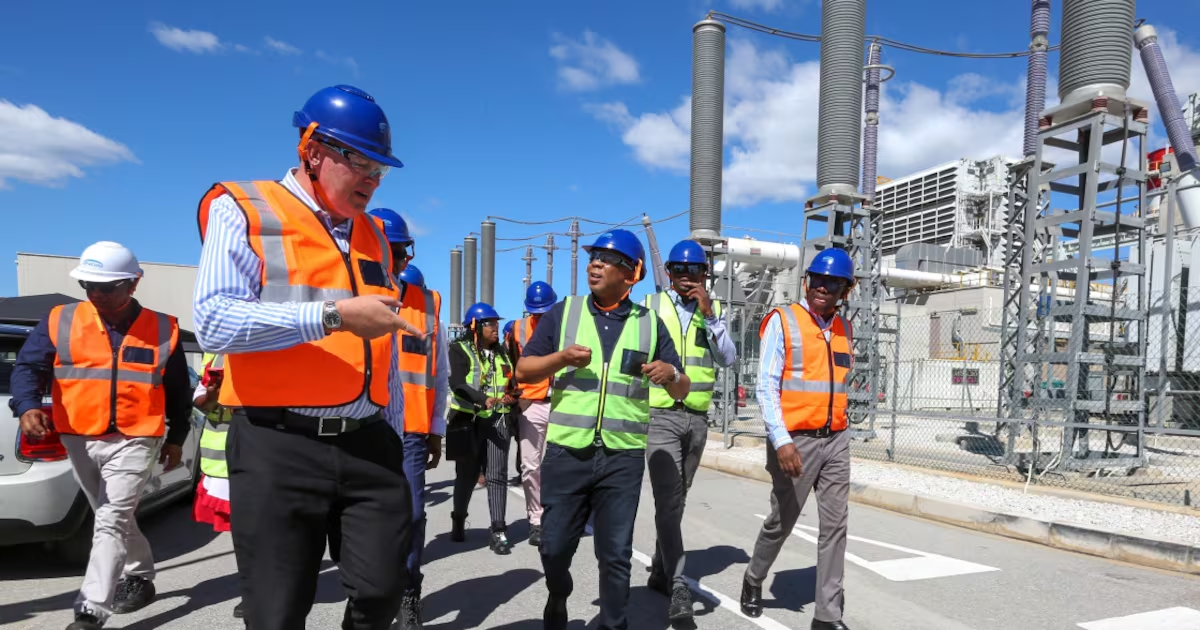
A recent World Bank report recommending that South Africa consider extending its flagship 15% corporate income tax incentive across all special economic zones (SEZs) presents a familiar temptation. It allows the state to celebrate an endorsement while avoiding a far harder, more necessary, reflection on the true state of our national industrial strategy. Trade, industry and competition minister Parks Tau was quick to welcome the findings, praising the report as confirmation of the “impressive progress we have achieved”. He highlighted: 13 designated zones;R31.7bn in attracted private investment; and 28,821 direct jobs. On the surface, backed by a global institution’s conclusion that South Africa possesses the capacity to run a “world-class” programme, the narrative feels complete. However, this verdict deserves rigorous analysis. South Africa’s SEZs are quietly fracturing along six separate institutional faultlines, says the writer. Graphic: (Gibs) No amount of optimistic sentiment can change a stubborn, structural reality: South Africa’s SEZs are quietly fracturing along six separate institutional faultlines. Beneath the promotional material, parliament’s own oversight verdict is far less enthusiastic. The hard truth is that a zone can hold full, legislated SEZ status and still remain entirely unable to secure a rail connection, quayside access, a customs licence or an administrative board without wading through years of intergovernmental gridlock. The systemic paralysis of our economic zones is layered over six distinct structural flaws:1. The strategy of provincial turn-takingThe department has historically allocated SEZs based on the vaguely defined “economic potential of a region”. In practice, this has manifested as a political rotation of opportunity among provinces rather than a hard-nosed national sectoral strategy tied to industrial needs. A damning 2024 policy analysis by the Inclusive Society Institute found that South Africa’s SEZs “have not been integrated into a long-term development plan, industrialisation, or growth plan” grounded in the country’s actual comparative advantage in global trade. Instead of clustering industries where global value chains dictate they would naturally thrive, we build speculative infrastructure based on geographic equity. Asymmetric capabilities might exist across our economy, but they are rarely found inside our designated zones. 2. Split governance authoritiesThe architectural blueprint of the SEZ programme contains a fundamental design flaw: the national government designs and funds the zones, but provincial and municipal structures govern them and contribute land or assets. Under current legislation the department is virtually powerless when operations stall. It cannot independently appoint an administrative board, nor can it force a dysfunctional provincial licensing entity to pick up the pace. Viewed in isolation, each bureaucratic decision is defensible. Stacked together, they describe an economic zone that looks seamless in a PowerPoint presentation but remains six institutional hurdles away from functioningThis legislative lacuna was openly acknowledged by former minister Ebrahim Patel, who admitted to the National Council of Provinces that his department “historically was just the funder, and it had no say over anything else”. We have divorced financial accountability from executive authority. 3. The tapering incentive mirageThe promise of fiscal relief is equally inconsistent. Of South Africa’s 13 designated SEZs, only six qualify for the prized 15% corporate income tax rate, and the National Treasury has attached a strict 2031 sunset clause to these benefits. When the World Bank’s July 2026 report recommended extending this reduced rate to every zone, parliament’s select committee on economic development responded within 48 hours with visible caution. The committee noted that the recommendation “requires careful consideration”, adding that its own oversight found a highly polarised landscape: some zones perform well, while others desperately require “stronger governance, improved implementation and greater accountability”. Investor pitch decks say one thing; the state’s own oversight bodies say another. 4. SEZ status is not customs statusDesignation under the SEZ Act does not automatically confer customs benefits. Securing customs-controlled area status is a separate bureaucratic hurdle managed by the South African Revenue Service (Sars) under an entirely different piece of legislation. Sars licenses each individual enterprise within the zone separately, and these licences must be renewed every 12 months. For example, the Atlantis SEZ historically struggled to qualify for its building tax allowance because doing so required a third, separate sign-off from the finance minister. Three separate state institutions, three entirely disconnected regulatory tracks, and no legal requirement that they move at the same speed. 5. Unanswered questions on labour flexibilityWhile South Africa’s zones offer duty-free imports, standard VAT relief and a discounted corporate tax rate for the lucky few, they offer nothing when it comes to labour dispensation. The US state department’s 2025 investment climate statement explicitly confirmed that there are zero exemptions from national labour laws inside an SEZ. The full weight of the Labour Relations Act applies precisely as it does anywhere else. The solution is not to announce a 14th SEZ or host another glittering investment summit. The fix requires a fundamental paradigm shiftFor the highly labour-intensive, export-orientated manufacturers these zones are built to attract, this total lack of flexibility is a major deterrent, diluting our proposition against agile competitors such as Vietnam or Bangladesh. 6. Dependency on the uncompelledThe most glaring vulnerability of the SEZ model is its total dependence on state-owned monopolies that the zones have zero power to compel. Take the Tshwane Automotive SEZ, constructed to anchor Ford’s huge export operations on the promise of a high-capacity rail corridor bypassing Durban. Ford’s specialised rail siding was built and ready, yet years later it is still required to export the vast majority of its vehicles via road freight. Freeport Saldanha has experienced the same struggle since its inception, fighting to secure valuable access to critical port quayside infrastructure. The department has admitted to parliament that the national logistics network isn’t reliable enough to plan around, forcing officials to personally negotiate, case by case, to secure the basic rail and port access their SEZ status implied they should have had on day one. The pattern and the fixWhen you stack these challenges together, a clear pattern emerges. We have six separate institutions operating on six independent tracks, with none legally obliged to align: the department decides where to build; the provinces decide who runs it; the Treasury dictates the tax rate; Sars controls customs; labour law offers no flexibility; and state-owned enterprises such as Transnet hold a monopoly over the infrastructure that no SEZ can legally enforce. Viewed in isolation, each bureaucratic decision is defensible. Stacked together, they describe an economic zone that looks seamless in a PowerPoint presentation but remains six institutional hurdles away from functioning. The solution is not to announce a 14th SEZ or host another glittering investment summit. The fix requires a fundamental paradigm shift: choosing industrial sectors based on genuine global comparative advantage rather than provincial turn-taking, and finding legal mechanisms to ensure all six regulatory tracks converge under a single, fully accountable authority well before a new zone is designated. Until we unify the machinery of the state, our SEZs will continue to be expensive mirages of unfulfilled promise and industrial disappointment.Flaatten is an independent security, strategic affairs and governance adviser.
NILS FLAATTEN | Ghost in the machine: why SA’s SEZs look great on paper but fail in reality
Political rotation trumps industrial strategy as zones fail to leverage comparative advantage, writes Nils Flaatten
1,162 words~5 min read