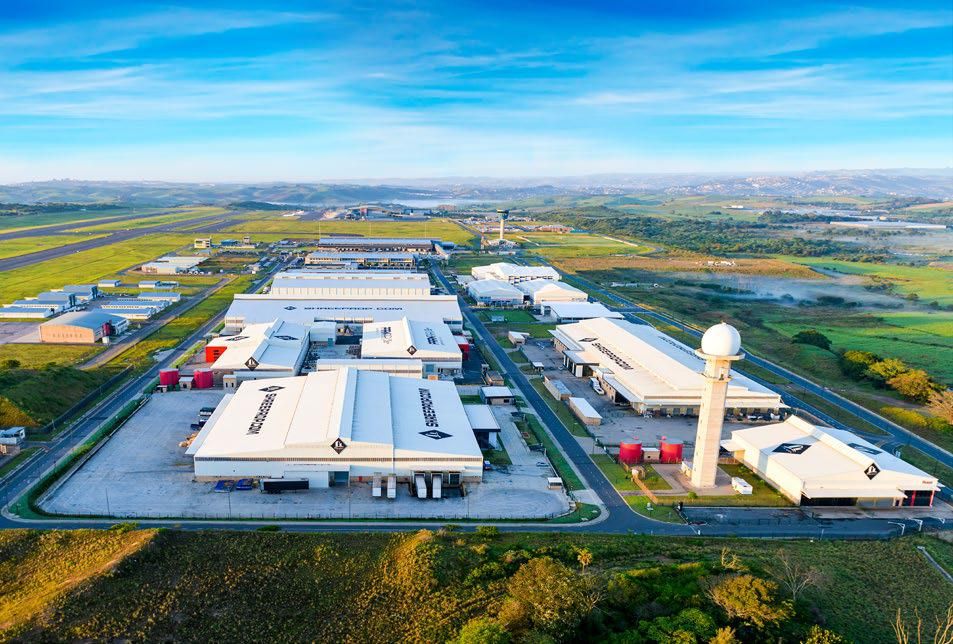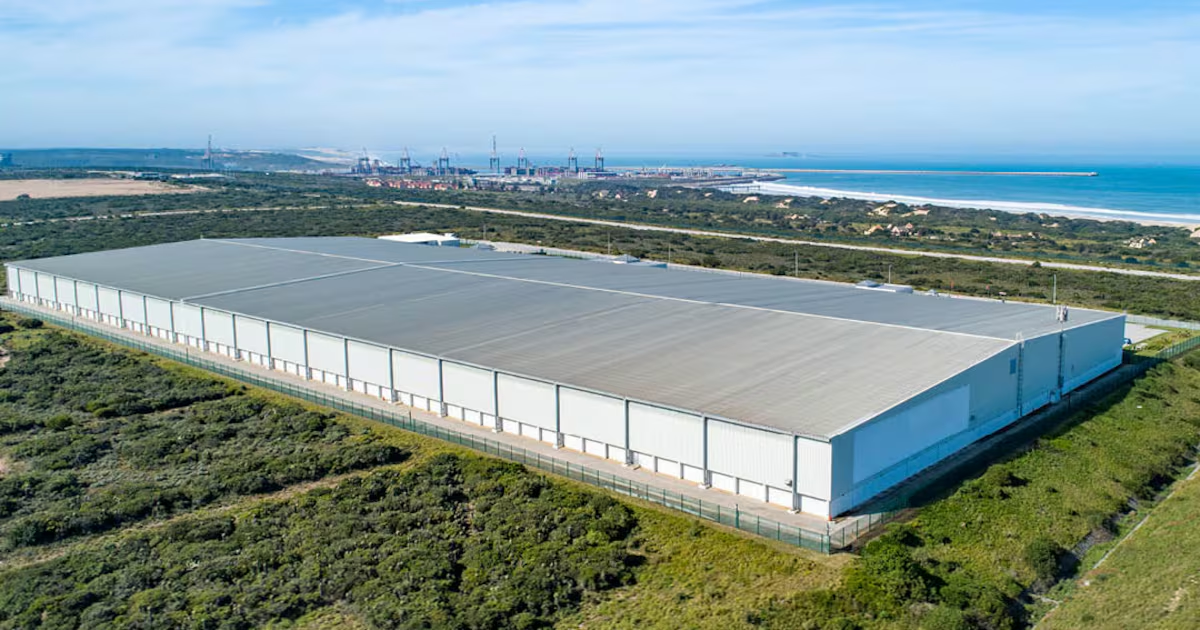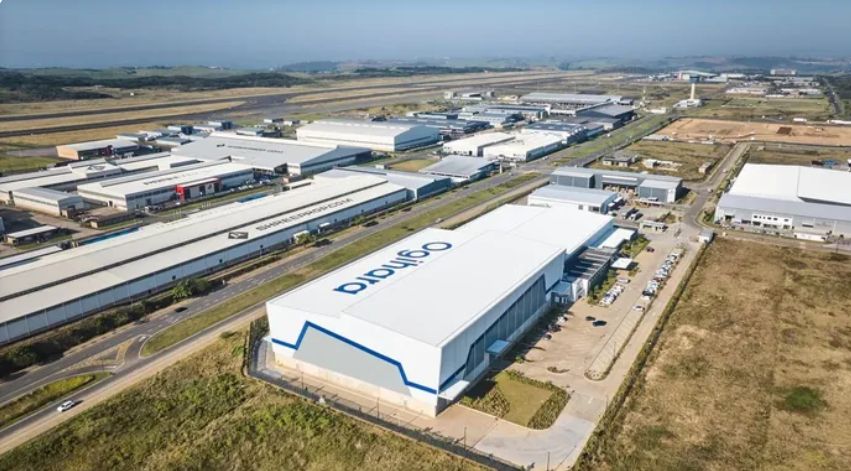
For many years, South Africa was a shining example of industrialisation in Africa. Our country developed industrial capabilities in many productive sectors, such as automotive, steel and defence technologies, with the manufacturing sector contributing more than 24% to GDP between the 1980s and 1990s. However, this has over time declined to a point where manufacturing is now only contributing about 12% in 2026, with the resultant effect being the perennial prevalence of high unemployment, poverty and inequality. This reality has culminated in South Africa losing its top-rank position as the most industrialised economy in Africa to Morocco, based on the African Development Bank’s Africa Industrialisation Index. The key driving force responsible for Morocco’s emergence as the new leading nation in this regard is robust government support and policy certainty, which includes a modern incentive framework. For example, for industrial companies located within designated industrial acceleration zones (which are the special economic zone’s equivalent), full exemption from corporate income tax is applicable for the first five consecutive fiscal years from the start of the operations, with a tax cap of 15% thereafter.Significantly, pro-industrialisation incentives in Morrocco are highly targeted with respect to location, sector type and investment profile. This has led to the country being able to aggressively grow its manufacturing base, particularly in the automotive and aerospace sectors, while simultaneously diversifying its export basket.In contrast, South Africa’s incentive offering has reduced over time, more so with respect to township- and rural-development-focused incentives. Most incentive offerings are generic in nature, which severely disadvantages the development of pro-industrialisation platforms in underdeveloped regions. This is part of the reason the spatial configuration of South Africa remains largely unchanged post 1994.The other systemic challenges attributed to South Africa’s manufacturing decline include the constrained and costly access to energy and logistics, for example, rail and port infrastructure. This is further worsened by the perceived government policy uncertainty, which has, as reported by the Reserve Bank, partly led to the hoarding of an estimated R1.8-trillion cash reserves by South African companies that is starving the broader economy of domestic investment and job creation.South Africa boasts ore reserves worth more than R40.59-trillion, with 16 of these commodities ... ranked in the top 10 globally. Nevertheless, for the country to realise its true potential, it is critical that all spheres of government be rallied around the vision and objectives of initiatives such as the SEZ programme. Moreover, there are some reports that have sounded the alarm on the erosion of the critical sector-specific STEM (science, technology, engineering, and mathematics) skills base, which has partly contributed to the structural unemployment challenges in the country.To alter the country’s economic trajectory, the government has recently unveiled the industrial development strategy, which provides a pathway through which the country’s comparative advantages can be harnessed to deepen domestic industrial capability. To this end, the department of trade, industry and competition (DTIC) has identified critical sectors that lend themselves well to propelling the country towards a high-impact industrialisation path. These have been segmented into three main pathways, namely, decarbonisation, diversification, and digitalisation. Complementing the country’s new industrial strategy are spatial interventions that have been deployed for the purposes of pigeon-holing the prioritised sectors in sync with the characteristics that circumscribe the country’s different regions.Chief among these is the Special Economic Zone (SEZ) programme. There are 13 designated SEZs spanning eight provinces, which are host to more than 224 operational companies with a combined investment value of about R31.7bn. More importantly, an estimated 28,821 active direct jobs have been created in the process.Notably, the government has reviewed its implementation model of the SEZ programme to enable wider socioeconomic impact. To this end, the spatial industrial development (SID) strategy has been developed. Underpinning the SID strategy is a sector advancement approach, which is implemented through a cluster development model.It is further buttressed by key initiatives, including (i) the new infrastructure funding model aimed at leveraging private sector infrastructure finance; (ii) trade corridors and cross-border SEZs, which bring a great opportunity for continental value chain integration, especially in the context of the AfCFTA; and (iii) integration of township/rural-based SMMEs in SEZs.In addition, SEZ-based skills development academies will be established in partnership with the department of higher education (through Setas, the National Skills Fund, TVET colleges, and so on). The revision of the incentive structure has been identified as a critical factor in achieving the set objectives of the SID strategy. As supported by the findings of the World Bank on its review of the SEZ programme, which has demonstrated the programme’s net economic contribution — increased exports, GDP, payments of municipal rates, corporate and individual taxes collected, and so on — there is a case for extending and amending the current SEZ incentive regime so that it is competitive globally.This is important for the country’s constrained gross fixed capital formation, which remains at a modest 13.5% of GDP (falling from 22.8% in 2009). The idea is to derisk industrial projects at early stages of development, thus paving the way for meaningful private sector investment/participation. The Nyanza Light Metals Pigment Plant investment project can be used as a case in point in this regard. Substantively, the dtic supported the project’s development of a bankable feasibility study and testing facility, which has assisted with unlocking private sector investment of about R15bn.The above assertion is consistent with international experience from countries, for example, China, Türkiye, Morocco, and Egypt, that have, through SEZs, successfully built strong industrial bases that have enabled the integration of their economies into critical global value chains. These countries have developed comprehensive SEZ-specific incentives, which has made it easier to crowd in private investments.The country boasts ore reserves worth more than R40.59-trillion, with 16 of these commodities — platinum group metals, manganese, chromite, vanadium, titanium, etc — ranked in the top 10 globally. Nevertheless, for the country to realise its true potential, it is critical that all spheres of government be rallied around the vision and objectives of initiatives such as the SEZ programme. With proper support, SEZs have the potential to serve as a platform for transforming the economic landscape of the country and crowding in private investments while ameliorating the livelihoods of South African households, particularly in township/rural areas. • Molefane is acting deputy director-general for investment and spatial industrial development at the department of trade, industry and competition
MAOTO MOLEFANE | How Special Economic Zones can help revive South Africa’s manufacturing sector
South Africa needs globally competitive incentives and stronger Special Economic Zones to rebuild manufacturing and attract investment
1,054 words~5 min read