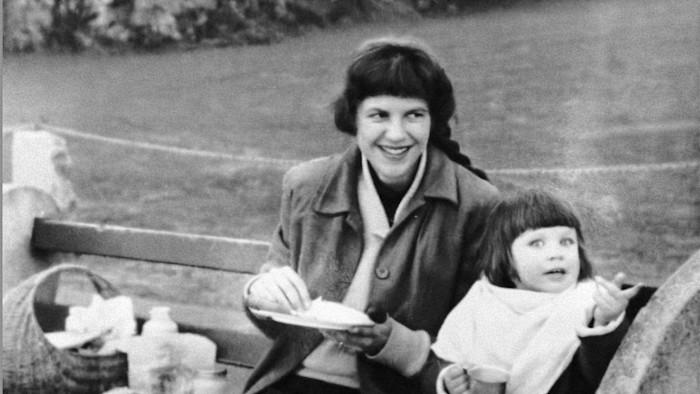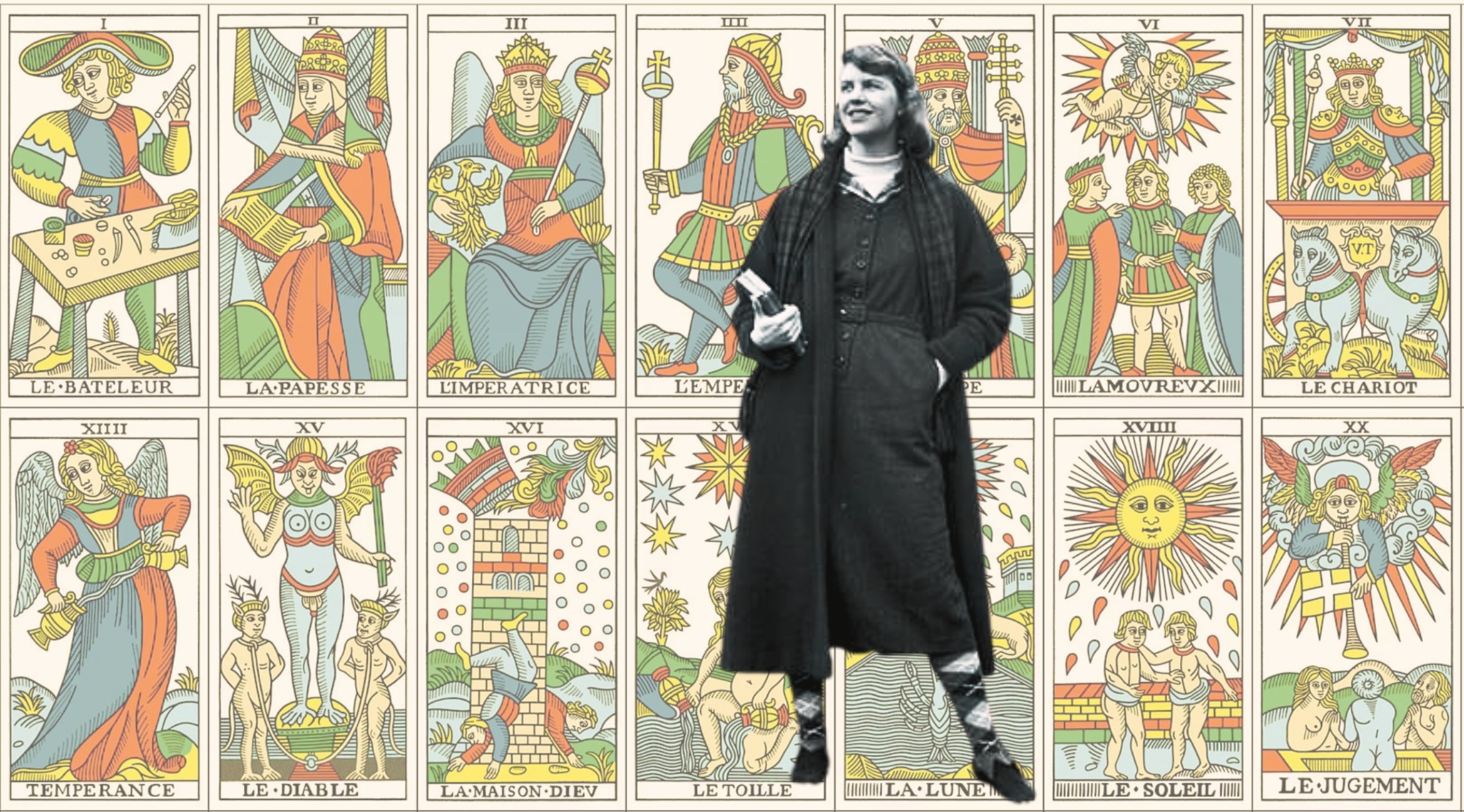
According to Smithsonian Magazine, Sylvia Plath used the Tarot de Marseille deck, which her husband, Ted Hughes, gifted her on her 24th birthday in 1956. It is believed that she also used the Rider-Waite deck. The original Tarot de Marseille cards were auctioned at Sotheby’s and gifted to Courtney Love, who shared a post of her own tarot pulls from Plath’s cards. Upon encountering the notorious social media post, I started forming my humble understanding of Plath’s work, through the eyes of my degree in literature and as a tarot reader.
First, it’s important to know that tarot is a system of imagery in the cards, which is left open to interpretation. Yes, there are specific guidelines in the basic meaning, but the reader’s relationship to the card paints the canvas.
In Plath’s case, she literally draws reference to The Hanged Man in her poem “The Hanging Man,” describing someone suspended in midair, with their world upside down. Many scholars have said that the poem relates to an “unsympathetic” world and to her inability to fit into the status quo as a woman in the 1960s, due to her resistance and ambivalence toward taking on the role of a housewife.
I read these texts as Plath using tarot to explore the divide she feels between tradition and the loss of her heritage through an existential lens.