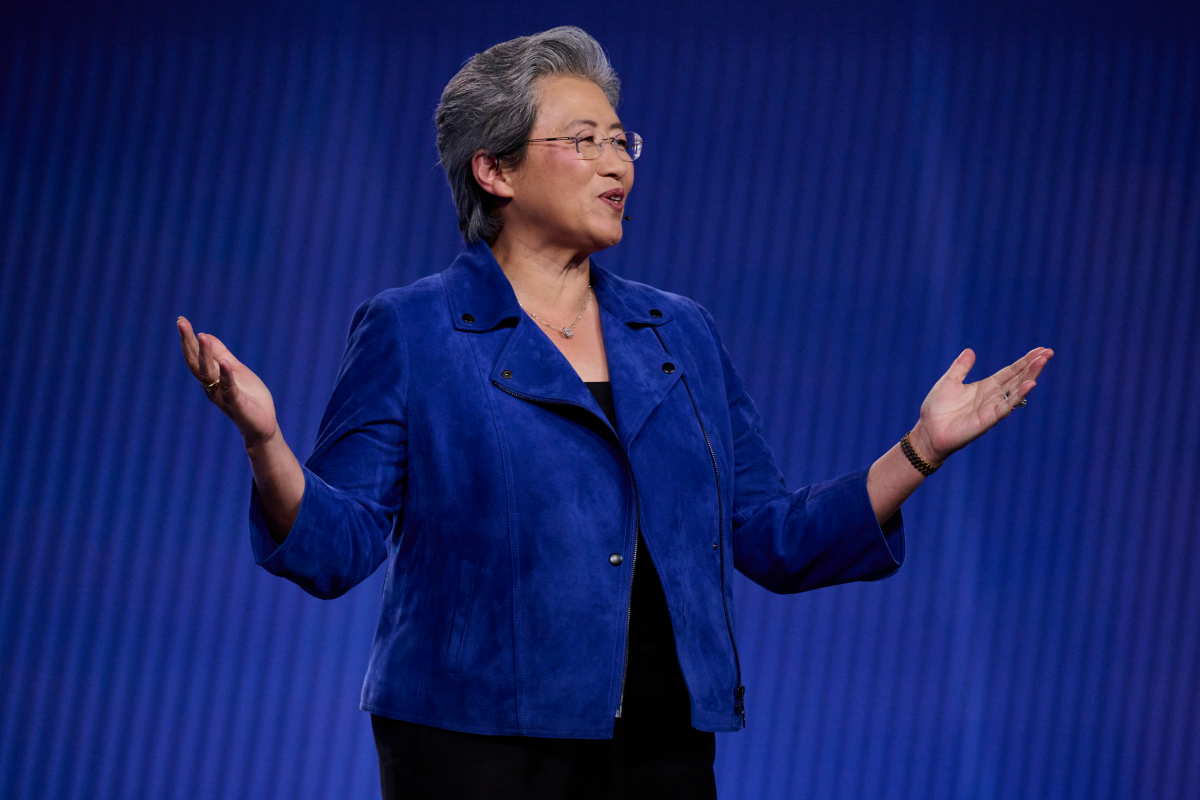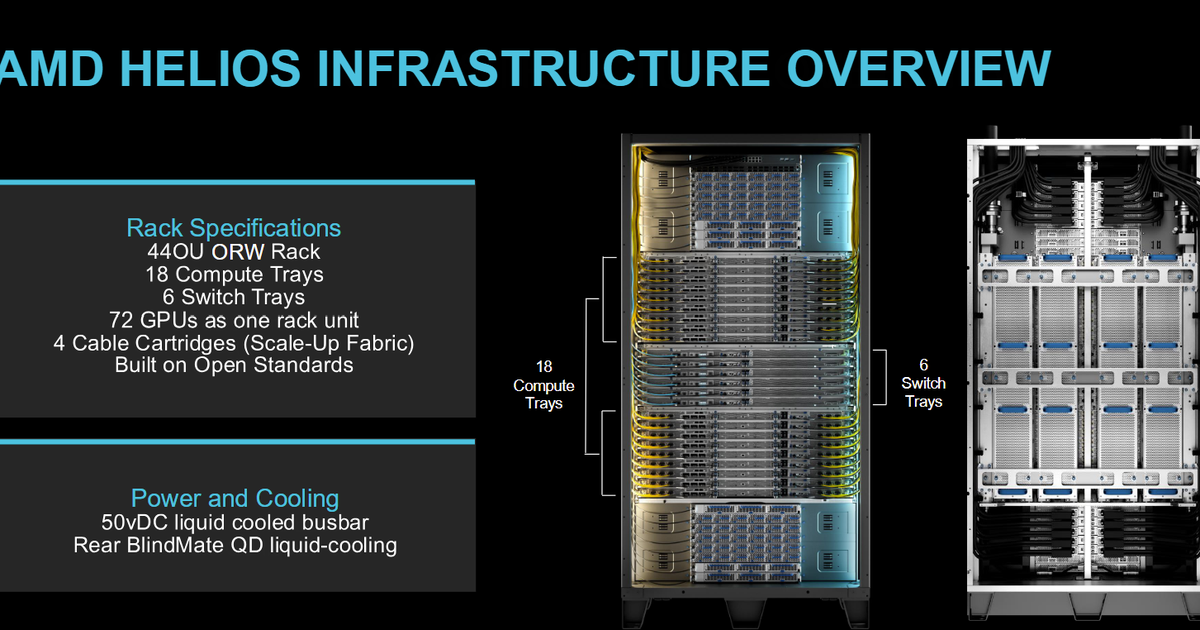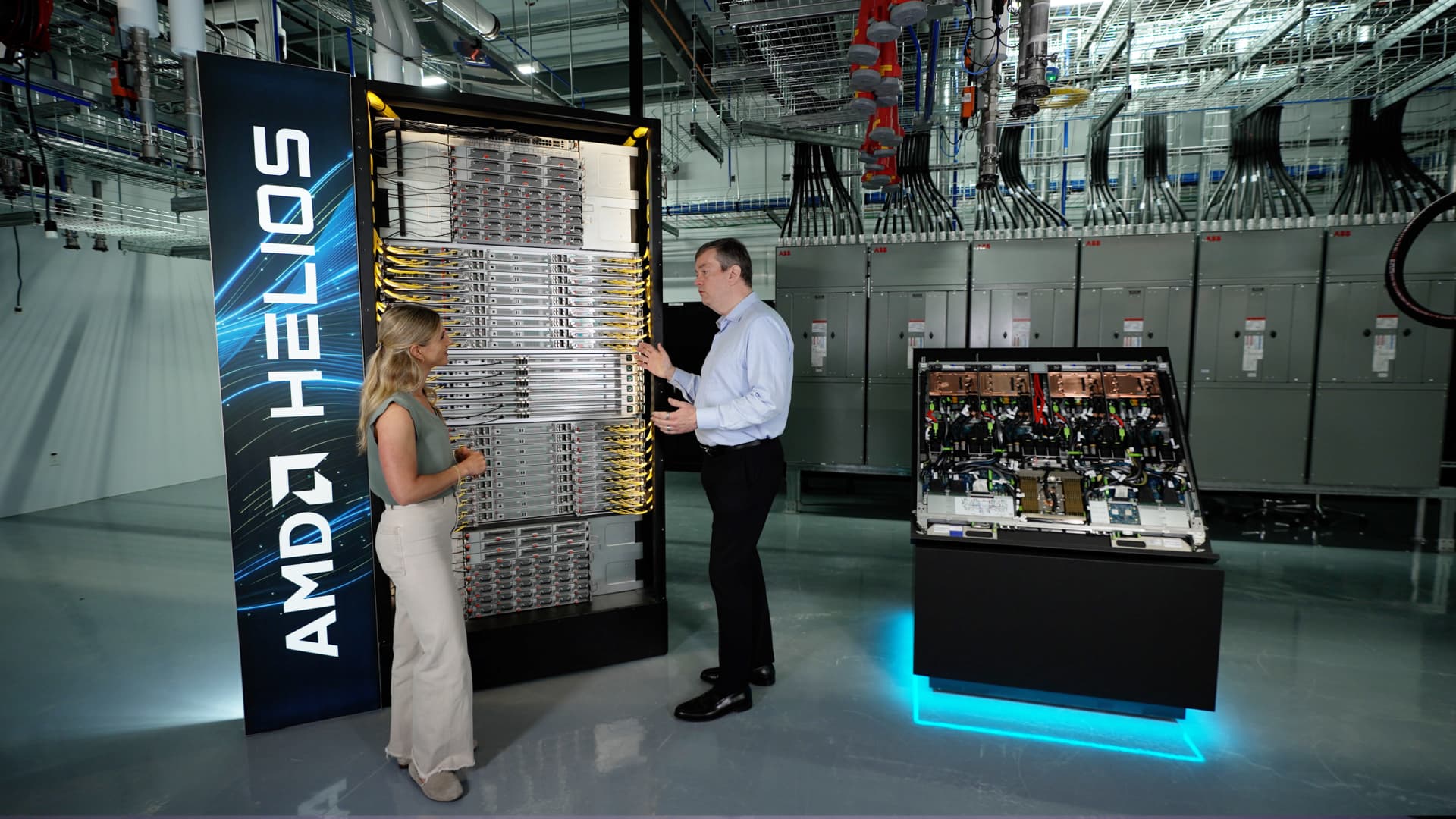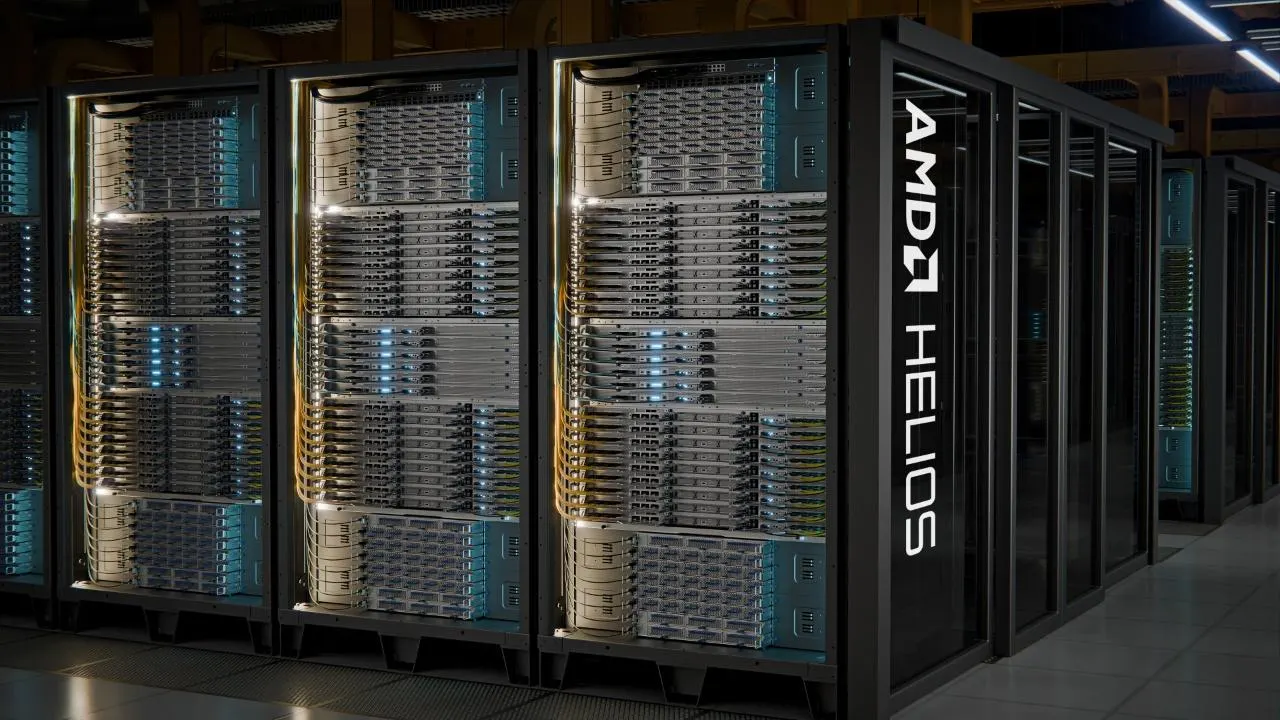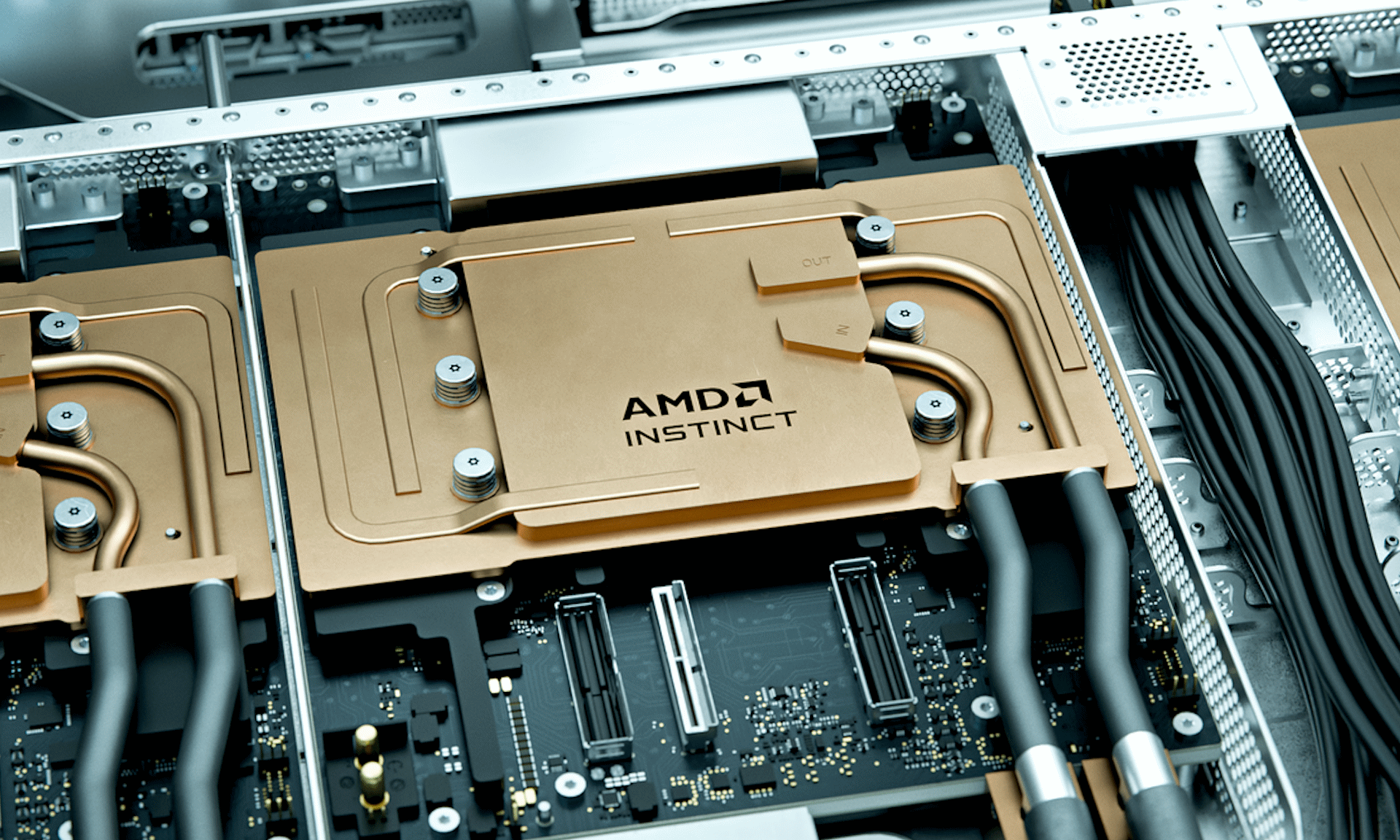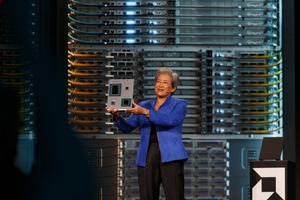
AMD Chair and CEO Lisa Su holds up a board carrying the Instinct MI455X accelerator and other chips used in the company's Helios AI server rack during her keynote at the Advancing AI 2026 conference in San Francisco on Thursday. (AP) AMD has begun production of Helios, the AI server rack it is positioning against Nvidia's data center systems, with Samsung Electronics supplying the high-bandwidth memory inside it.AMD CEO Lisa Su announced the milestone Thursday at the company's Advancing AI conference held in Seoul. According to Su, shipments will begin late in the third quarter and expand in the fourth.Helios is sold as a complete cabinet rather than as individual chips. Each unit contains 72 Instinct MI455X accelerators together with processors, networking equipment and cooling. AMD specifies up to 432 gigabytes of HBM4 per accelerator, or roughly 31 terabytes across the rack. HBM refers to memory stacked in vertical layers next to an AI processor to feed it data quickly.Samsung's mass-produced HBM4 holds 36GB in a 12-layer stack, which works out to about a dozen stacks per accelerator. Nvidia's competing Rubin processor uses eight. The difference means each AMD rack shipped carries more Samsung memory than an Nvidia system of comparable scale.Su said Helios offers 50 percent more memory capacity and 6 percent higher bandwidth than Nvidia's Vera Rubin platform. The figures are AMD's own specifications rather than independent benchmark results. AMD CEO Lisa Su (right) and Jun Young-hyun, head of Samsung Electronics' Device Solutions division, hold up a memorandum of understanding on next-generation AI memory after signing it at Samsung's Pyeongtaek chip complex on March 18. (Samsung Electronics) Samsung was designated primary HBM4 supplier for the MI455X under an agreement signed in March at its Pyeongtaek chip complex, which Su visited for the occasion. Primary supplier status does not indicate exclusivity, and neither company has disclosed Samsung's share of the orders. Samsung began commercial HBM4 shipments in February.Bart Walker, vice president of memory for the AMD account at Samsung Semiconductor US, and senior engineer James An outlined the technical work at a Samsung-hosted session at the AMD event. Samsung did not issue a press release on the presentation.An said the HBM4 doubles the number of input-output connections to 2,000 from 1,000 in the previous generation, and that Samsung produced the logic layer beneath the memory stack on its own 4-nanometer foundry process. Samsung also supplies server memory modules for the sixth-generation EPYC "Venice" processors used in Helios.The AMD business gives Samsung a second major customer at a time when it trails in the HBM market. Counterpoint Research put SK hynix at 58 percent of first-quarter HBM revenue, with Samsung and Micron each at 21 percent.Whether the arrangement translates into meaningful revenue depends on how many Helios racks AMD actually ships. The company has announced large-scale commitments from OpenAI, Oracle and Anthropic, but the deployments run on separate schedules extending into 2027, and Samsung has not disclosed pricing or volume terms.
Samsung supplies HBM4 as AMD’s Helios enters production
AMD has begun production of Helios, the AI server rack it is positioning against Nvidia's data center systems, with Samsung Electronics supplying the high-bandw
TL;DRAI
AMD launches Helios production with 72 MI455X accelerators, 31TB HBM4; Samsung primary supplier, shipments start late Q3 2026. Helios' 50% memory advantage over Nvidia Vera Rubin signals AMD scaling AI alternatives while Samsung expands HBM market position.
492 words~2 min read