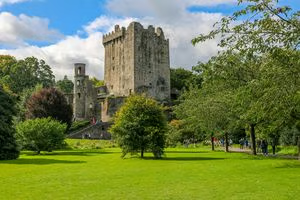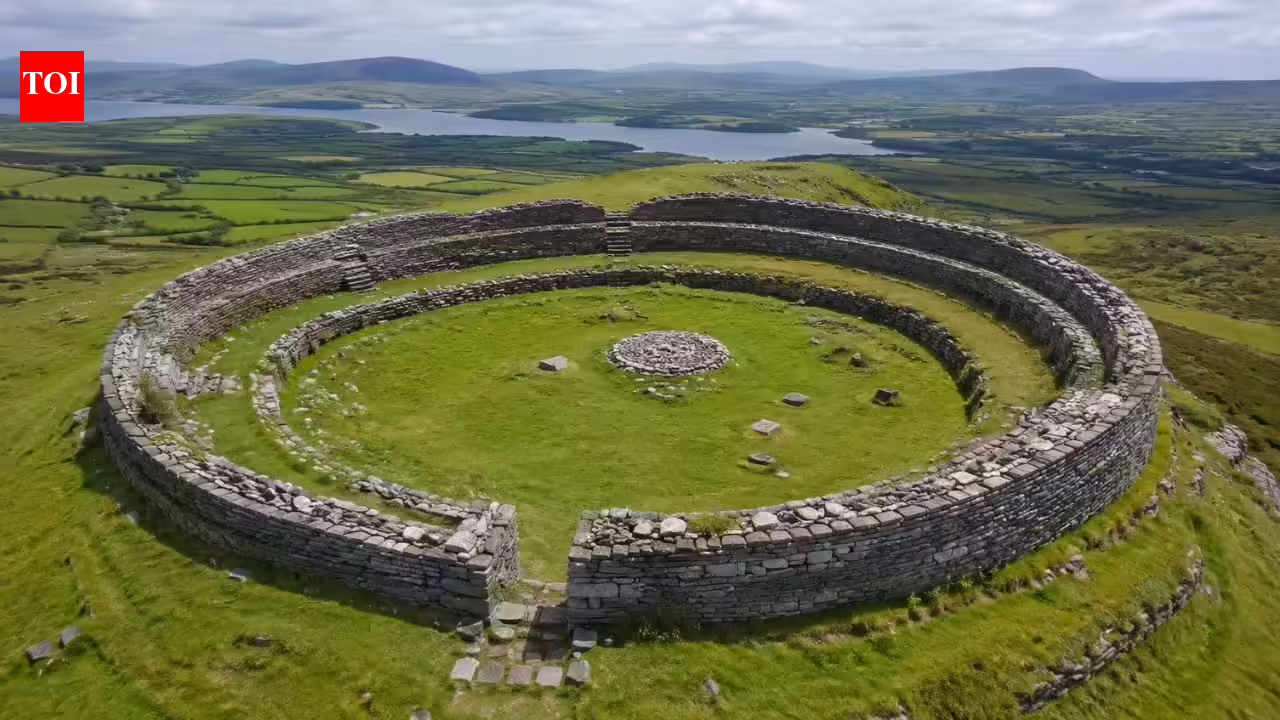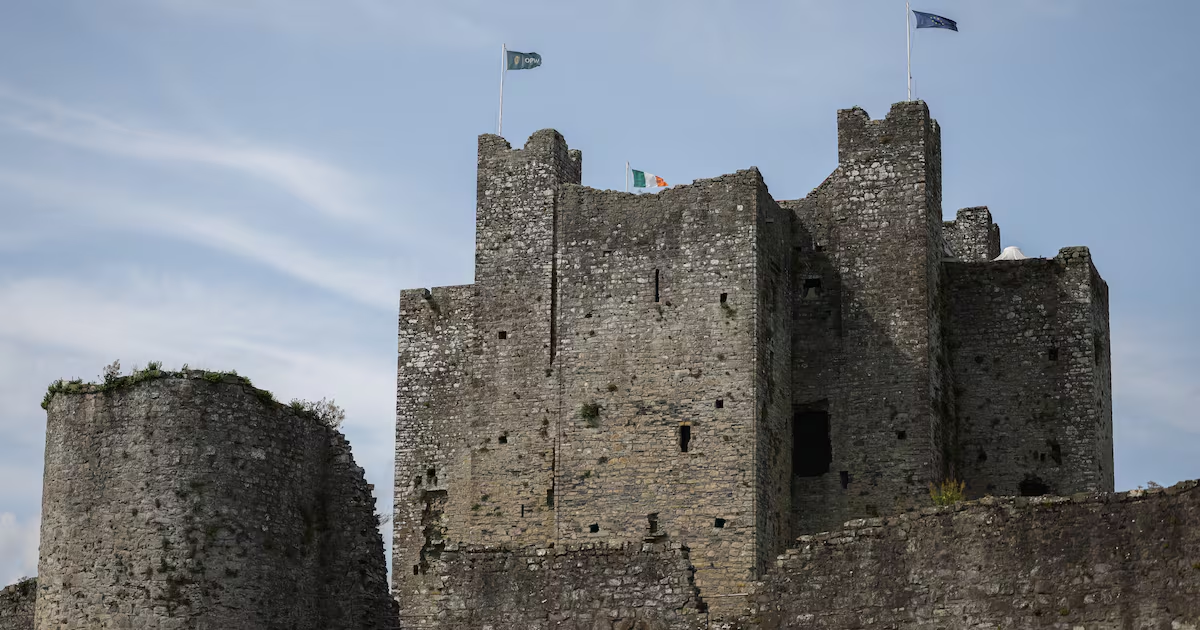
The Medieval Castles of Ireland Author: David Sweetman ISBN-13: 978-1-80151-214-5Publisher: Four Courts PressGuideline Price: €24.95; 210ppThe ruins of stone fortresses, castles and strongholds are distinctive features of the Irish countryside. This journey through the rich tapestry of their architectural styles charts centuries of conquest, settlement and adaptation. The book deals with earth and timber castles, moving through the Anglo-Norman stone fortresses and later medieval ones, to hall-houses and tower houses, fortified and stronghouses. David Sweetman (1938-2023) was head of the Archaeological Survey of Ireland and chief archaeologist in what is now the National Monuments Service (formerly Dúchas and OPW) and took part in ground-breaking excavations. He pays homage to Harold Leask for his pioneering 1941 work on Irish Castles. Two-hundred original drawings and photographs are included, many of which will be instantly recognisable to castelophiles. The colossal fortresses of medieval Ireland – the landscape legacy of the Anglo-Normans built to establish military and administrative control – steal the limelight. As some of the most visited sites in Ireland, they form the largest chapter and include castles at Trim, Kilkenny, Limerick, Ferns and Carrickfergus, as well as the Rock of Dunamase in Co Laois dramatically perched on an outcrop. The least understood buildings are the ubiquitous tower houses dating from the 15th and 16th centuries, which, although they lack the dramatic siting of the bigger fortresses, are given due attention. The author states that one inescapable fact about the origin of tower houses is that a grant of £10 was made available under a statute of Henry VI in 1429 to every man in the Pale who wished to build a castle within 10 years. The grant provided the impetus to erect the typical tower house of the eastern half of Ireland. Co Louth, for example, still has the standing remains of 26 tower houses, while Co Meath boasts almost 50 examples; between the two counties there is little or no difference in their plans and layouts. Another chapter of this comprehensive book discusses hall-houses, simple rectangular-shaped buildings that are a small type of castle. These two-storey houses with their first-floor door entrance high above the ground came to the notice of field archaeologists in the early 1990s. The houses appear to have originated in the early 13th century, providing another example of how exploring secrets of the past continues to yield fascinating insights. Paul Clements is an author and book reviewer
The Medieval Castles of Ireland: Fascinating insights into secrets of the past
A comprehensive guide to buildings that chronicle centuries of conquest, settlement and adaptation
401 words~2 min read