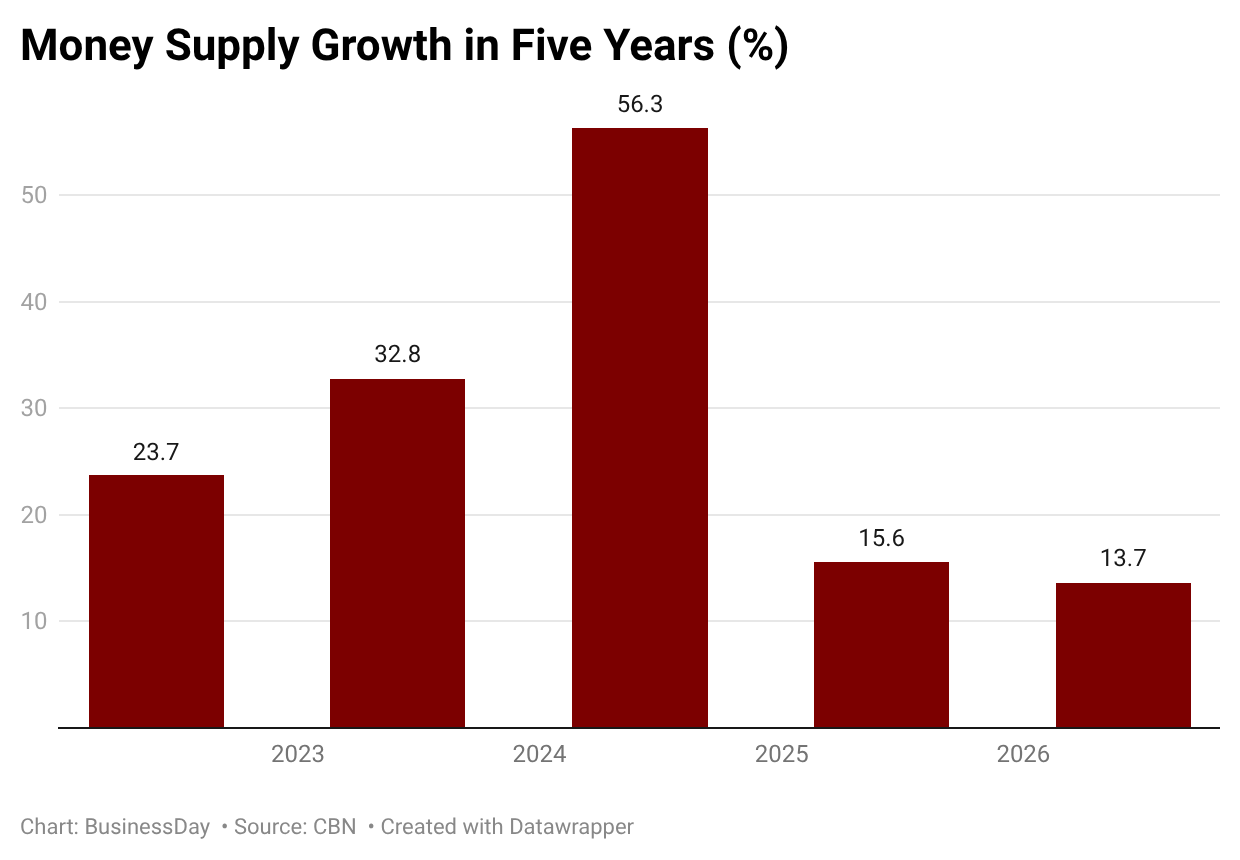
Nigeria’s broad money supply climbed to N133.25tn in June 2026, up from N129.21tn in May, despite the Central Bank of Nigeria maintaining a benchmark Monetary Policy Rate at 26.5 per cent.
This underscores continued growth in liquidity even amid the country’s tight monetary policy stance. By implication, businesses and households had more money to spend and invest in June than in May.
The data, released by the CBN on Wednesday, shows a N4.04tn month-on-month increase, signalling that liquidity in the economy continued to expand, driven mainly by higher domestic assets and growth in quasi-money.
Broad money is a comprehensive measure of the total money supply in an economy. It includes physical cash and highly liquid “narrow money”, alongside less liquid assets such as savings accounts, time deposits, and money market funds that can be quickly converted into cash, according to Investopedia.
Quasi-money, which consists largely of savings and time deposits, increased to N88.54tn from N84.58tn, while demand deposits edged higher to N39.78tn from N39.43tn.