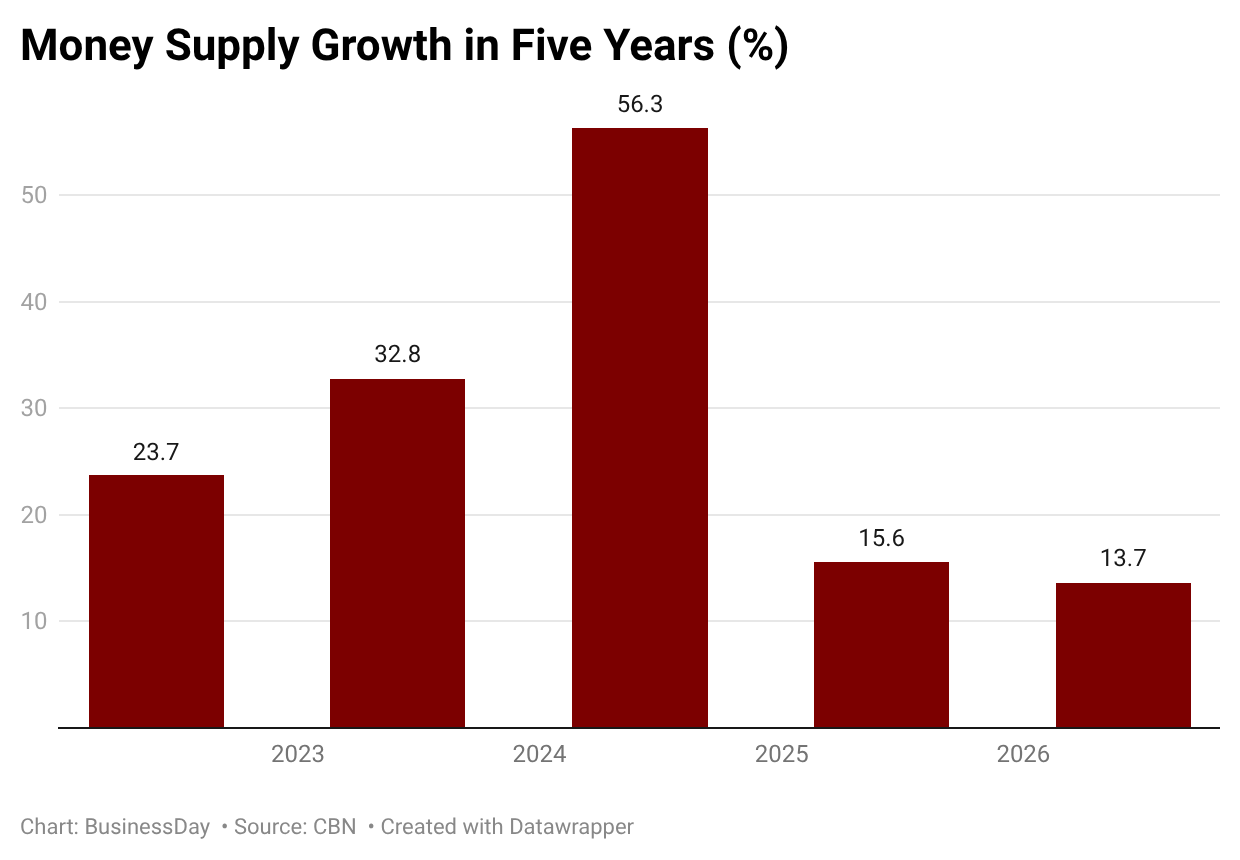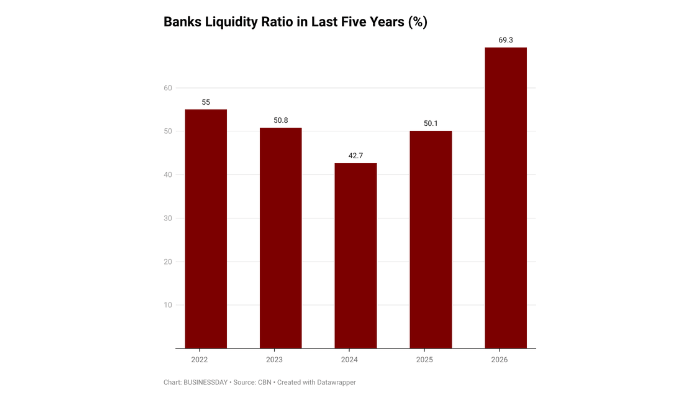
Nigeria’s financial system is becoming increasingly liquid, supported by stronger foreign exchange inflows and an expanding money supply. Yet the additional liquidity is not translating into stronger lending to businesses, raising questions about the effectiveness of monetary policy in stimulating investment and economic activity.
The latest Monetary and Credit Statistics published by the Central Bank of Nigeria (CBN) for May 2026 paint a picture of an economy where liquidity conditions are improving, but businesses remain reluctant to borrow, while banks continue to exercise caution in extending new credit.
Analysis of the CBN data by the Financial Markets Dealers Association (FMDA) shows that broad money supply (M3) increased by 3.38 percent month-on-month to N129.21 trillion in May from N124.99 trillion in April.
Similarly, money supply (M2) rose by 3.38 percent to N129.20 trillion from N124.98 trillion in April, reflecting increased liquidity within the financial system.
Ordinarily, rising money supply signals greater liquidity in the banking sector, creating conditions that could support stronger lending to businesses and households. However, the May figures suggest that while liquidity is improving, credit demand remains weak.