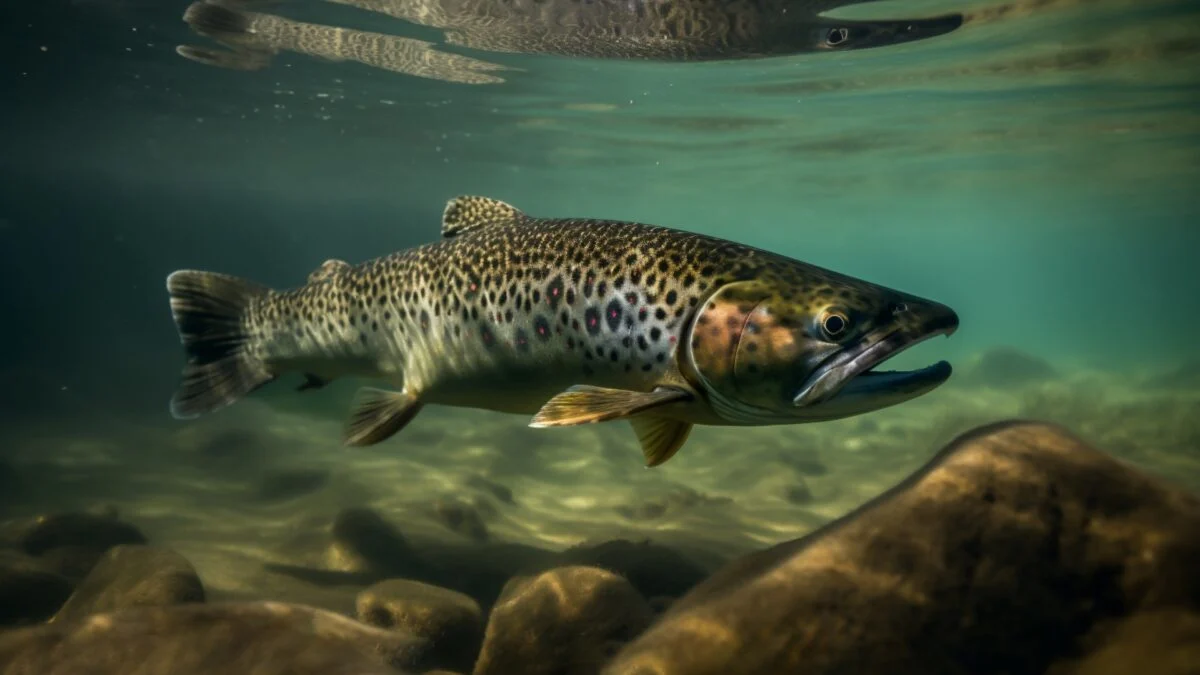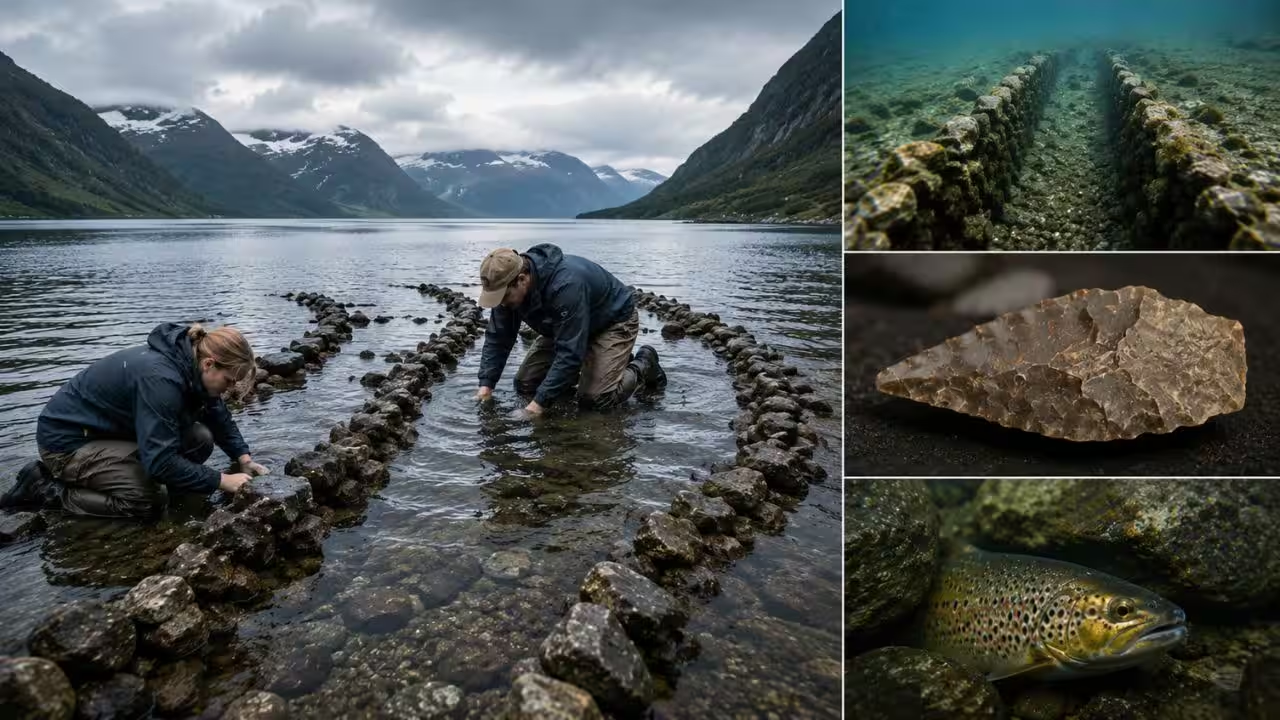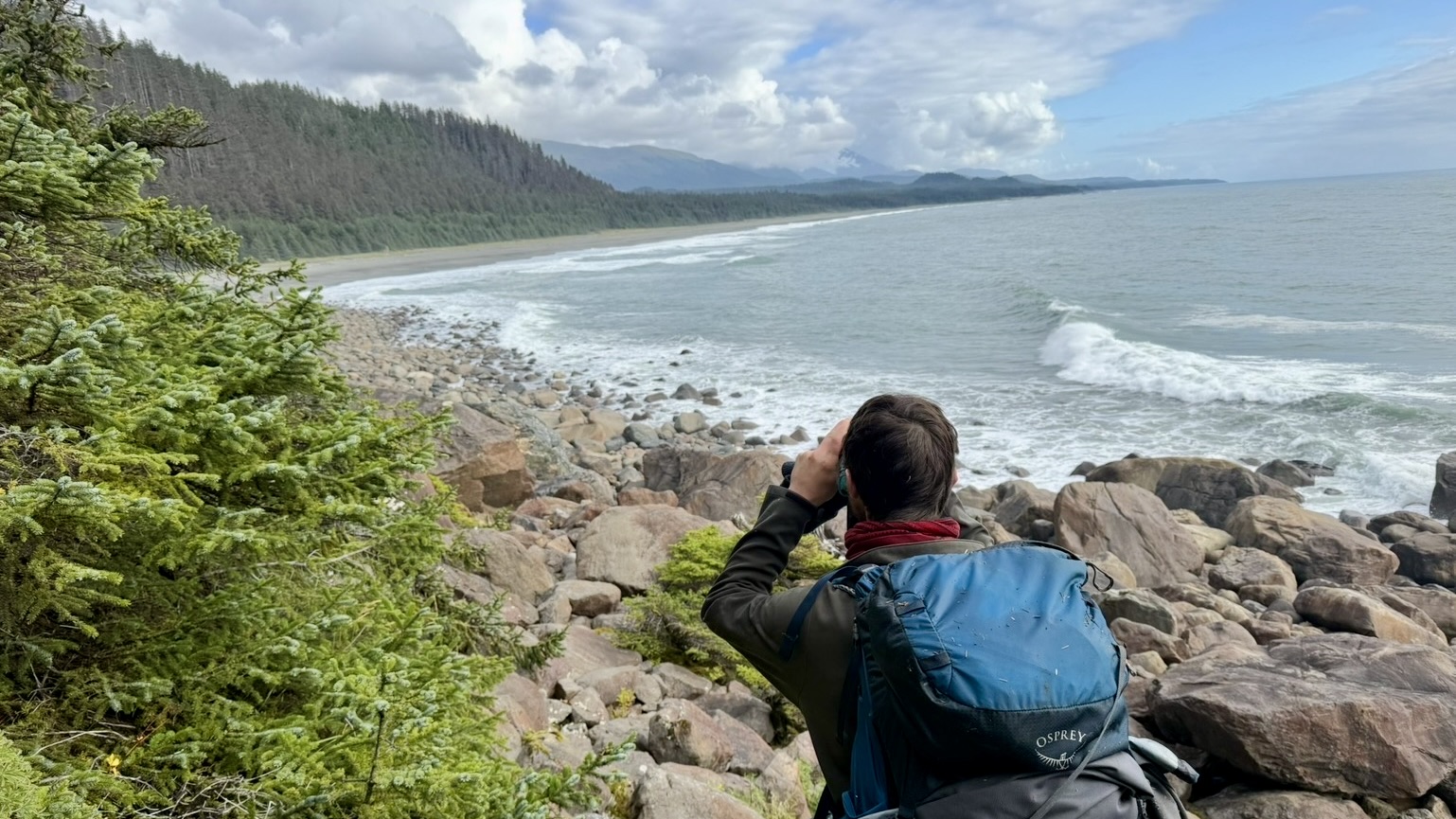
Public radio’s longest-running daily global news program.AboutContactDonateMeet the TeamPrivacyTerms of use©2026 The World from PRXPRX is a 501(c)(3) organization recognized by the IRS: #263347402.The ‘fishing link’: The role of salmon in the human migration to North America How did humans populate what we now call the Western Hemisphere? The old theory held that humans walked across a historic land bridge from Asia to Alaska in search of big game. A more recent hypothesis suggests that ancient humans paddled along the coastline from river to river in pursuit of salmon. One anthropologist calls it the “fishing link.” National Geographic Explorer Paul Salopek has been exploring this as he paddles down Alaska’s coastline into British Columbia, and he joins Marco Werman to explain what he’s learned.The lure of early migrations? Silver salmon in Tlingit fisher Paul Pavlik’s skiff inYakutat, Alaska.When the first humans arrived on the North American continent, how did they get here?One common belief is that after the last Ice Age ended, as melting glaciers made it possible, people walked across the Bering Strait from Asia.In recent decades, a new hypothesis has emerged: The first arrivals paddled around the glaciers, driven further south by the allure of salmon. It’s what one anthropologist calls the “fishing link.”National Geographic Explorer Paul Salopek immersed himself in that history as he paddled down the Alaskan coastline to Canada.“I’m in a sea kayak, which is, as you probably know, a modern design from an ancient design, an Inuit design of a skin-covered boat,” Salopek recently told The World. “So, in a strange way, it’s very close to maybe the way the first marine explorers moved down the west coast of North America way back in the Stone Age.”Salopek, who’s documenting his experiences in a project known as Out of Eden Walk, caught up with Host Marco Werman to share more about his experience catching salmon and how the “fishing link” fits into modern times.The classic old hypothesis of the peopling of the Americas, as you might remember from our high school days, is that people were hunting on land, and they walked over during the land bridge, when there was a land bridge between Siberia and Alaska called Beringia, kind of a cold steppe, cold grassy highlands. And there were big animals, land animals. … Imagine a kind of a cold Serengeti; and that protein source drew people on into this new horizon. Then they got bottlenecked, right? Because there was this big ice sheet for thousands of years until it melted. And then they came down an ice-free corridor. Then that’s when you start seeing archaeological sites in Canada and North America, South America, etc. But recent discoveries, Marco, in far South America, in places like Chile, are 14,500 years old. That’s before that ice plug, that cap, melted. So, it’s confusing. So, this new theory basically posits that they were able to reach in small craft and bypass this big ice obstacle.Yeah, that’s my Paleolithic, Marco. I started working on boats when I was 19, in the Indian Ocean, on shrimp boats in Australia, and then I was last on deck on a scalloper out of New Bedford, Massachusetts, when I was in my early 30s, off and on. So yeah, I did work at sea, deep-water fishing, but you know, I got out of it simply, and this is something that is kind of tragic and poignant, you know, fishing catches around the world, as you well know, are declining a lot — over more than a million metric tons a year for decades now. And the number of fisherpeople — men and women — engaged in oceanic fishing is declining by 20% to 30% over the last 20 years. So, it’s sad to note that if this theory does prove out that the lure of the sea was a factor in pulling us on these ancient migrations, that there are fewer and fewer people who today engage in that activity, which is the last hunting activity left, right? You’re after wild game, wild fish.Absolutely. What’s happening is that as the temperature’s warming, it also warms the water. And so, these big salmon corridors, you know, salmon migrate upstream; they go from the ocean into freshwater to spawn. As the rivers in the south get warmer and warmer, the salmon disappear.And so, again, another kind of poignant asterisk on what I saw in Yakutat with these young fishermen is that these are the kind of last refuges where there’s still relatively healthy salmon runs because the water hasn’t quite gotten that warm. So, a step into the past, if you will.Parts of this interview have been lightly edited for length and clarity.Writer and National Geographic Explorer Paul Salopek has embarked on a 24,000-mile storytelling trek across the world called the “Out of Eden Walk.” The National Geographic Society, committed to illuminating and protecting the wonders of our world, has funded Salopek’s project since 2013. Explore the project here. Follow the journey on X at @PaulSalopek, @outofedenwalk.
The ‘fishing link’: The role of salmon in the human migration to North America - The World from PRX
How did humans populate what we now call the Western Hemisphere? The old theory held that humans walked across a historic land bridge from Asia to Alaska in search of big game. A more recent hypothesis suggests that ancient humans paddled along the coastline from river to river in pursuit of salmon. One anthropologist calls it the "fishing link." National Geographic Explorer Paul Salopek has been exploring this as he paddles down Alaska's coastline into British Columbia, and he joins Marco Werman to explain what he's learned.
834 words~4 min read