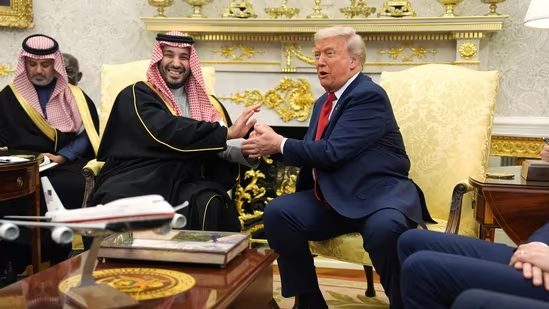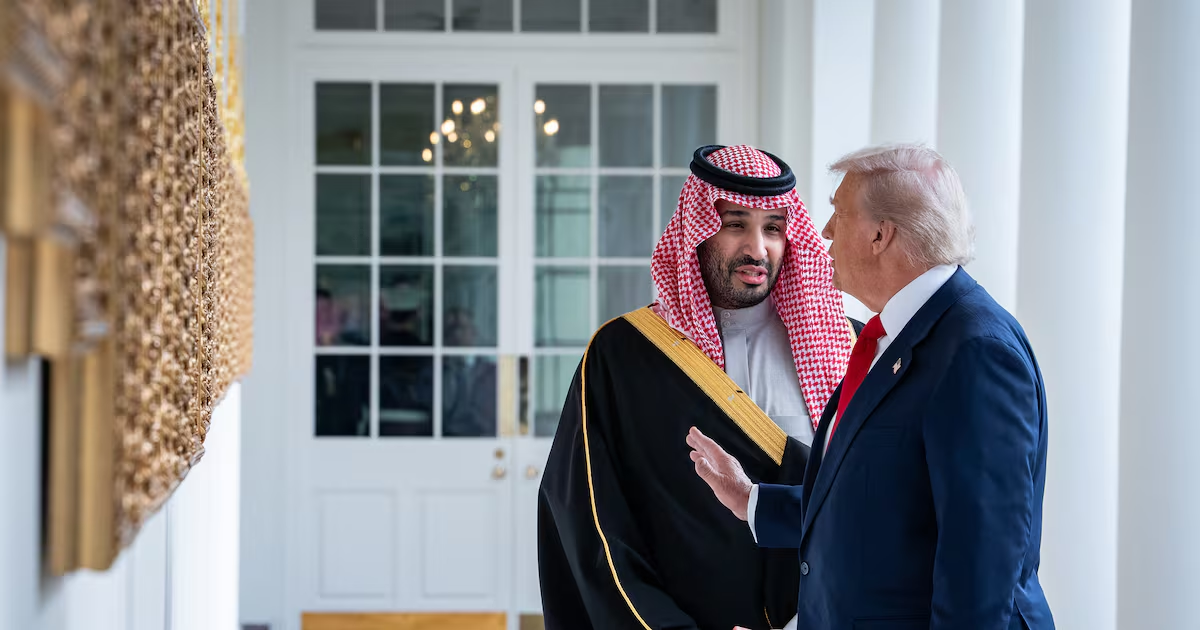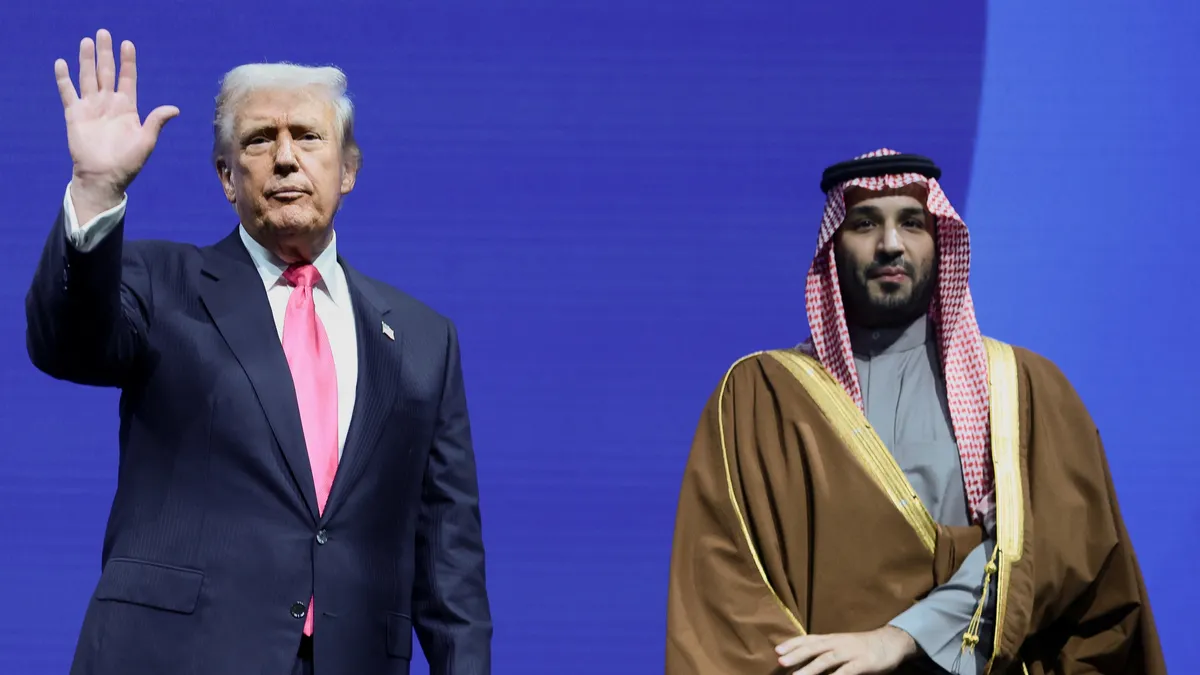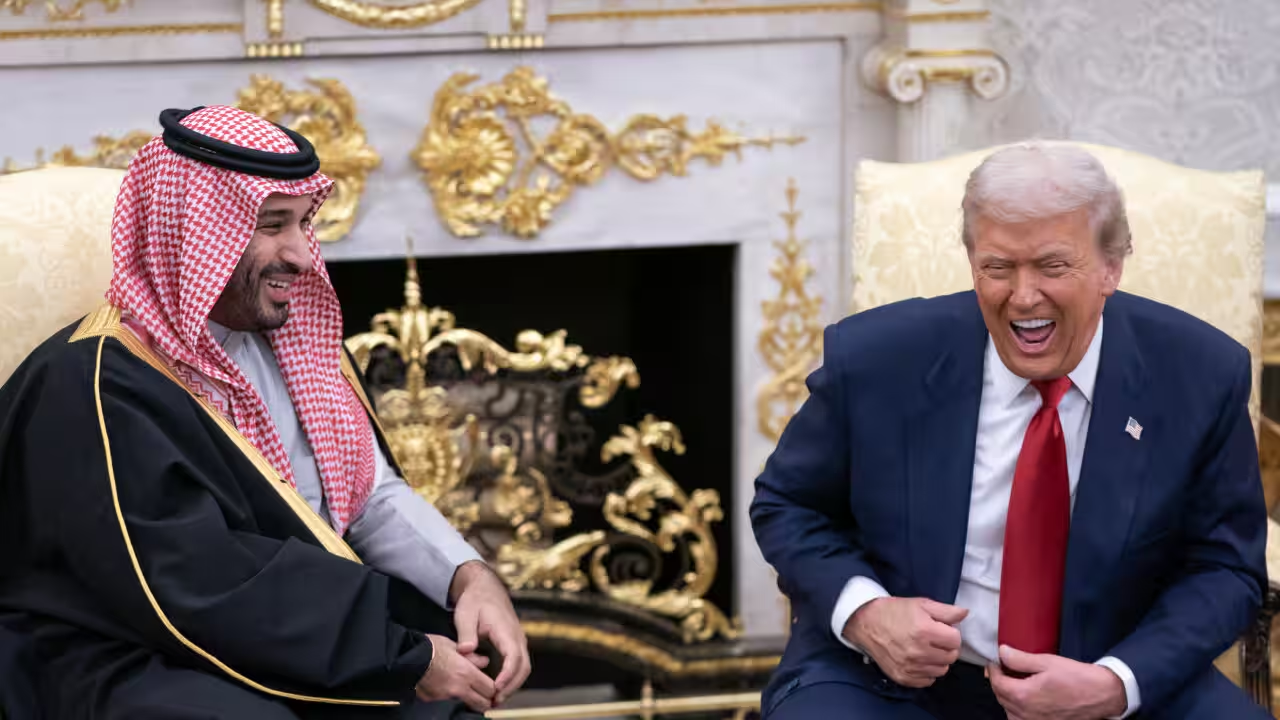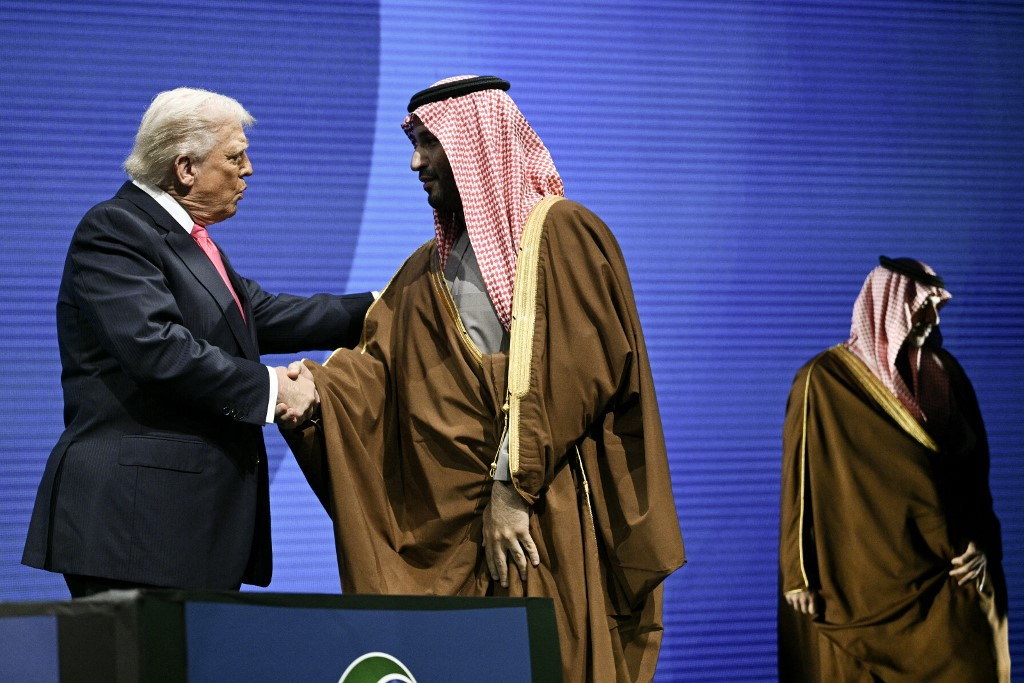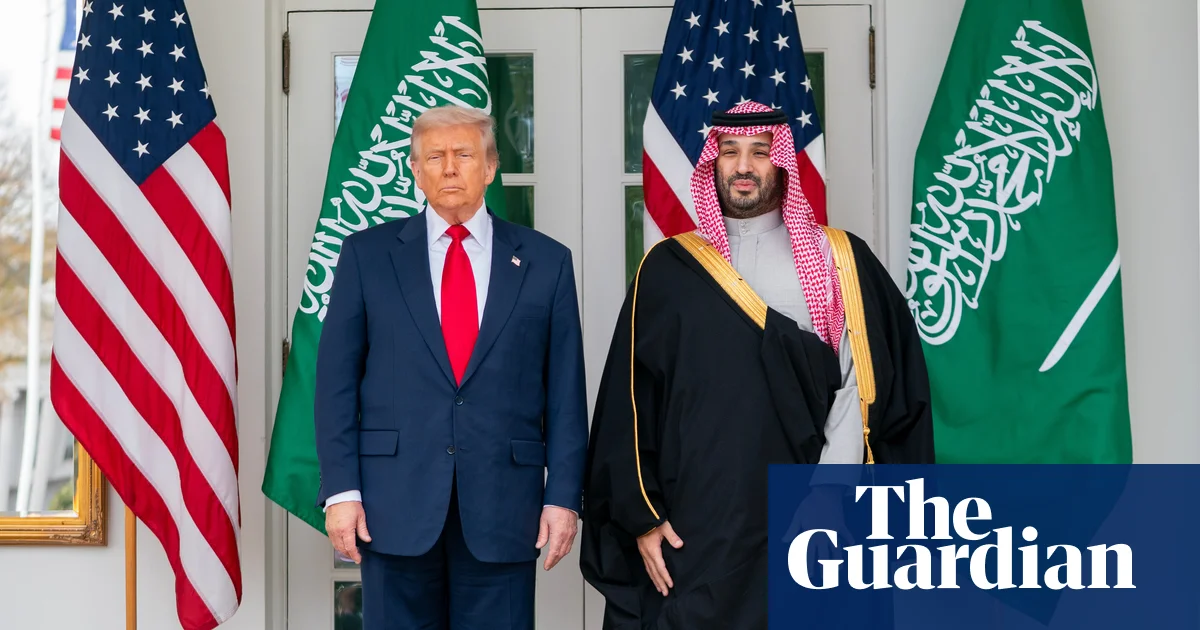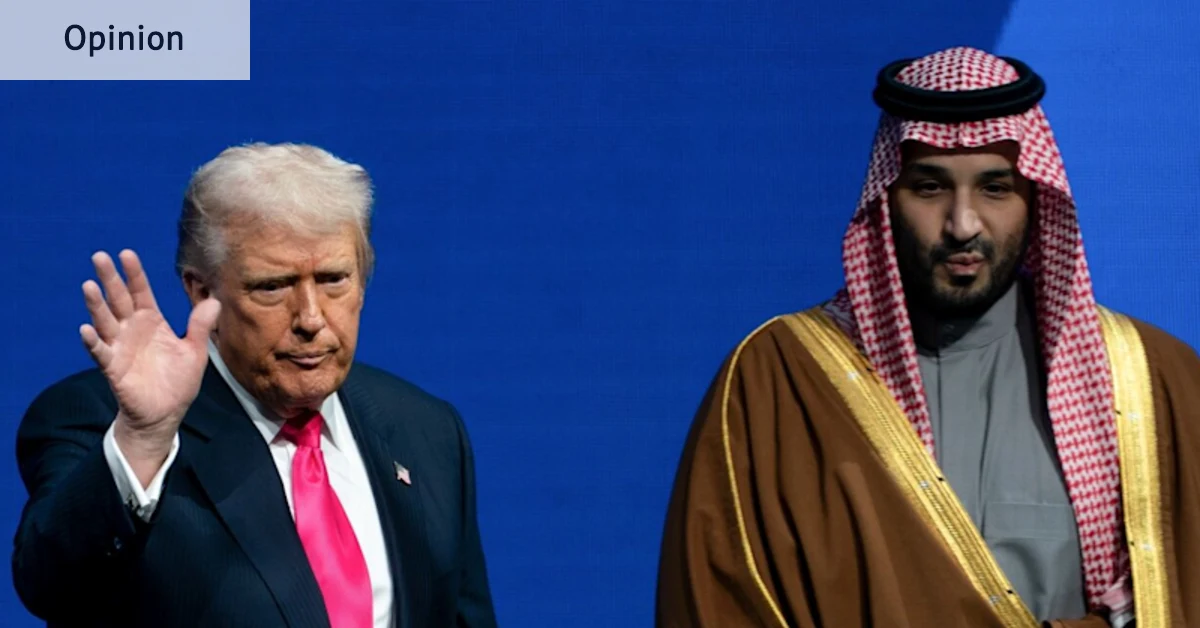
OpinionJuly 24, 2026 — 5:00amThe historic US-Saudi Arabia civilian nuclear agreement announced this week marks a geopolitical shift in the Middle East. It also sows the seeds of a future crisis in nuclear proliferation, illustrating yet again US President Donald Trump’s instinct for short-term transactional deals with problematic long-term consequences.Under the 30-year agreement, American companies will build nuclear reactors and related nuclear infrastructure for the desert kingdom. The deal is a major commercial boost to the US nuclear industry, especially to Westinghouse Electric, whose AP1000 reactor has struggled to find major investors. It is also a victory for Saudi Arabia, which is exempt from conditions that previous US governments had insisted on. These include snap inspections and the collection of environmental samples anywhere in the country by the International Atomic Energy Agency.US President Donald Trump and Mohammed bin Salman, Saudi Arabia’s crown prince pictured in November 2025.BloombergAfter becoming president for the second time last year, Donald Trump moved swiftly to reward the cryptocurrency and artificial intelligence industries, which had poured millions into the campaign. Big-money Political Action Committees such as the pro-crypto group Fairshake and the pro-AI group Leading the Future wanted nuclear power to meet the city-sized electricity needs of their rapidly proliferating data centres.Accordingly, Trump issued an executive order to revitalise the US nuclear industry by building new reactors at home and making US nuclear companies the “partners of choice” abroad. He also began talking to Crown Prince Mohammed bin Salman, Saudi Arabia’s de facto ruler, about constructing a civilian nuclear program in the kingdom. Those talks resulted in this agreement.Westinghouse Electric stands to gain from the Saudi deal, which is worth tens of billions of dollars. A pioneer in the field of nuclear reactor construction, its AP1000 reactor produces more than a gigawatt of electricity – enough to power 750,000 homes or a major AI data centre.Westinghouse built four of them in China but experienced significant construction delays and cost overruns with two reactors in the state of Georgia – the only ones it finished domestically. The Saudi contract gives it many years of work and also meets Trump’s ambition to quadruple US nuclear energy capacity by 2050.On the Saudi side, the deal shows its commitment to a long-term partnership with the United States. In the 1930s, the Arabian American Oil Company began as a commercial partnership with John D. Rockefeller’s Standard Oil and evolved into a globally significant relationship between an absolute Islamic monarchy and the world’s most powerful democracy. Saudi Aramco is today controlled by the Saudi government.This deal is a kind of “nuclear Aramco” in which an Arabian American Nuclear Energy Company cements a decades-long presence of US companies in the kingdom, reinforced by US diplomatic and military heft to protect their interests. Civilian nuclear suppliers from China and Russia can be shut out of this arrangement, fulfilling Trump’s goal of placing the Middle East under the umbrella of US power.With the Trump deal, Saudi Arabia has evaded several conditions previous US administrations sought to impose on it. For one, it is not required to normalise its diplomatic relationship with Israel – something the Biden administration had insisted on. A normalisation may have been possible until the current Israel-Hamas war, but the crown prince has to pay attention to public opinion even in an absolute monarchy. Alive to these realities, Trump dropped the requirement that Saudi Arabia recognise Israel in return for civilian nuclear co-operation.Saudi Arabia has also evaded a requirement to comply with the “gold standard” of US nonproliferation policies, unlike its regional rival, the United Arab Emirates. When the UAE signed a similar civilian nuclear agreement with the US in 2009, it had to agree to the Additional Protocol of the International Atomic Energy Agency.That meant disclosing much more information on nuclear and nuclear-related activities, facilitating snap inspections by IAEA inspectors, and other safeguards. It also gave up the right to enrich uranium and reprocess spent nuclear fuel, which are potential pathways to nuclear weapons.Saudi Arabia’s hands are not tied in this manner. A future, less friendly Saudi Arabia may follow the path of Iran, which obtained a nuclear reactor and the highly enriched uranium fuel to run it from the US in 1957 when it was under US hegemony. India, too, conducted its first nuclear test in 1974 using plutonium from a Canadian-supplied heavy-water reactor. Trump’s successors will have to deal with the fallout if a future Saudi leadership decides to cross the nuclear threshold.US inspectors can monitor the Westinghouse reactors, but international inspections are not required. This sets an alarming precedent: If it’s fine for the US and Saudi Arabia to have a bilateral deal with minimal IAEA involvement, then Russia may argue that it, too, can help Iran or some other country with a civilian nuclear reactor while avoiding international inspections.Trump’s headline-grabbing acts today will be his successors’ headaches tomorrow.Professor Clinton Fernandes is in the Future Operations Research Group at UNSW. His latest book is Turbulence: Australian Foreign Policy in the Trump Era.The Opinion newsletter is a weekly wrap of views that will challenge, champion and inform your own. Sign up here.Professor Clinton Fernandes is part of University of NSW’s Future Operations Research Group which analyses the threats, risks and opportunities that military forces will face in the future. He is a former intelligence officer in the Australian Army.From our partners
The US gave Iran its nuclear capabilities. Now Trump is giving them to Saudi Arabia
A nuclear deal between the US and Saudi Arabia is a reminder to the world that Iran only has nuclear capabilities because America provided them.
892 words~4 min read