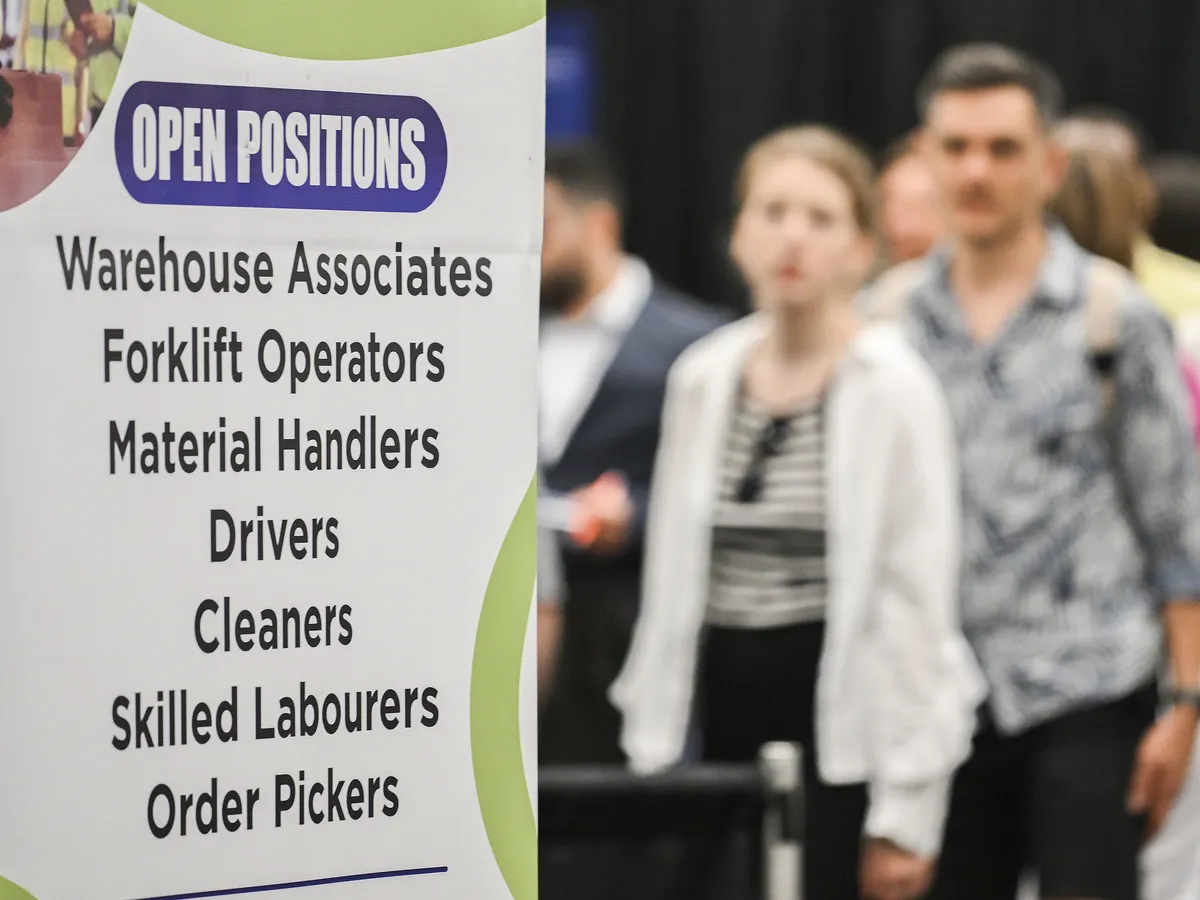
Skip to Content News Archives Economy Energy Oil & Gas Renewables Electric Vehicles Mining Commodities Agriculture Real Estate Mortgages Mortgage Rates Finance Banking Insurance Fintech Cryptocurrency Work Wealth Smart Money Wealth Management Investor Personal Finance Family Finance Retirement Taxes High Net Worth FP Comment Executive Women Puzzmo Newsletters Financial Times Business Essentials More Innovation Information Technology FP500 Podcasts Small Business Lives Told Tails Told Shopping Financial Post Store Obituaries Place a Notice Advertising Advertising With Us Advertising Solutions Postmedia Ad Manager Sponsorship Requests Classifieds Place a Classifieds ad Working Profile Settings My Subscriptions Saved Articles My Offers Newsletters Customer Service FAQ News Economy Energy Mining Real Estate Finance Work Wealth Investor FP Comment Executive Women Puzzmo Newsletters Financial Times Business Essentials HomeWorkCanadian youth don't want foreign workers' jobs, says CFIB surveyNearly half of young Canadians said they wouldn't look for work that requires regular overnight shifts or frequent and heavy physical effort You can save this article by registering for free here. Or sign-in if you have an account.A sign advertising open positions at the Montreal Career Fair and Training Expo in Montreal, Que. Photo by Graham Hughes/Bloomberg filesJobs most commonly filled by temporary foreign workers (TFWs) are “exactly” the ones young Canadians don’t want, according to a survey by the Canadian Federation of Independent Business (CFIB).Subscribe now to read the latest news in your city and across Canada.Exclusive articles from Barbara Shecter, Joe O'Connor, Gabriel Friedman, and others.Daily content from Financial Times, the world's leading global business publication.Unlimited online access to read articles from Financial Post, National Post and 15 news sites across Canada with one account.National Post ePaper, an electronic replica of the print edition to view on any device, share and comment on.Daily puzzles, including the New York Times Crossword.Subscribe now to read the latest news in your city and across Canada.Exclusive articles from Barbara Shecter, Joe O'Connor, Gabriel Friedman and others.Daily content from Financial Times, the world's leading global business publication.Unlimited online access to read articles from Financial Post, National Post and 15 news sites across Canada with one account.National Post ePaper, an electronic replica of the print edition to view on any device, share and comment on.Daily puzzles, including the New York Times Crossword.Create an account or sign in to continue with your reading experience.Access articles from across Canada with one account.Share your thoughts and join the conversation in the comments.Enjoy additional articles per month.Get email updates from your favourite authors.Create an account or sign in to continue with your reading experience.Access articles from across Canada with one accountShare your thoughts and join the conversation in the commentsEnjoy additional articles per monthGet email updates from your favourite authorsSign In or Create an AccountorNearly half of young Canadians said they wouldn’t look for work that requires regular overnight shifts or frequent and heavy physical effort, which is what many small businesses are looking for, CFIB said.Nine of 10 small businesses that rely on TFWs say they cannot fill those positions with local employees, it said.FP Work touches on HR strategy, labour economics, office culture, technology and more.By signing up you consent to receive the above newsletter from Postmedia Network Inc.A welcome email is on its way. If you don't see it, please check your junk folder.The next issue of Work will soon be in your inbox.We encountered an issue signing you up. Please try again“Canada’s youth are not looking for overnight kitchen shifts or work in rural and remote communities,” Dan Kelly, CFIB president, said in a press release. “The temporary foreign worker program has become a convenient scapegoat for a tighter job market for Canadian youth, but the argument just doesn’t hold up.”The federal government implemented measures between October 2023 and November 2024 to reduce reliance on the TFW Program, but in April said it would temporarily increase the allowable share of low-wage temporary foreign workers in eligible rural regions.Kelly said cuts to the TFW program, which has become controversial in recent years, don’t hand jobs to youth, but create staffing crises.CFIB said the TFW program is still essential to help small businesses fill persistent gaps in roles that local youth are unwilling or unable to take, in addition to helping protect Canadian jobs in local businesses.It said that more than a third of youth are unwilling to look for jobs that are mainly outdoors and exposed to weather conditions or jobs that pay at or near minimum wage.Harvesting accounts for more than 30 per cent of all TFW positions, work that’s physically demanding, outdoor and seasonal. Other top jobs filled by TFWs are nursery and greenhouse labourers, food service supervisors, cooks and livestock labourers, all jobs that involve irregular hours, seasonal work or rural locations.Even when youth are open to certain roles, most want to stay close to home, CFIB said, with only 19 per cent willing to relocate to a different city or town for a service-sector job, while just eight per cent would move to a small town or rural community and only three per cent would consider a remote or isolated community.“There’s no lineup of young people from urban areas applying for a 5 a.m. bakery shift in rural Saskatchewan,” CFIB policy analyst Molly MacCormack said. “Pretending otherwise and limiting access to labour doesn’t get those jobs done.”She said high youth unemployment does not guarantee a readily available local workforce.“Canadian kids may be willing to serve food in a nearby restaurant, but unless there is staff to start early, work late or deal with a hot kitchen, the system breaks down,” she said.The report said that although rural businesses face greater staffing pressures, many businesses in cities also have labour shortages and struggle to recruit workers for non-standard jobs.It said that more than half of small companies using the TFW program say it has helped them stay open and keep employing Canadians.“When businesses close, everyone loses, including the young Canadians who work there,” said Bérengère Fouqueray, a CFIB research analyst. Join the Conversation This website uses cookies to personalize your content (including ads), and allows us to analyze our traffic. Read more about cookies here. By continuing to use our site, you agree to our Terms of Use and Privacy Policy.
Canadian youth don't want foreign workers' jobs, says CFIB survey
Jobs most commonly filled by temporary foreign workers are exactly the ones young Canadians don't want, according to the CFIB. Find out more
1,030 words~5 min read