Skip to Content News Archives Economy Energy Oil & Gas Renewables Electric Vehicles Mining Commodities Agriculture Real Estate Mortgages Mortgage Rates Finance Banking Insurance Fintech Cryptocurrency Work Wealth Smart Money Wealth Management Investor Personal Finance Family Finance Retirement Taxes High Net Worth FP Comment Executive Women Puzzmo Newsletters Financial Times Business Essentials More Innovation Information Technology FP500 Podcasts Small Business Lives Told Tails Told Shopping Financial Post Store Obituaries Place a Notice Advertising Advertising With Us Advertising Solutions Postmedia Ad Manager Sponsorship Requests Classifieds Place a Classifieds ad Working Profile Settings My Subscriptions Saved Articles My Offers Newsletters Customer Service FAQ News Economy Energy Mining Real Estate Finance Work Wealth Investor FP Comment Executive Women Puzzmo Newsletters Financial Times Business Essentials HomeNewsEconomyWorkHighly skilled Canadian workers want to come home — but we need to give them a reasonEliot Pence: Canada can reverse the brain drain, but we need to commit to building a dynamic startup culture firstLast updated 1 hour ago You can save this article by registering for free here. Or sign-in if you have an account.The brain drain is not inevitable but the consequence of past decisions. We have an opportunity to choose a different path and truly harness the ingenuity of Canadian founders. Photo by Sviatlana Barchan/Getty ImagesIn the early 1990s, Estonia emerged from the collapse of the Soviet Union with little capital and a limited industrial base. It had no obvious path forward as an emerging nation looking to define itself.Subscribe now to read the latest news in your city and across Canada.Exclusive articles from Barbara Shecter, Joe O'Connor, Gabriel Friedman, and others.Daily content from Financial Times, the world's leading global business publication.Unlimited online access to read articles from Financial Post, National Post and 15 news sites across Canada with one account.National Post ePaper, an electronic replica of the print edition to view on any device, share and comment on.Daily puzzles, including the New York Times Crossword.Subscribe now to read the latest news in your city and across Canada.Exclusive articles from Barbara Shecter, Joe O'Connor, Gabriel Friedman and others.Daily content from Financial Times, the world's leading global business publication.Unlimited online access to read articles from Financial Post, National Post and 15 news sites across Canada with one account.National Post ePaper, an electronic replica of the print edition to view on any device, share and comment on.Daily puzzles, including the New York Times Crossword.Create an account or sign in to continue with your reading experience.Access articles from across Canada with one account.Share your thoughts and join the conversation in the comments.Enjoy additional articles per month.Get email updates from your favourite authors.Create an account or sign in to continue with your reading experience.Access articles from across Canada with one accountShare your thoughts and join the conversation in the commentsEnjoy additional articles per monthGet email updates from your favourite authorsSign In or Create an AccountorIt made a deliberate bet: treat its entrepreneurial class as a national asset to help grow and scale companies that could establish the country’s reputation as a nation of builders and founders. Today, Estonia has more unicorn companies — privately held startups valued at over US$1 billion — per capita than any country on Earth. Skype was built there. So were Wise and Bolt. A country of 1.3 million people decided to take control of its own future, and it did.Similarly, Germany’s post-war recovery was not built on a handful of dominant conglomerates, but on what they refer to as the Mittelstand: hundreds of thousands of small and medium-sized manufacturers. They now account for more than half of Germany’s economic output and nearly 60 per cent of its jobs. More than 600 of them are world market leaders in their fields. This was the product of a deliberate government decision to build from the middle out, rather than from the top down.FP Work touches on HR strategy, labour economics, office culture, technology and more.By signing up you consent to receive the above newsletter from Postmedia Network Inc.A welcome email is on its way. If you don't see it, please check your junk folder.The next issue of Work will soon be in your inbox.We encountered an issue signing you up. Please try againCanada has never made that bet on the same scale.What we have instead is a small number of large, entrenched players. These are the oligopolies and family dynasties that have shaped our economy for generations. That’s what happens when capital concentrates and procurement flows to the familiar; when we play it safe, ostensibly. The result is a country where the instinct to build something from scratch is not rewarded, and where the fastest path to scale often runs through a foreign parent company.The resulting brain drain is a policy failure with a long history and a familiar shape. We train exceptional engineers and founders and then watch them leave because there is rarely anything here worth staying for.As I built my defence company in Canada, the same story surfaced again and again. I met with sharp, hard-working Canadian engineers who had spent years in the United States. It wasn’t so much that they wanted to leave, but they knew that if they stayed, they would be cogs in large, foreign machines, advancing another country’s IP and contributing to another country’s future. It was good work, it paid well, but it was neither theirs nor Canada’s to own.There are Canadians who want to come home, but only if there is something worth building here.Keeping our best and brightest from going south requires the kind of environment that gives an entrepreneurial Canadian a reason to bet on their country. That means procurement that moves at speeds required for a startup. It means contracts structured to build and scale domestic IP. It also means a culture inside government that treats an initial purchase contract as a bet on a future Canadian success story, instead of a financial risk.As a country, we also need to dream big. To borrow a sport analogy, we need to go for gold, and not just a podium finish, to attract top talent. Most of Canada’s legacy industrial policy was calibrated for safety and designed to minimize risk rather than maximize outcome. We set our sights on participation and being a respected supplier, but that is not how you build an industry or retain the talent to sustain it.Canada’s Defence Industrial Strategy marks a new path forward, but it must be executed with that same unflinching intent. The Build-Partner-Buy framework is correct in principle, but frameworks must be matched by real action. Initial purchase contracts and procurement speed are two concepts we must embrace. For a promising founder, the signal that the government will support and buy from our country’s emerging defence primes will be the difference between staying in Kanata or taking a call from a defence contractor in Virginia.Canada is beginning to understand this. Private capital is moving into defence in ways it has not for decades. The federal government has promised to reimagine the procurement cycle to move at the speed this moment requires.The brain drain is not inevitable but the consequence of past decisions. We have an opportunity to choose a different path and truly harness the ingenuity of Canadian founders.Eliot Pence is the founder and CEO of Dominion Dynamics Join the Conversation This website uses cookies to personalize your content (including ads), and allows us to analyze our traffic. Read more about cookies here. By continuing to use our site, you agree to our Terms of Use and Privacy Policy.
Highly skilled Canadian workers want to come home — but we need to give them a reason
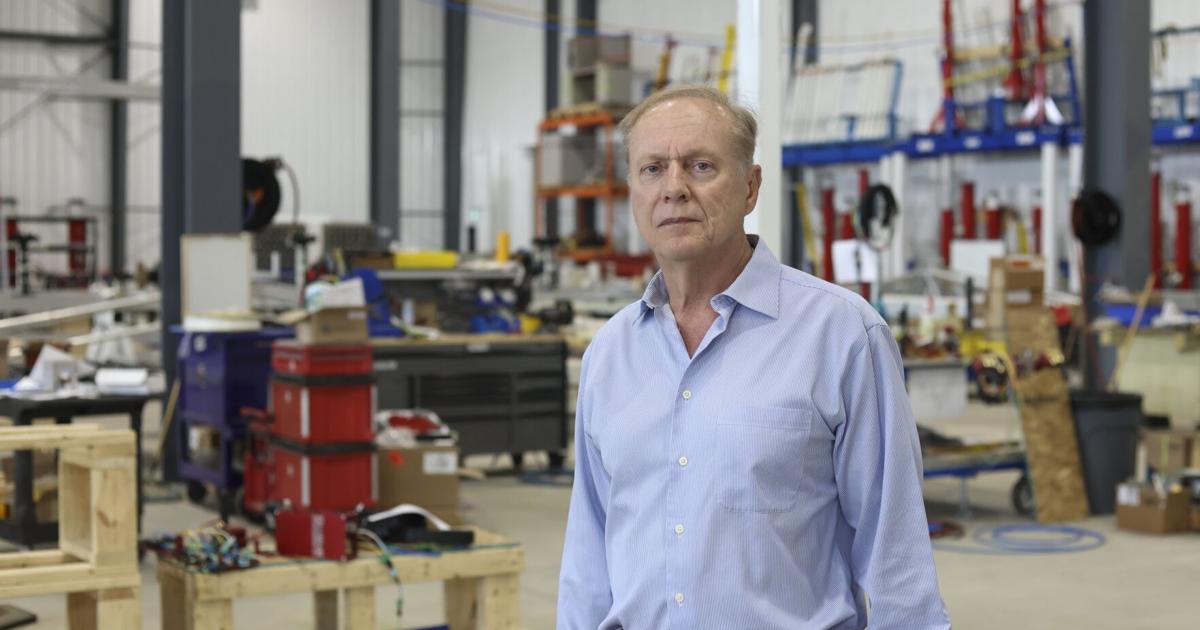
Eliot Pence: There are Canadians who want to come home, but only if there is something worth building here. Find out more here
1,252 words~6 min read