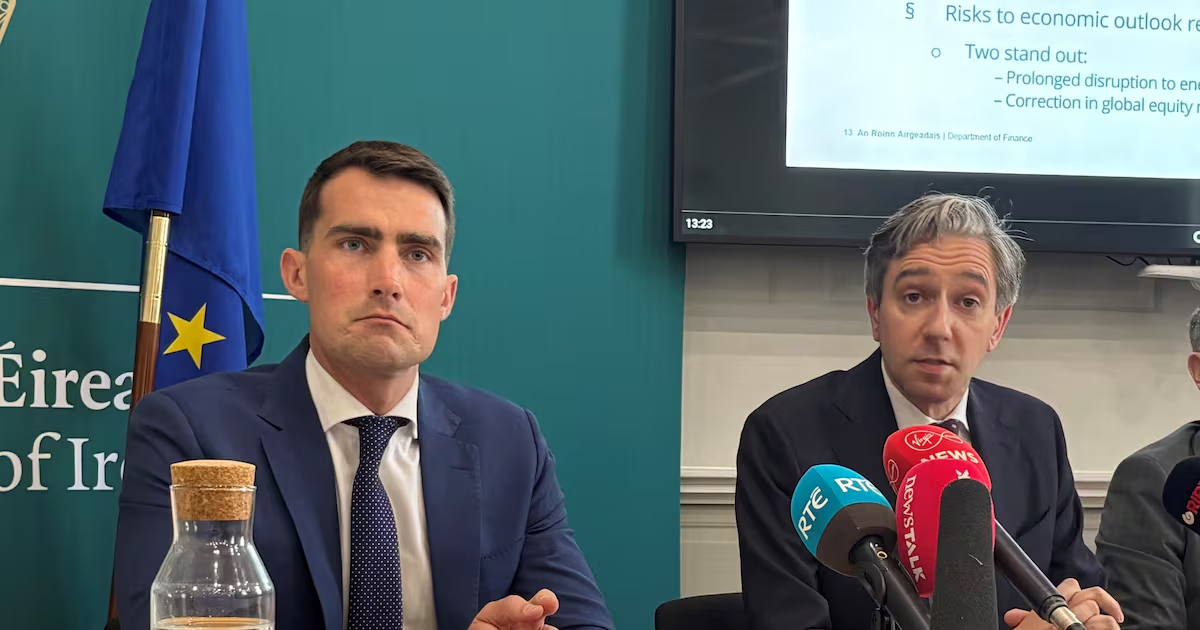
Adjusting income tax bands and credits fully for expected wage inflation of 4 per cent next year would cost over €1 billion next year, using up much of the €1.5 billion set aside for the budget day tax package, according to pre-budget papers published on Thursday.The figures illustrate the challenges facing Minister for Finance, Simon Harris, in offering real gains to taxpayers. If bands and credits need to be adjusted for inflation, then those receiving wage increases pay proportionately more in tax, partly due to paying more of their income at the higher 40 per cent rate. The Tax Strategy Papers, drawn up by senior civil servants in advance of the budget, also show the huge reliance on higher earners to pay income tax. The top 1 per cent of earners, on incomes in excess of €303,900, pay 23 per cent of all income tax and the top 10 per cent, earning over €109,500, pay 62 per cent of all income tax.The civil servant that this shows the exposure of revenues to job losses in highly-paid areas such as tech. The papers cost various changes to the income tax system, though Harris has indicated that increasing the rate at which people pay at the higher 40 per cent rate is his priority.The papers also look at other tax headings. On inheritance tax, the civil servants underline the cost of major reform. Uplifting the Class B threshold -which applies to inheritances left to siblings, niece, nephew, grandchild, grandparent, or parents – to the same level as the Class A threshold applying to children of €400,000 would cost over €300 million.[ We can already identify who will gain most from the budget: the better-offOpens in new window ]A “lifetime threshold” of €460,000, suggests as applying to all inheritances received, would cost €577 million.Government ministers have indicated that they want to act on inheritance, including by helping childless couples. On carbon tax, where increases are due to come into effect in the budget as part of an annual process, the papers say it would be “best practice” to continue to do this, though they add that it would be possible to examine the plan which sees these taxes rise annually up to 2030 to see if timings could be changed. Aer Lingus job cuts and Ryanair’s profits plunge - what is happening in the Irish aviation sector? Listen | 41:54The Tax Strategy Papers are drawn up each year by senior civil servants to provide budget options for Ministers. In some areas they are based on goals outlined in the Programme for Government, but many are also used to detail options across a range of policy areas seen as relevant. The Government is under no obligation to accept any of the recommendations. On Wednesday, in its pre-budget Summer Economic Statement, the Coalition said that it would aim for a budget package of €8.5 billion, of which €7 billion would be additional spending and €1.5 billion would be in tax reductions.
Adjusting income tax bands and credits to cost over €1bn next year
Tax Strategy Paper show reliance on top earners, who pay 602 per cent of all such taxes
496 words~2 min read