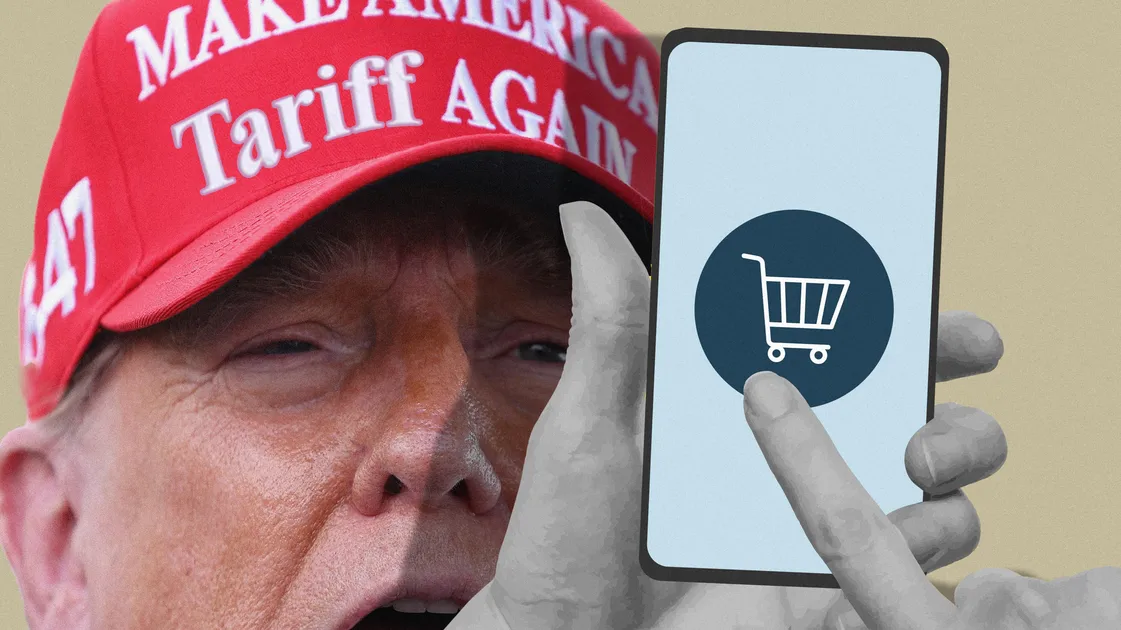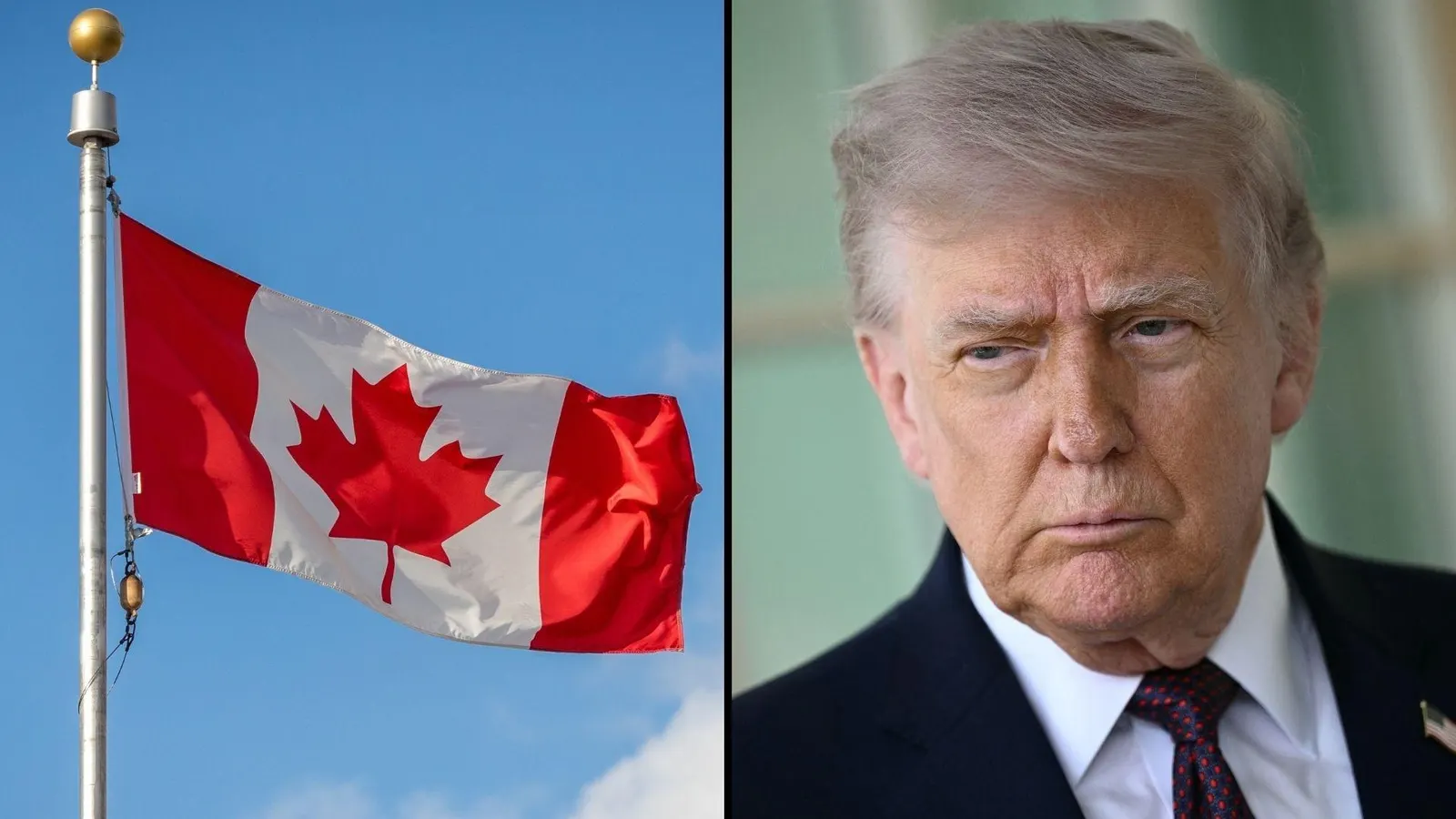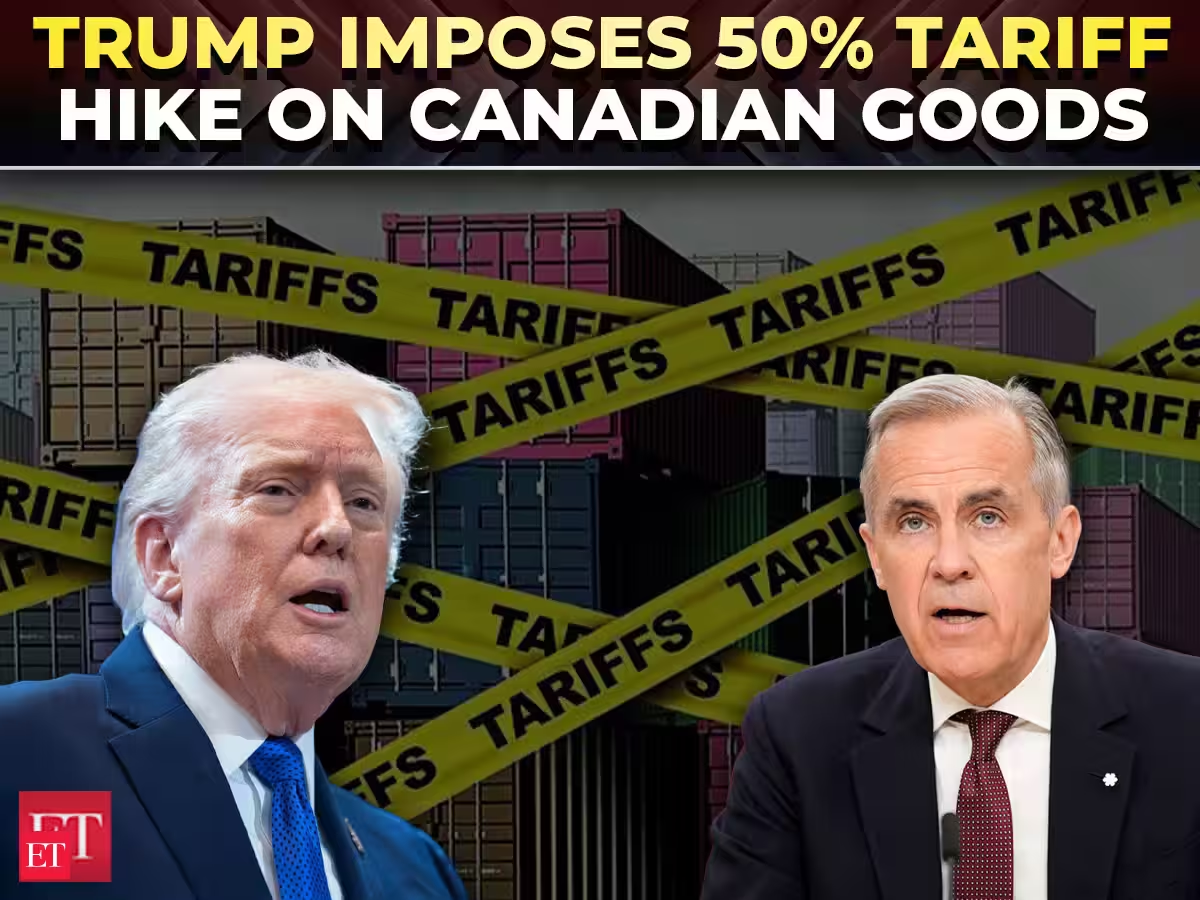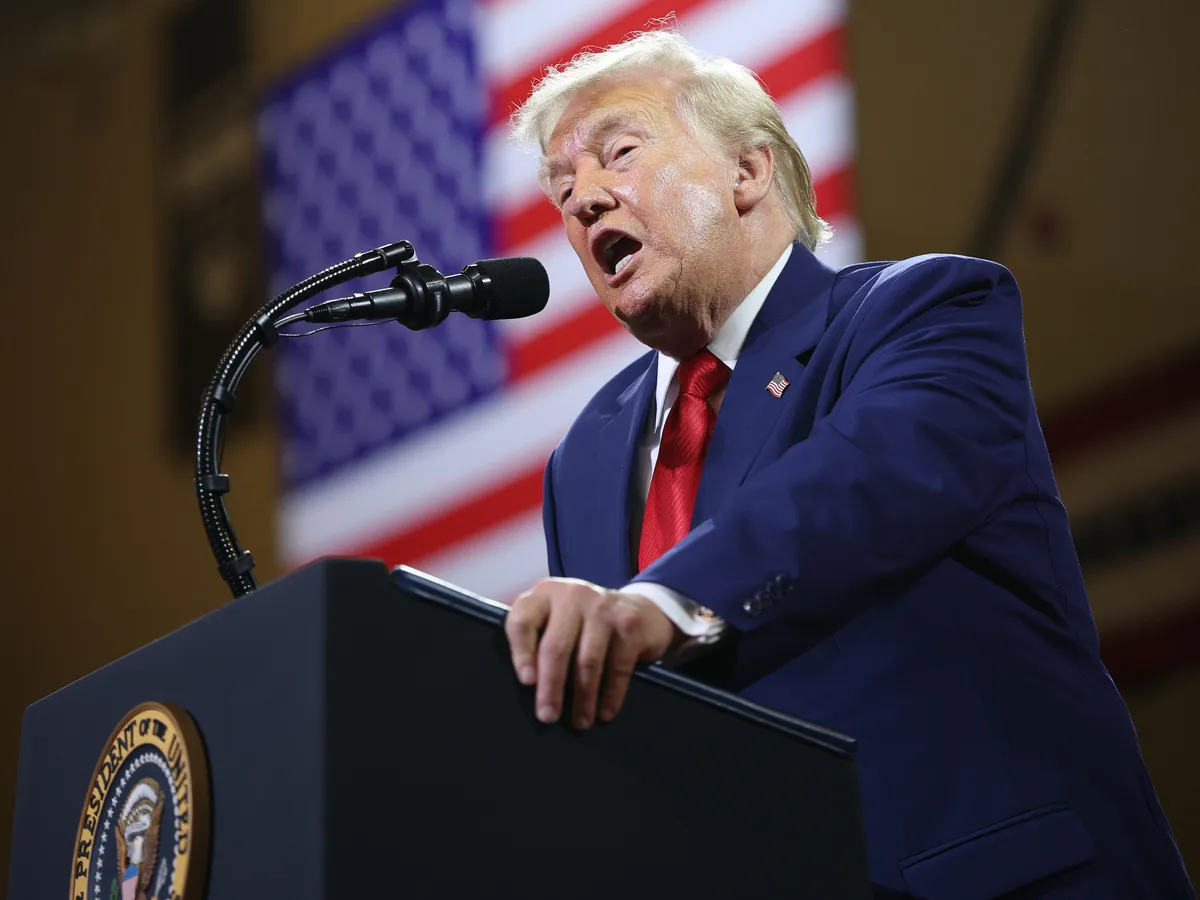
Skip to Content News Archives Economy Energy Oil & Gas Renewables Electric Vehicles Mining Commodities Agriculture Real Estate Mortgages Mortgage Rates Finance Banking Insurance Fintech Cryptocurrency Work Wealth Smart Money Wealth Management Investor Personal Finance Family Finance Retirement Taxes High Net Worth FP Comment Executive Women Puzzmo Newsletters Financial Times Business Essentials More Innovation Information Technology FP500 Podcasts Small Business Lives Told Tails Told Shopping Financial Post Store Obituaries Place a Notice Advertising Advertising With Us Advertising Solutions Postmedia Ad Manager Sponsorship Requests Classifieds Place a Classifieds ad Working Profile Settings My Subscriptions Saved Articles My Offers Newsletters Customer Service FAQ News Economy Energy Mining Real Estate Finance Work Wealth Investor FP Comment Executive Women Puzzmo Newsletters Financial Times Business Essentials HomeNewsEconomy'A pretty strange list': What Canadians need to know about Trump's new 50% tariffs and the claims used to justify themAs the trade war ramps up again, Financial Post looks at what goods are being targeted, what Canada can do and moreLast updated 7 hours ago You can save this article by registering for free here. Or sign-in if you have an account.On Monday, U.S. President Donald Trump signed three proclamations imposing new 50 per cent import duties on a broad swath of Canadian exports. Photo by Kevin Dietsch/Getty ImagesJust as Canadians and the economy were settling into something resembling a trade routine with the United States, President Donald Trump this week hit Canada with an unexpected new round of 50 per cent tariffs set to take effect Aug. 19. Here, the Financial Post explains what goods are being targeted, how Trump is justifying these levies and what Canada can do to respond.Subscribe now to read the latest news in your city and across Canada.Exclusive articles from Barbara Shecter, Joe O'Connor, Gabriel Friedman, and others.Daily content from Financial Times, the world's leading global business publication.Unlimited online access to read articles from Financial Post, National Post and 15 news sites across Canada with one account.National Post ePaper, an electronic replica of the print edition to view on any device, share and comment on.Daily puzzles, including the New York Times Crossword.Subscribe now to read the latest news in your city and across Canada.Exclusive articles from Barbara Shecter, Joe O'Connor, Gabriel Friedman and others.Daily content from Financial Times, the world's leading global business publication.Unlimited online access to read articles from Financial Post, National Post and 15 news sites across Canada with one account.National Post ePaper, an electronic replica of the print edition to view on any device, share and comment on.Daily puzzles, including the New York Times Crossword.Create an account or sign in to continue with your reading experience.Access articles from across Canada with one account.Share your thoughts and join the conversation in the comments.Enjoy additional articles per month.Get email updates from your favourite authors.Create an account or sign in to continue with your reading experience.Access articles from across Canada with one accountShare your thoughts and join the conversation in the commentsEnjoy additional articles per monthGet email updates from your favourite authorsSign In or Create an AccountorSUBSCRIBER EXCLUSIVE: FP West: Energy Insider brings you behind the oilpatch’s closed doors with exclusive insights from insiders every Wednesday morning.By signing up you consent to receive the above newsletter from Postmedia Network Inc.A welcome email is on its way. If you don't see it, please check your junk folder.The next issue of FP West: Energy Insider will soon be in your inbox.We encountered an issue signing you up. Please try againOn Monday, Trump signed three proclamations imposing new 50 per cent import duties on a broad swath of Canadian exports in response to what the White House alleged was “Canada’s discriminatory treatment of U.S. commerce.”The U.S. administration said the levies, which were set to take effect 30 days later on Aug. 19, are retaliating specifically against Canadian tariffs and quotas on American automobiles, alcohol and dairy.The new tariffs apply to goods regardless of whether they are covered by the Canada-United States-Mexico Agreement (CUSMA), the White House said, and would apply on top of existing global tariffs of 10 per cent that are set to expire Friday and any new tariffs in response to earlier U.S. claims that Canada has lax forced-labour standards.The goods targeted cover a sweeping range of items, from Canadian wine and whisky to cement and hockey sticks.Altogether, they amount to approximately $28 billion in trade or five per cent of Canada’s exports to the U.S. last year.The White House said this latest round of tariffs will not apply to energy, potash or products already subject to tariffs under Section 232, and some other goods, such as fish and critical minerals.“It’s a pretty strange list,” said Fen Osler Hampson, professor of international affairs at Carleton University. “It doesn’t hit any of what we would call the big value categories … but it’s not insignificant.”Robert Kavcic, a senior economist at BMO Capital Markets, said in a note that chemicals, plastics, electronics and industrial equipment take the biggest hit proportionally, followed by consumer goods and forestry and wood products.Other items include miscellaneous manufacturing, machinery and industrial equipment, and agriculture and food products.Trump is invoking a section of the Tariff Act of 1930 — also known as the Smoot-Hawley Tariff Act — that gives presidents the power to impose duties based on a foreign country’s discrimination against U.S. commerce.Section 338 of this act appears to provide the president with “unfettered power” to impose tariffs of up to 50 per cent for measures that are discriminatory or unreasonably burdensome, especially relative to other countries, said trade lawyer Mark Warner of Maaw Law.Trump justified the tariffs by claiming Canada is discriminating against the U.S. economy in several ways. One is by banning the sale and distribution of U.S. alcohol while increasing imports from countries such as Chile, Japan, Argentina, Ireland, New Zealand and Australia. The proclamations say Canadian imports of U.S. alcohol decreased by 81 per cent from April 2025 to March 2026, or by about $582 million.The Trump administration also claimed Canada’s tariffs on motor vehicles are more restrictive than regulations imposed on other countries. Officials claim Canadian imports of U.S. vehicles have decreased by 22 per cent from April 2025 to March 2026, or around US$5.6 billion.Trump also called Canada’s tariff-rate quotas on U.S. dairy a trade irritant, claiming they are more restrictive than those imposed on other countries.Trump’s justification for the new tariffs included that Canada imposed a tariff system on U.S. motor vehicles and treats other countries more favourably. However, the proclamations neglect to mention that Canada’s auto tariffs were put in place in April 2025 in response to U.S. tariffs on Canadian autos, steel and aluminum, which violated CUSMA rules that say no party can increase any existing duties or adopt new duties on goods originating from North America unless specifically authorized.Canada’s countermeasures, which the government’s website says “will remain in place until the U.S. eliminates its tariffs against the Canadian auto sector,” impose a 25 per cent tariff on U.S. motor vehicles that don’t comply with CUSMA rules and on the non-Canadian and non-Mexican content of CUSMA-compliant U.S.-made vehicles.These are higher than tariffs on motor vehicles from some other countries. For example, Mexican vehicles that are CUSMA compliant are duty free (as generally were American-made vehicles, prior to the U.S.-launched trade war). Chinese electric vehicles, meanwhile, are currently subject to 6.1 per cent tariffs on a quota of 49,000 vehicles while imports exceeding this quota are subject to a 100 per cent tariff. Direct-import Japanese vehicles are subject to standard baseline tariffs of 6.1 per cent unless the vehicles are compliant with the Comprehensive and Progressive Agreement for Trans-Pacific Partnership (CPTPP).Canada’s auto industry was severely impacted by the U.S. tariffs. According to the Office of the Chief Economist, motor vehicles and parts manufacturing sectoral gross domestic product (GDP) fell by 1.4 per cent in 2025. Exports of Canadian motor vehicle and parts also struggled throughout 2025 in the face of U.S. tariffs, falling by three per cent.Imports of North American vehicles also hit a record low while imports from overseas increased. According to data from the 2026 Canada Automotive Outlook report from TD Economics the share of Canadian motor vehicles sourced from within the CUSMA region was at a record low of 65 per cent. Mexico saw “a modest increase in its share of Canadian imports, nearly equal in magnitude to the decrease in the share accounted for by the U.S.,” wrote TD Economics economist Andrew Foran.“To a lesser extent, we have also seen higher imports from outside of the North American region, including Japan, South Korea and Germany,” he added.While Trump complained about Canadian discrimination on alcohol, the decision by Canadian provinces and territories (except for Alberta and Saskatchewan) to pull U.S. booze off their shelves in February and March last year also came in response to U.S. tariffs affecting key sectors such as auto, aluminum, lumber and steel, alongside threats to annex Canada.The provincial moves resulted in a US$360 million drop in U.S. wine exports and a US$150 million drop in U.S. spirits exports to Canada over the past year, according to U.S. Census Bureau data.At the same time, Canadian alcohol sales edged up. Domestic alcohol products represented about 60.6 per cent of sales in Canada in 2024/2025, up from 59 per cent the previous fiscal year, according to the latest data from Statistics Canada.Additionally, Canada significantly increased monthly imports from France, which increased by $13.9 million, and Italy, which increased by $8 million, between March and August 2025, according to University of British Columbia Sauder School of Business trade economist Werner Antweiler. Imports from Spain, New Zealand, Chile, and Ireland all increased by around $3 million monthly during the same time period.Canada’s supply management system has long been an irritant to the United States. Trump has previously claimed that Canada imposes 250 to 300 per cent tariffs on U.S. dairy products. However, Canada has a quota that allows a certain amount of U.S. dairy products to enter tariff-free under CUSMA, according to the U.S. Department of Agriculture. Tariffs ranging from 200 to 300 per cent only apply if these quotas are exceeded.National Bank of Canada economists predicted Canada’s overall tariff rate would rise modestly, from about five per cent to just over 7.7 per cent, in a note. This tariff rate refers to the average amount U.S. businesses would need to pay to import Canadian goods overall.However, raising tariffs could discourage U.S. businesses from importing some products altogether. “Needless to say, the proposed 50 per cent tariffs would make select imports uneconomical, limiting the increase in the effective rate,” National Bank said. This means that though the overall tariff increase would be modest, it could be prohibitive in certain sectors.Andreas Schotter, a professor of international business at Western University’s Ivey Business School, said the most critical impact will be felt at the company level, particularly for small and medium-sized businesses, as opposed to the macroeconomic level. He said there could be some job losses and reduced investment as well.Andrew Hencic, director and senior economist at Toronto-Dominion Bank, also flagged the impact on business confidence.“Businesses have been operating under a cloud of uncertainty for over a year, and although the new announcements are likely to dent confidence further, a repeat of the scale of the confidence shock from 2025 remains a tail risk,” he wrote in a note.Should the tariffs be maintained, Hencic said they would likely shave between 0.3 to 0.6 percentage points off GDP growth over the next year, assuming no major changes in business behaviour or government response.“While we don’t expect the Bank of Canada will need to cut rates, we see bond yields, stock prices and the Canadian dollar all falling further in the near term on elevated trade tensions over the next few months,” said Royce Mendes, managing director and head of macro strategy at Desjardins Group, in a note.Ontario Premier Doug Ford has said Canada “can’t keep rolling over for President Trump,” and suggested that Canada should retaliate against the new tariffs if talks fail.Schotter said he expects to see bilateral tariffs, with Canada retaliating with levies on some U.S. goods. But given Canada’s reliance on U.S. markets for its exports, he also recommended Canada offer some concessions through either its U.S. dairy allocations or on energy.Warner said an “obvious” solution would be for Canada to resolve the provincial alcohol bans, echoing suggestions made by Saskatchewan Premier Scott Moe, but Carney has said he would leave this decision with the premiers. Both B.C. Premier David Eby and Ford said their provinces would not lift the bans.David-Alexandre Brassard, chief economist at the Chartered Professional Accountants of Canada, recommended Canada focus on dealing with the vehicle dispute, as he said in a note it accounts for about 95 per cent of the tariff burden.“It may be tempting to respond with dollar-for-dollar retaliation, but that approach produced little progress earlier this year,” Brassard said.Carleton’s Hampson said Carney’s strategy should focus on a serious resolution to the CUSMA trade dispute. Many of Trump’s issues with Canada’s trade policy are potentially resolvable, but the question of what Canada receives in return remains.“This is why we’re stuck at the negotiating table,” he said. “There’s certainly a basis for a deal, but they’re going to have to make some concessions, and it can’t just be one-way.”Carney himself pointed to a hastening of talks, saying he and Trump agreed in a call to “intensify negotiations” in the coming weeks.Trump may be turning to the new tariffs after earlier measures under the International Economic Emergency Powers Act were struck down by the Supreme Court earlier this year, Warner said.“He has to put an architecture in place, or he has to abandon the tariff policy,” Warner said. “He’s not going to abandon the tariff policy.”While Warner said Trump is likely also using these tariffs to push Canada to the table on broader CUSMA negotiations, Schotter said the president may hope the announcement serves as a distraction from the war in Iran, which has raised oil prices for Americans.Desjardins’ Mendes wrote that he expects the U.S. administration will want to announce some wins, including at least a partial resolution to North American trade disputes before the midterm elections.“That leaves us still optimistic about the prospects for the economy and financial markets in 2027,” he said. Join the Conversation This website uses cookies to personalize your content (including ads), and allows us to analyze our traffic. Read more about cookies here. By continuing to use our site, you agree to our Terms of Use and Privacy Policy.
'A pretty strange list': What Canadians need to know about Trump's new 50% tariffs and the claims used to justify them
Here's what goods are being targeted, how Donald Trump is justifying the new 50% tariffs and what Canada can do to respond. Find out more.
2,421 words~11 min read