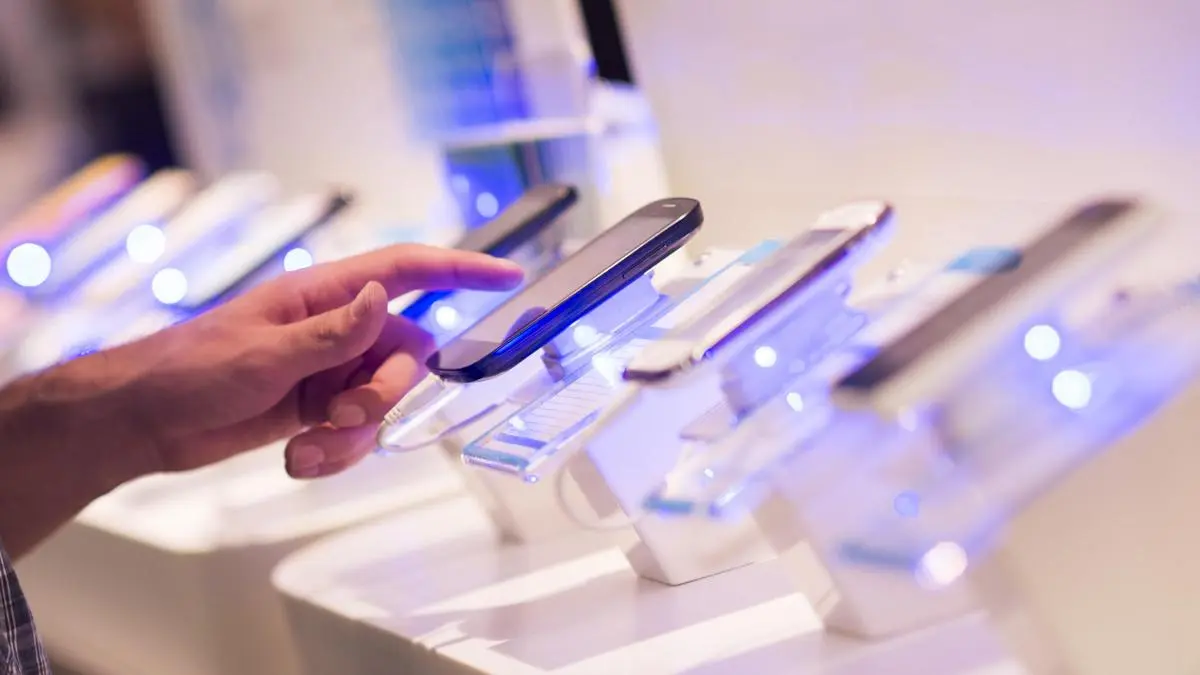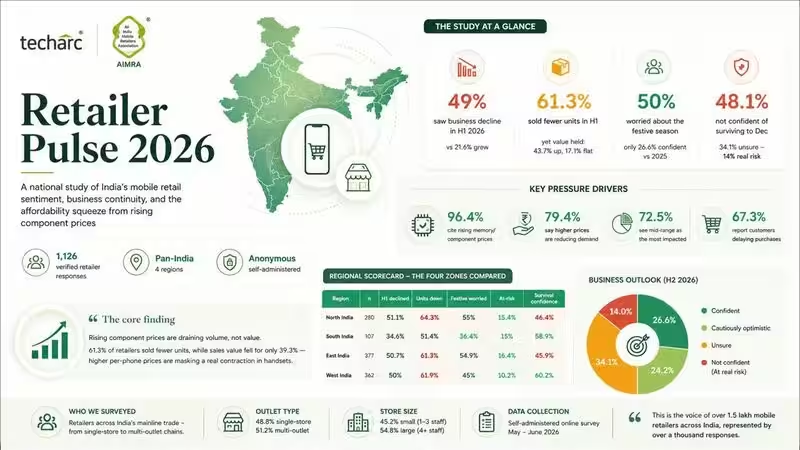
A nationwide retailer survey by Techarc and the All India Mobile Retailers Association (AIMRA) has highlighted growing pressure in India’s smartphone retail market, with a majority of retailers reporting a decline in handset sales during the first half of 2026.A recent report ‘Retailer Pulse 2026’, which surveyed 1,126 “verified mobile retailers” in 22 States and Union Territories, also highlights how costs of memories and other components are eroding the purchasing power of Indian customers.About The AuthorHey there, i am a technology enthusiast with a deep passion for gadgets, consumer electronics, emerging technologies, and the fast-paced world of digital innovation. Constantly exploring the latest tech trends, product launches, and industry developments, I enjoy translating complex technological advancements into engaging and accessible stories for readers. My interests span smartphones, wearables, artificial intelligence, smart devices, and the broader technology ecosystem. As I begin my journey as a Tech Journalist at Gadgets Now, I am excited to contribute to a platform that informs millions of readers, combining my passion for technology with storytelling to deliver insightful, accurate, and timely tech coverage.Though the sales in unit volumes dropped to rock bottom, the sharp increase in mobile prices helped to mitigate the losses for the retailers and their revenue loss as not be very significant. The trend, therefore, signals caution as retailers step into the festive season, especially so for small traders.Study highlights changing dynamics in smartphone sales marketThe Retailer Pulse 2026 report finds that the current market pressure is largely reflected in volumes rather than revenue.“The data suggests 61.3% retailers saw selling volume in the first half of FY26 decrease over H1FY25,” noted the report which said only 39.3% retailers saw rupee turnover decrease during the period, whereas 43.7% of retailers noted an increase in turnover. Higher component and memory costs have led to increased handset prices, thus, enabling some retailers to not lose out on overall sales volume, it added.The study describes this as a shift where higher ticket values are masking a contraction in the number of smartphones being sold through retail channels.Business sentiment remains cautious among mobile retailersThe survey reveals that almost half of the retailers who participated are also facing challenges in their businesses. Nearly 49% of survey respondents reported decline in their business in H1 2026 relative to H1 2025, versus 21.6% who reported increase in their business. Retailers are anxious about festive season that traditionally turns out to be one of the best selling period for the smartphone industry.The report said that 50% of retailers are concerned about the performance during the festive season in 2026 relative to 2025, while 26.6% remain upbeat.More articles by AuthorTrending StoriesWhereas 47.4% respondents anticipated fall in the July-December period. The results hint that softening demand and price erosion may impact the retail performance.Mass-market smartphone segments expected to face maximum pressureThe study highlights that the impact of rising prices is expected to be concentrated in the mass-market segments. The report suggests that retailers expect maximum pressure for the Base segment priced 10,001 - 20,000 & Mid segment priced 20,001 - 30,000 in H2 2026, who will account for 80.9% of the retail estimate for sales estimates.These segments comprise most of the demand for smartphones in India, and are sensitive to the price increases, which can lead consumers to postpone upgrade. Independent and single-store retailers will find themselves at more risk than those with larger store footprint across locations that typically possess comparatively robust resilience due to the size of their retail network.Smaller retailers report higher operational uncertaintyThe survey points towards rising concerns over business continuity among some mobile retailers. Nearly 14% felt they were at a significant risk of not continuing until December 2026, and another 34.1% admitted to uncertainty of viability. The study reveals how smaller stores (particularly single outlets), the most exposed to disruptions, feel the pinch due to a lack of scale and financial resilience.The analysis spans diverse states across the country and incorporates responses in seven languages. The association said the findings provide a data-backed view of challenges faced by retailers at the consumer-facing end of the smartphone ecosystem.Retailers seek GST relief and industry support measuresPolicy intervention is also cited as a prominent requirement from retailers in the report. About 53 percent retailers requested for a decrease in the GST levied on smartphones as their top priority from the government. The retailers also desired for the lowering of the import duties on memory and components due to increased input costs in the smartphone pricing structure.As reported in the survey, such initiatives will improve the device affordability and kickstart demand resurgence.From an industry perspective, they asked the smartphones brands & original equipments manufacturers (OEM’s) to bear some part of the increasing costs to protect entry-level price points and availability of extended no-cost EMI & Financing Options at Retail outlets.AIMRA and Techarc underline need for market interventionKailash Lakhyani, Founding Chairman of AIMRA, said the Retailer Pulse 2026 study provides data-based insight into challenges that retailers have been experiencing at the ground level. He said that high memory and component price impact affordability of smartphone and ask government and industry players to contemplate about various policy before season in order.Faisal Kawoosa, Chief analyst and Co-founder, Techarc, said these finding show the tough times for mobile retail community and said if steps not taken now it could lead from bad to worst. The further squeeze can give other implications like issues to smaller retailers.Nationwide retailer survey captures market challengesThe Retailer Pulse 2026 study represents responses from 1,126 verified retailers across 22 States and Union Territories. The anonymous survey was conducted across seven languages and focused on understanding how smartphone retailers are experiencing market changes amid rising component costs.The report concludes that India’s smartphone retail market is facing a complex situation where revenue stability does not necessarily indicate healthy demand. Although the higher average value has helped certain players to maintain their turnovers, declining unit sales in the market hint at some form of constraint on consumer buying propensity.With the festive season around the corner, most players would closely monitor the trends in consumer demand, pricing, financing schemes offered to buyers and likely policy measures in terms of market regulation that will shape smartphone sales in the latter half of 2026. FAQsWhat does the Retailer Pulse 2026 study reveal about India's smartphone sales trends?The Retailer Pulse 2026 study indicates a volume decline in smartphone sales in India, with 61.3% of retailers selling fewer units compared to the previous year, despite overall revenue being partially supported by higher smartphone prices.What challenges are smartphone retailers facing ahead of the festive season?Smartphone retailers are expressing concerns about performance during the upcoming festive season, with 50% worried about sales compared to 2025, and 47.4% expecting a decline in the July-December period, primarily due to weaker consumer demand and pricing pressures.What measures are retailers requesting from the government to improve smartphone sales?Retailers are requesting a reduction in GST on smartphones and relief on import duties for memory and components to improve affordability and support demand recovery, along with support from smartphone brands to absorb rising costs.end of article
AIMRA-Techarc Pulse: 61.3% Retailers Report Smartphone Sales Decline in H1 2026
As of early 2026, Indian smartphone retailers are witnessing a troubling decline in handset sales, a trend fueled by soaring component costs that elevate device prices and pinch consumer budgets. With an air of caution pervading the market, many retailers are unsure about the performance of festive season sales, particularly in the mass-market segment, which is anticipated to endure the greatest downturn.
TL;DRAI
AIMRA survey: 61.3% of Indian mobile retailers reported sales decline in H1 2026; higher component costs raised prices, masking unit drop. Mass-market segments most at risk; 49% retailers face YoY decline, 14% risk closure by December—pressuring budget smartphone OEMs' margins.
1,178 words~5 min read