Running a cross-border payments company means constantly watching money move—where it comes from, where it goes, and what happens after it arrives. One figure keeps coming back to me: Nigeria receives roughly $20 billion annually in diaspora remittances, and about 70% goes directly to household consumption.
That spending sustains millions of families. The remaining 30% is spread across savings, housing, business investment, and other asset accumulation. Unlike portfolio capital, much of it is tied to long-term decisions and relationships, making it a potentially more durable source of domestic capital. That raises an important question: are diaspora remittances Nigeria’s most underutilised source of patient capital?
For much of the past decade, Nigeria’s external capital strategy has repeatedly leaned on foreign portfolio investment in fixed-income securities, a recurring pattern that has supported reserves in good periods but exposed the economy to volatility when those flows retreat.
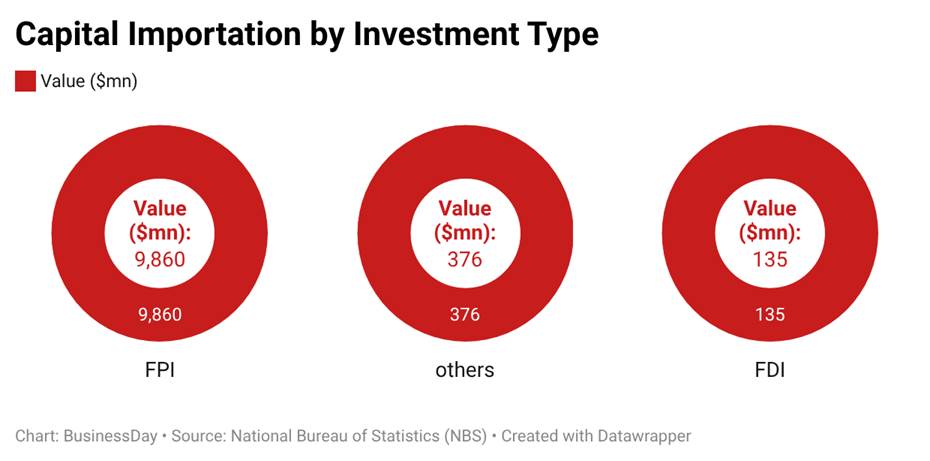
In the first quarter of 2026, total capital importation into Nigeria was $10.37 billion. Of that total, foreign direct investment (FDI) accounted for approximately $135 million—just 1.3% of total capital importation. The bulk was portfolio investment, and while that has its uses-–it has contributed to Nigeria’s external reserves reaching roughly $50 billion in mid-2026, a meaningful milestone– portfolio capital has a particular character. It comes in because of an opportunity and leaves when that opportunity closes. It is, as I sometimes describe it, hot money: high-cost, exit-oriented, and sensitive to conditions in ways that might create recurring pressure on the naira.