Unlike earlier market cycles characterised by speculative trading, the current growth is primarily fuelled by everyday utility.
Driven by persistent macroeconomic pressures and high remittance costs, Nigeria has emerged as the principal engine of cryptocurrency adoption in Sub-Saharan Africa.
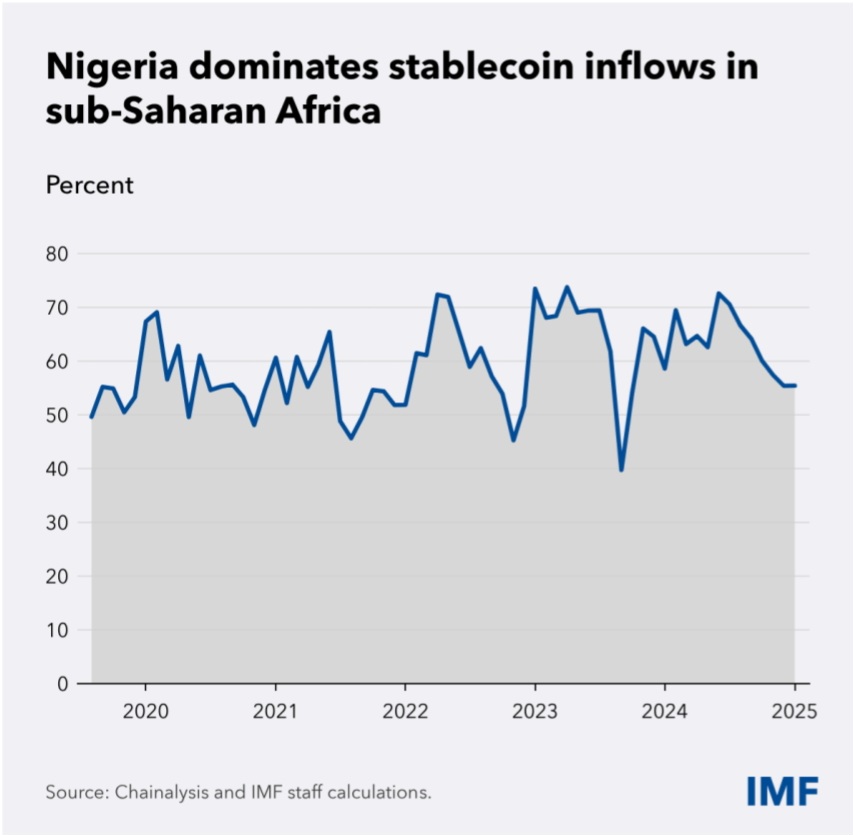
Data from the International Monetary Fund (IMF) reveals that the country processed approximately $59billion in crypto asset inflows between July 2023 and June 2024, while capturing nearly 60 per cent of all stablecoin transfers into the sub-region since 2019.
Unlike earlier market cycles characterised by speculative trading, the current growth is primarily fuelled by everyday utility.
Small businesses and households across Nigeria are increasingly relying on dollar-denominated stablecoins as a hedge against local currency volatility and as an efficient vehicle for cross-border transactions.