The most expensive restart in SaaS is often the one nobody planned: onboarding a new customer. Every SaaS team expects adding a tenant to be a database operation. I still see production systems where it is a deployment.
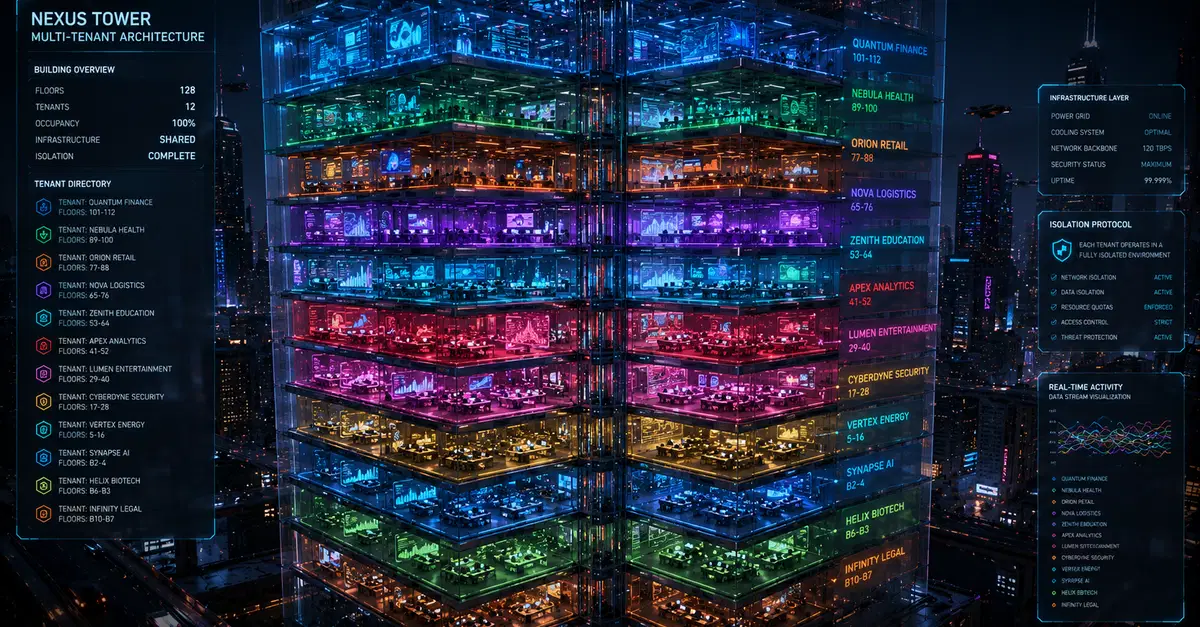
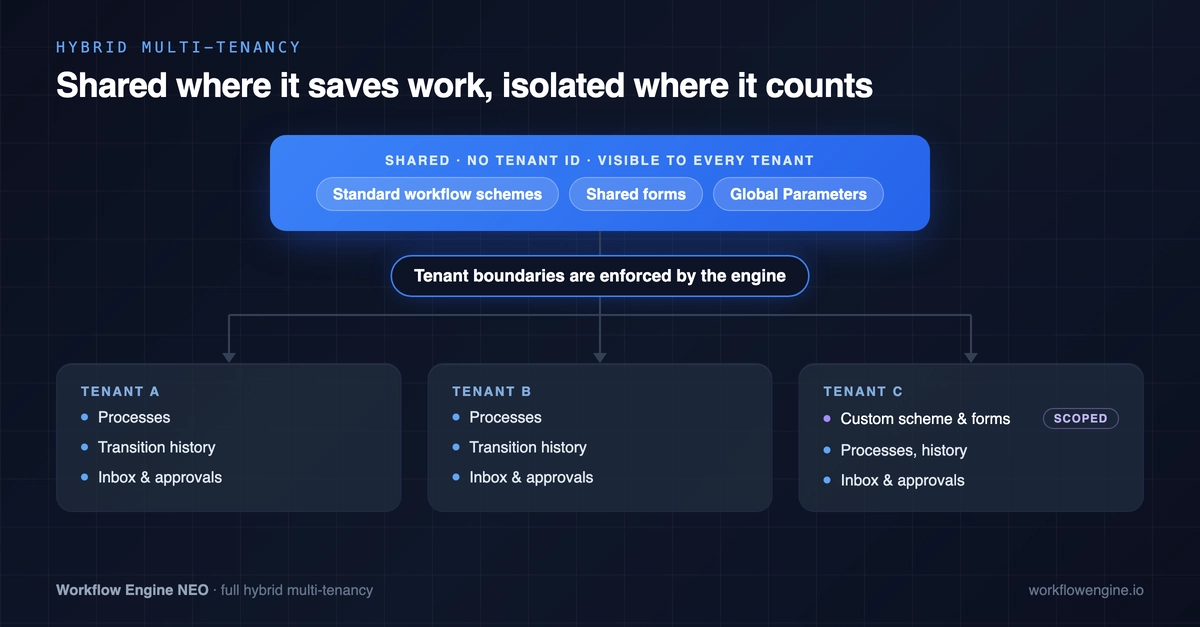
I am Mike Lukinov, co-founder of Optimajet. In July 2026 we shipped Workflow Engine by Optimajet version 22.0.0, and for SaaS teams it changes the thing that matters most: tenants become runtime objects instead of startup configuration. Tenants register and unregister while the host is running, and multi-tenancy is finally full and hybrid, meaning every layer of engine data can be tenant-scoped or shared, side by side in one installation.
Here is the scene that drove this work. Last month I spoke with a team running about 150 enterprise tenants on .NET. Everything worked, until sales signed one more customer. Their onboarding checklist contained the line "restart production". Every restart window interrupted other tenants' approvals mid-flight. That was not a workflow problem, it was an architecture problem.
This post is the announcement written the way I explain it on architecture calls: what a SaaS team should demand from a .NET workflow engine, and how the new version answers it. I mark each block as Documented behavior, Architectural recommendation, or Honest limitation, so you can separate facts from my opinion.