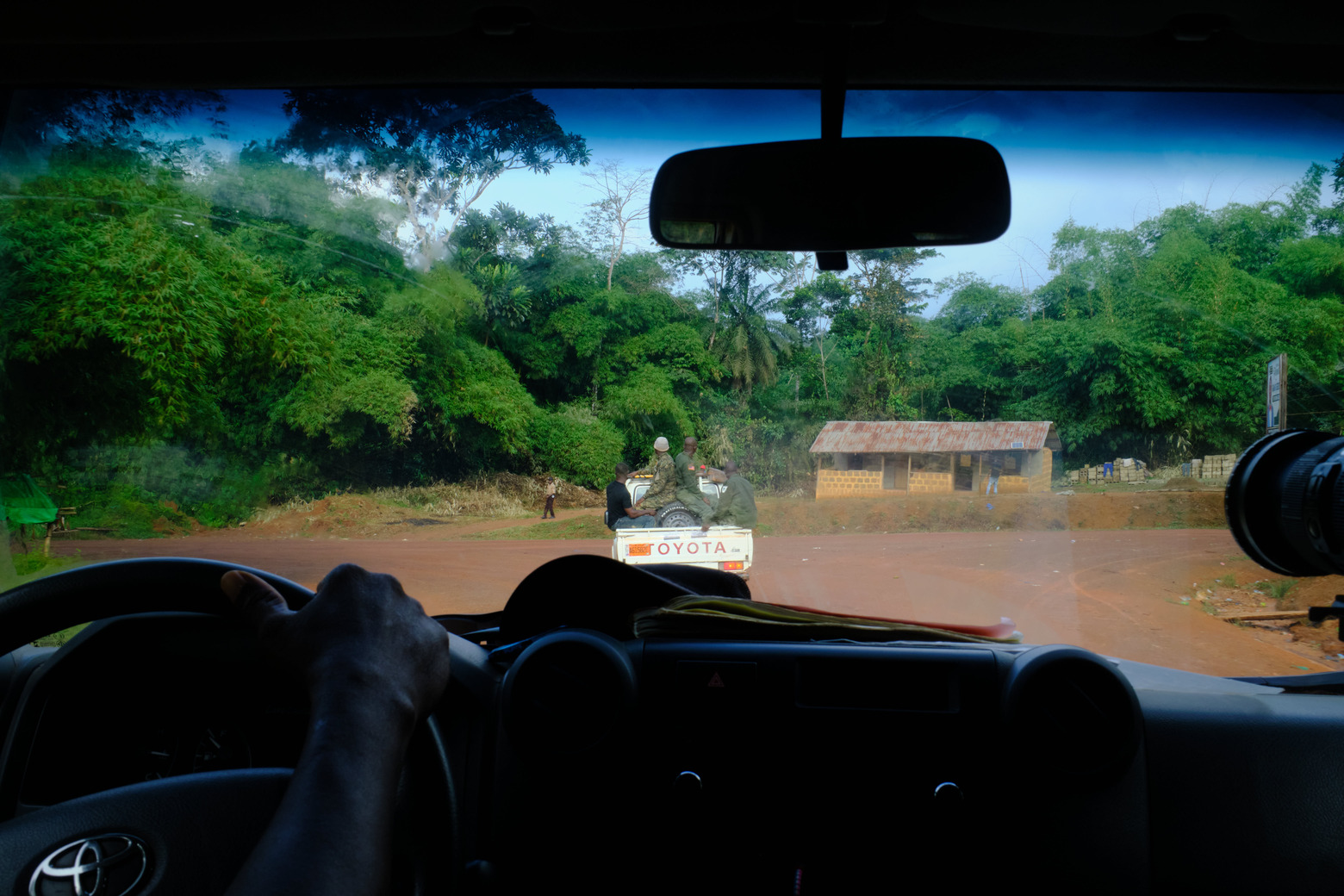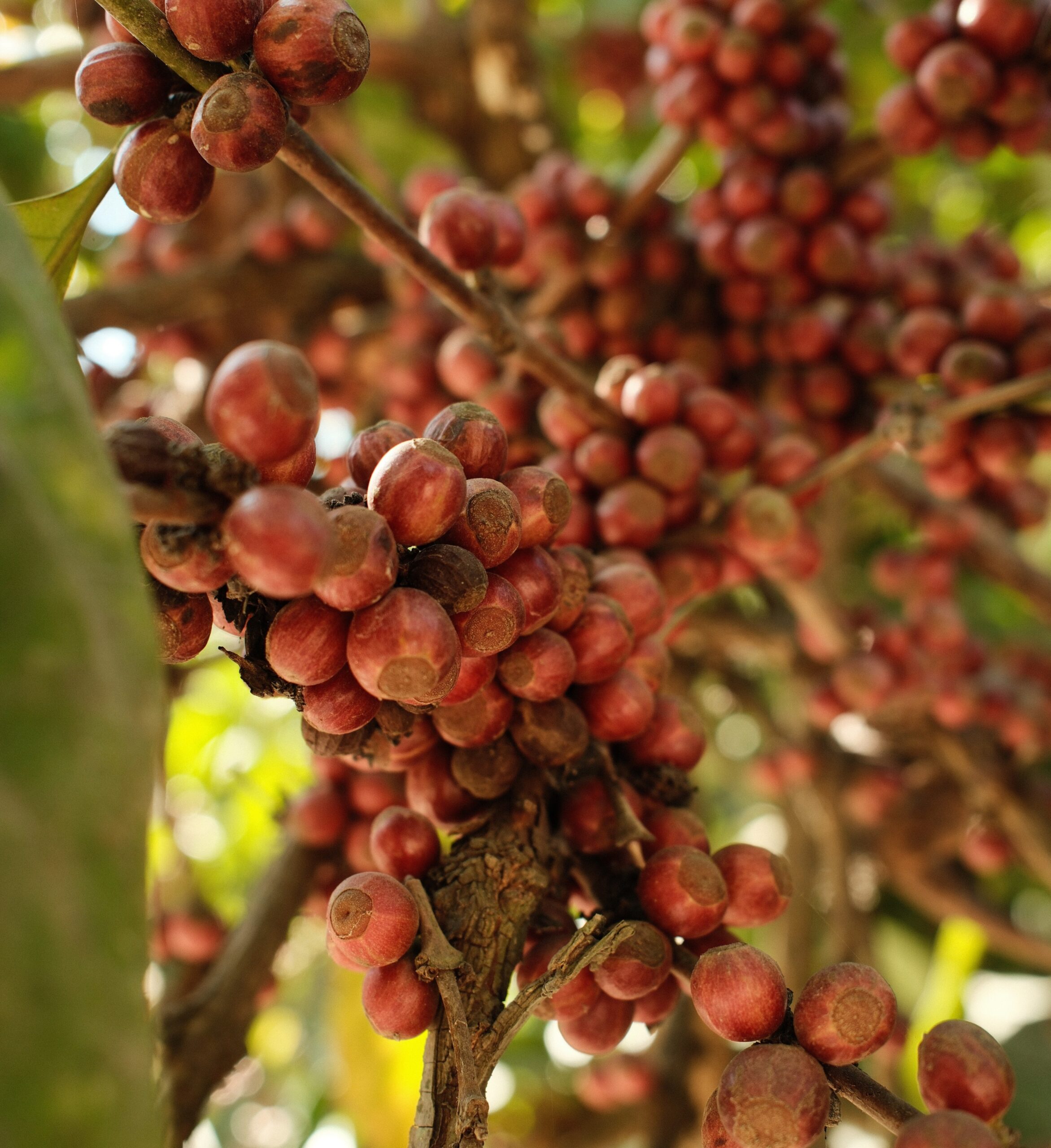
Your browser does not support this video. July 23rd 2026 By Tomas Weber On a baking-hot afternoon in January, Aaron Davis climbed out of a white Toyota Land Cruiser that had arrived at a village of clay-walled huts. It was the peak of Sierra Leone’s dry season. The ground was a rich ochre and dotted with deep, round shafts—mines which villagers had dug to prospect for gold and diamonds. But Davis had come in search of a different kind of treasure. On our way to the village, in the east of the country, we had driven past plantations of oil palms and cashews, and a railway carrying iron ore to the coast as part of a Chinese-backed mining venture. Davis, who wore a biker bandanna around his neck to protect it from the sun, had allowed me to join him on condition that I keep the name of the village secret. There were rumours that other foreigners had been poking around. A local farmer called Alex John Bulle led us down a path behind a hut on the edge of the forest. It was a relief to feel the cool air beneath the trees. Davis darted over to some yellowing, spindly bushes. To my untrained eye, there was little to distinguish them from any other foliage. But this was no ordinary plantation. It was a secret experiment to develop a coffee plant that could withstand climate change. At the moment, only two coffee species are grown at scale: arabica and robusta. Most coffee drinkers think arabica tastes better but it is also highly vulnerable to rising temperatures. Davis believes the saplings we were looking at—which belong to a naturally heat-resistant wild species called stenophylla—could be key to preserving the wonder-brew. Until a few years ago, scientists had feared that stenophylla was extinct in Sierra Leone. But Davis rediscovered the species in 2018 after trekking through the country’s forests for months. This clearing was one of dozens of sites where Davis and his team, including Bulle, were now cultivating the crop. This was no ordinary plantation. It was a secret experiment to develop a coffee plant that could withstand climate change Davis, a botanist at the Royal Botanic Gardens in Kew, London, is a wild-coffee prospector. He and his collaborators claim to have discovered roughly a third of the more than 130 species of wild coffee that we know about. An academic by training, Davis is instinctively open about his work. But that’s a reflex he’s had to learn to suppress. The world of wild coffee is unexpectedly cutthroat, as botanists, corporate scouts and chancers compete to find species that could become commercially valuable. On a recent trip to Malaysia, where he’d gone to visit coffee farms growing a rare hybrid, Davis realised that someone was on his trail. Farmers told his team, which had been posting about Davis’s journey on social media, that a suspicious individual had visited the same locations about two weeks after Davis had left them and requested seeds. Sometimes coffee-hunters don’t bother to ask: Davis told me that last year robbers made off with thousands of stenophylla plants from a farm in Sierra Leone. There are more formidable obstacles in the quest to save coffee. The warming climate is stretching even stenophylla’s heat tolerance to its limit. Davis had insisted on not watering the plants I saw in Sierra Leone; the purpose of the trial was to test if stenophylla could still flourish in its native habitat. But the plants seemed to be having a tough time of it. Their long, ribbon-like leaves, meant to be a deep, glossy green, were pale and paper-dry. Over the years Davis has also had to accept that big firms don’t seem particularly interested in helping him. A handful of companies, mostly based in Europe and America, dominate the coffee market, which is estimated to be worth around $250bn a year. Their focus is on short-term supply, rather than planning for the long run. Last year Mywish Maredia, an economist at Michigan State University, estimated that the global coffee industry spends less than 0.1% of its annual revenue on research and development—far below the r&d allocation of comparable industries. A resulting lack of innovation could put the 2.25bn cups of coffee the world drinks each day at risk. “I would use the word ‘crisis’,” said Maredia. Your browser does not support this video. Davis, 61, who rides a vintage motorbike around west London between coffee-hunting expeditions, seems to have assumed the burden of identifying species that can survive a changing climate. Aside from his modest salary from Kew, Davis does not, and will not, make money from any of his projects. At a roadside eatery in Sierra Leone, he jotted down the cost of a bargain fish lunch for his expenses. “People think it’s crazy,” he told me. “I get no bonuses, there’s no perks. Staying in the worst accommodation…I’m doing it purely for the enjoyment and the fact it’s going to have an impact.” Davis has a reputation in the coffee trade as a maverick—somebody with interesting but ultimately outlandish ideas about coffee’s future. Although some in the industry see the need for experimentation (“We need to be looking under every rock for opportunities,” an executive at an American firm told me), the big coffee companies tend to view Davis’s plan to grow new species at scale as a costly and quixotic fantasy. But Davis relishes a challenge. In Sierra Leone, he has chosen as his testbed a nation that was once a large coffee exporter, but has produced little since the 1990s, when a civil war left the country in ruins. Most growers believe its climate is too hot and dry to produce beans of high quality. Davis disagrees. If a coffee can thrive in Sierra Leone, goes the logic, it can thrive almost anywhere. At Kew, the idea that the world’s forests contain unappreciated treasures has deep roots. In 1759 Princess Augusta, the mother of King George III, founded the gardens that now occupy 320 acres along the southern bank of the Thames in west London. Kew became the nerve centre of imperial botany. Its plant collectors ranged across Africa, Asia and the Americas in search of species with commercial potential, packing promising specimens into specially designed cases and shipping them back to London. The big coffee companies tend to view Davis’s plan as a costly and quixotic fantasy Some were redistributed across the British empire. In the mid-19th century, staff from Kew sent South American cinchona trees to India to be cultivated. Their bark was processed into quinine, a natural anti-malarial. The drug helped Britons survive malaria in west and central Africa, making it easier to colonise the continent’s interior. Kew also helped shift the world’s rubber production from the Amazon to South-East Asia. In 1876 Henry Wickham, an explorer, orchestrated one of history’s most audacious plant heists when he smuggled 70,000 rubber seeds out of Brazil and sent them to Kew. The seeds were shipped to British Malaya (an area that now covers Singapore and parts of Malaysia), where they were used to establish plantations. Today, Kew’s mission is conservation and research rather than the search for tropical cash crops. But its herbarium, a vast scientific archive containing more than 7m preserved plant specimens, contains valuable clues in the search for climate-resilient crops. Over the past several years, coffee growers have endured droughts, frosts, hailstorms and floods. Alongside these more extreme weather events, seasons have become more unpredictable: rains arrive too early and dry seasons stick around for too long. In Ethiopia, the birthplace of arabica, early downpours trigger blossoms that wither away before pollination. “It’s just unprecedented. When you talk to the locals there they say: ‘We’ve never seen this’,” said Davis. In Colombia, intensifying heat is driving arabica farmers up the mountains, where land is scarcer but cooler (arabica struggles above 30°C). In 2020 and 2021 in Brazil, the world’s largest coffee producer, severe drought followed by frost destroyed nearly 600m kilograms of coffee, around 6% of annual global supply. Climate change, along with tariffs and rising labour costs, has more than doubled the average price for half a kilogram of ground-roast coffee in America since 2020. “Within a decade”, said Davis, “coffee will become a luxury product.” Your browser does not support this video. Robusta, a caffeine-rich species widely used in instant coffee, is more heat-resistant than arabica (it takes its name from its supposed resilience). But even it is not immune to climate change. In Vietnam’s Central Highlands, the world’s most important robusta-growing region, long droughts punctuated by floods have led to a big decline in fruit yields. In 2015 researchers from Germany, Colombia and Nicaragua published a study which suggested that half the world’s coffee-growing areas could become unusable by 2050. It was the first time that coffee companies had ever received such a blunt warning. Reading that paper “was kind of like a cold shower”, Andrea Illy, the chairman of Illycaffè, an Italian coffee brand, told me from his office in Milan. “We said: ‘Oh my God’.” Growing coffee has always been a high-risk, low-margin enterprise. Around half the world’s 25m coffee farmers survive on less than $3.20 per day. This year they have also faced higher costs for fertiliser, thanks to Donald Trump’s war on Iran. Factor in the increasingly volatile weather, and an already precarious business is becoming dangerously unstable. Climate change is making many growers consider switching to a more reliable crop, such as plantain or palm oil, or even abandoning the industry altogether. Meanwhile, global demand for coffee continues to swell; in China consumption has more than doubled over the past ten years. The puzzle of how to deliver on future orders bedevils producers. “Where’s the next 20m bags going to come from?” asked Dave Behrends, the head of trading at Sucafina, a large coffee trading firm in Geneva. And the “next 40m?” Even when he’s not working, Davis spends much of his time around plants. He tends to his allotment and the garden of the west London house he shares with his wife Lucy Smith, a botanical artist he met at Kew. After his parents' recent deaths, Davis began biking down to the Kent coast, in south-east England, to care for their lush tropical garden. It was here that his fascination with plant-hunting had begun. When Davis and his sister were children, their mother, a keen horticulturalist, used to take them to plant fairs and nurseries to buy rare flowers and shrubs. The family’s garden grew so magnificent that the local postman would sometimes quietly take tea breaks in it. “Within a decade coffee will become a luxury product” When Davis was a teenager, he had a girlfriend whose father had worked in India in the 1950s as a butterfly collector. The romance and adventure of a job that involved darting around the world in pursuit of exotic specimens caught his imagination. He started collecting caterpillars, but then realised he was more interested in growing the plants they ate. At university Davis studied botany and wrote his phd thesis on snowdrops, white wildflowers native to Europe and the Middle East that bloom in winter. Shortly after completing his thesis, Davis was having tea at Kew Gardens when he happened to get into conversation with Diane Bridson, an expert in coffee plants, who worked at Kew. As the story goes, Davis peppered Bridson with questions about how many coffee species there were and where they grew, only to be told, “Nobody knows exactly.” Impressed by Davis’s enthusiasm, Bridson eventually hired him to find out. He then set off on a mission to catalogue the world’s coffees, spending much of his time in Madagascar. By the mid-2000s, as conversations among colleagues became increasingly dominated by climate change, Davis found himself preoccupied with the consequences for coffee. Realising there was almost no data on the subject, in 2012 he assembled a small team of botanists to gather as much as possible. Your browser does not support this video. They decided to focus their research in Ethiopia, Africa’s largest coffee producer. The scientists from Kew, joined by their Ethiopian counterparts, spent years driving more than 30,000 miles across the country, often on roads so remote they did not appear on the government’s own maps. They visited as many coffee farms as possible, recording data about the climate in each area and using it to build models to predict what would happen as temperatures rose. The results shocked them. By the end of the century, the models suggested, large parts of Ethiopia would become unsuitable for growing coffee. Davis had hoped to find wild varieties of arabica in Ethiopia that were naturally adapted to higher temperatures, but came back empty-handed. He wondered if he should be looking for an entirely different wild species. Somewhere in Africa’s forests, he reckoned, there must be coffee plants with helpful genetic traits, such as heat tolerance or drought resistance. Of course, they would also need to taste good. One species that piqued his interest was stenophylla, which had been cultivated in Sierra Leone in the early 20th century but was no longer being grown by the 1950s. Davis had never seen a live plant, but knew what it looked like. Inside Kew's herbarium is a specimen collected by George Don, a Scottish botanist, on an expedition to Sierra Leone in the 1830s. At various points, stenophylla was grown commercially in several other African countries, though on a smaller scale than it was in Sierra Leone. Although arabica was the first coffee species known to have been traded, west Africans may have been consuming stenophylla for far longer. Daniel Sarmu, a Sierra Leonean development specialist who would later join the search for the lost species, told me his ancestors roasted stenophylla seeds over open fires before grinding them in mortars. Coffee growers may switch to more reliable crops, or even abandon the industry Women used the plant's fruit, known as cherries, to make soap and to flavour dishes, and walking sticks were carved from its branches. Farmers continued to grow stenophylla under British colonial rule, but from the early 20th century they increasingly shifted towards robusta, which had a reliably higher yield. Stenophylla had other qualities, however. Accounts from the 19th and early 20th centuries praise its flavour; in one scientific journal from 1929, a French explorer describes it as “exquisite”. Don suggested its taste was superior to arabica. Davis knew stenophylla could stand up to heat and drought: it was native to a place much warmer than the coffee-growing regions of Ethiopia. But he also knew that looking for stenophylla or similar species was not a mission to be undertaken lightly. “It’s very, very hard to find wild coffee,” Davis told me in December as we sat in his office at the top of a red wrought-iron spiral staircase above the herbarium. It was a small room, filled with jars of old coffee beans, dna samples of wild coffee in airtight containers, maps and leather-bound Victorian plant manuals. We were sipping sweet and fruity cups of excelsa—another drought-resistant species he’s helping farmers grow in Uganda. Davis explained that many wild species grow in small, isolated pockets in dense forests. Some coffees grow up to 20 metres tall in high-altitude rainforests, while others are twiggy shrubs in low-lying areas. Their fruit can be bright red or deep black, and range in size from pea to grape. The seeds they contain (what we commonly know as beans) can be turned into brews with a range of weird and wonderful flavour notes, from jasmine, clove and charcoal, to marshmallow and purple yam. Hunting for wild coffee is physically demanding work, involving days of hacking through undergrowth while balancing the unwieldy pruning poles needed to pluck fruit from the treetops. While seeking out species in Cameroon in the early 2000s, Davis was further weighed down by a backpack filled with clinking bottles of Johnnie Walker Black—gifts for village chiefs in exchange for permission to roam their land. Your browser does not support this video. Coffee-prospecting can be dangerous, too. In the forests of Madagascar in the late 1990s, Davis and his mentor, the Malagasy biologist Franck Rakotonasolo, were searching for species they believed might be naturally caffeine-free. During the expedition Davis contracted trench foot and spent a week in hospital with hookworm. Despite the ordeals, he recalls those adventures with a kind of nostalgia. “The combination of being naive, young and not having a great deal of funds”, he told me, “always makes things exciting.” In 2014 Davis turned 50, although he had the energy of a younger man, not to mention two decades of experience in the jungle. He was still desperately short of funds. But if anyone was going to track down stenophylla, it was going to be him. A conversation with an old colleague gave Davis a way forward. Jeremy Haggar, an ecologist at Greenwich University, told him he was working with farmers growing robusta in Sierra Leone. Davis suggested they team up to find stenophylla, if it still existed. According to Davis’s own research, 60% of wild coffees are threatened with extinction thanks to a mixture of deforestation, climate change, pests and diseases. Even if it was still growing somewhere, they would be looking for it in a country roughly the size of Scotland. Haggar was enthusiastic about the challenge, but both men knew they would need to take a targeted approach. Davis combed through documents in Kew’s library and found that the last recorded sighting of stenophylla, in 1954, had been in a forest three hours east of Freetown, Sierra Leone’s capital. In 2018 he and Haggar, together with Sarmu, the Sierra Leonean development specialist, began searching in that spot, as well as in the hills around Freetown. It had been a long road to get there. First the Ebola outbreak in west Africa meant their travel plans had to be put on hold. Then some promising-looking leaves Haggar found in Sierra Leone failed to match the specimen preserved in Kew’s herbarium. To Davis’s delight, most of the tasters couldn’t distinguish stenophylla from arabica For all the men’s excitement at finally being on the ground, the plant remained stubbornly elusive. Sarmu rode from farm to farm on his motorbike, asking people to keep an eye out for it. He put up “wanted” posters featuring photocopies of stenophylla leaves and inviting people to send in samples. “We got a lot of weird stuff,” Davis told me. “But no stenophylla.” On a muggy afternoon that December, Davis, Haggar and Sarmu were pushing their way through the Kasewe Hills, a patch of forest in the middle of the country. It was getting late; they’d spent hours trying to arrange permission from the village chief to enter the forest, and find somebody to drive them there. Out of nowhere Davis noticed a small shrub nestled in the undergrowth. It was the only coffee plant in the area and its leaves were long and narrow, tapering to a sharp point. He was certain it was stenophylla. The feeling, Davis told me, was one of “absolute relief”. “To finally find a living plant was really exciting.” Although the shrub was healthy, it was too young to fruit. But at least there was proof that stenophylla was alive and well. On the walk back to the car, Sarmu mentioned the landscape reminded him of the forests around his home city of Kenema, Sierra Leone’s diamond-trading capital. Perhaps stenophylla was also growing there? They headed in that direction. After several hours hiking through thick forest in the hills around Kenema, the trio found several mature stenophylla trees, around seven metres tall, growing on a sloping ridge. They were not fruiting either. But when the trio returned to check at the beginning of 2020, they found branches laden with clusters of inky-black fruit. They weren’t quite ripe, but after his colleagues returned home, Sarmu harvested the cherries and sent ten grams of stenophylla seeds to England. In 2021 Davis and Haggar took the packet to the headquarters of Union Coffee, an east London roaster which specialises in ethically sourced beans. Steven Macatonia, Union Coffee’s co-founder, was interested in selling stenophylla if it lived up to its reputation. Your browser does not support this video. After managing to eke out just enough coffee for a few espresso shots, the men took their first sips. According to the rules of coffee tasting, a taster must adopt a neutral expression after drinking to avoid influencing their colleagues—but Davis struggled to stop his poker face from turning into a grin. They all agreed: stenophylla’s sweetness, silky body and softness on the tongue brought to mind a high-quality arabica—specifically Rwandan Red Bourbon, a prized variety that dominates coffee production in the east African country. “It was mind-blowing,” said Davis. Union was willing to sell stenophylla if it could be grown at scale, and Davis was keen to bring other companies on board. The following year, he held a blind tasting for a group of professional tasters in Montpellier, France. To Davis’s delight, most of the tasters—which included an expert from Nespresso—were unable to distinguish stenophylla from arabica. In April 2021 he published the results in a paper in Nature. Within hours, his inbox was flooded with requests for stenophylla—some from big coffee companies such as Illy. (Unfortunately there wasn’t enough stenophylla to meet the demand.) There was talk of more trials. Starbucks, which markets itself as using 100% arabica, began plotting to cross the coffee with stenophylla in the hopes of capturing some of its heat and drought tolerance. Six years later, though, the initial hype around stenophylla has died down. While small specialty-coffee outfits continue to compete for the world’s extremely limited supplies, interest from industry heavyweights has remained peripheral, with none of the large-scale investment Davis had hoped for. Instead, most climate-related r&d has focused on breeding more resilient versions of existing commercial species. Davis believes that approach can only go so far. “If you stay within a species,” he told me, “you’re bound by its biological limits.” “There’s a big risk of introducing something that you don’t know” But domesticating wild coffees such as stenophylla is difficult and expensive. The first step to introducing a new species is finding a coffee in the forest that not only tastes good but also yields plenty of fruit. Then you have to start experimenting. How much shade does it enjoy? Which altitudes will it tolerate? How much water does it need? And before you can plant an unruly wild species at scale, you need to “break it in”. “If you try to get a zebra to pull a cart for you it’s a bit of a mess,” said Vern Long, chief executive of World Coffee Research, an organisation working with the coffee industry to breed temperature-proof varieties of arabica and robusta. Over successive generations of plants, Long explained, you have to pick out the strongest individuals—the most vigorous, the ones with the best yields and taste—and breed them until you have trees with reliably strong genetics. Even with modern breeding tools, that can take decades. There are yet more hurdles to overcome. Farmers must be persuaded to rip out their existing trees and plant an unknown species that will take years to reach maturity. Bulle—the farmer who is helping with Davis’s project—told me his parents used to grow robusta but had abandoned their coffee plants during the civil war in the 1990s, when 2.6m people were displaced from their land. For farmers of his generation, stenophylla presented both an opportunity and a challenge. “I’m very anxious,” he told me. “It’s so different.” Finally you have to hope that prospective consumers won’t be put off by the unfamiliar new taste of a new coffee. “There’s a big risk of introducing something that you don’t know” to consumers, said Pablo von Waldenfels, director of corporate responsibility at Tchibo, a German coffee retailer. But Davis remains convinced of stenophylla’s potential and is determined to prove that it can be grown commercially in its native environment. Together with Sarmu and Haggar, he is working with dozens of Sierra Leonean farmers to cultivate 12,000 plants in a programme supported by a small grant from Sucafina, the coffee-trading firm. “It’s something that we think could really help our industry over the next 20 years,” Behrends, the company’s head of trading, told me. Despite the company’s support, the trials remained underfunded, and Davis and Haggar were making frequent trips to Sierra Leone to monitor the young plants. When I joined them in January, the country was enduring an unusually severe dry season. As our plane descended towards Freetown airport, I could see small fires glowing in the forest below. Sitting in the dining room of our hotel outside Freetown the next morning, Davis gave short shrift to the complimentary Nescafé. “I don’t drink that common stuff anymore,” he said, laughing. “I drink stuff that’s not even known to science.” From his luggage he extracted a hand-powered coffee grinder and a small bag of beans and proceeded to brew me another cup of excelsa. Davis and Haggar spent a week checking their stenophylla plots across the country. In many locations, the trees appeared stunted and stressed—partly because of the heat, but also because the project was running on minimal resources and in some cases without fertiliser. From time to time, the ramshackle nature of the endeavour wore down Davis’s usually cheerful disposition. “We’re starting from absolute scratch,” he told me after inspecting one disappointing site. “The capacity for research [and] intervention in Sierra Leone is almost non-existent.” As we moved farther inland towards the country’s eastern highlands, the trees began to look healthier. They were taller and stronger, and their leaves were a darker green. At one plot, we met a farmer whose main problem was keeping his neighbours away. Believing the stenophylla plants to be weeds, they had chopped down several of them. “Most people here don’t know anything about stenophylla,” he told me. Luckily, dozens of his plants had survived the cull and were about to bud. He was proud to be growing his country’s native coffee and looked forward to harvesting several kilos of beans next year—a small but symbolic haul. Davis was overjoyed at how well the stenophylla plants were doing. “I’d got to the stage where I thought they’d never flower, so I’m just super-happy,” he said. Your browser does not support this video. When he got back to London, Davis embarked on an anxious wait for news about the stenophylla plantations. Would they make it through the long dry season? In June he texted me excitedly to say that the plants that were flowering in January were now fruiting. “You know,” he said, “I think it’s going to happen. We will be drinking stenophylla.” The plan is initially to market the coffee as a high-end product, selling it to coffee nerds at a premium. Stenophylla's small yields, however, mean farmers such as Bulle would still be gambling their livelihoods on it. Davis, though, believes there could be a way to help spread the risk. He has been hunting through Sierra Leone’s forests for yet another species of wild coffee. Liberica, which copes better at higher temperatures than arabica, is mostly grown in South-East Asia, but it is native to west Africa. In the 19th century, American abolitionists imported the beans from Liberia, a west African republic founded to “resettle” free and formerly enslaved black Americans. They served the fruity, smoky brew to Union troops in the civil war. Davis thinks liberica, which can grow up to 20 metres tall, could provide stenophylla trees with the shade they desperately need, as well as helping farmers diversify. Earlier this year, he found what could be a liberica tree in a forest on Sierra Leone's border with Liberia, and intends to test its dna. His team at Kew has identified a natural hybrid of liberica and excelsa, “libex", which is apparently tastier and higher-yielding than purebred liberica, while retaining its heat tolerance. Davis is always on the lookout for ways to get other people as excited about wild coffee as he is. He and his wife sometimes talk about collaborating on a book about his life’s work. (Smith is hesitant about taking on what could become a never-ending project. Her husband, she suspects, will keep discovering more coffees.) Davis wonders about getting France’s top barista to make stenophylla espressos in the World Barista Championship. Another idea is to auction the forthcoming haul from the farmer in eastern Sierra Leone at Sotheby’s or Christie’s. To help generate a buzz, he gave a small bag of stenophylla beans to James Hoffman, a British barista who runs a popular YouTube channel. “It is ultimately a clean, sweet-tasting coffee that has some acidity, has got some florality,” said Hoffmann in a video. It “actually fills me with a great deal of hope.” ■ Tomas Weber is a writer in London Illustrations by Aga Wieckowska VIDEO COURTESY OF KEW GARDENS
The maverick scientist trying to save coffee from extinction
Climate change threatens your morning brew. Its future may depend on a long-lost plant
4,854 words~22 min read