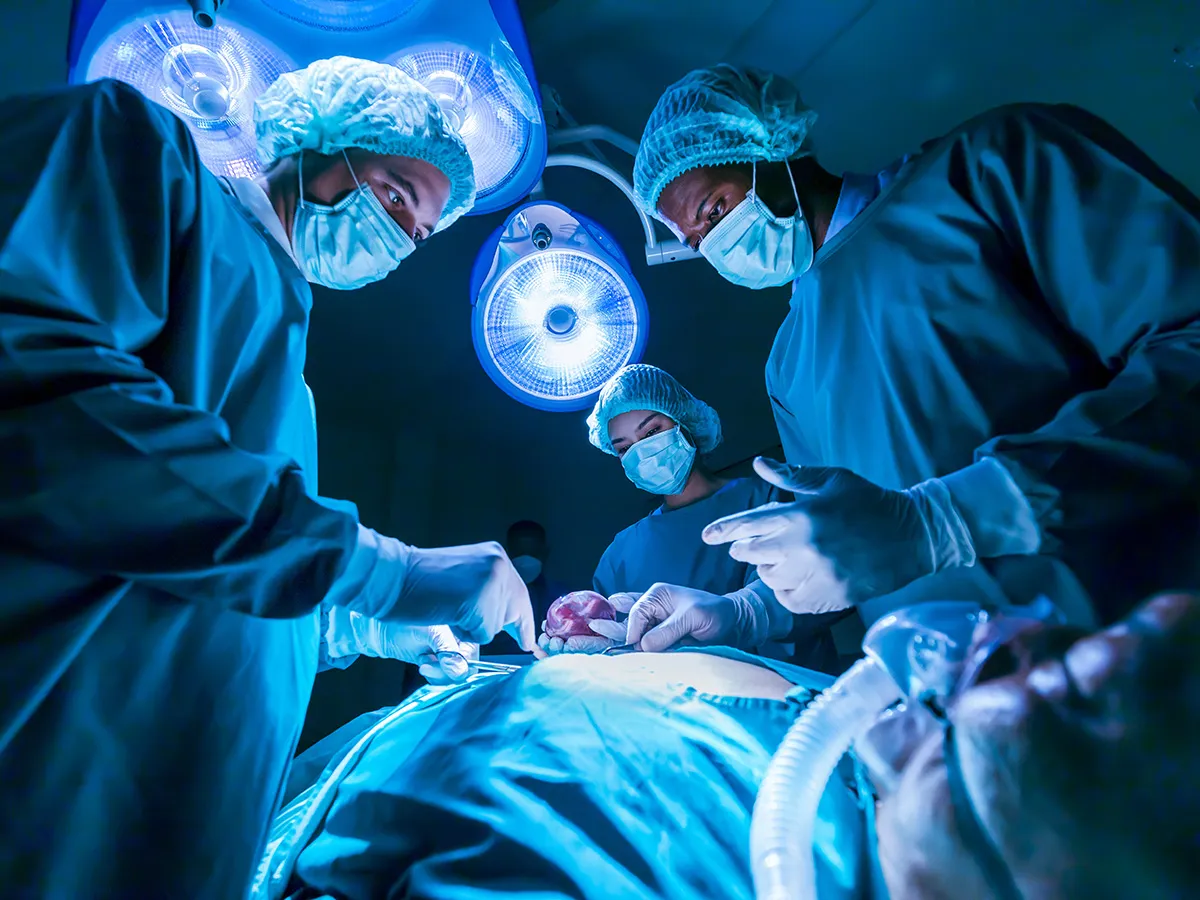
Skip to Content Subscribe Our Offers My Account Manage My Subscriptions FAQ Newsletters Canada Canadian True Crime Canadian Politics Health World Israel & Middle East Financial Post NP Comment Longreads Puzzmo Diversions Comics NP News Quiz New York Times Crossword Horoscopes Life Eating & Drinking Style Sponsored Play for Ontario Travel Travel Canada Travel USA Travel International Cruises Travel Essentials Culture Books Celebrity Movies Music Theatre Television Business Essentials Advice Lives Told Tails Told Shopping Buy Canadian Home Living Outdoor Living Kitchen & Dining Tech Style & Beauty Personal Care Entertainment & Hobbies Gift Guide Travel Guide Amazon Prime Day Deals Savings National Post Store More Sports Hockey Baseball Basketball Football Soccer Golf Tennis Driving Vehicle Research Reviews News Gear Guide Obituaries Place an Obituary Place an In Memoriam Classifieds Place an Ad Celebrations Working Business Ads Archives Healthing Epaper Manage Print Subscription Profile Settings My Subscriptions Saved Articles My Offers Newsletters Customer Service FAQ Newsletters Canada World Financial Post NP Comment Longreads Puzzmo Diversions Life Shopping Epaper Manage Print Subscription HomeNewsCanada'Death by organ donation': Doctors raise possibility of retrieving organs from MAID patients while they are still aliveRetrieving organs from MAID patients before they die might improve the quality of donor organs, as the authors of a new paper argue, but it also risks eroding public trust in MAID and organ donationLast updated 16 minutes ago You can save this article by registering for free here. Or sign-in if you have an account.The idea of death by organ donation not only sounds ghoulish, it also risks eroding public trust in both MAID and organ donation, says one bioethicist. Photo by Adobe StockA new paper is reviving the idea of “death by organ donation” — retrieving organs from MAID patients while they are sedated and unconscious but still alive.Enjoy the latest local, national and international news.Exclusive articles by Conrad Black, Barbara Kay and others. Plus, special edition NP Platformed and First Reading newsletters and virtual events.Unlimited online access to National Post.National Post ePaper, an electronic replica of the print edition to view on any device, share and comment on.Daily puzzles including the New York Times Crossword.Support local journalism.Enjoy the latest local, national and international news.Exclusive articles by Conrad Black, Barbara Kay and others. Plus, special edition NP Platformed and First Reading newsletters and virtual events.Unlimited online access to National Post.National Post ePaper, an electronic replica of the print edition to view on any device, share and comment on.Daily puzzles including the New York Times Crossword.Support local journalism.Create an account or sign in to continue with your reading experience.Access articles from across Canada with one account.Share your thoughts and join the conversation in the comments.Enjoy additional articles per month.Get email updates from your favourite authors.Create an account or sign in to continue with your reading experience.Access articles from across Canada with one accountShare your thoughts and join the conversation in the commentsEnjoy additional articles per monthGet email updates from your favourite authorsSign In or Create an AccountorCurrent law prohibits it, due to the long-standing dead donor rule, or DDR, which holds that people must be dead before organs can be removed (the “Death Requirement”) and that doctors must not kill a person by means of procuring his or her organs (the “Don’t Kill Rule”).However, the authors of a new paper published in the prestigious New England Journal of Medicine say the growing acceptance of voluntary euthanasia complicates the dead donor rule, because people are knowingly consenting to death, and euthanasia laws sanction killing by physicians in “circumscribed situations.”Get a dash of perspective along with the trending news of the day in a very readable format.By signing up you consent to receive the above newsletter from Postmedia Network Inc.A welcome email is on its way. If you don't see it, please check your junk folder.The next issue of NP Posted will soon be in your inbox.We encountered an issue signing you up. Please try againDeath by organ donation might improve the quality of donor organs, they argue, “potentially saving many lives” and allowing donors to maximize their donation.The idea not only sounds ghoulish, it also risks eroding public trust in MAID and organ donation both, said University of Toronto bioethicist Kerry Bowman, who has spent most of his working life in critical care.“I think a lot of the public would be fairly horrified by it.”The authors of the paper — “Contextualizing the Dead Donor Rule in an Era of Voluntary Euthanasia” — said they are not arguing that the dead donor rule should be abandoned. Rather, the authors say it’s time to reassess the rule as it applies to MAID patients, given the growing acceptance of organ donation after euthanasia.The rule protects people from being killed for their organs and treated merely as a means to benefit others, and has been preserved to protect public trust, they said.However, voluntary euthanasia “creates a new ethical context” for the DDR, they wrote.The “categorical constraint on physician killing, for its part, is legally and ethically circumvented by voluntary euthanasia,” two Canadian critical care doctors and a Harvard Medical School bioethicist wrote in the prestigious New England Journal of Medicine.“The current legal reality of voluntary euthanasia provides a new context for interpreting the Don’t Kill Rule.”MAID organ donors “are not dead yet, but their death is imminent” and will result directly from their voluntary request to have their lives ended by lethal injection, they said. In those cases, it may become “ethically arbitrary” to require a formal declaration of death before organs are retrieved, they wrote.“In this landscape, the moral significance of strict temporal sequencing (post, not pre-mortem retrieval) is diminished,” they said.The outcome isn’t altered “by whether death occurs moments before or during organ retrieval.”Therefore, the ethical focus should “shift away from identifying a precise moment of biologic death and toward respecting patients’ autonomous decisions, ensuring that safeguards against coercion and exploitation are robust and advocating for a transparent and publicly accountable process,” they wrote.Under guidance developed by the Canadian Blood Services, the decision to receive MAID must precede, and be separate from, the decision to donate, so that people don’t feel pressured to choose either.However, the possibility of organ donation can be raised once the MAID request has been granted, and increasing numbers of Canadians requesting MAID are asking to donate their organs after death. One study found Canada performs more organ donations after euthanasia than any other country that has legalized the practice. Between 2019, the first year it was available, and 2021, Canada performed 136 organ donations after euthanasia. In 2021, Canada had 41 cases, compared to only 20 in Belgium, The Netherlands and Spain combined.With organ donation after MAID, the person is taken to a hospital and administered life-ending drugs. Next follows a standard organ donation protocol: blood pressure is monitored via a line inserted into a small artery in the wrist to determine when the person’s heart has stopped beating.Doctors then wait an additional five minutes — the “no touch” period — to confirm death before the person is transferred to the operating room for organ retrieval.Death by donation “would look in some ways similar, and in some ways very different,” said first author of the new paper, Dr. Carter Winberg, a Canadian critical care doctor currently completing his masters in bioethics at Harvard Medical School.The person would be brought to hospital and taken to an operating room, where they would receive the same sedating medications used with euthanasia. Except surgery would commence once the person was fully unconscious. Death would ultimately be caused by removal of vital organs.Organs were once only ever removed from donors declared brain dead, meaning an irreversible loss of all brain function. They’re medically and legally dead, but their hearts are still beating, and a ventilator keeps oxygen flowing to the heart and other organs until organs can be retrieved, packed in special preservation fluids and sent to the recipient’s transplant hospital.Twenty years ago, doctors began removing organs from “controlled circulatory death” donors — people who, like MAID patients, aren’t brain dead, but whose prospects for recovery are so grim a decision is made to withdraw life support.However, organs can be damaged during the dying process and mandated waiting period due to a lack of blood flow and oxygen. The longer the ischemia time — that elapsed time without blood flow — the greater the risk the organs won’t function when transplanted inside another body.The current legal reality of voluntary euthanasia provides a new context for interpreting the Don't Kill RuleOrgan donation after euthanasia carries the same risks. However, if organs were removed while still receiving blood, the ischemia time would be shortened dramatically, making lungs, livers, kidneys and pancreases as viable as organs retrieved after brain death. It would also enable heart donation. Most donor hearts are retrieved from brain-dead donors.“Since death would be a chosen and inevitable outcome in these cases, enabling retrieval under ideal conditions represents a Pareto improvement: no one would be made worse off, and multiple lives might be saved,” they said.No jurisdiction, as far as they’re aware, is considering or implementing death by organ donation. But in the setting of voluntary euthanasia and organ donation after euthanasia, the idea warrants “open, transparent dialogue,” they argue.Most cases of organ donation involve people in intensive care who can’t provide first-person consent. Doctors have to rely on substitute decision makers and families “to help us understand their values and wishes,” Winberg said.“That’s a very different looking context than someone who drives in from home with a family member and is able to have a full conversation with you about their values and wishes.”With legalized euthanasia, organ donation has entered a “completely different landscape,” he said. “You have competent people asking and requesting their death. You have direct physician killing,” realities that didn’t exist when the dead donor rule was “stamped and defined in the literature.”Everyone agrees people shouldn’t be used for their organs, he said.“If the purpose of the death requirement is to maintain public trust and protect patients, can the spirit of that rule be done through other means? Our group would argue that it could be done through other means, if it was done thoughtfully in terms of upstream safeguarding with people who are competent and able to provide first-person consent.”“So, yes, broadly, we are asking whether retrieval could form part of the process that causes death, rather than always occurring only after death has been declared in this specific new context,” Winberg said.It’s a scenario his two co-authors raised in an earlier paper published in 2019 in the same journal.Today, more than 200 million people live in jurisdictions around the world with some form of legalized assisted death.Death by organ donation “is asking surgeons to take a living person into the operating room and to come out with a dead person, which I think is murder,” Lainie Friedman Ross, a University of Rochester bioethicist, told NPR.Bowman, the University of Toronto bioethicist who has been involved in many MAID cases, is troubled by the very practice of organ donation after euthanasia.“There’s a substantial cohort of patients that apply for medical assistance in dying who are approved, yet who choose not go go through with it. They take things day by day and they eventually die of their illnesses in other ways,” he said.But if they have already talked to people about organ donation they might be afraid to say they’ve changed their minds. “I would argue that really erodes the voluntary element of it.”People who seek MAID “tend to be really, really worn down by the reality and difficulties” of the illnesses they’ve been living with, he said.“Some have said to me, ‘I take more than I give. Everyone takes care of me. I don’t give anything back.’ I worry about the psychology of that, in a lot of ways.”Many clinicians also “really hold the desire to not want to waste organs,” Bowman said. “There can be subtle encouragement, definitely, to donate (and) societal praise.”The authors “are kind of saying the definition of death has evolved, so we don’t have to worry about that as much,” Bowman added.“You really do need some firewalls,” he said. “Clinicians, whatever they are, have got to put the patient in front of them first at all times. When a person is going to donate and it’s clinically advantageous for them to donate when they are still alive, one is pulling the other.”National PostOur website is the place for the latest breaking news, exclusive scoops, longreads and provocative commentary. Please bookmark nationalpost.com and sign up for our newsletters here. Join the Conversation This website uses cookies to personalize your content (including ads), and allows us to analyze our traffic. Read more about cookies here. By continuing to use our site, you agree to our Terms of Use and Privacy Policy.
'Death by organ donation': Doctors raise possibility of retrieving organs from MAID patients while they are still alive
A new paper explores whether doctors should have to wait to retrieve organs from MAID organ donors until they are declared dead.
2,135 words~10 min read