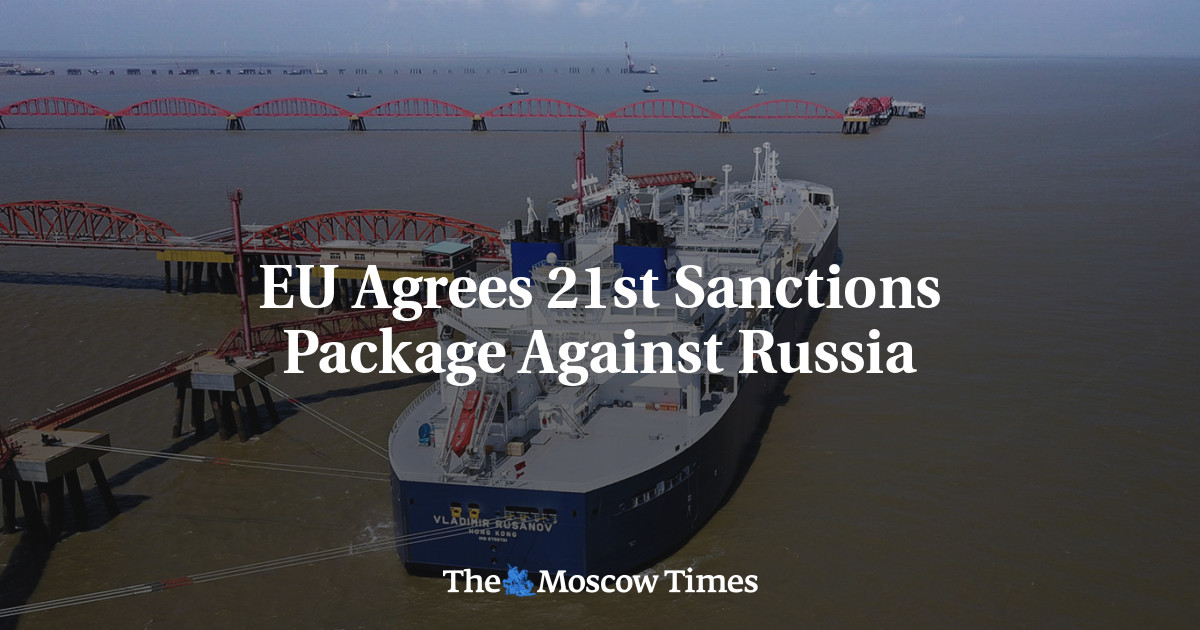
EU ambassadors reached an agreement on the European Union's 21st package of sanctions against Russia on July 23 after Greece withdrew its veto, ending weeks of difficult negotiations. The measures still require formal approval by EU ministers through a written procedure, but that is expected to be a formality.
According to EU diplomats, the package is less ambitious than the European Commission's original proposal after member states negotiated a series of compromises. Despite that, officials stressed that the agreement preserves EU unity while introducing new restrictions targeting Russia's economy and financial sector.
"The negotiations on this package have been challenging, but we found agreement on the remaining issues while maintaining EU unity as we have in the previous 20 packages," an EU diplomat said after the deal was reached.
One of the key elements retained is a revised price cap on Russian oil. The EU agreed to freeze the cap at about USD44 per barrel for the next 12 months. Under the previous mechanism, the cap would have automatically increased alongside rising global oil prices, potentially reaching around USD58 per barrel. By keeping the limit fixed despite market volatility, EU officials say Russia will be deprived of significant oil revenue.