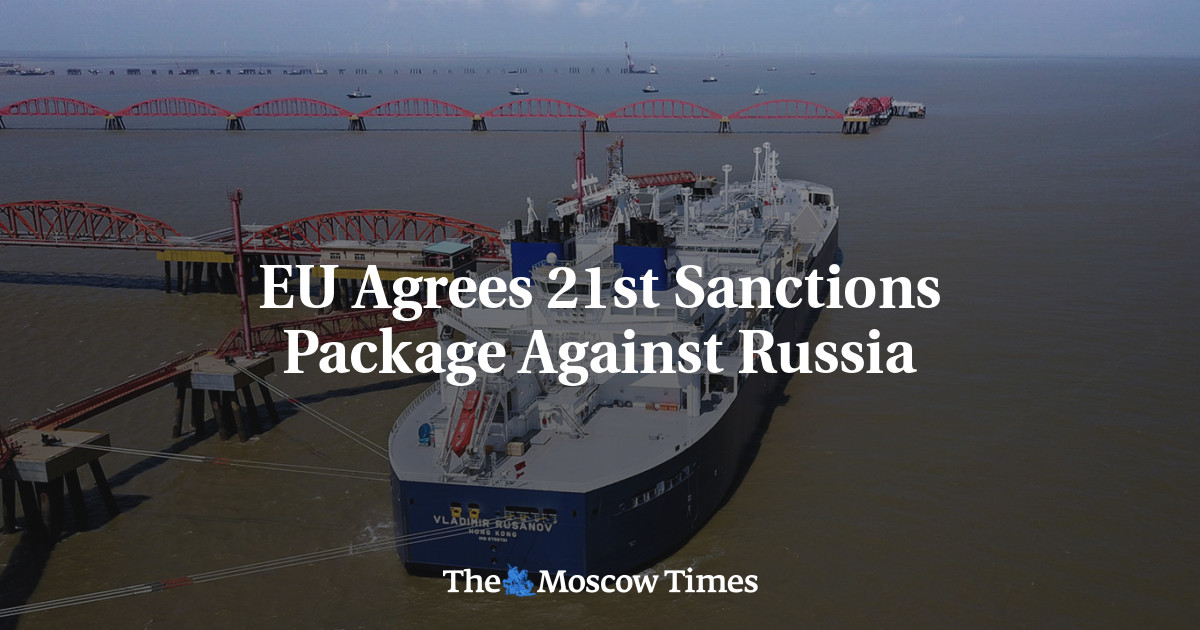
EU ambassadors have reached a political agreement on the 21st sanctions package against Russia, an EU diplomat said on Thursday. The package was held up by a raft of objections by member states to various proposed elements. "Our 21st sanctions package targets the sectors with the highest impact: energy, financial services, crypto, and trade," European Council head Antonio Costa posted online. Two EU diplomats said the package includes a 12-month freeze on the Russian oil price cap, as well as a one-year exemption allowing the transfer of Russian liquefied natural gas (LNG) to third countries, with automatic renewal. Read moreUS issues sanctions waiver on Russian oil sales again Diplomats said the final hurdle was overcome after Greece was granted an exemption allowing one of its shipping firms to carry on transporting Russian liquefied natural gas from the Arctic. "Member states showed solidarity with Greece and it's expected that Greece will do the same with others in the future," one EU diplomat said. Ambassadors from the EU's 27 member states had been racing to seal an agreement to lock in a price cap on Russian crude exports at $44 before a deadline that could have seen it leap up. The new package also targets Moscow's financial and crypto sector and blacklists scores more Russian officials over the war. But a sweeping visa ban that had been proposed to stop Russians who fought in Ukraine coming to the bloc has been kicked down the road. Diplomats said that there was only a commitment to work towards such a ban in the future. Various other elements have been stripped out. Bulgaria said it managed to block putting Russian Orthodox Patriarch Kirill on an asset freeze and visa ban blacklist. Portugal and France objected to a ban on imports of cod and Alaskan pollock from Russia, diplomats said. The technical work on the sanctions package will now be concluded and a written procedure for adoption will be launched on Thursday afternoon. (FRANCE 24 with Reuters and AFP)
War in Ukraine: EU agrees 21st round of sanctions on Russia
EU ambassadors on Thursday reached a political agreement on a new round of sanctions against Russia over the Ukraine war, according to EU diplomats. The 21st sanctions package includes a 12-month…
333 words~2 min read