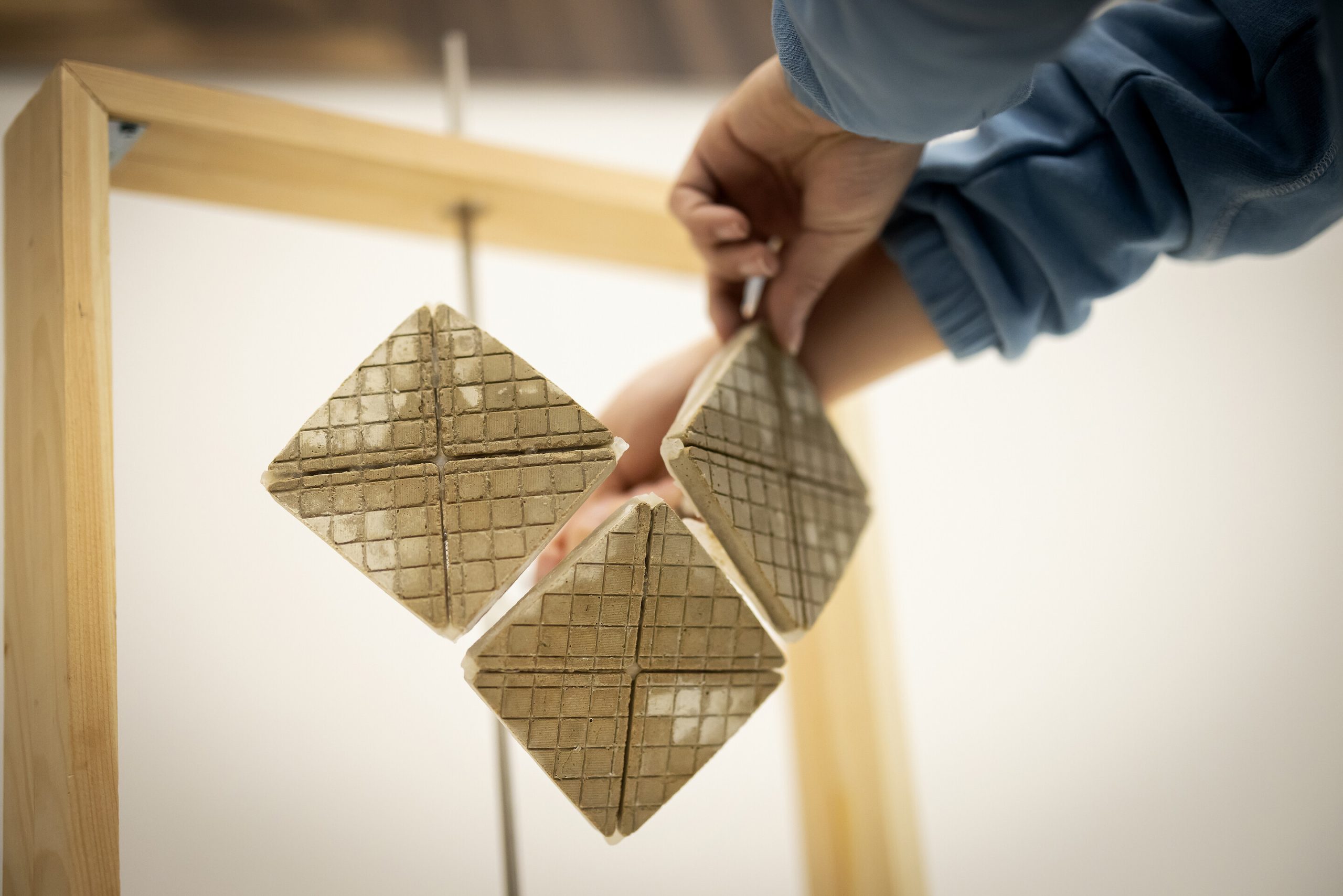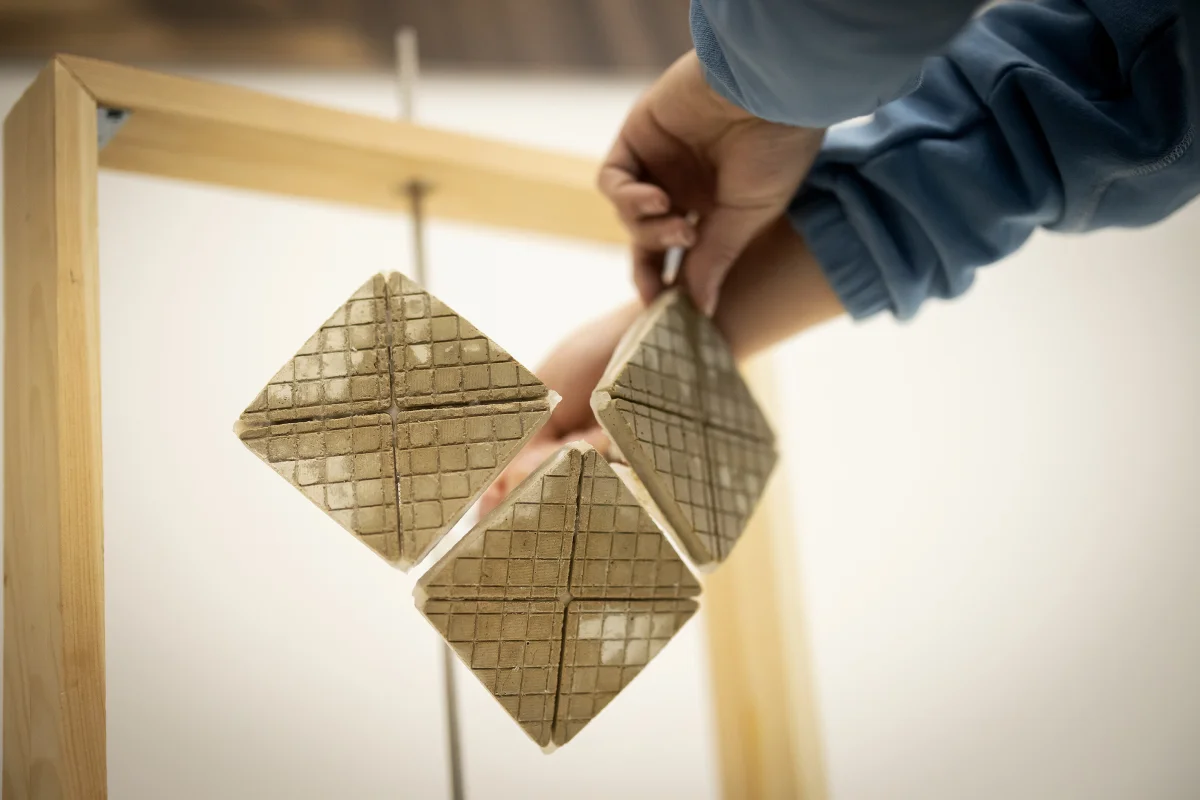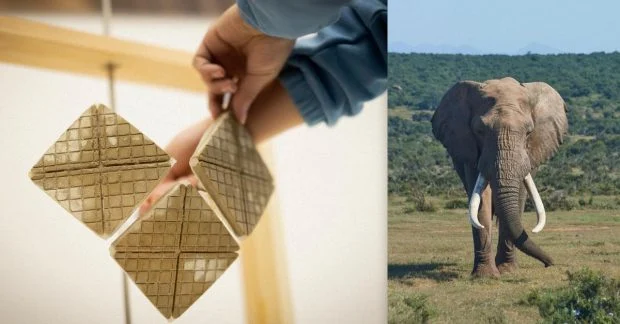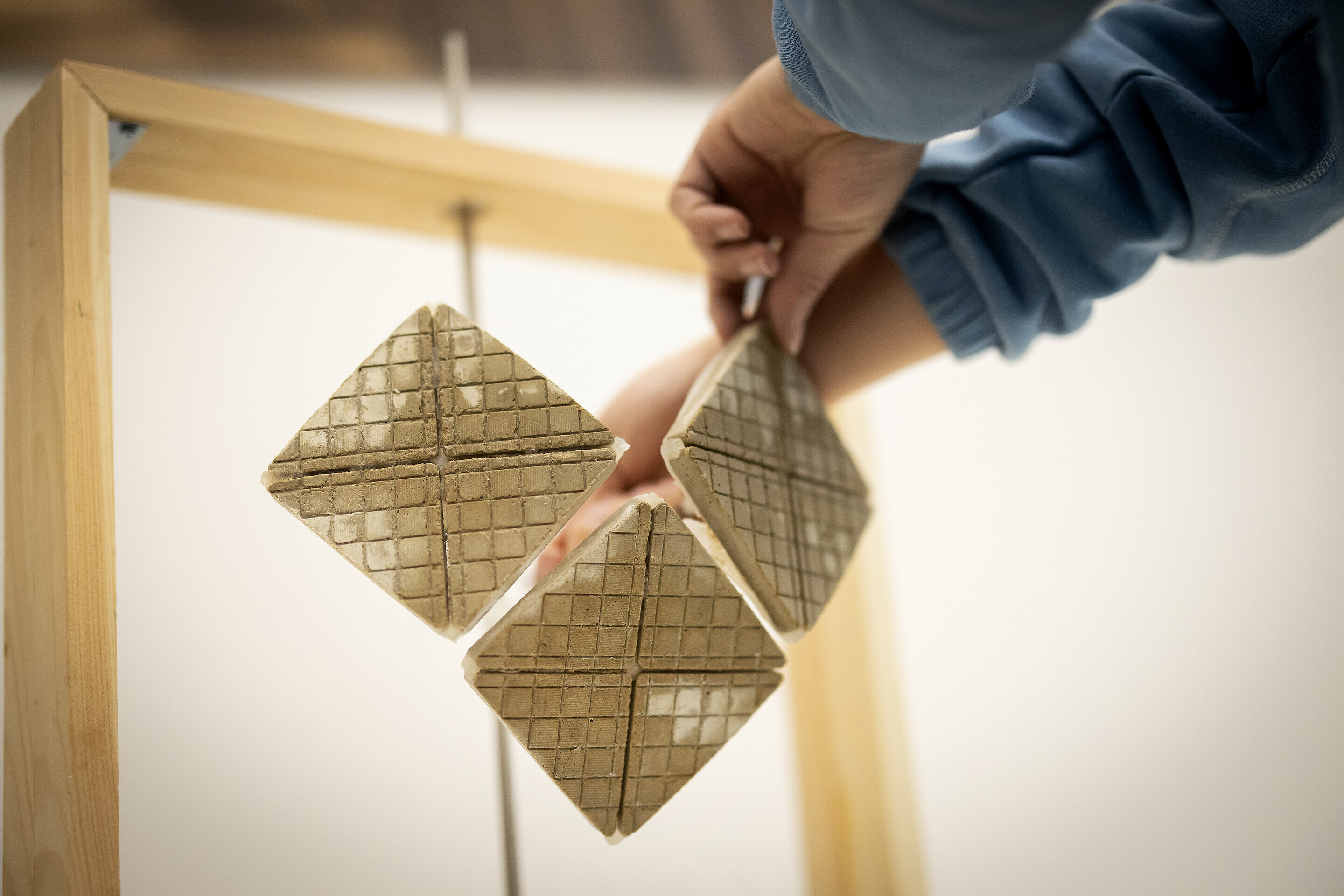
Architect Dorit Aviv and materials scientist Shu Yang have designed a cement-based tile that captures and slowly evaporates water, lowering surface temperatures without air conditioning. The approach, pictured in this prototype by Weitzman PhD student Ji Yoon Bae, could help cities stay cooler while cutting the energy and emissions tied to conventional cooling systems. Credit: University of Pennsylvania
Inspired by the cracked, water-trapping skin of elephants, Penn researchers have developed a low-cost cement tile that cools buildings by capturing and slowly evaporating water—turning a structural flaw into a climate solution.
During sunny and sweltering summer days, much relief comes from sweat. As beads of moisture evaporate on the skin, they pull heat away almost invisibly. It feels like a nuisance, but this is one of the most efficient cooling systems in the animal kingdom.
But not all animals have the ability to sweat. The African elephant is one example, enduring intense heat on the African savanna with dark gray, inches-thick skin. How does it stay cool?
"Wrinkles," says Dorit Aviv, an associate professor of architecture in the Weitzman School of Design. "Elephants have a network of cracks in their skin that trap water. When they spray themselves, that water stays put and evaporates slowly, cooling them over time."