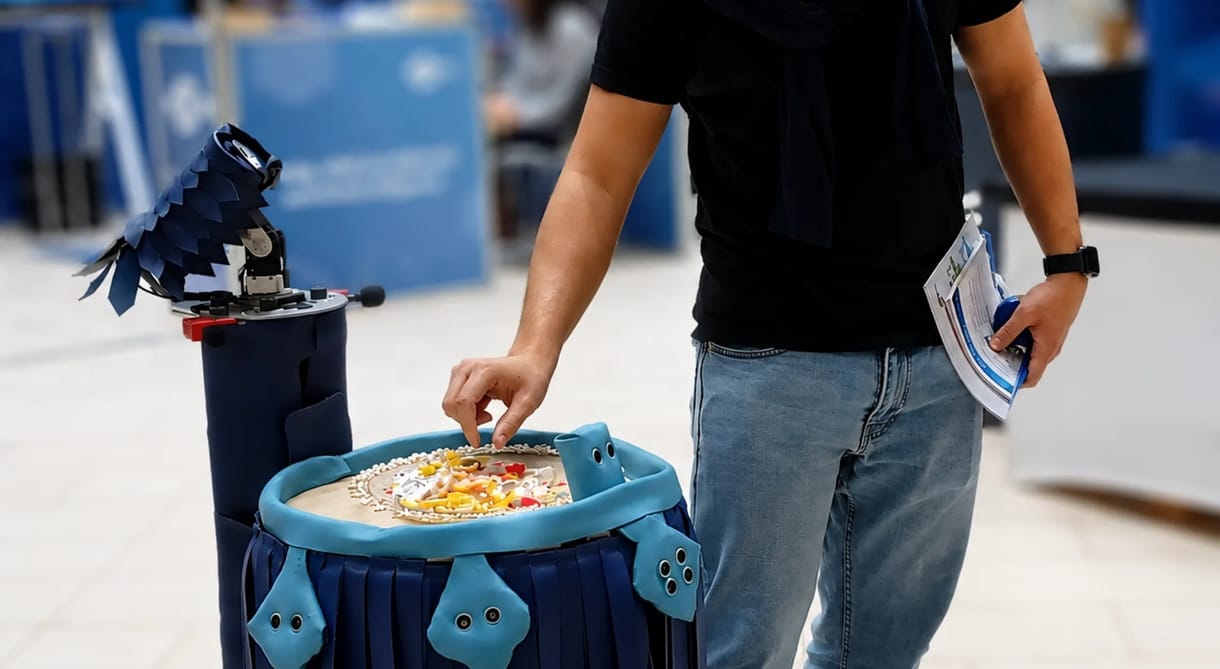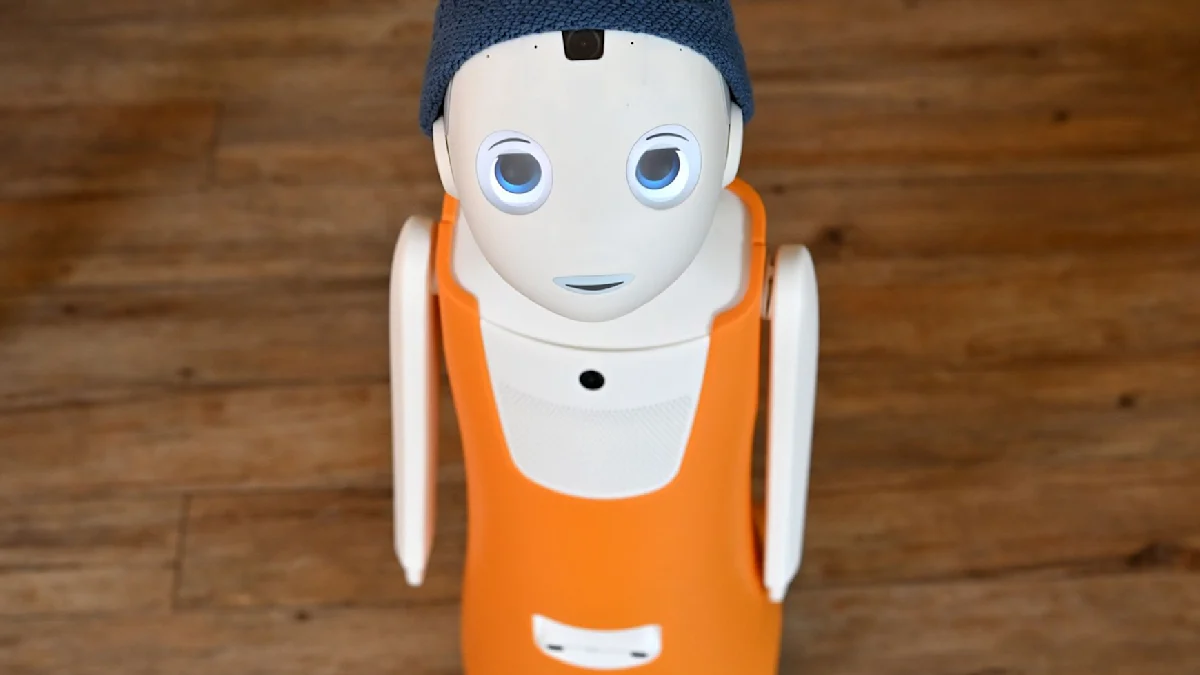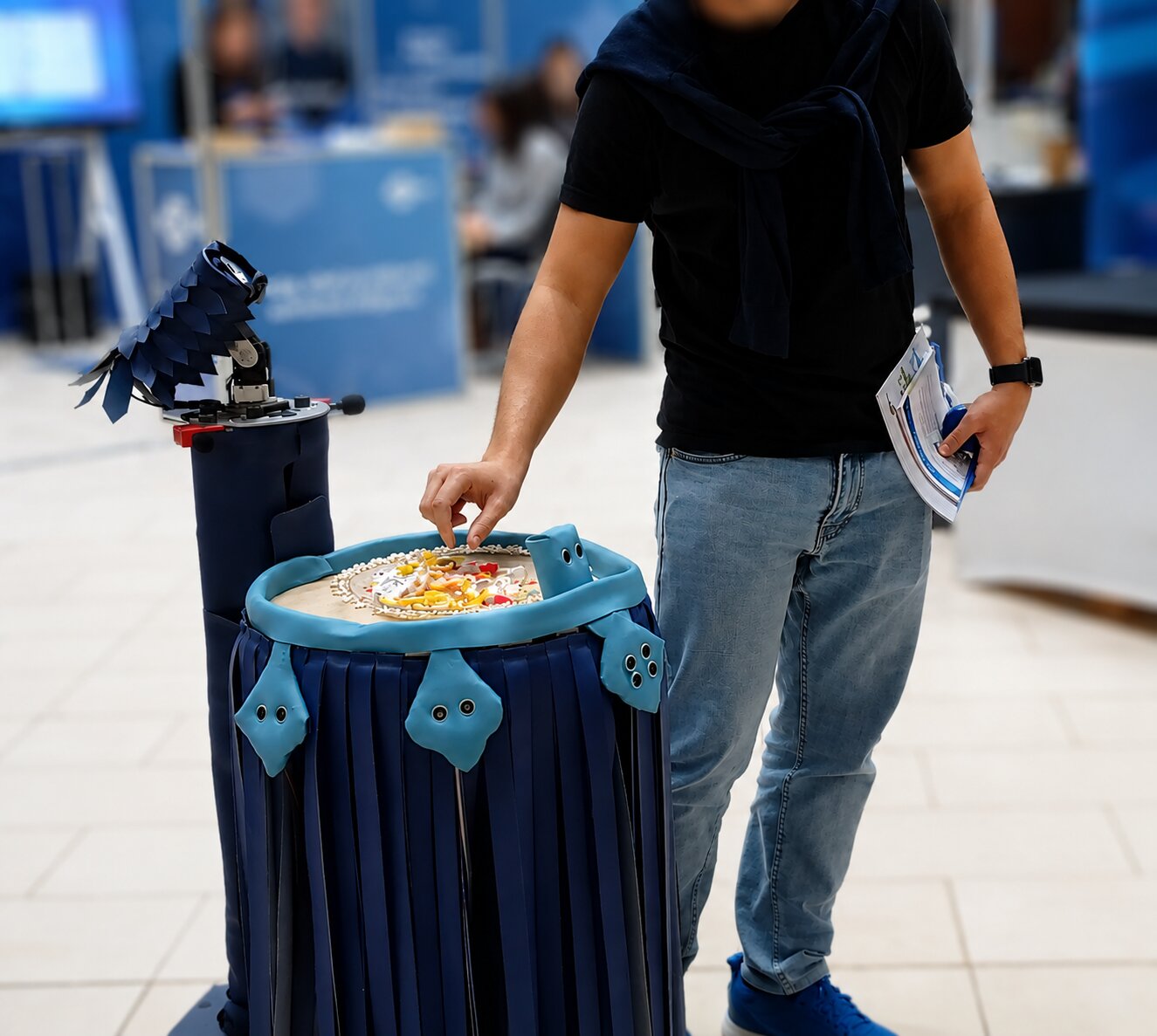
Autonomous service robot offering candy. Credit: Márta Gácsi / ELTE Eötvös Loránd University
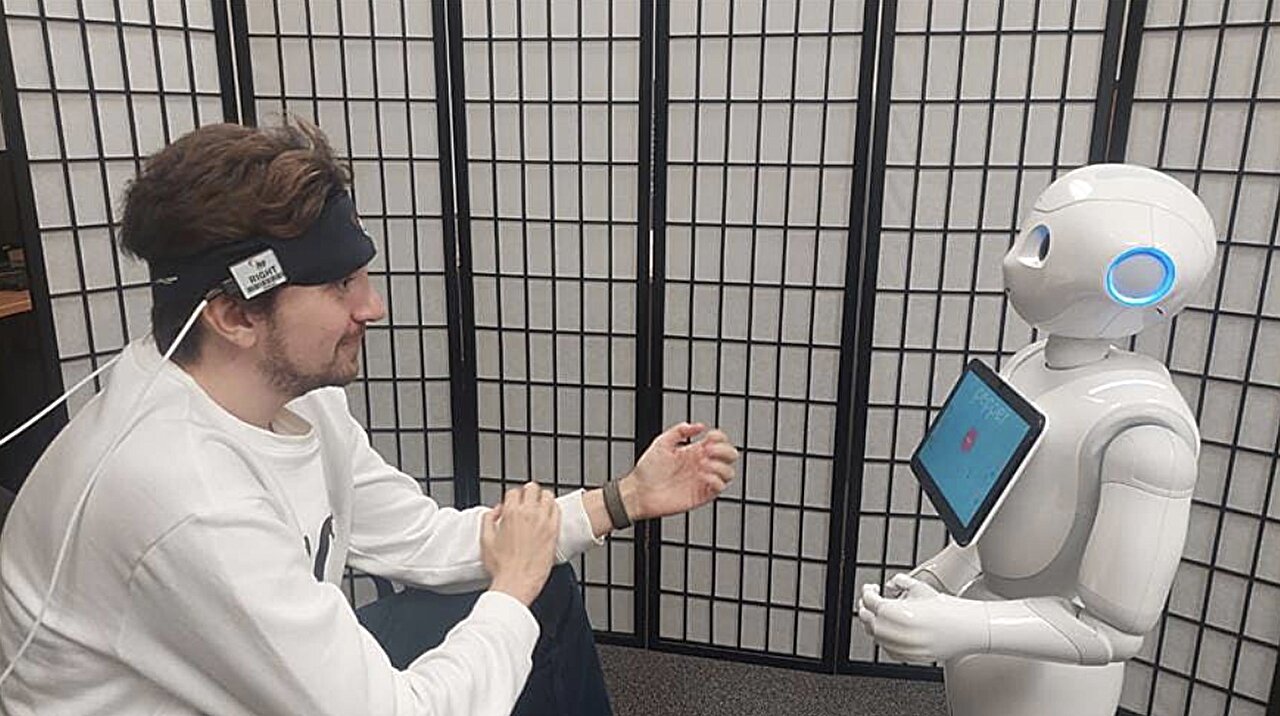
When a robot offers you candy, it is hard not to be curious. In an experiment conducted by ethologists at ELTE, visitors at public events noticed an autonomous service robot more often than a human server, and the candy on the robot's tray disappeared faster. The study also suggests that the presence of robots may influence the way people behave in social situations.
Imagine walking through a crowded event when a robot with free candies on its tray rolls up beside you. Would you stop? Would you smile? Or would you rather step out of its way? According to a new study published in the journal Computers in Human Behavior Reports, most people seem to behave more curiously than cautiously around certain social robots.
Researchers at ELTE Eötvös Loránd University (Hungary) and HUN-REN–ELTE Comparative Ethology Research Group investigated how visitors reacted to an autonomous service robot, Biscee, and a human, both offering candies at real-life events. The goal was simple: to find out whether people behave differently around a robot than around a person performing the same task in everyday situations outside the laboratory.