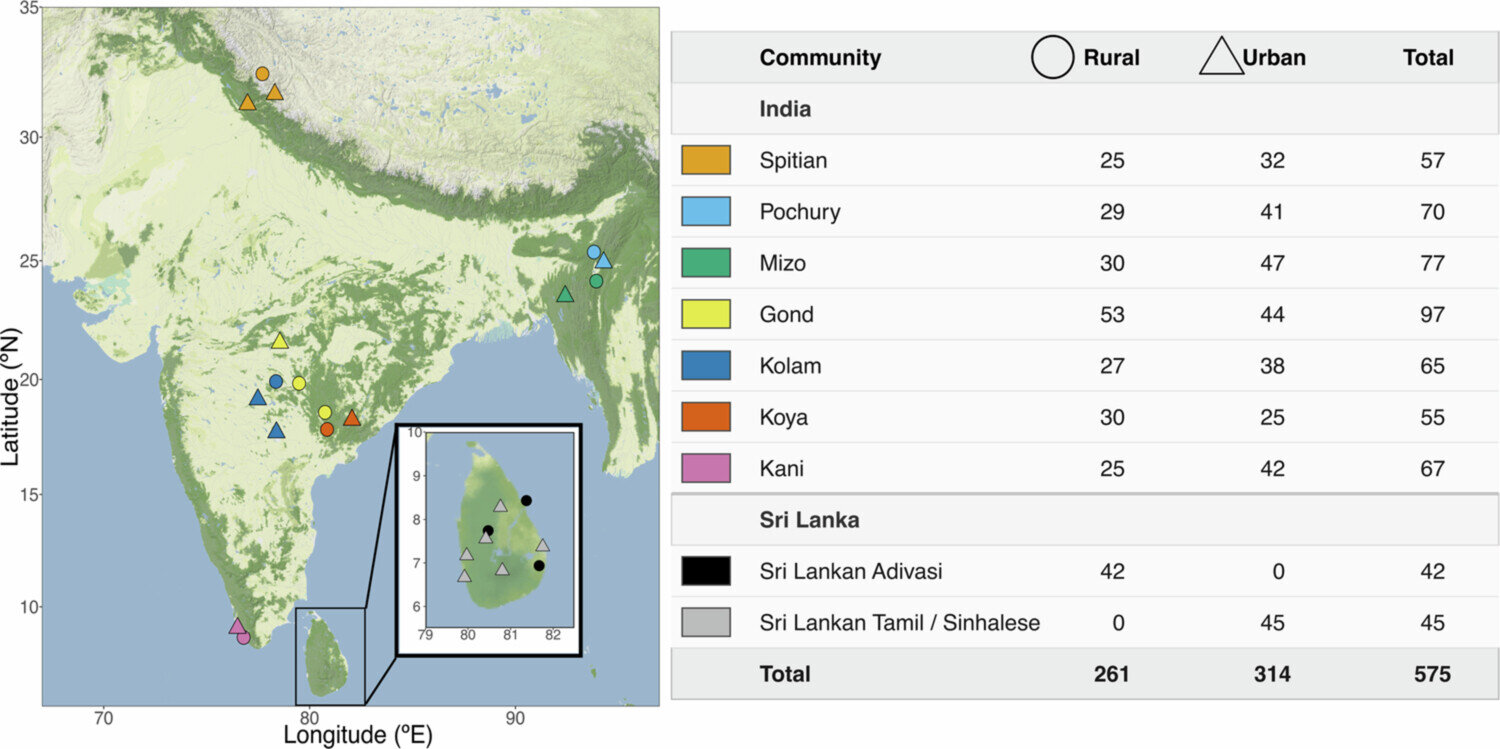
Geographic locations of sampling sites in India and Sri Lanka. Credit: Gut Microbes (2026). DOI: 10.1080/19490976.2026.2700042
Urbanization is one of the most consequential demographic shifts of the 21st century. As communities move from traditional or rural to urbanized ways of life, changes in diet, lifestyle and environmental exposures can influence many aspects of human biology and health. Research has shown that urbanization can alter the gut microbiome, the community of microorganisms inhabiting the digestive tract, but whether this transition follows a common pattern across different global populations has remained unclear.
South Asia is uniquely suited to address this question because it combines extraordinary cultural, dietary and ecological diversity with some of the world's fastest rates of urbanization. As lifestyles change, the region is also experiencing a rapid rise in cardiometabolic disorders, such as type 2 diabetes, heart disease and obesity, making it increasingly important to understand how urbanization shapes the gut microbiome. Despite this, South Asian populations remain underrepresented in global microbiome research.
A new study published in Gut Microbes addresses this gap through one of the most geographically and culturally diverse surveys of the South Asian gut microbiome to date. An international team of researchers from India, the United States and Sri Lanka reports findings from the South Asian MicroBiome ARray (SAMBAR), a population-scale cohort of 575 adults from 10 communities across India and Sri Lanka: Spitians from the Indian Himalayas; Gond, Kolam and Koya from central India; Kani from South India; Mizo and Pochury Naga from Northeast India; and Adivasi alongside urban Sinhalese and urban Sri Lankan Tamil communities from Sri Lanka.