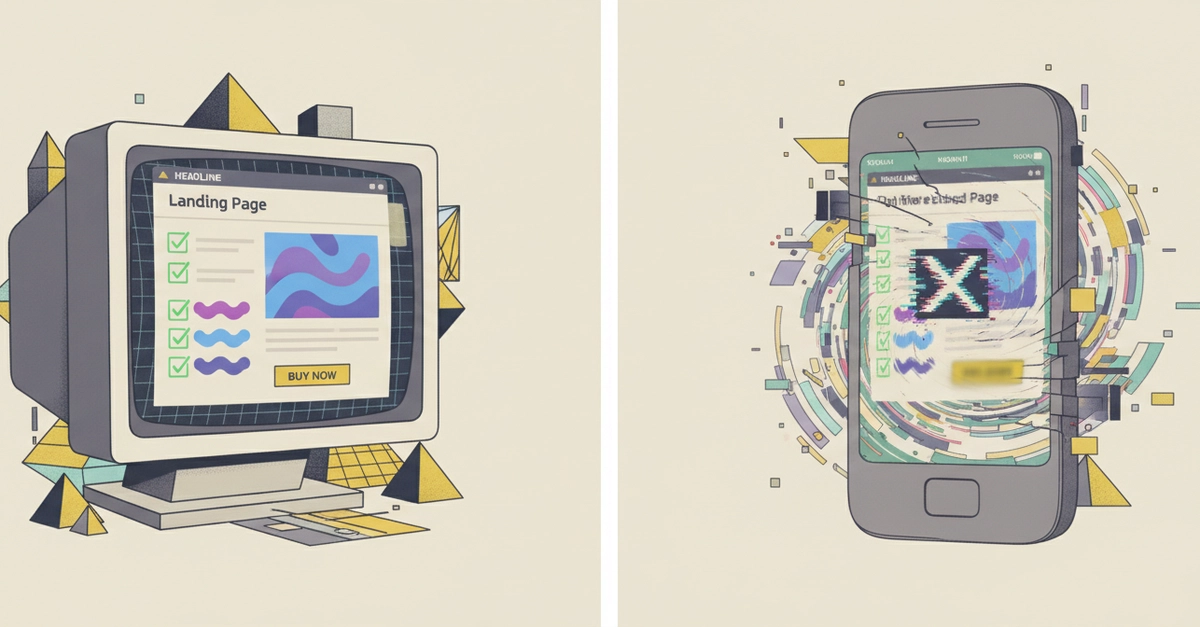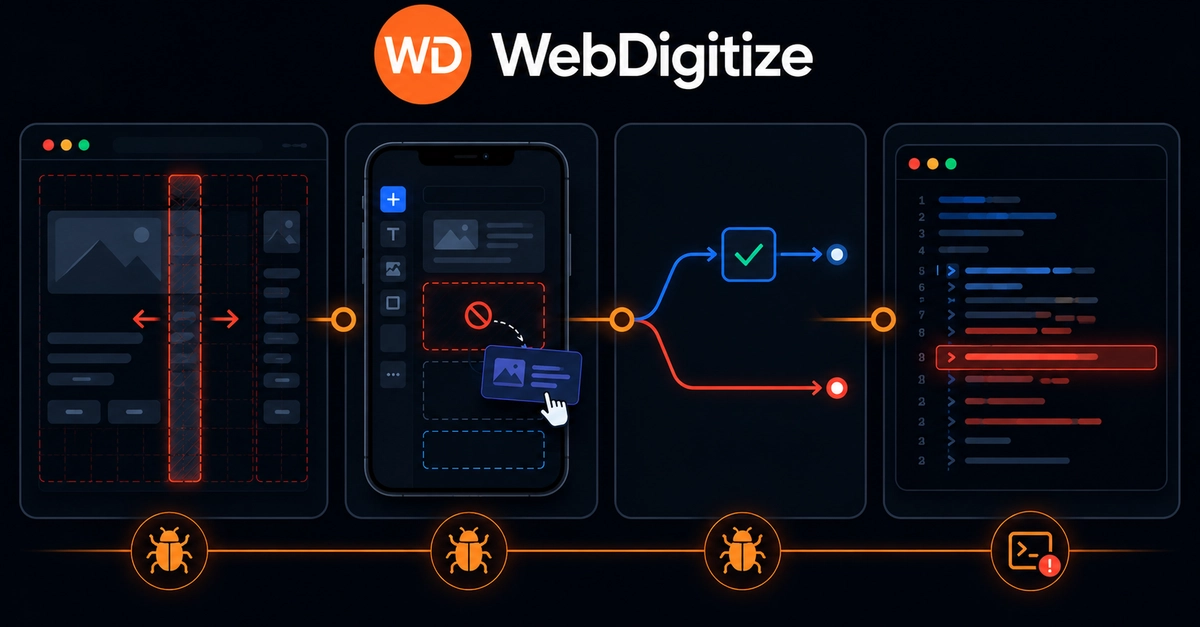
I discovered a page on our customer's site that, at first glance, appeared to be a CSS bug. A hero section on her site had collapsed into a vertical sliver — a fashion-photo strip about 70 pixels wide, running the full height of the page, with her headline text wrapping into a column one word deep. Below it, the same broken hero repeated itself. The service cards that should have been on the page were gone.
It's the kind of screenshot that makes you assume you know the fix before you've looked at anything. A missing breakpoint, probably. Ship a CSS patch, close the ticket, move on.
I was wrong about the scope in almost every direction. By the time I was done, I'd found four separate bugs, two of them in completely different parts of the stack, and one of them entirely unrelated to the customer's report — a bug in the fix itself. This is a write-up of what actually happened, in the order I found it, because the order matters: each bug looked like the whole story until the next one showed up underneath it.
WebDigitize is an AI website builder for Nigerian small businesses — describe your business, get a live, editable, multi-page site in minutes, built on a drag-and-drop editor (Puck) with an AI layer on top. The incident touched the editor, the CSS layout system, the AI onboarding pipeline, and — in the least expected turn — the database ORM.