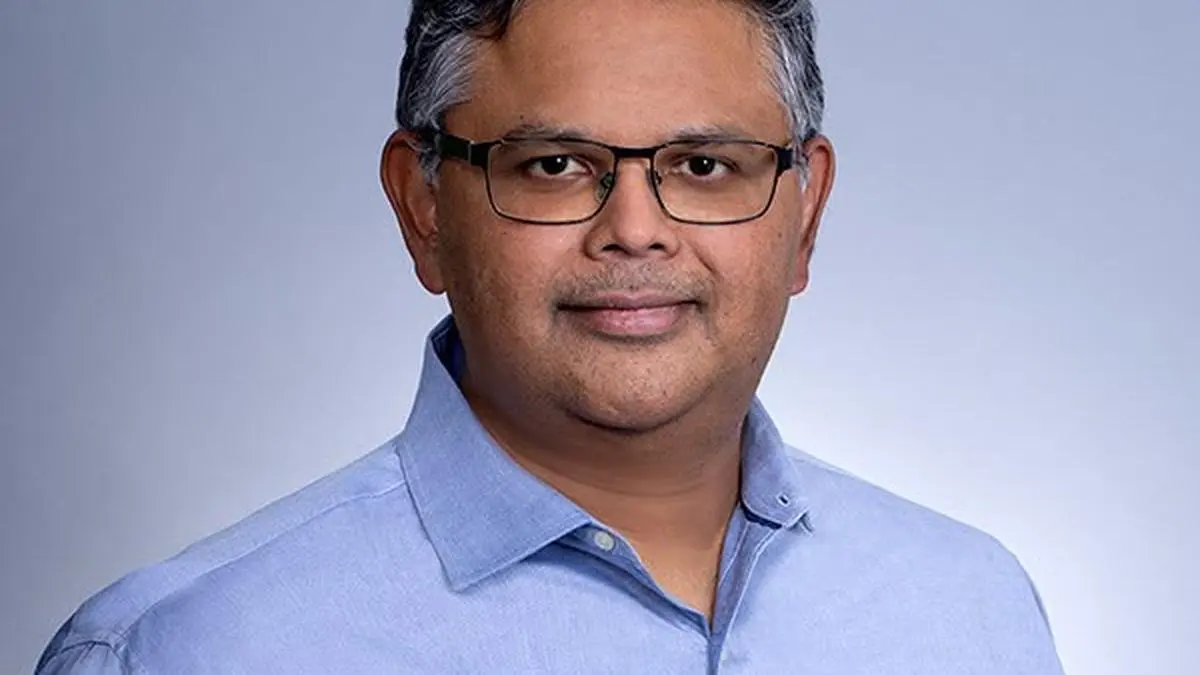
Arunkumar Narayanan, Senior Vice President, Compute and Networking Portfolio Management, Dell Technologies Infrastructure Solutions Group
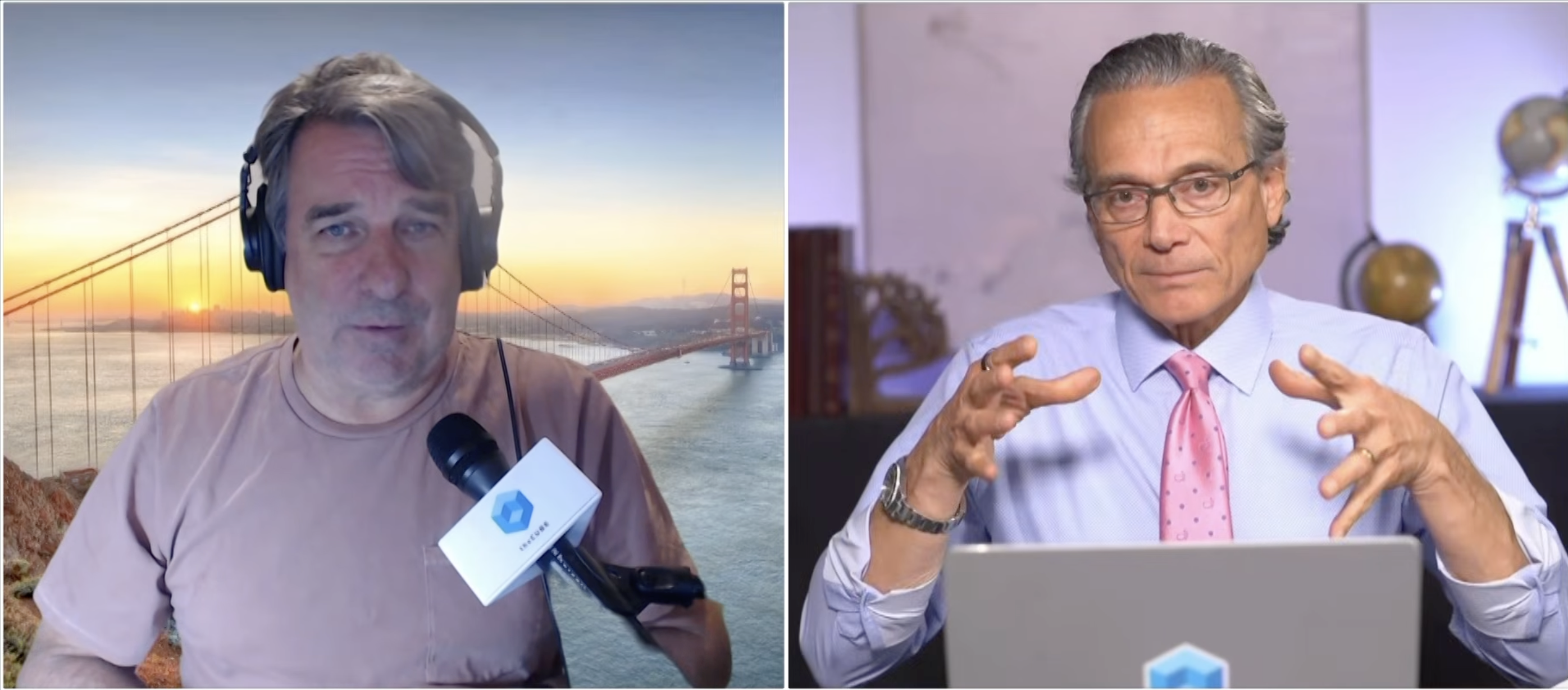
Dell Technologies is seeing AI infrastructure demand expand across hyperscalers, neocloud providers and enterprises as organisations accelerate AI deployments, following a 181 per cent year-on-year growth in its Infrastructure Solutions Group (ISG) in the first quarter of Fiscal Year 2027. Arunkumar Narayanan, Senior Vice President, Compute and Networking Portfolio Management, Dell Technologies Infrastructure Solutions Group (ISG), and Venkat Sitaram, Senior Director and Country Head, Infrastructure Solutions Group, Dell Technologies India, discuss the company’s AI strategy, enterprise adoption trends and India’s growing role in the AI infrastructure landscape.
Venkat Sitaram, Senior Director and Country Head, Infrastructure Solutions Group, Dell Technologies India
In Q1 results, ISG grew 181 per cent year-on-year. Where are you seeing the strongest demand across the markets Dell operates in?Arun: ISG had a stellar quarter. Almost all our businesses grew. Our core server and networking business grew at 92 per cent y-o-y. Our AI business grew at 1,700 per cent y-o-y. We shipped $12 billion worth of AI servers in one quarter. Our storage business also grew at 8 per cent y-o-y. As we innovate on technology, we’re also taking market share.How is demand for AI infrastructure evolving in India, especially amid the current data centre boom and recent tax incentives?Venkat: A lot of aggregators and neoclouds who have set up shops elsewhere are looking for quick turnaround and deploying rack-scale data centres. That’s a demand we’re seeing. The second type of demand is shifting gears from there to the local cloud service providers, as well as the hyperscalers. The third one is from those enterprises, typically BFSI, Telco, including government entities. They are looking at advancing and accelerating the AI — pilot to production or further production with agentic AI.Many AI-native companies in India are start-ups without the capital for large AI infrastructure. Do you see modular, scalable deployments as a practical alternative to large data centre investments?Arun: This can be broken down into two categories. For a start-up, a scalable unit with an AI factory-type model is probably the right size chunk. We build AI factories, which can be smaller than a scalable unit and go all the way up to a scalable unit and mega scale. The ability to provide a system that has server storage networking to build an AI factory is one of the things we’ve innovated.We have about 5,000-plus enterprise customers already doing enterprise AI with us. These customers are using the systems to do inference solutions on-prem to improve their workflows and processes. Through the first two years of AI, from 2023 to Q4 of 2025, we had about 3,000 customers. From Q4 through Q1, we added another 2,000 customers. The velocity at which we are adding customers is growing. The first generation of AI was around training workloads, but a lot of it has shifted to inference workloads. Inferencing is what enterprises want to do. And now that we’ve hit the inflection point on inference, we’re beginning to see more enterprise adoption.With the IndiaAI Mission driving greater focus on AI infrastructure, how have customer conversations evolved since its launch?Venkat: The architectures have evolved. The IndiaAI Mission is also looking to help upcoming native companies with easy access, alongside citizen services, educationalists and other AI practitioners. That scale is only increasing, and some of us building those AI factories are only adding more power, efficiency and scale. It will evolve as we move forward in this journey.How are conversations around liquid cooling evolving? Are customers increasingly adopting it and what advantages does it offer over traditional cooling solutions?Arun: The three types of customers are neocloud customers, sovereign customers and enterprise customers. Neocloud customers use case is selling GPUs as a service, for which they need the latest and greatest GPU technologies. The only way to cool some of these GPUs is liquid cooling. That’s where you get the most efficient data centre design.One important measure for a data centre operator is Power Usage Effectiveness (PUE), which shows how much energy is used for IT versus the other stuff in the system to maintain the IT operating. Liquid-cooled data have a much lower PUE than air-cooled data centres. For a data centre operator, that’s the advantage. It’s an economic scheme.Most enterprise customers don’t need advanced systems with lots of liquid cooling. They are doing inference in an enterprise setting. For them, air-cooled service is the right answer. We see a split in the market. The neoclouds and the sovereigns will adopt liquid cooling fast, while enterprises are staying on air cooling for the current use cases..Published on July 22, 2026