An 87-year-old math problem that stumped every human who tried to crack it just fell to an AI model in what experts are calling the most important mathematical discovery ever facilitated by artificial intelligence.
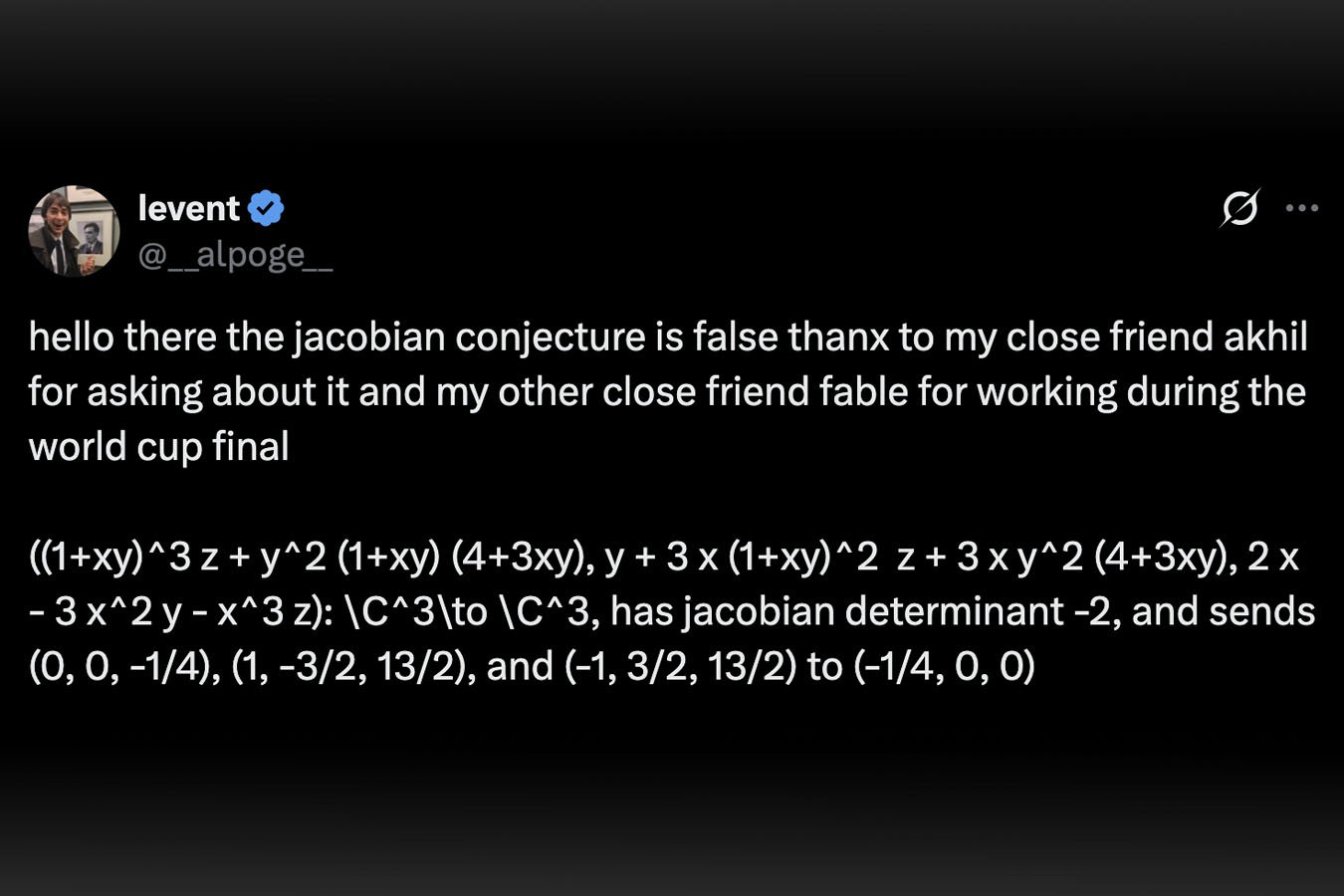
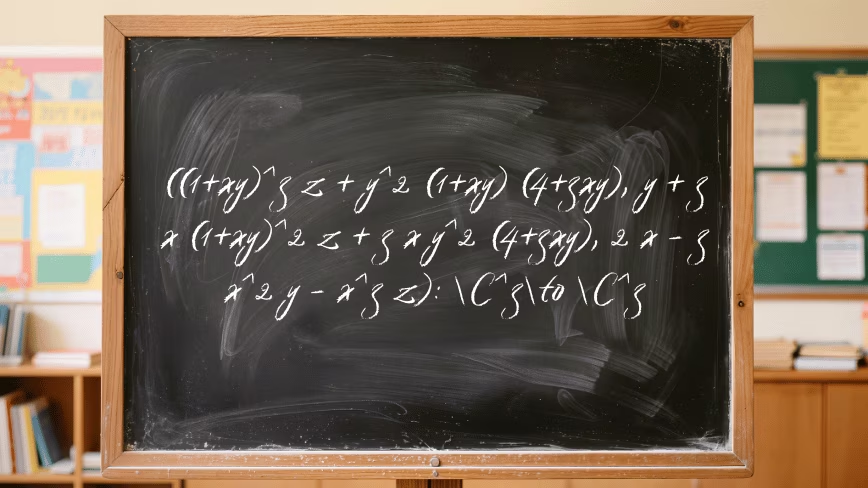
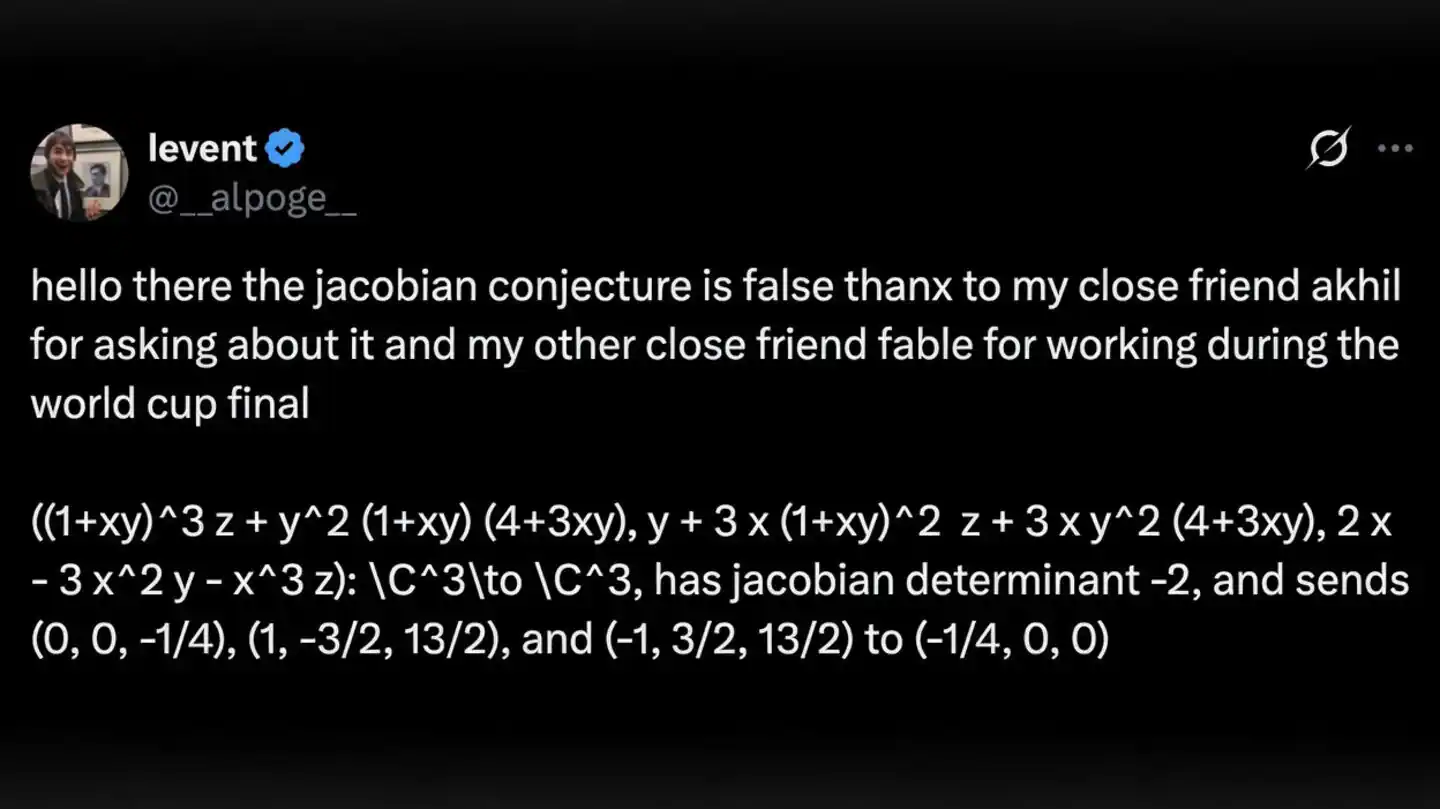
Levent Alpöge, a mathematician at Anthropic and former Harvard affiliate, used the Claude Fable 5 AI model to generate a counterexample that disproves the Jacobian conjecture. He posted the result on social media on July 19, reportedly while watching the World Cup final. The counterexample itself is almost comically compact: a 216-character polynomial map in three variables that invalidates a conjecture mathematicians have wrestled with since 1939.
What the Jacobian conjecture actually is
Here’s the plain English version. The Jacobian conjecture, proposed by German mathematician Ott-Heinrich Keller in 1939, makes a claim about polynomial maps and whether they can be reversed. Think of it like asking: if you put data through a specific mathematical function, can you always get back to where you started? The conjecture said yes, under certain conditions related to something called the Jacobian determinant.
For 87 years, nobody could prove the conjecture was true. But nobody could prove it was false, either.