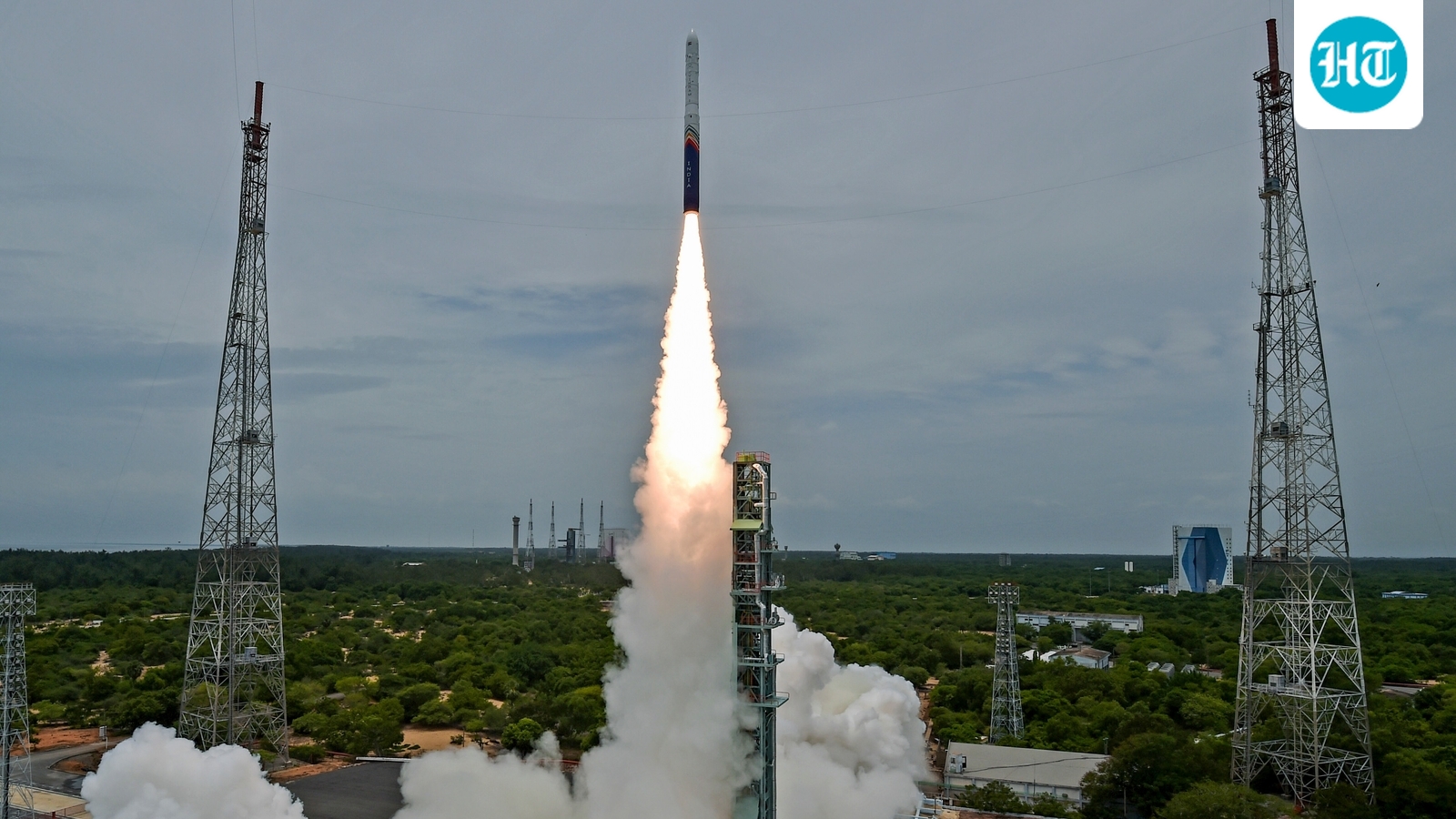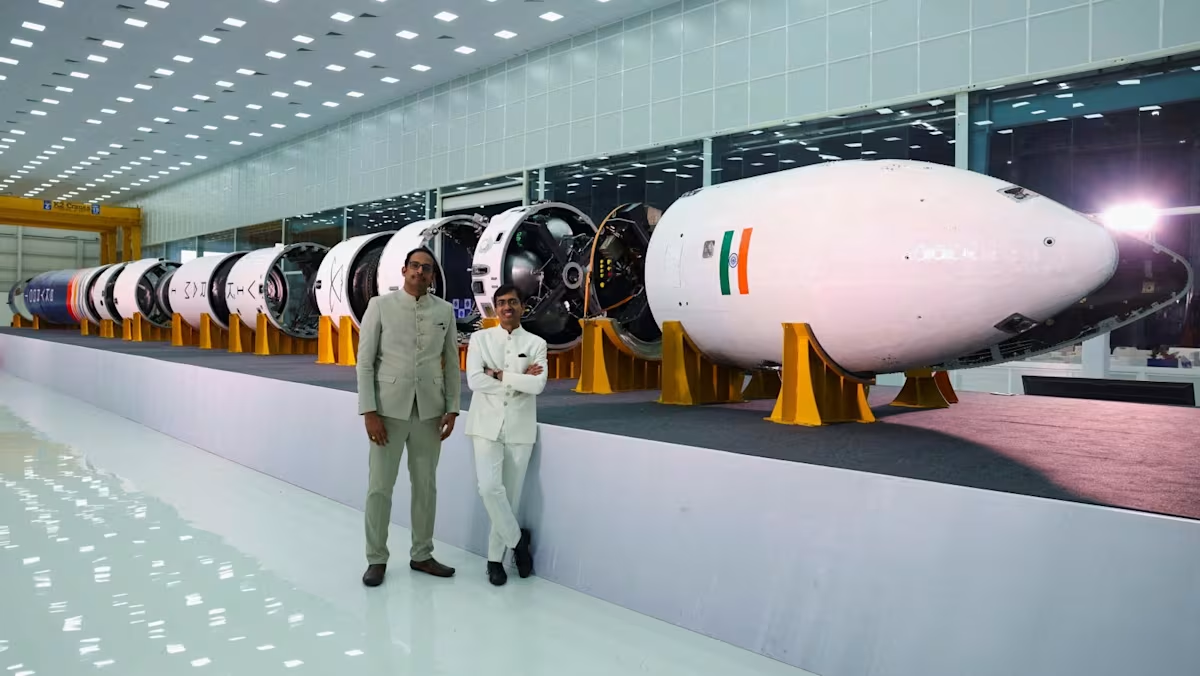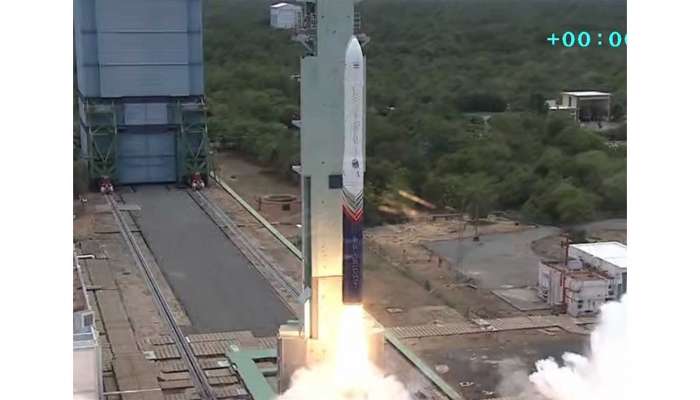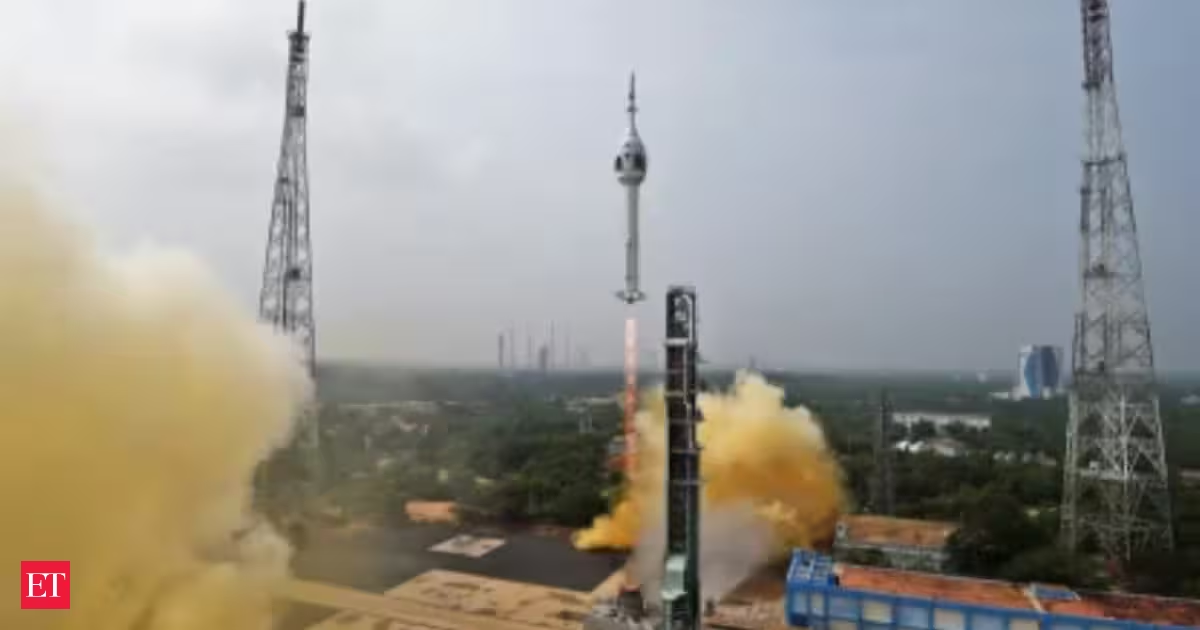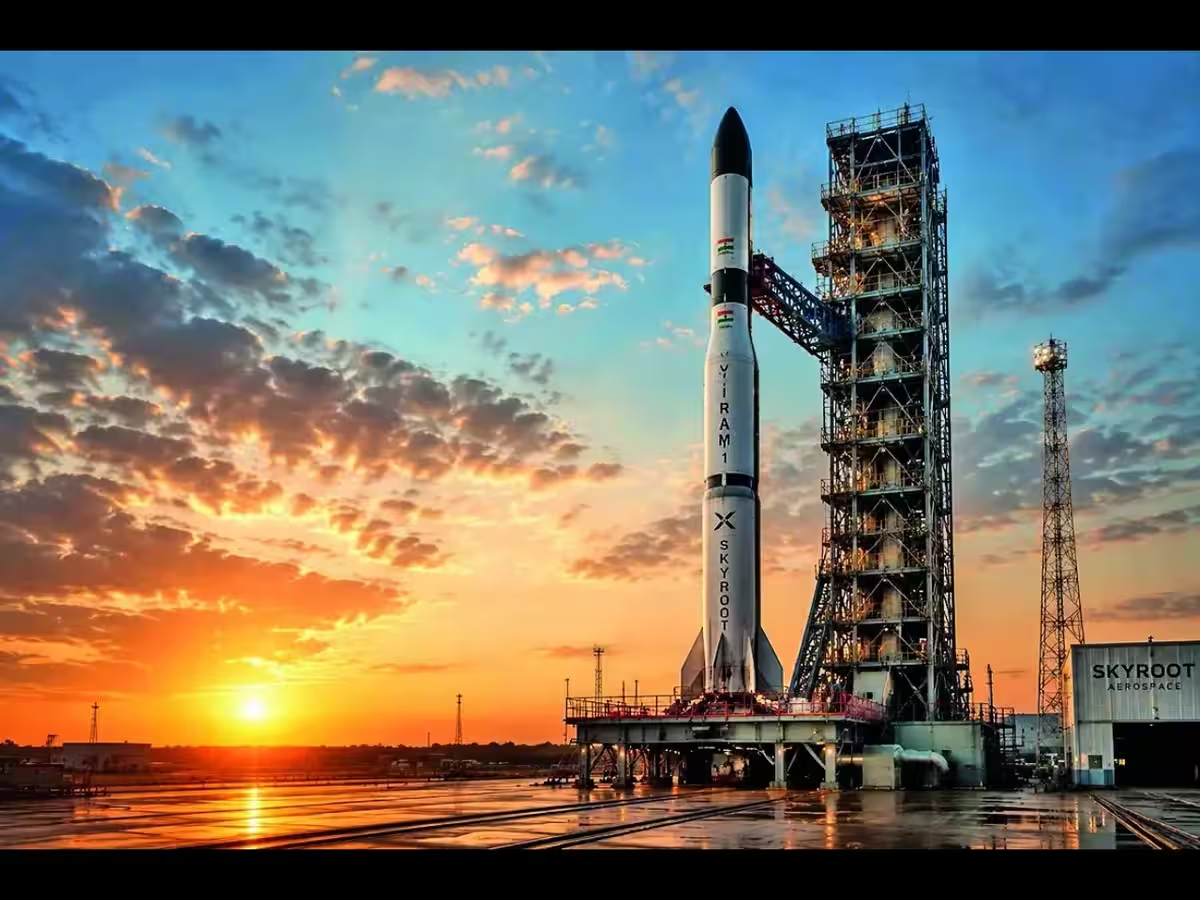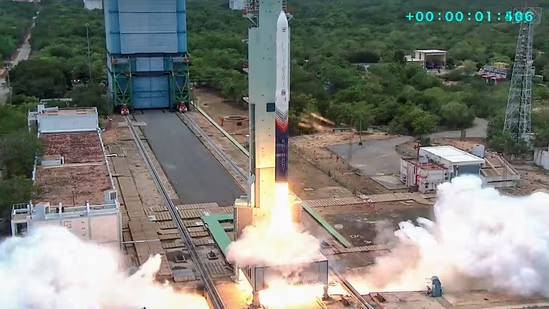
For many years, India’s space story has been told through moments of national pride. A successful mission, a precise launch, a scientific breakthrough, or a new global milestone. These moments matter. They have built confidence in Indian science and inspired generations of engineers, researchers and entrepreneurs. But the next phase of India’s space journey will be different. It will not be defined only by innovation. It will be defined by the country’s ability to build, test, repeat and scale.In this screengrab from a video posted on July 18, 2026, the Vikram-1 Test Flight-1 (Mission Aagaman), India's first private orbital rocket launch, lifts off from the Satish Dhawan Space Centre, in Sriharikota, Andhra Pradesh (@skyrootaerospaceofficial/X)Space is now moving from a mission-led sector to an industrial sector. Satellites support communication, navigation, weather forecasting, agriculture, disaster response, border monitoring, urban planning and digital services. As India becomes more dependent on space-based infrastructure, reliable access to orbit will become as important as the satellites themselves.The big question before India is no longer whether it can build advanced space technology. That has already been proven. The question now is whether India can build the industrial depth needed to launch frequently, respond quickly and retain control over critical capability.This version makes the transition from ecosystem evolution to India’s current growth drivers more explicit:Every major space power has eventually evolved from relying primarily on a national space agency to building a broader industrial and operational ecosystem around it. India is now entering this phase because the scale and nature of its space requirements are changing. The growth of satellite constellations, defence needs, earth-observation applications and diversified launch demand is creating the need for more frequent, flexible and responsive access to orbit, which cannot be supported by a single institutional framework alone. At the same time, rising geopolitical uncertainty has made domestic launch capacity and control over critical space technologies increasingly important, making a strong private space ecosystem central to India’s long-term space growth and national resilience.India has done remarkably well in creating a culture of space innovation. The next challenge is to convert this innovation into manufacturing strength. Space capability cannot grow only inside design labs. It needs factories, test facilities, precision supply chains, trained technicians, software teams, launch operations and quality systems working together.This shift may sound technical, but its impact is very practical. A country that can manufacture and test high-thrust engines at scale can launch more often. A country that can integrate stages, qualify vehicles and manage mission operations domestically can respond faster. A country that owns its test data and system knowledge can keep improving with every launch.That is the difference between doing successful missions and building a true space economy.Launch capacity is the backbone of space-led growth. Without dependable launch access, satellites wait, services get delayed, and national requirements depend on limited launch windows. For a large and growing country like India, this is not just a commercial issue. It is a strategic issue.A meaningful first milestone for India would be the ability to support a rapid launch capacity of around 1,000 tonnes per annum. This would give the country a stronger base to serve national missions, commercial satellite demand and future strategic requirements.To reach that level, propulsion manufacturing has to become a core industrial priority. High-thrust engines are not just one part of a rocket. They are among the most important building blocks of launch capability. Setting up the capacity to manufacture around 50 such engines a year can give India the foundation for a more frequent and responsive launch ecosystem.In space, reliability is earned slowly. It comes from repetition, testing and learning from real data. A design may look strong on paper, but the real confidence comes when engines are manufactured, hot-fired, analysed and improved again and again.That is why a weekly testing cadence can be a major step forward. If India builds infrastructure capable of producing and hot-firing roughly one high-thrust engine every week, it can change the rhythm of its launch ecosystem. It allows teams to move from occasional validation to continuous learning.Before a new launch vehicle reaches its first orbital flight, manufacturing and testing around 15 engines can create the data foundation needed for confidence. Each test adds knowledge. Each build improves process control. Each cycle makes the system more mature. This is how space programmes become reliable, not through one perfect attempt, but through disciplined repetition.The future will also require speed. National needs may arise suddenly. A satellite may be required for disaster management, emergency communication, strategic monitoring or urgent security needs. In such situations, long preparation cycles can become a constraint.The ability to prepare and launch a dedicated mission within 15 days of receiving an urgent national requirement should become part of India’s space readiness thinking. Launch on demand is not only a business proposition. It is a national capability.For India, this capability can strengthen resilience. It can help the country respond to emergencies faster. It can also give policymakers and defence planners more confidence that access to orbit will be available when it is needed most.As space becomes more central to economic and national security, ownership of knowledge becomes as important as ownership of hardware. India must ensure that critical propulsion design authority, system engineering knowledge, manufacturing know-how, software, test data and mission configuration remain under Indian control.This does not mean working in isolation. Global partnerships will continue to matter. But the core capability stack must be built and retained within the country. Strategic independence comes from knowing how a system is designed, how it behaves, how it fails, how it improves and how it can be deployed when required.In the long-run, this knowledge base will be one of India’s most valuable space assets.For India to lead in the next phase of space growth, it needs the complete industrial chain for launch. This includes engine manufacturing, high-flow testing, stage integration, vehicle qualification and launch operations.Each part is important. But the real strength comes when they are connected. A fragmented ecosystem creates delays. A full-chain ecosystem creates speed, accountability and learning. It allows engineers to move faster from design to test, from test to qualification and from qualification to launch.This is where the private sector can play an important role, working alongside public institutions and national agencies. India now has the opportunity to build an ecosystem where public ambition and private execution reinforce each other.The benefits of this shift will go beyond rockets. A stronger launch ecosystem can create opportunities in advanced manufacturing, materials, electronics, cryogenic systems, precision engineering, software, logistics and data infrastructure. It can create high-value jobs and bring Indian suppliers into one of the world’s most demanding technology sectors.Space should now be seen as part of India’s wider industrial growth story. Just as semiconductors, defence manufacturing, clean energy and electric mobility are being treated as strategic sectors, launch infrastructure too deserves long-term focus.India has already shown the world what it can achieve in space. The next step is to build the industrial muscle to do it repeatedly, quickly and at scale.The coming decade will not only be about reaching orbit. It will be about reaching orbit whenever the nation needs it. That is the real promise of India’s next phase of space-led growth.(The views expressed are personal)This article is authored by Neeraj Khandelwal, co-founder & CEO, Astrobase Space Technologies.
A new phase of space-led industrial growth
This article is authored by Neeraj Khandelwal, co-founder & CEO, Astrobase Space Technologies.
1,217 words~6 min read