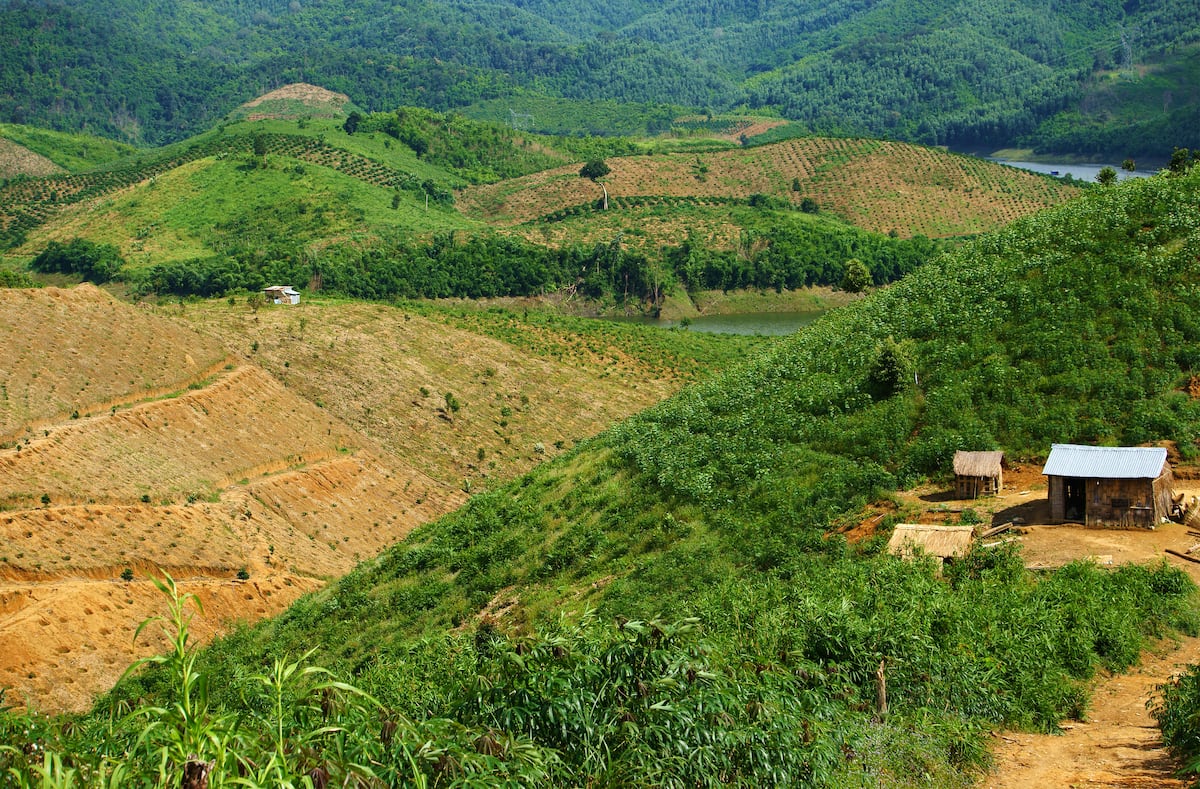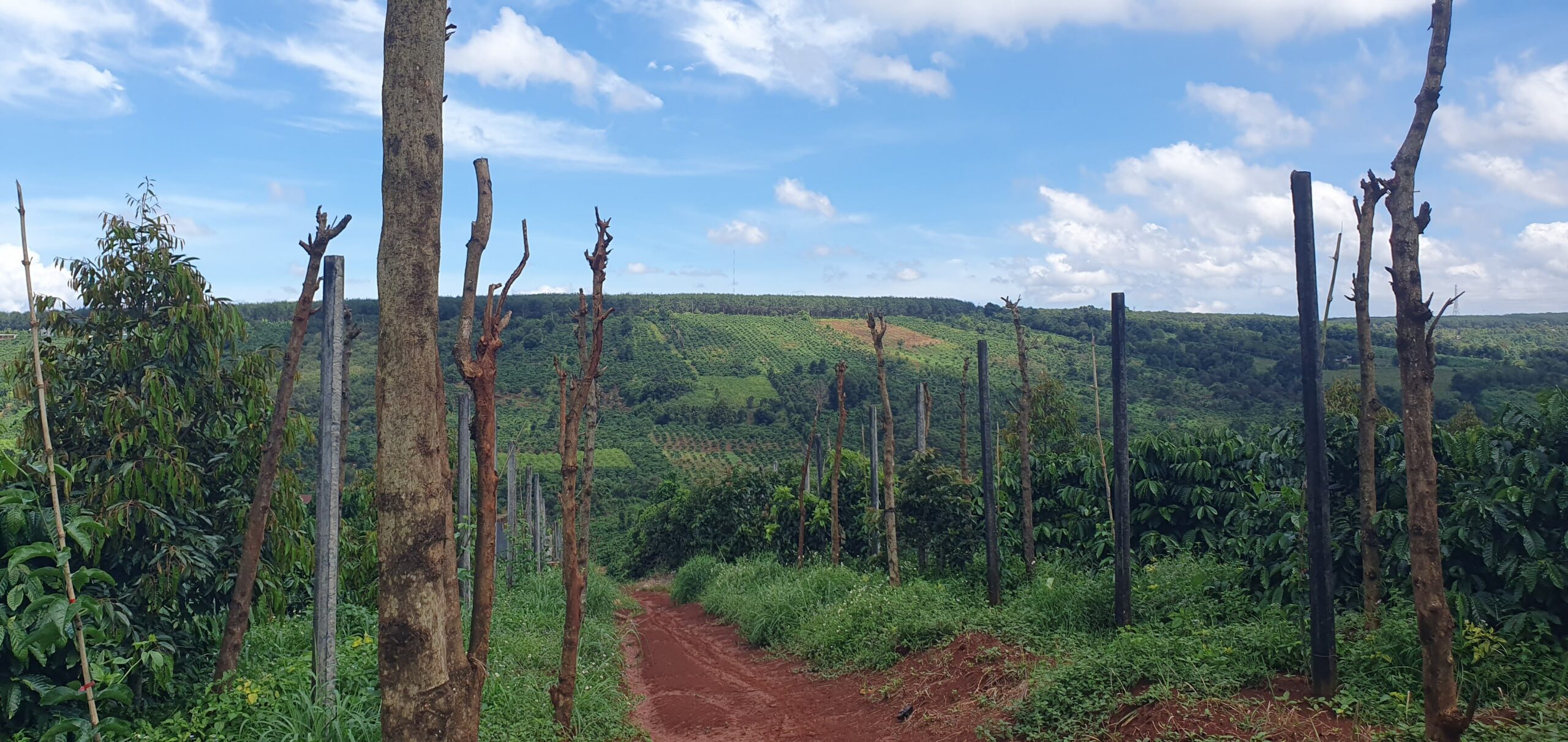
Decades of unchecked deforestation for coffee production has devastated Vietnam’s Central Highland forests, according to a new investigation by the Berlin-headquartered watchdog group Coffee Watch.
Vietnam is currently the world’s second largest coffee producer, supplying nearly 40% of the world’s exports of Robusta coffee (Coffea canephora).
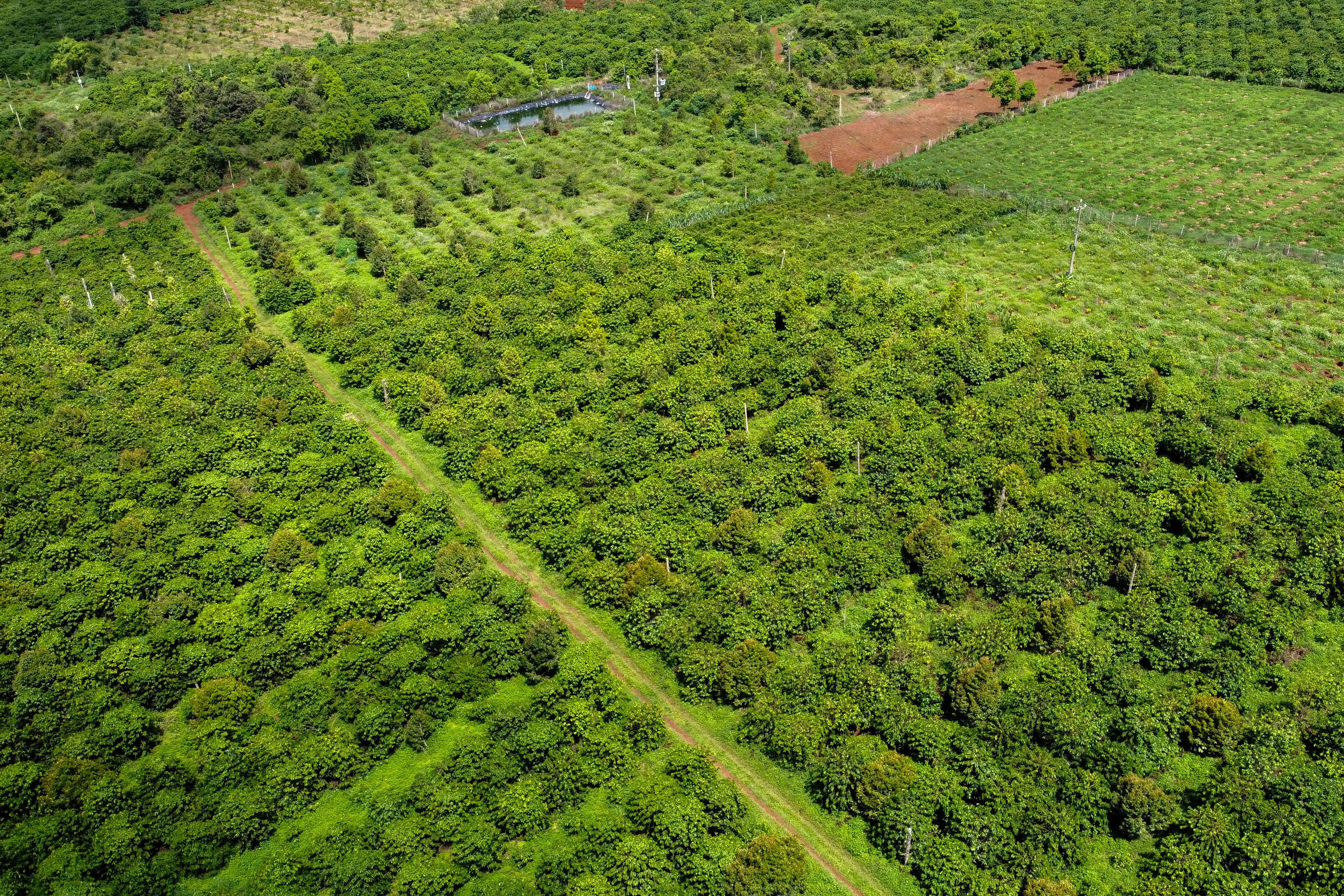
The investigation, which analyzed satellite data and government records, found that tropical forest cover in Vietnam’s Central Highlands region, which produces 95% of the country’s coffee, plummeted from 42.8% in 1990 to just 19% by 2020.
Forest loss was most rapid between 1995 and 2010, and stabilized at low levels in the 2020s, the investigation found. Much of the remaining tropical moist forest is now confined to “steeper, less accessible terrain, often at higher elevations and within formally designated protected areas,” the Coffee Watch’s report notes.
Historically, government policy and international development financing incentivized the rapid expansion of coffee in the Central Highlands, according to Coffee Watch. The ecological cost has been severe, the nonprofit adds, resulting in fragmented habitats, accelerated soil erosion and a “nutrient treadmill” where farmers must use increasing amounts of fertilizer to maintain yields in exhausted soils.