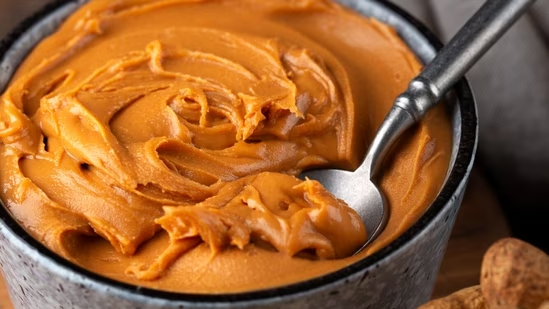
Dr Sood recommends enjoying peanut butter as your bedtime snack roughly two hours before sleep for the best results. (Freepik) Feeling restless or waking up at midnight? A spoonful of peanut butter two hours before bed might help, according to Dr Kunal Sood. Know three major benefits.If restless nights and soaring stress levels keep you tossing and turning, the secret to a better night’s sleep might already be sitting in your kitchen. In a recent video, a content creator suggested that consuming a spoonful of peanut butter before bed can work wonders for anxious sleepers. Also read | New study finds reducing sleep by just 80 minutes per night harms your health: Neurologist Dr Sudhir Kumar explainsShe said that 'eating a spoon of peanut butter before bed helps drop your cortisol levels' to assist with rest 'if you are a stressful anxiety b**** like me'. Addressing the claim in an Instagram post on July 22, Dr Kunal Sood, a US-based physician specialising in anesthesiology and interventional pain medicine, broke down the science behind why this simple bedtime snack might actually work.The science behind the claimResponding to the video, Dr Sood said: “Why would peanut butter before bed help you fall asleep? There are a couple of reasons.” According to him, the popular spread packs a triple-threat of nutrients that promote rest and stabilisation:⦿ Tryptophan: “Peanut butter contains tryptophan, which is a precursor to serotonin, which can have a calming effect on your brain,” Dr Sood explained.⦿ Healthy fats: The spread is rich in essential fats that play a crucial role in preventing midnight awakenings. “It is also high in healthy fats, which can help stabilise your blood sugar,” Dr Sood highlighted, noting that 'it does this by slowing carbohydrate absorption'. He pointed out, "The reason you wake up at night sometimes is a sudden spike and crash of your blood sugar.”⦿ Magnesium: “And lastly, peanut butter also contains magnesium, which has been shown to relax you and improve your sleep quality,” he shared.Timing and mindful consumptionWhile the nutrient breakdown offers promising benefits for anxiety relief and deeper sleep, Dr Sood cautioned that individual results will vary: “It is worth noting that while peanut butter may help some people sleep, it is not for everyone."For those looking to try the dietary habit, timing is key to avoiding digestive discomfort overnight, as Dr Sood advised in his caption: “Have you tried this? If you are going to eat prior to bed, it is recommended to eat two hours prior.”Whether you are looking to calm nighttime anxiety or smooth out blood sugar crashes, a small, well-timed dose of peanut butter might just be the simple, accessible hack your sleep routine needs.About the expertDr Kunal Sood, MD, is a double board-certified physician in anesthesiology and interventional pain medicine. He did his residency and fellowship in anesthesiology at Wayne State University in Detroit, Michigan, followed by a one-year fellowship in interventional pain medicine. He later became the medical director of the office in Germantown, Maryland.Note to readers: This article is for informational purposes only and not a substitute for professional medical advice. Always seek the advice of your doctor with any questions about a medical condition.This report is based on user-generated content from social media. HT.com has not independently verified the claims and does not endorse them.With a keen eye for detail and a heart for storytelling, Sanya is a seasoned lifestyle journalist who has spent over a decade documenting the intersection of aesthetics and substance. Since stepping into the media world in 2012, she has cultivated a career defined by versatility, curiosity, and an unwavering passion for what makes life both beautiful and meaningful.
Can a spoonful of peanut butter help you sleep? US physician Dr Kunal Sood explains trick to staying asleep all night
Feeling restless or waking up at midnight? A spoonful of peanut butter two hours before bed might help, according to Dr Kunal Sood. Know three major benefits. | Health
857 words~4 min read