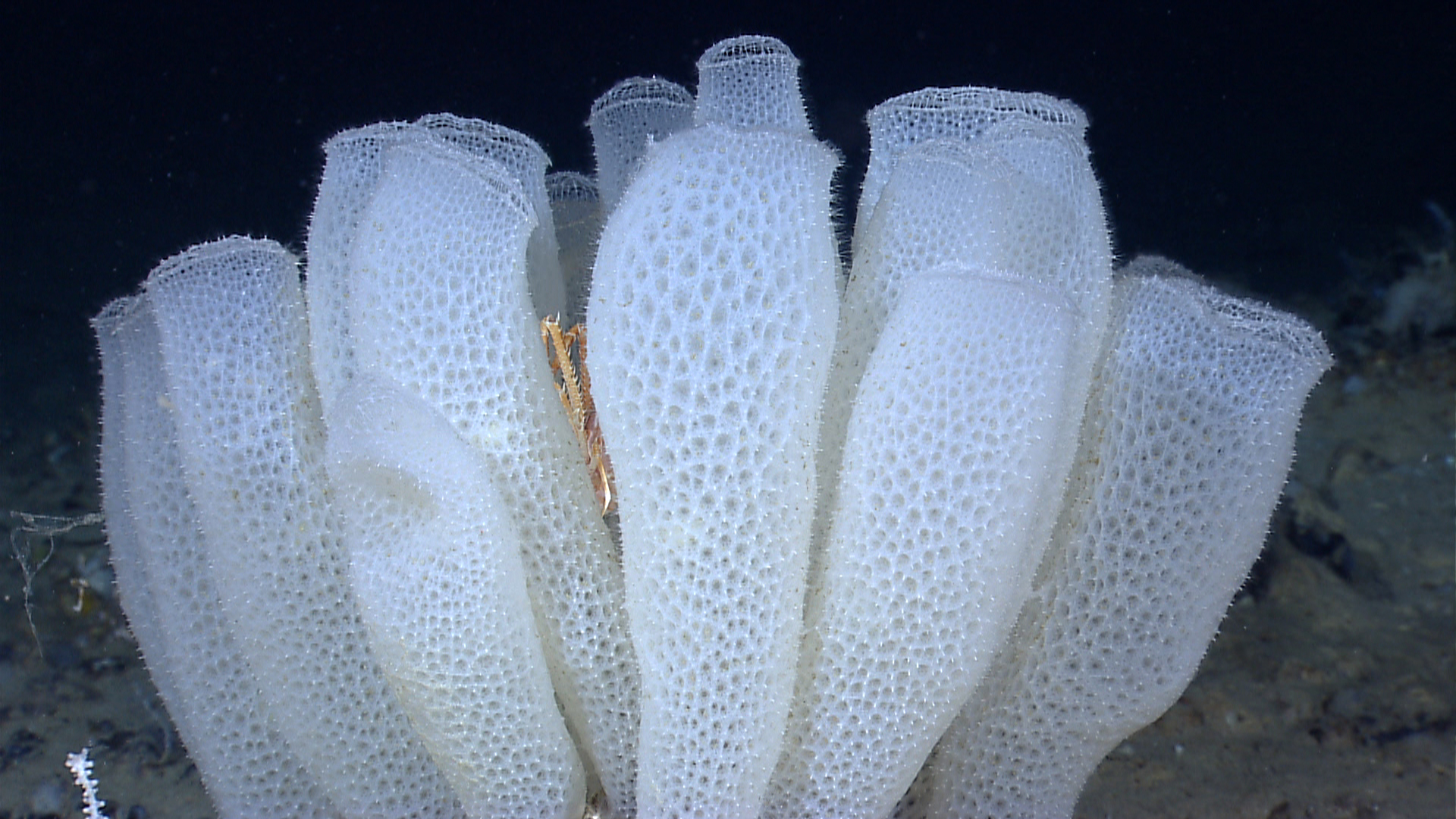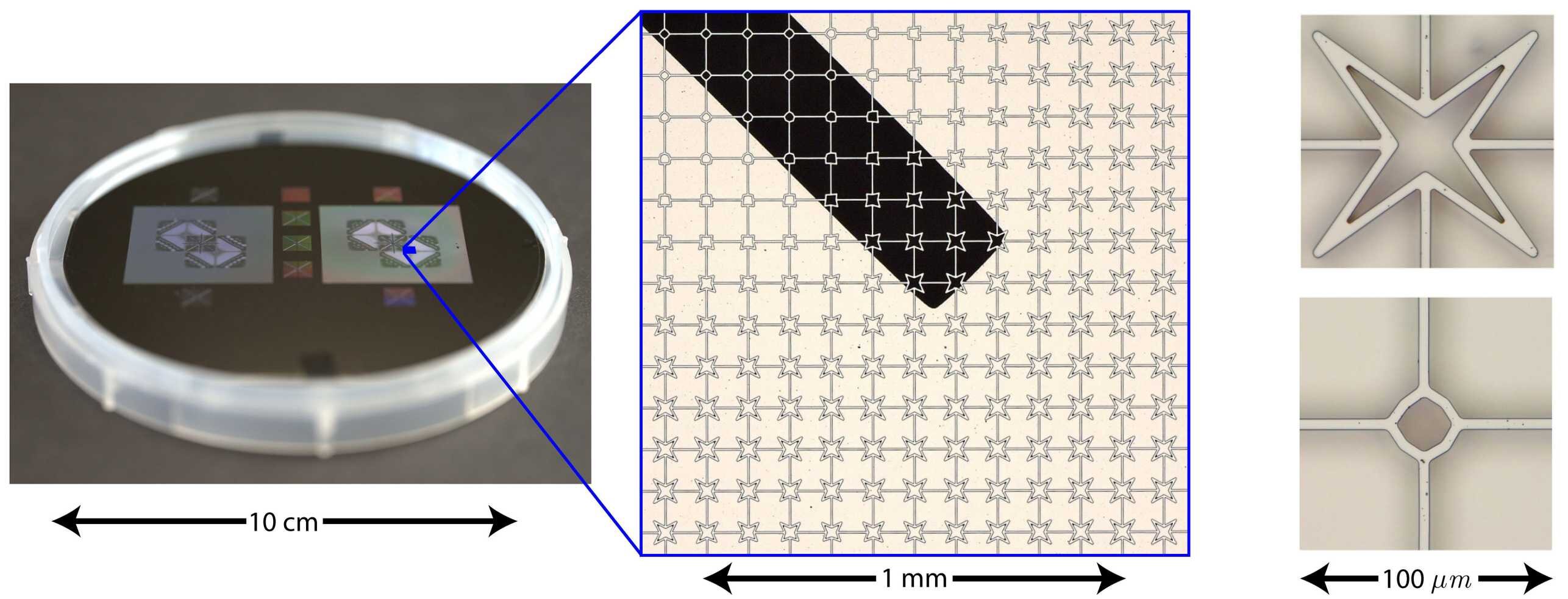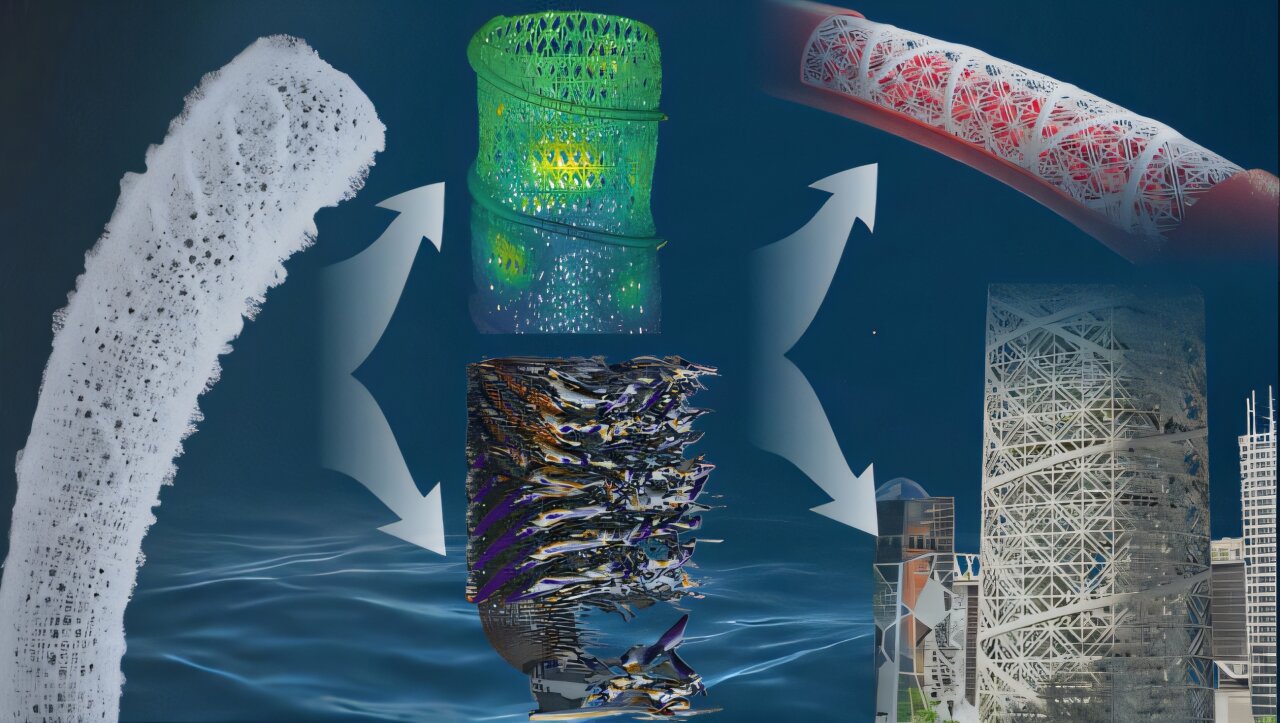
Bioinspired design concept and simulation-driven development of multifunctional metamaterials. Left: The deep-sea sponge Euplectella aspergillum, which inspired the lattice architecture. Center: Structural finite element analysis (FEA) and computational fluid dynamics (CFD) simulations used to evaluate mechanical and fluid-dynamic performance. Right: Example applications of bioinspired metamaterials in lightweight, flow-interacting engineering systems. Credit: Laser Thermal Lab, UC Berkeley
Along the vast ocean floor lives a species of glass sponge known as Venus' flower basket. Though delicate-looking, its exterior belies an exceptionally strong, lightweight skeleton that has intrigued scientists for the past 185 years.
Now, researchers from UC Berkeley and Harvard University have taken inspiration from this marine marvel to design new metamaterials that simultaneously optimize two connected, though often competing, requirements: structural resilience and fluid management.
As reported in Nature Communications, the researchers have built an automated framework that integrates mechanical and high-fidelity fluid-dynamics simulations with optimization tools, allowing users to explore complex metamaterial design options.