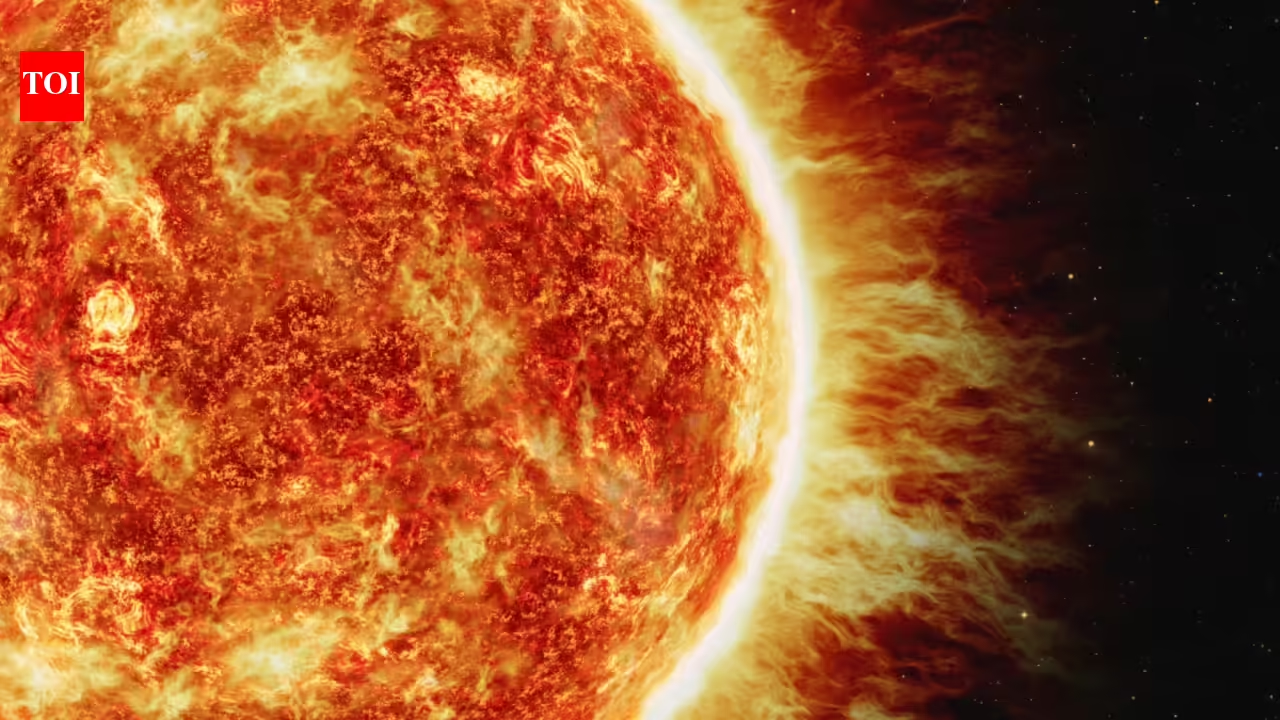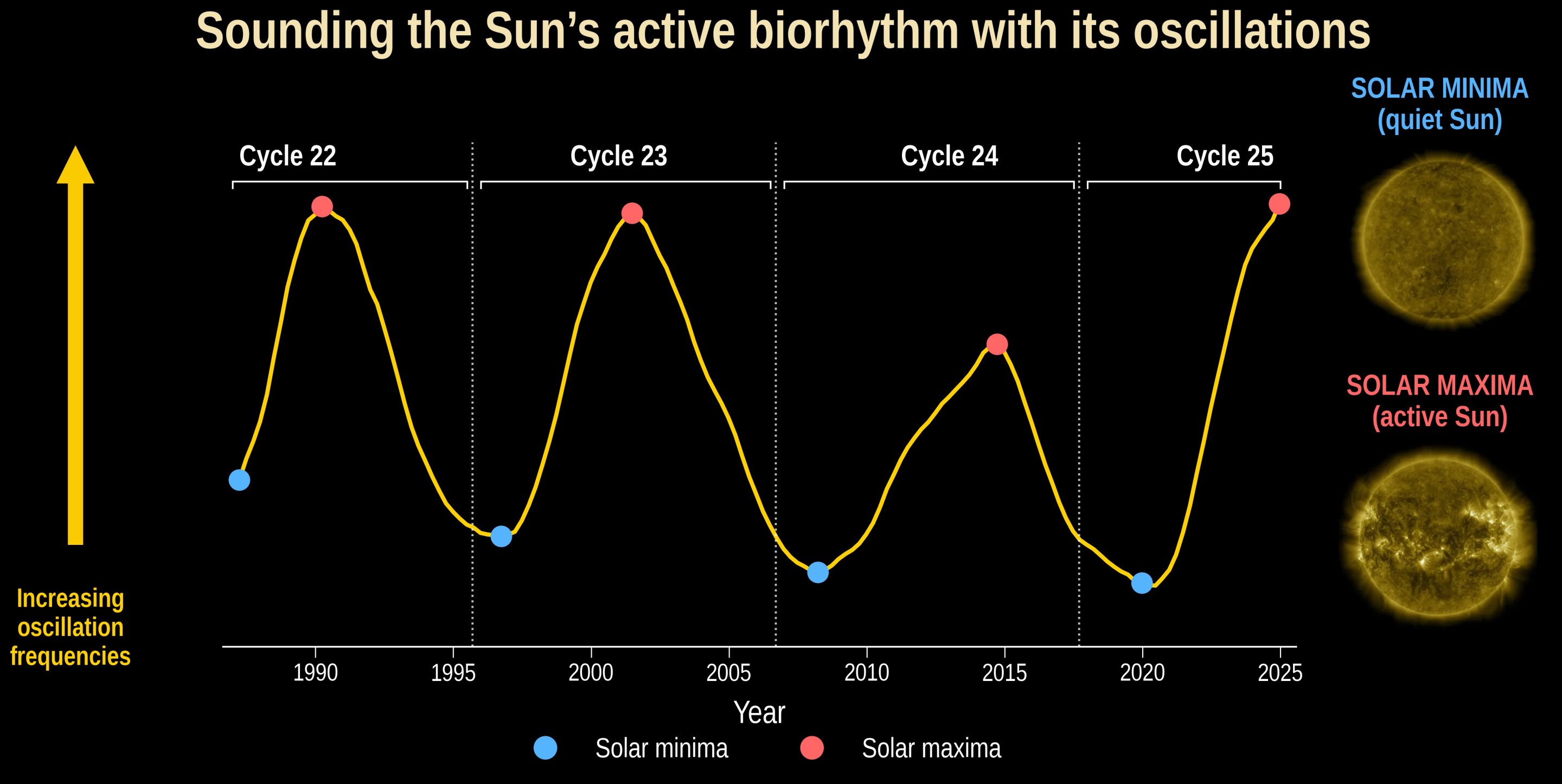
We’ve monitored the Sun’s cycles for centuries, but solar cycles vary in length and intensity. That’s made it challenging to reliably predict what the next cycle will bring. But astronomers might have found a way to make things less unpredictable. According to a new proposal, leveraging the Sun’s “switch-off” point may allow scientists to predict the Sun’s next activity cycle around six or seven years before its maximum. This point refers to a period in the solar cycle wherein the Sun’s most extreme weather events abruptly stop, or “switch” off. The research, led by Sandra Chapman of the University of Warwick in the U.K., will be presented at the Royal Astronomical Society’s National Astronomy Meeting this week. “The Sun doesn’t gently go to sleep and then gently wake up again,” Chapman said in a statement. “Instead, we’ve discovered that the most extreme space weather switches off quite suddenly at a specific point in every solar cycle. By identifying that point, we’ve found a new way to predict how active the next solar cycle is likely to be.”
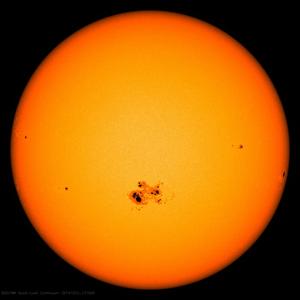
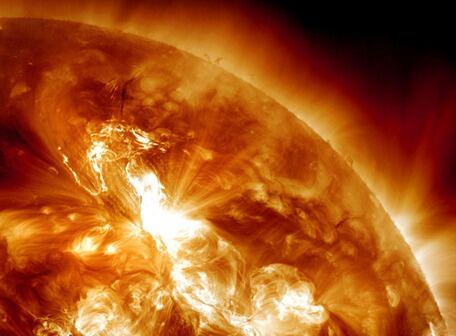
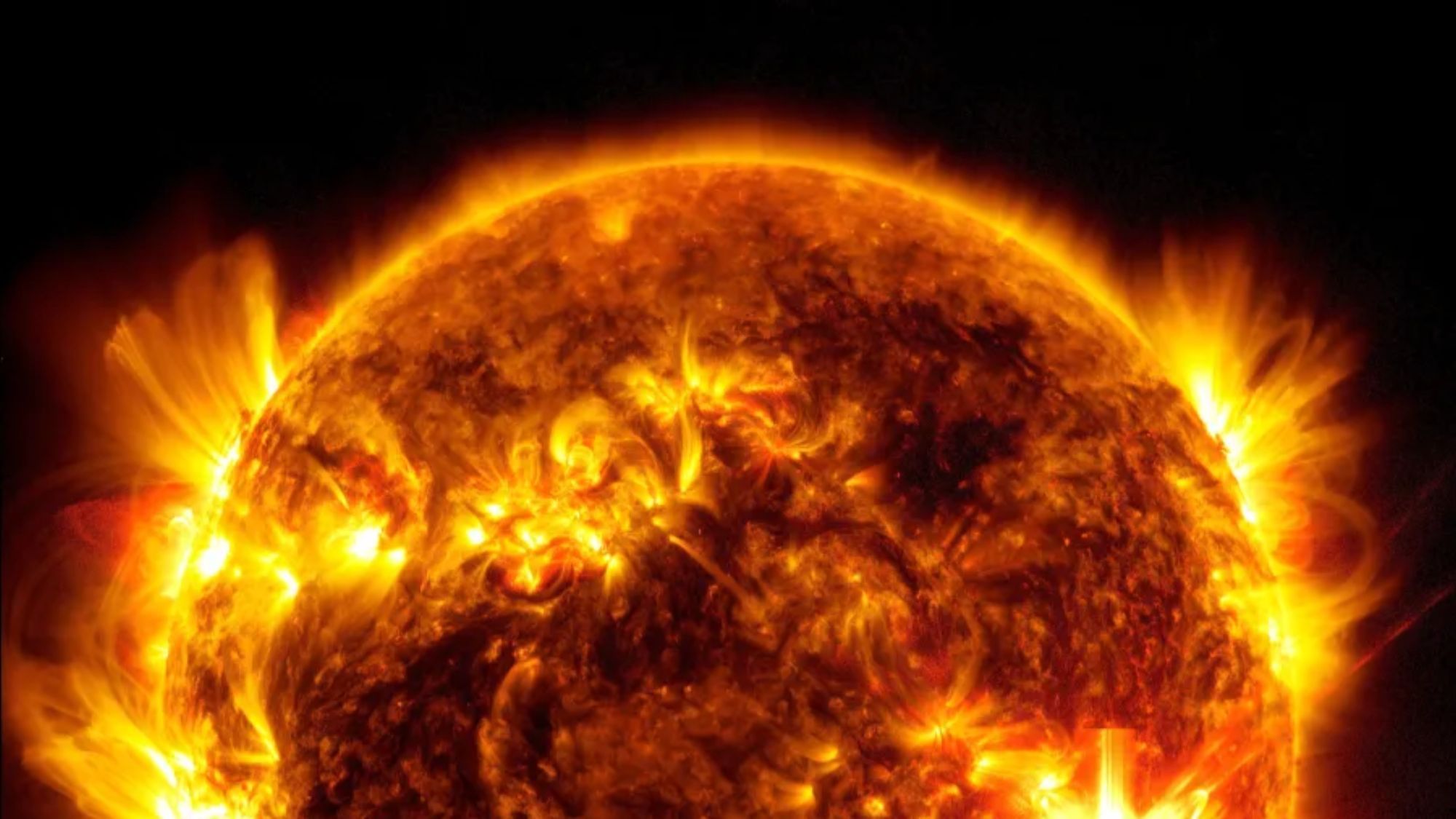
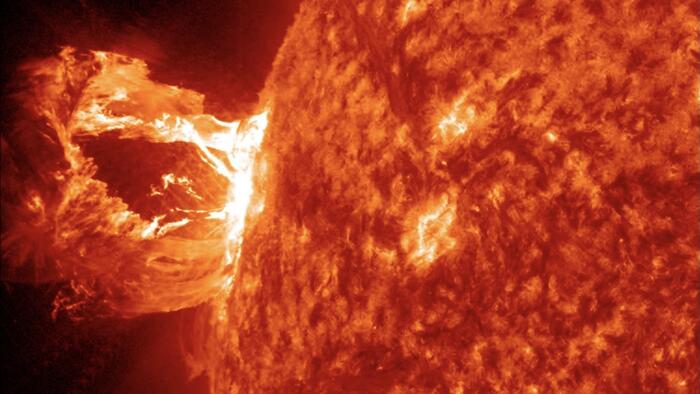
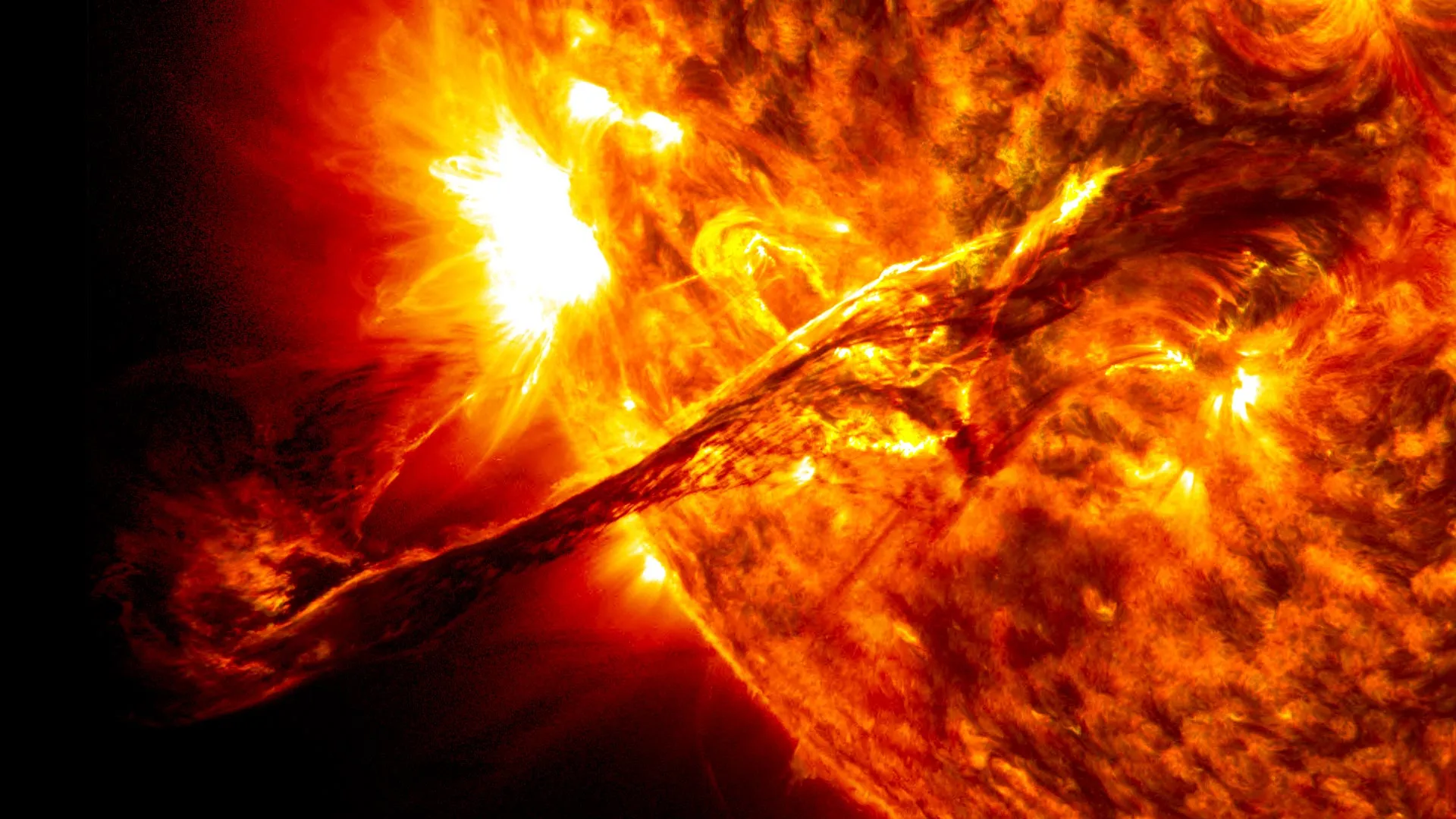
An irregular cycle This illustration lays a depiction of the sun’s magnetic fields over an image captured by NASA’s Solar Dynamics Observatory on March 12, 2016. Credit: NASA Goddard Space Flight Center Roughly every 11 years, the Sun’s magnetic field reverses polarity, which means that its north and south poles switch places. Between these cycles, a concentration of magnetic field lines creates sunspots, or dark spots that “freckle” the Sun’s surface. Sunspots are often responsible for intense weather events such as solar flares or coronal mass ejections and act as key indicators of both solar weather and the solar cycle for scientists.