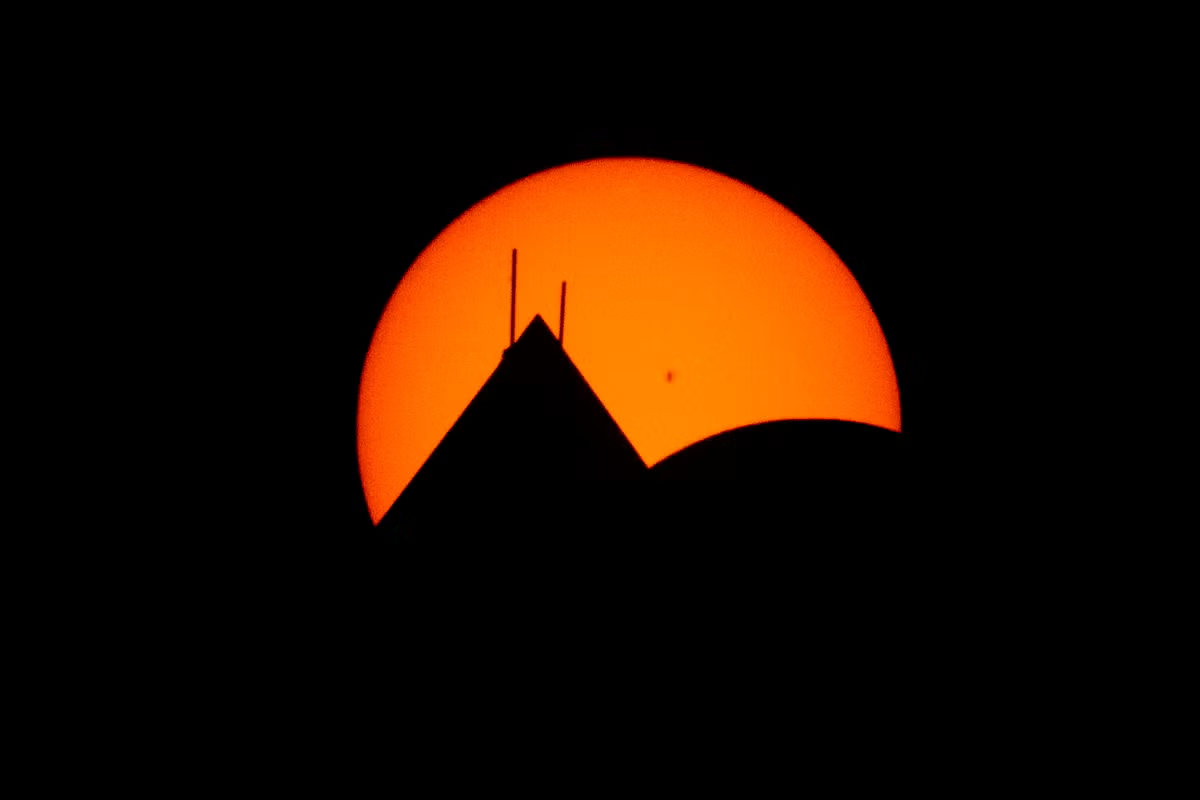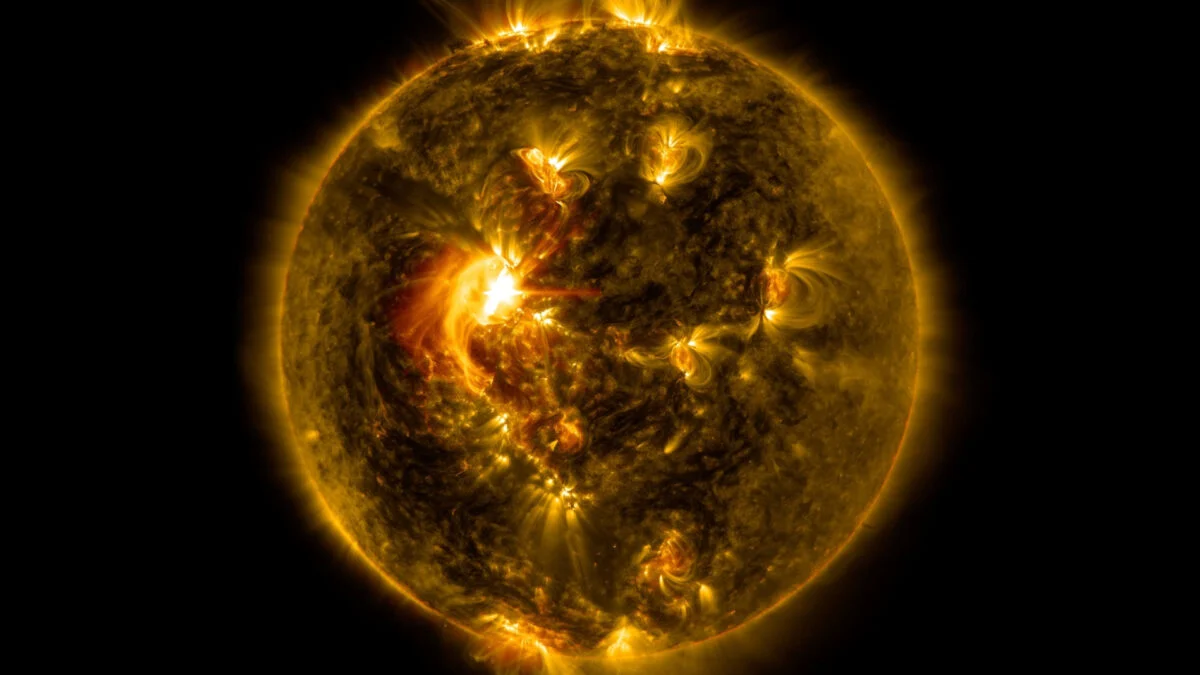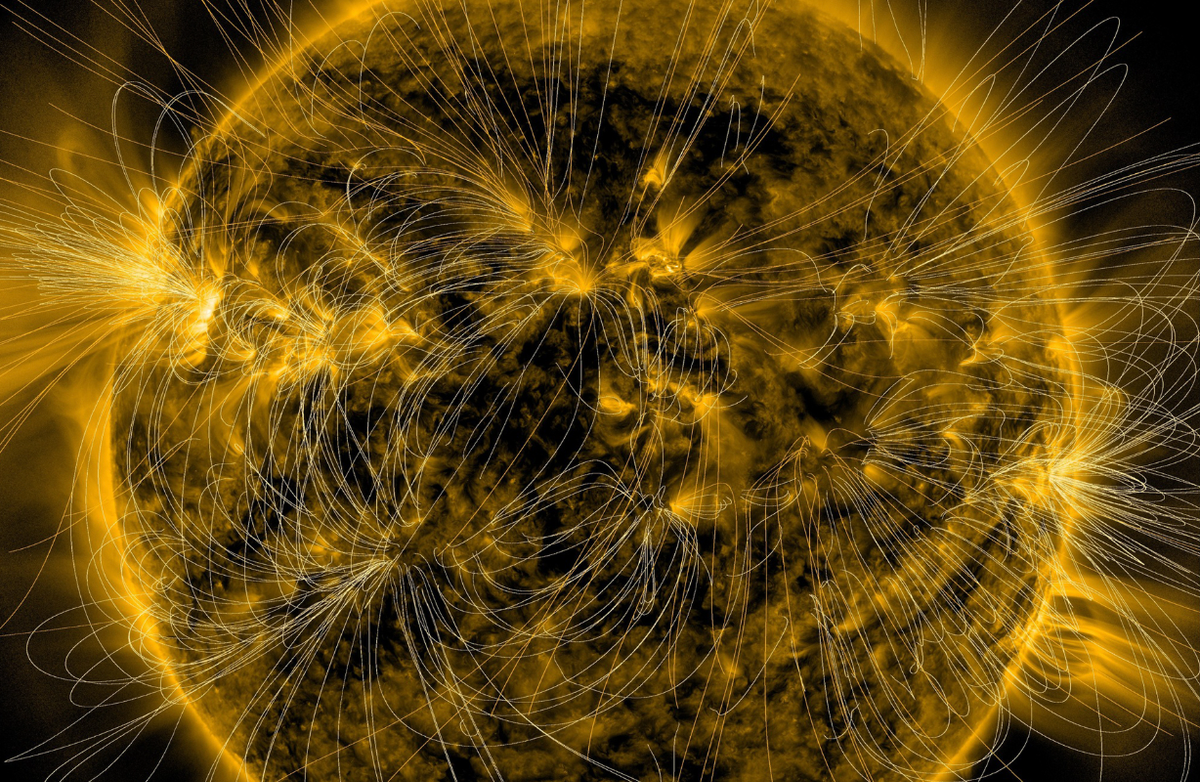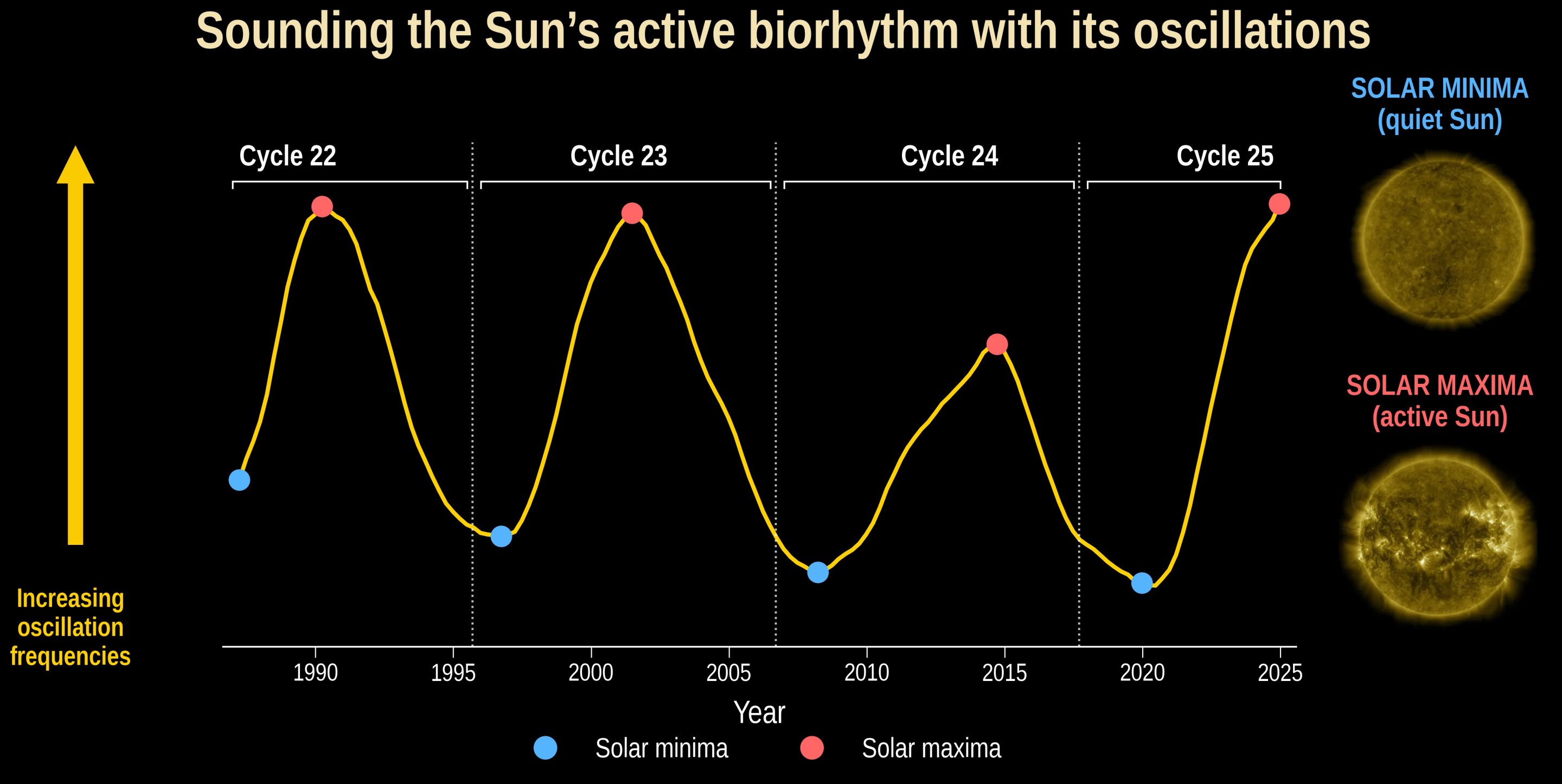
As the sun's activity varies over each 11-year solar cycle—from periods of high activity (solar maxima) to low activity (solar minima)—so the sun's oscillations, which are due to sound waves in the sun's interior, increase and decrease in frequency. The oscillations therefore track and probe the sun's active biorhythm. Credit: W.J.Chaplin
Internal changes due to the sun's "active biorhythm" have become increasingly "skin-deep" over the past four solar activity cycles, according to a new study.
Publishing its findings in Monthly Notices of the Royal Astronomical Society, an international team led by the University of Birmingham reveals solar magnetic activity is being squeezed into an increasingly shallow layer just below the visible surface, signposting long-term changes to the sun's active behavior.
Solar activity rises and falls in 11‑year cycles, producing solar flares, and ejections of highly charged particles and coronal mass ejections that give rise to space weather. This activity, and its cyclic variation, has its origins in the sun's interior, in processes that regenerate and reorganize the sun's magnetic field.
Understanding what drives the solar cycle is therefore crucial for making predictions of space weather, which can disrupt satellites, communications, GPS systems and power grids on Earth.