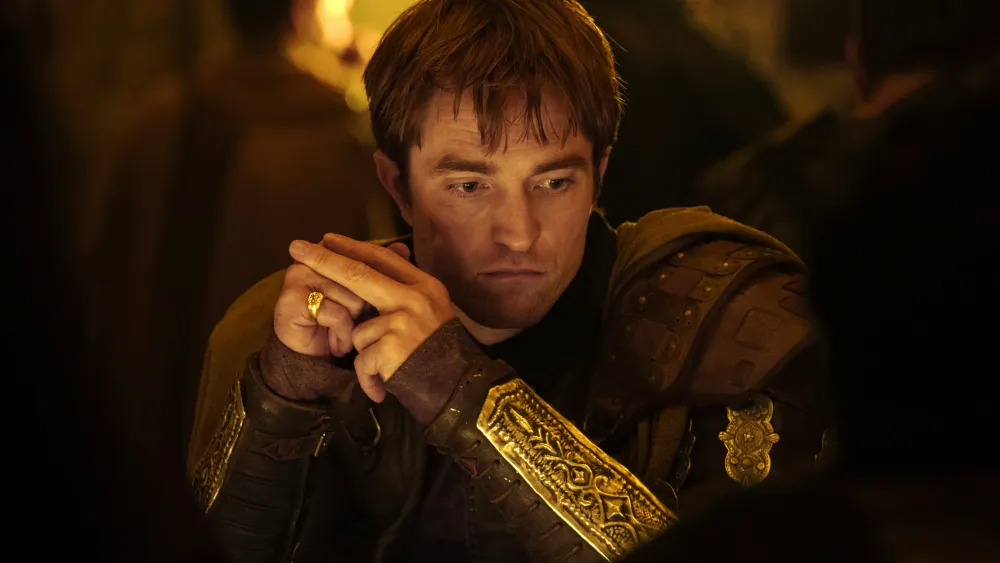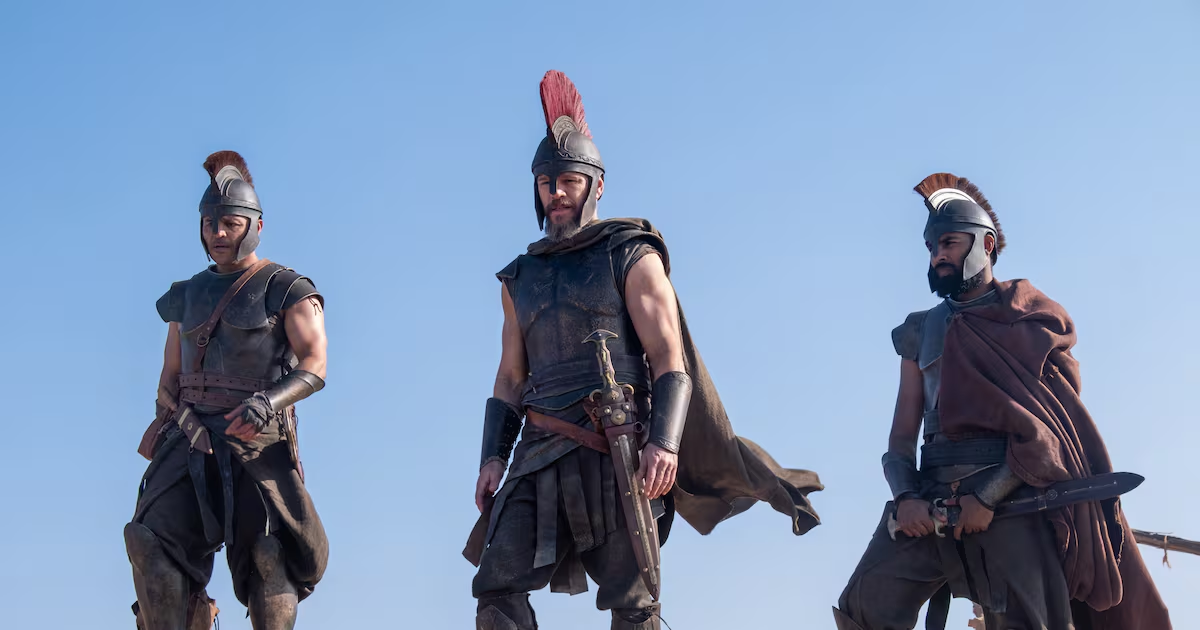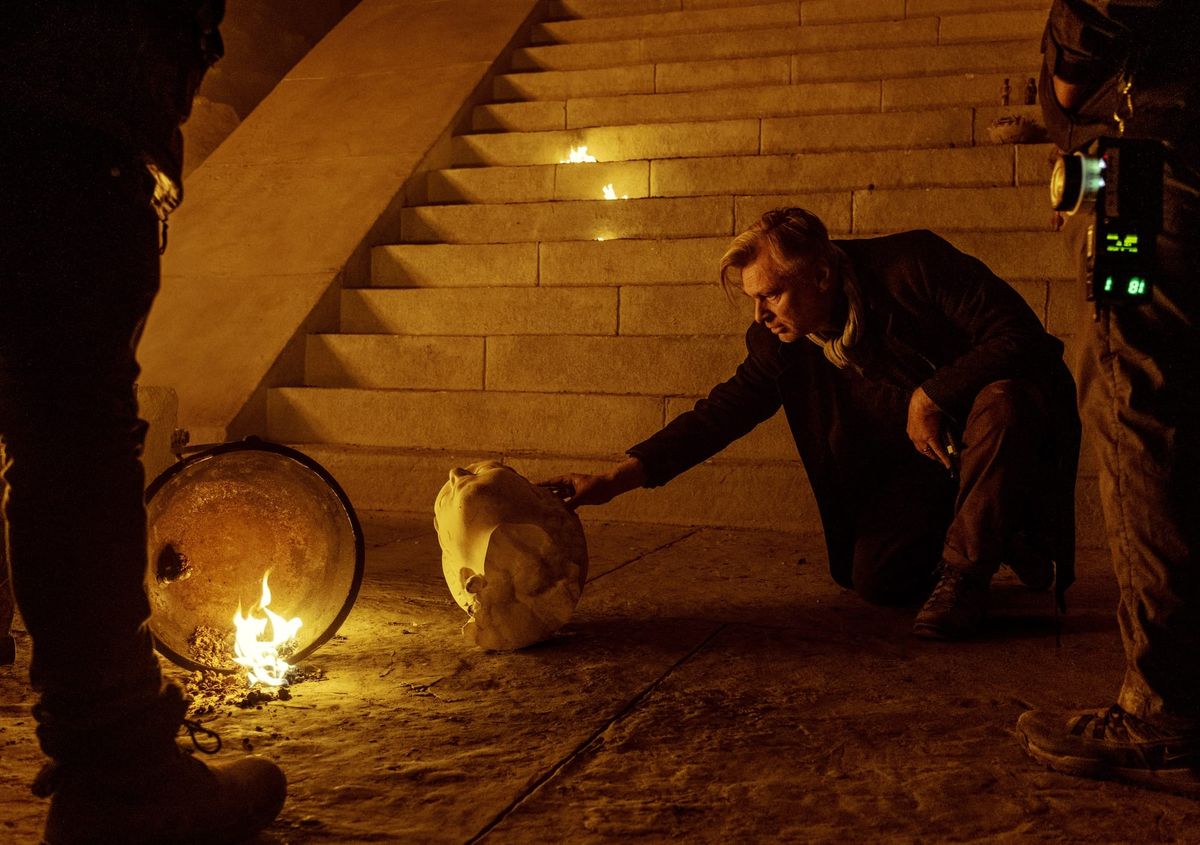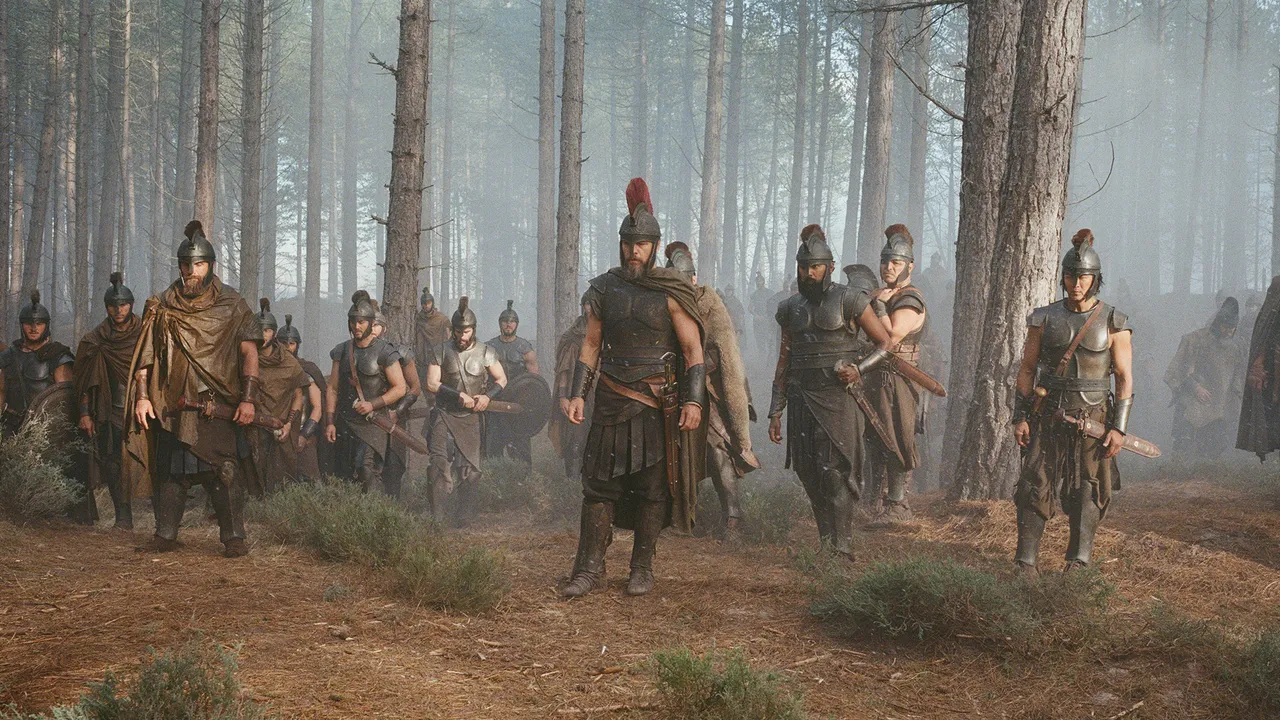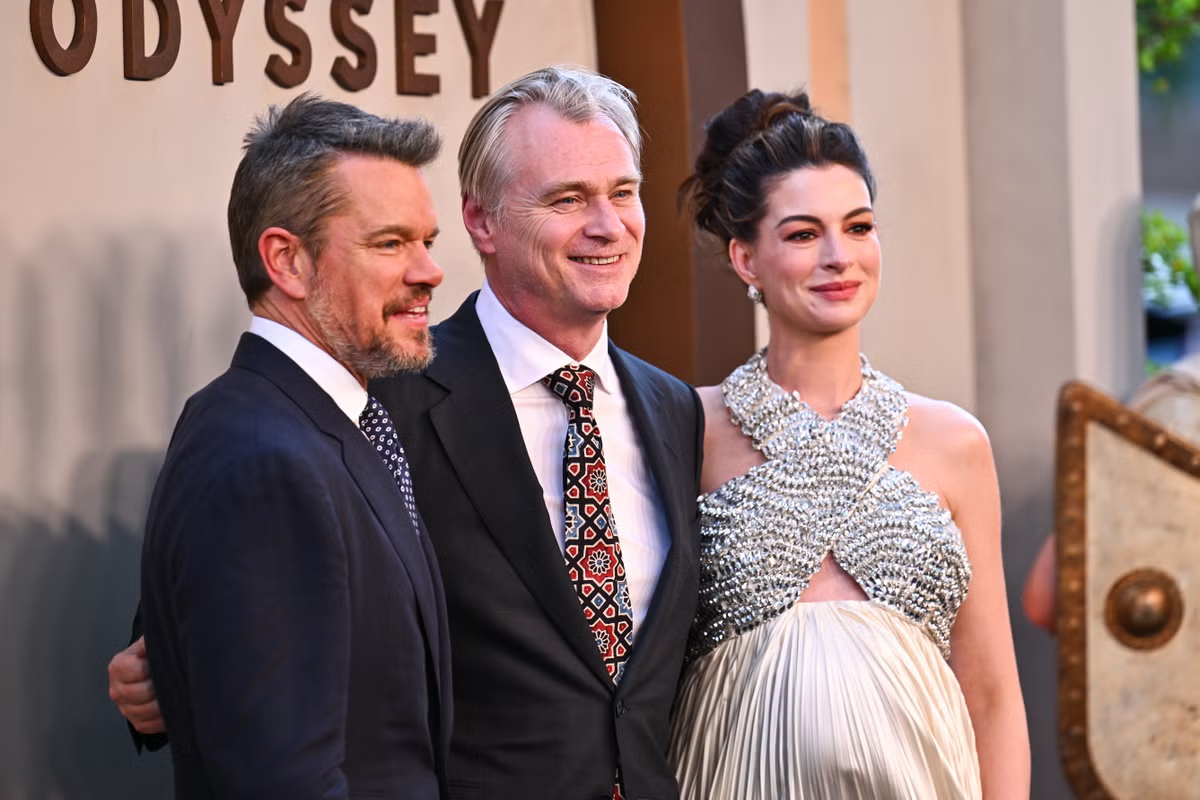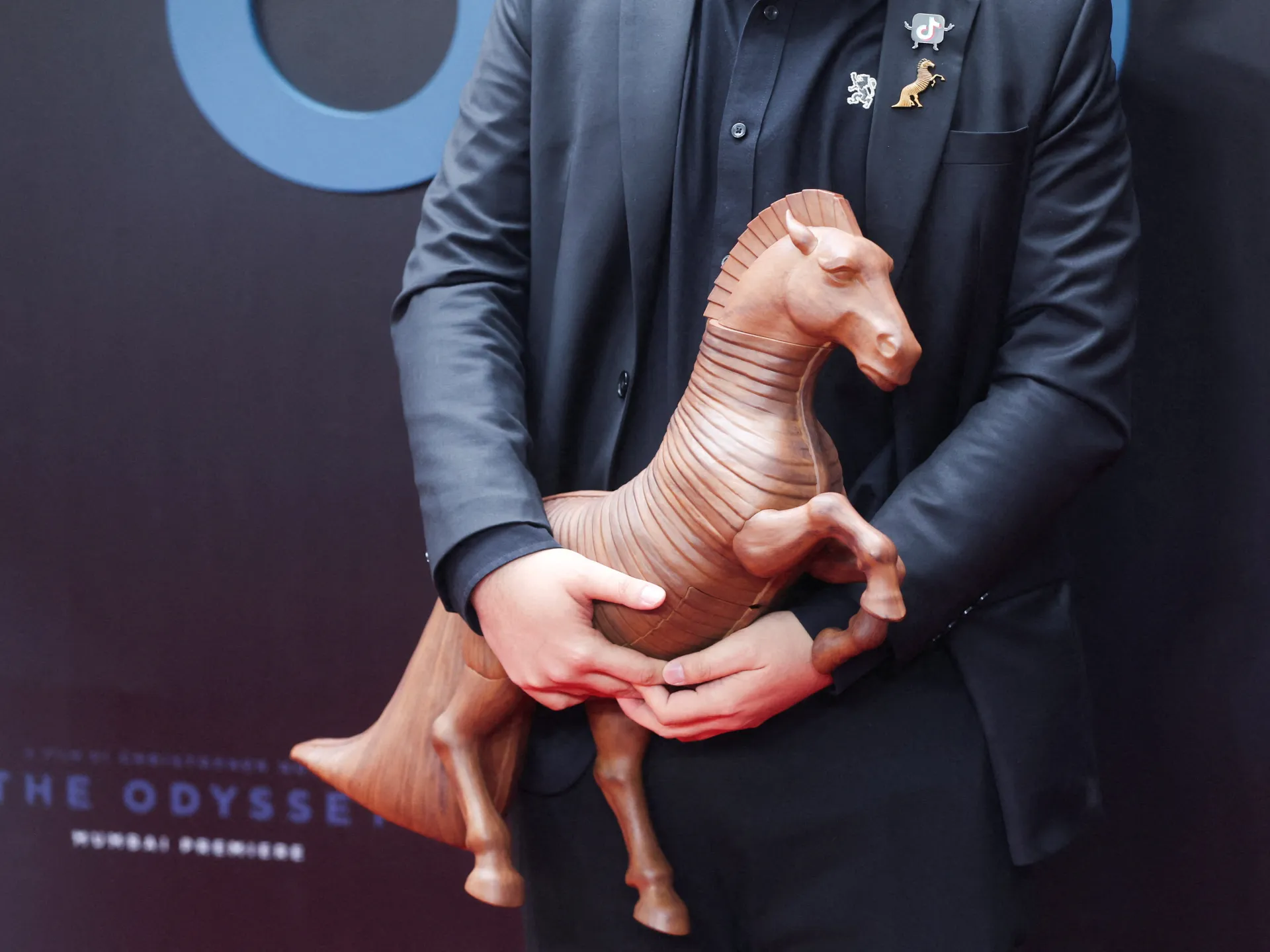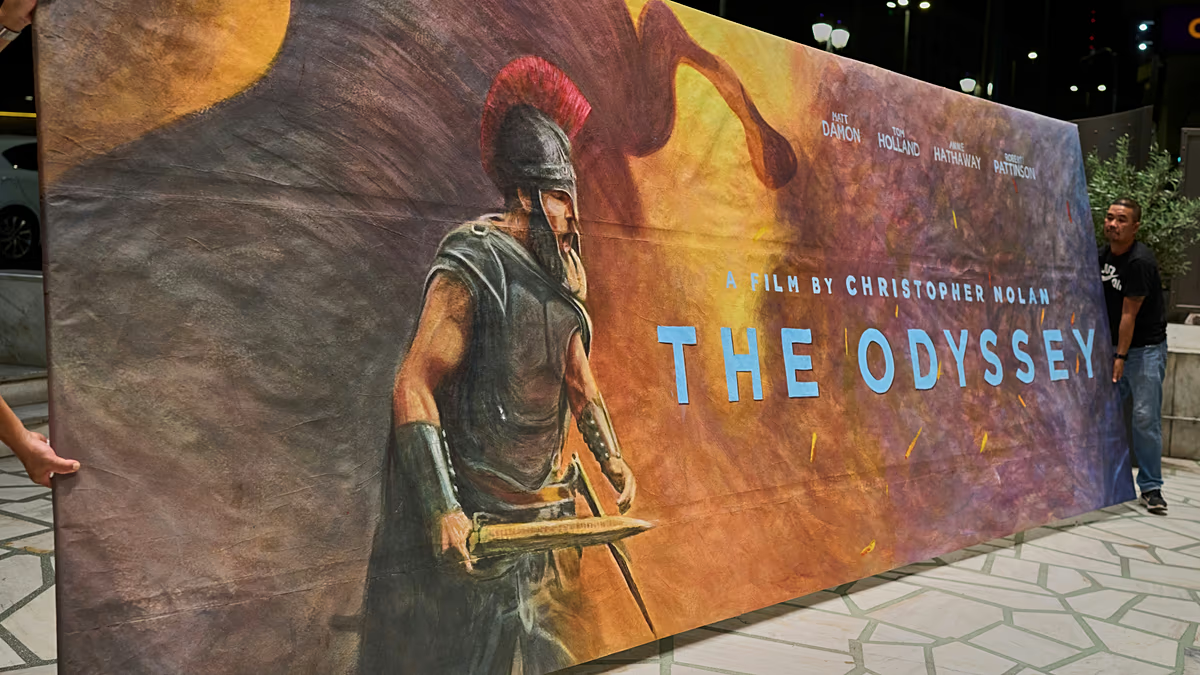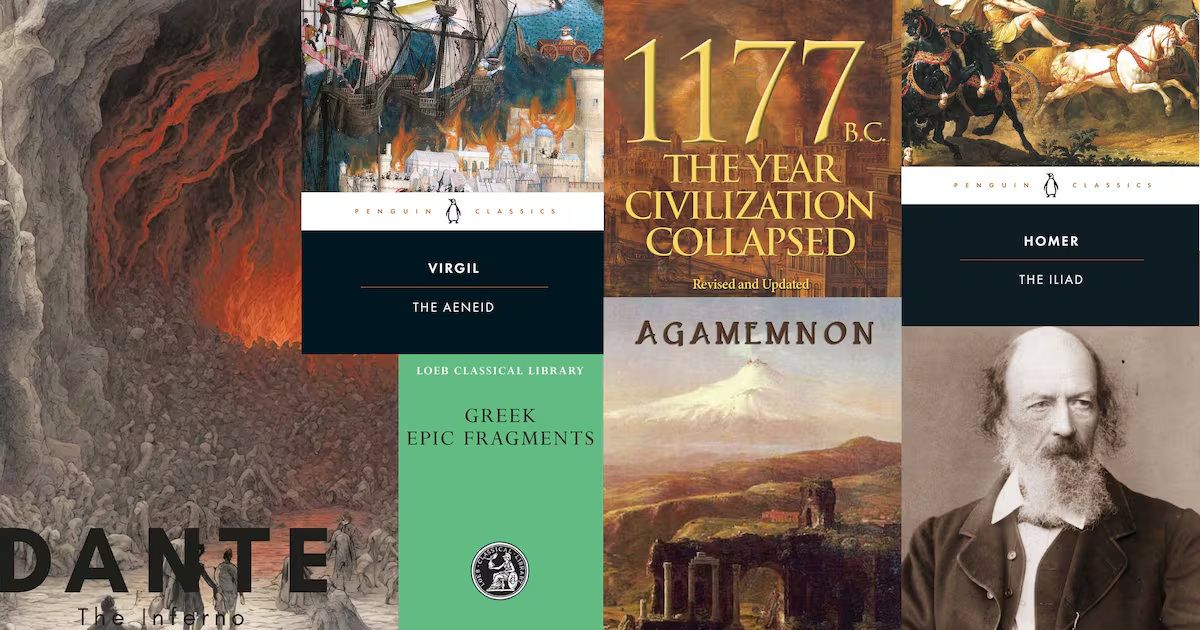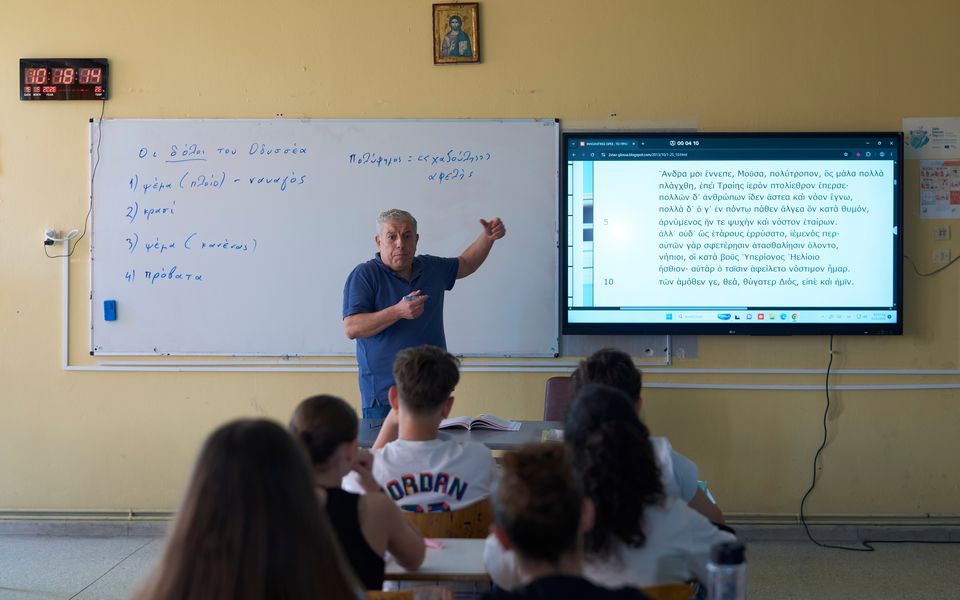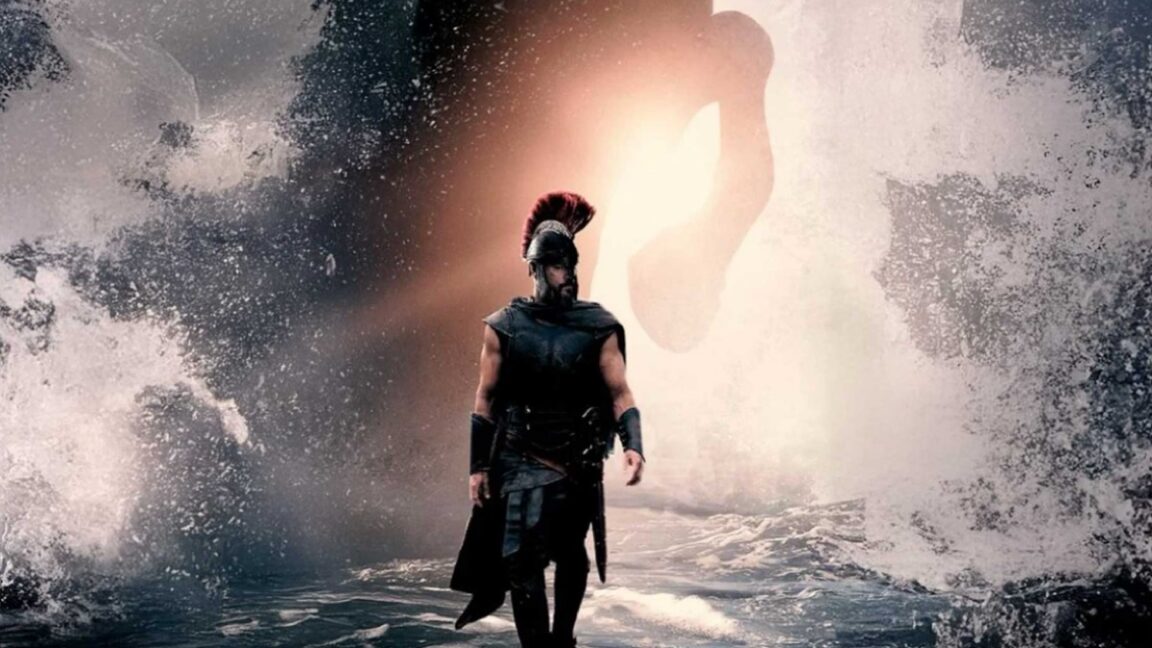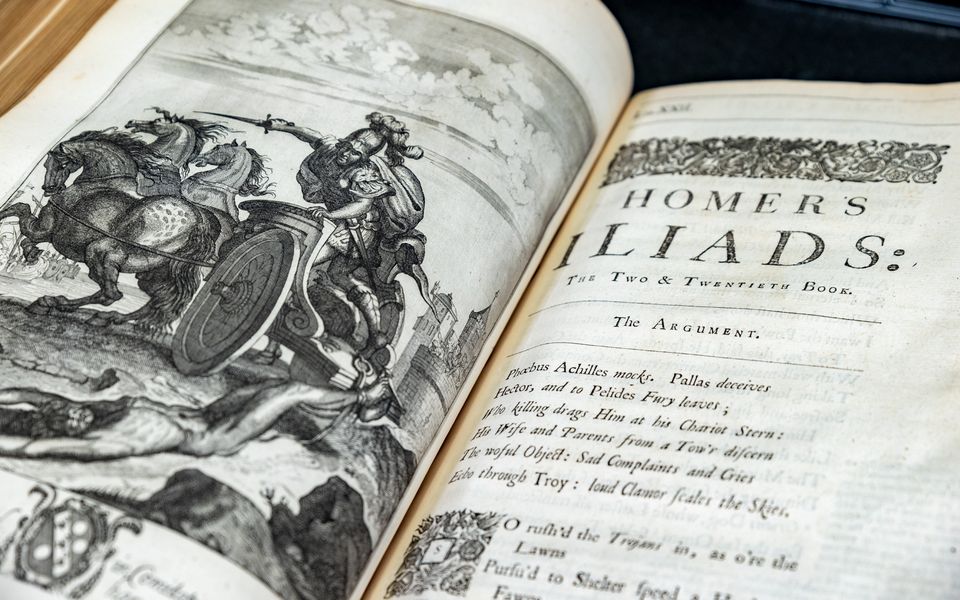
The debate around Christopher Nolan’s version of “The Odyssey,” an excellent supplement on Odysseus in Kathimerini’s Greek edition on July 19, and the great number of people discussing their personal response to Homer, tempt me to say a few words about my own connection with the poet and his work.
Not to judge Nolan’s film, which I have not seen, but because this is an opportunity to discuss the ancient Greeks at a time when knowledge – and interest – in them is fading fast, generation by generation. We need to look at the big picture, not get lost in the details. Often the gateway to the global is personal. That’s why I noted the comment of renowned classicist Mary Beard in the Times Literary Supplement (reproduced in Sunday’s Kathimerini). “‘The Odyssey’ is my book-of-a-lifetime. The first thing I ever read in ancient Greek, when I was 14, was ‘Odyssey,’ book 10 (where Odysseus lands on the island of Circe, who turns his men into pigs) and it has been with me ever since,” she wrote, in 2018. “What still surprises me are the clever and unsettling questions that it raises.” In the same issue, many people who have spent their lives in writing and study speak of the work’s effect on them. I add my own, humble “odyssey.”