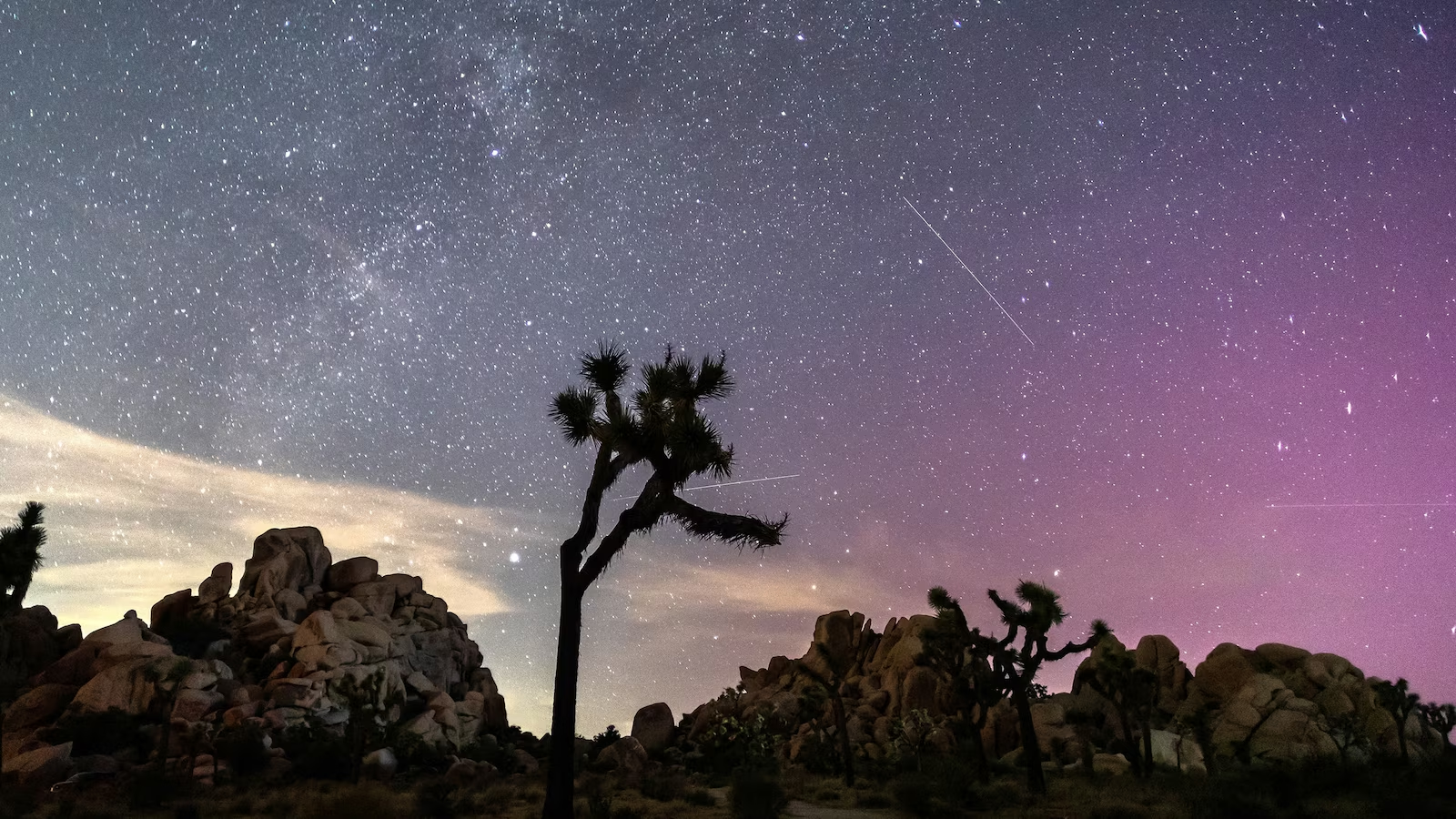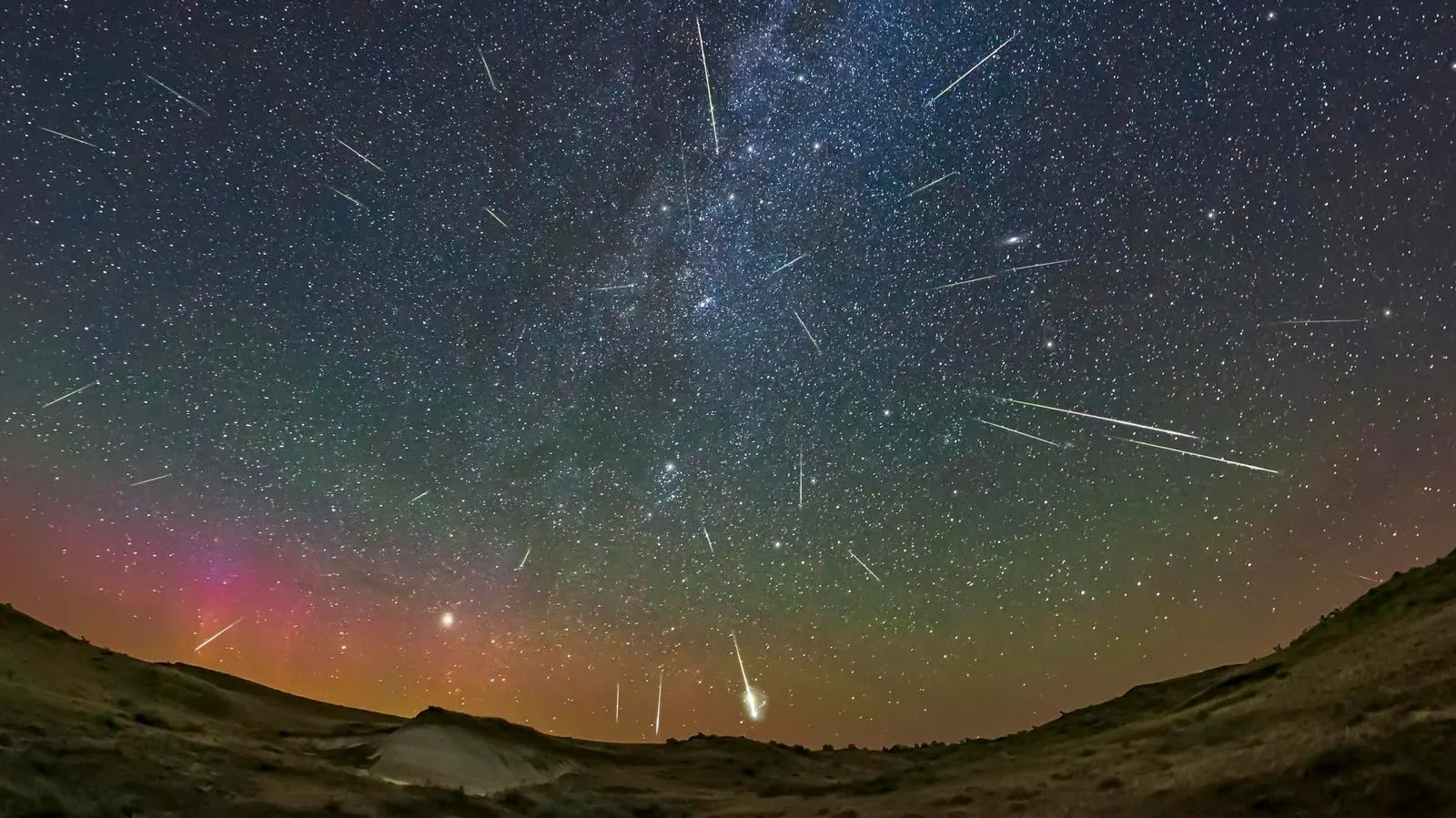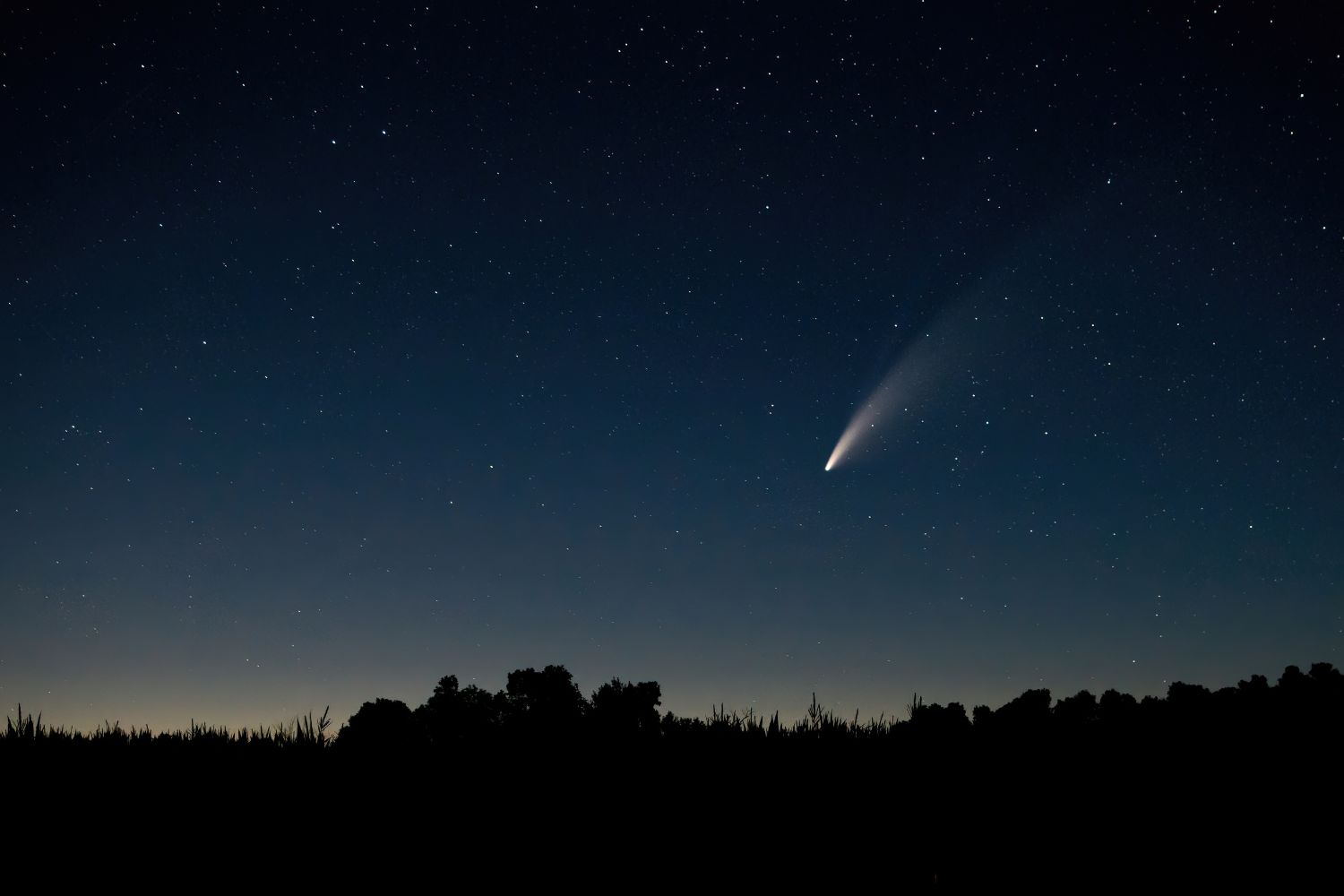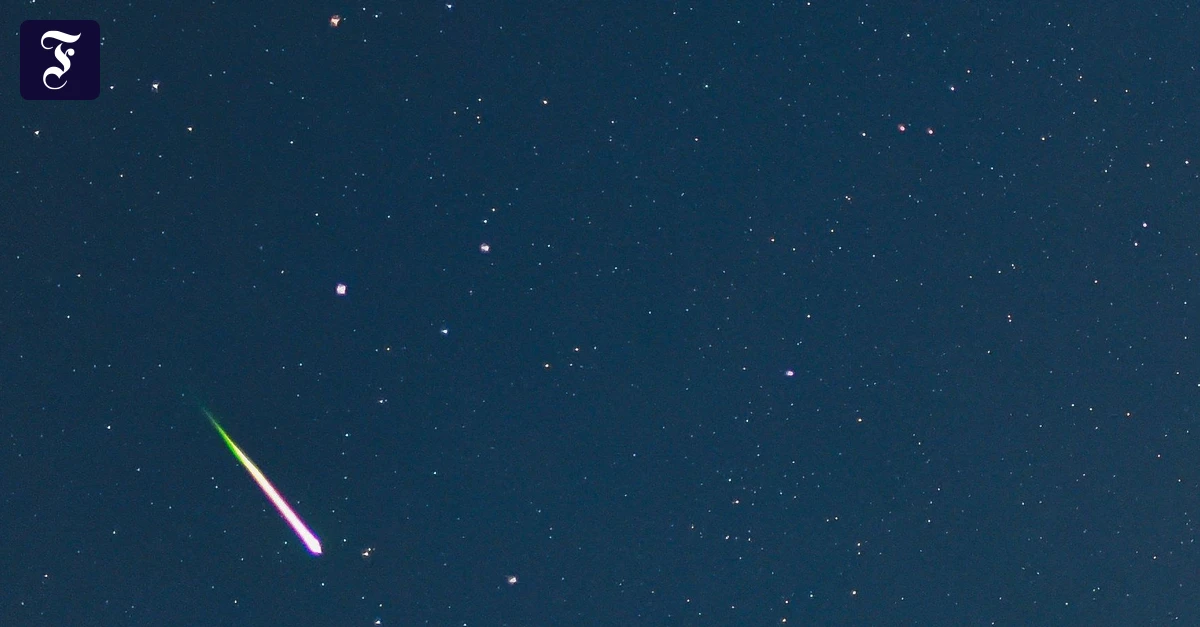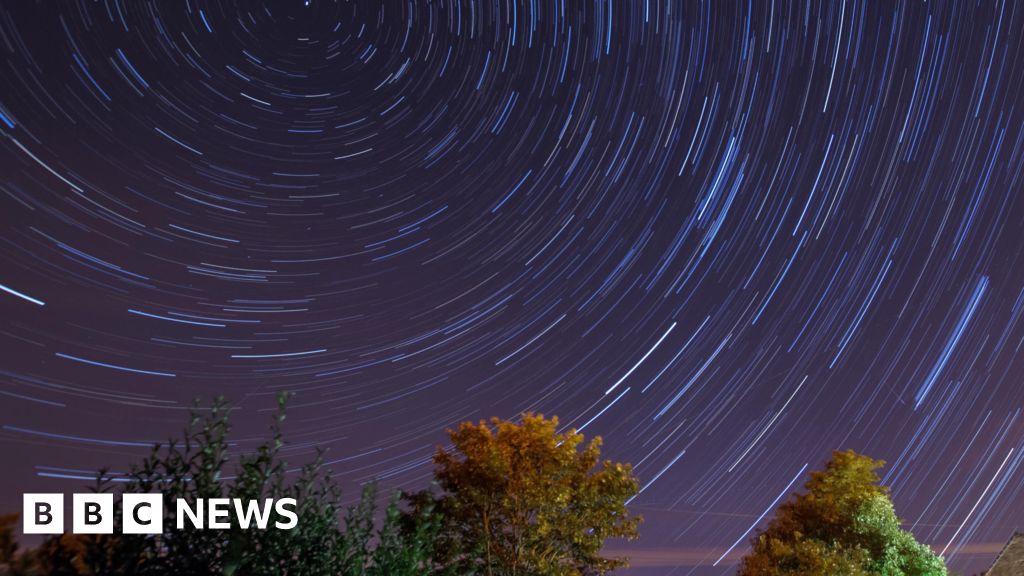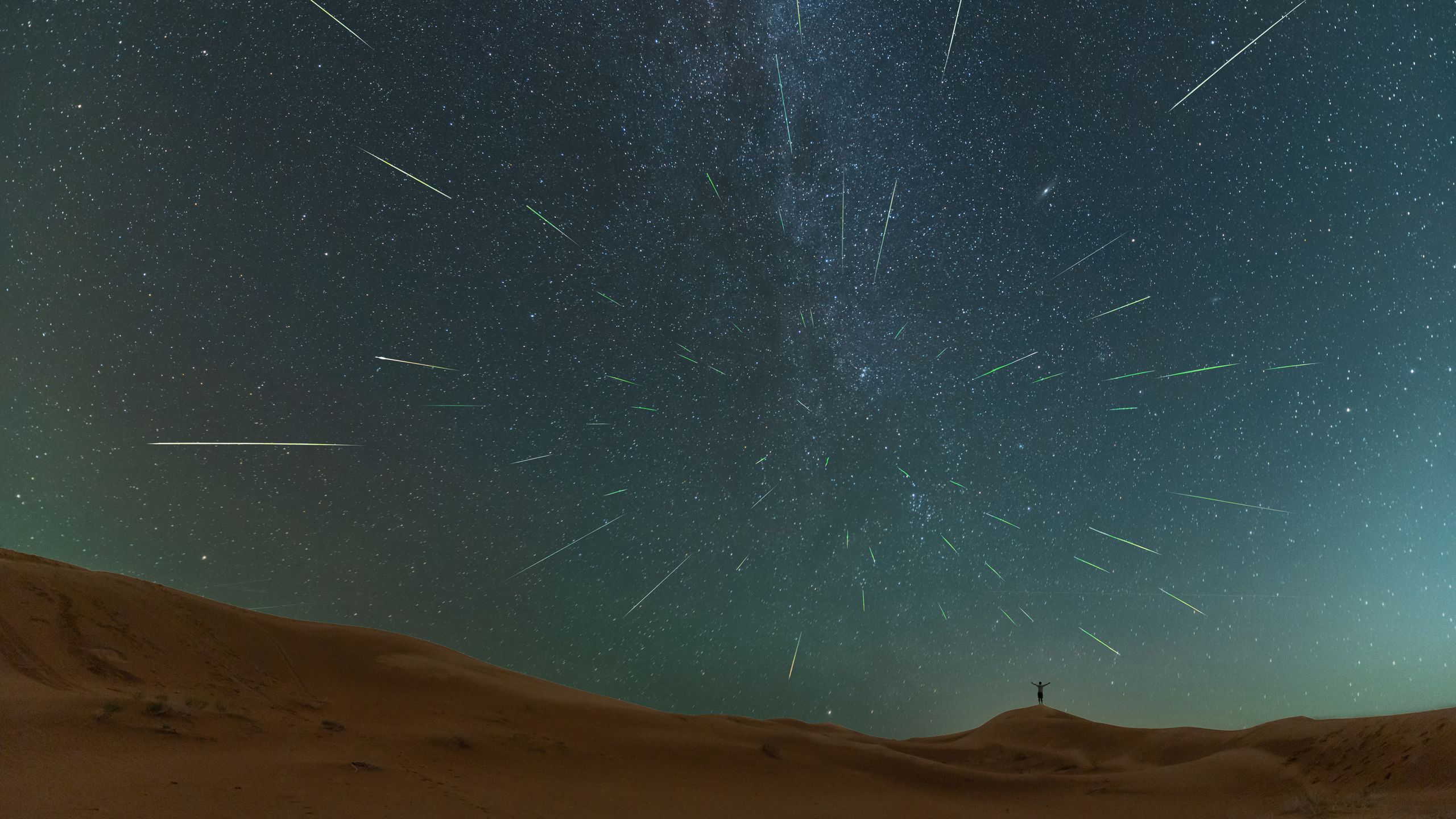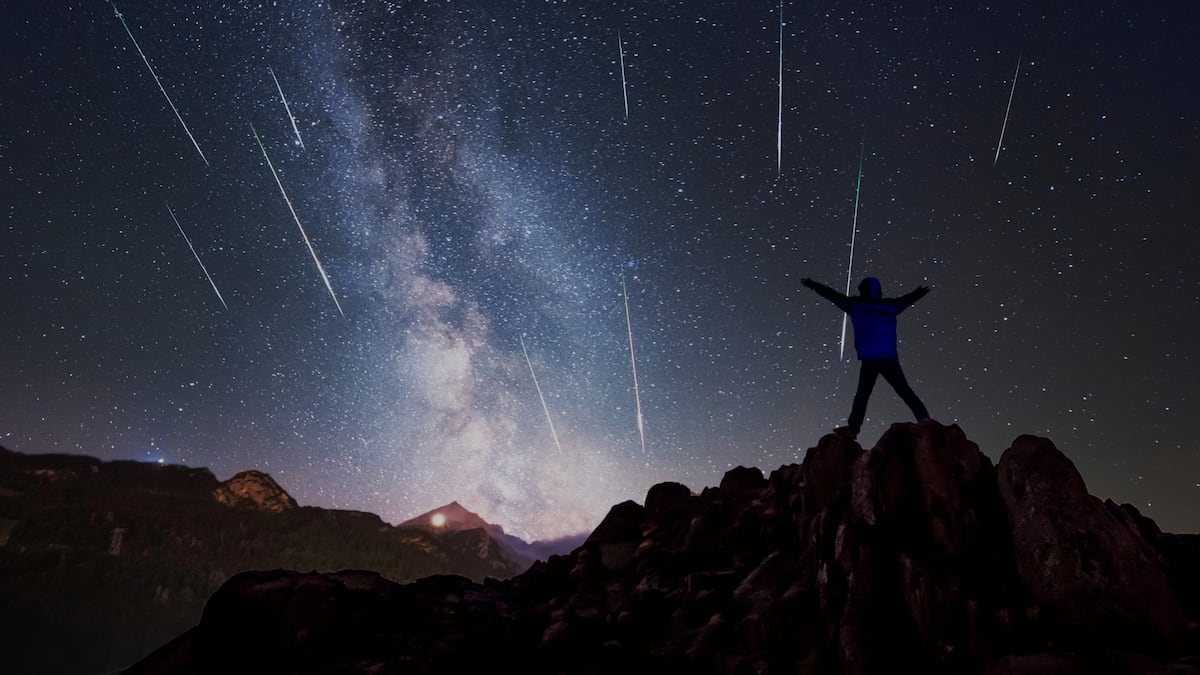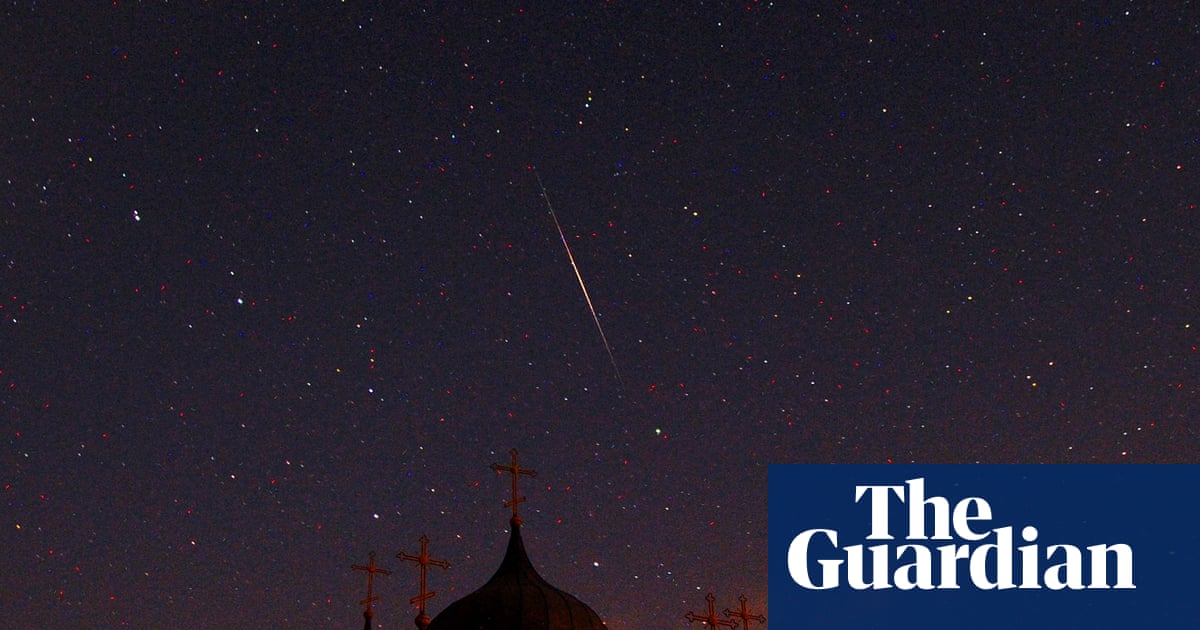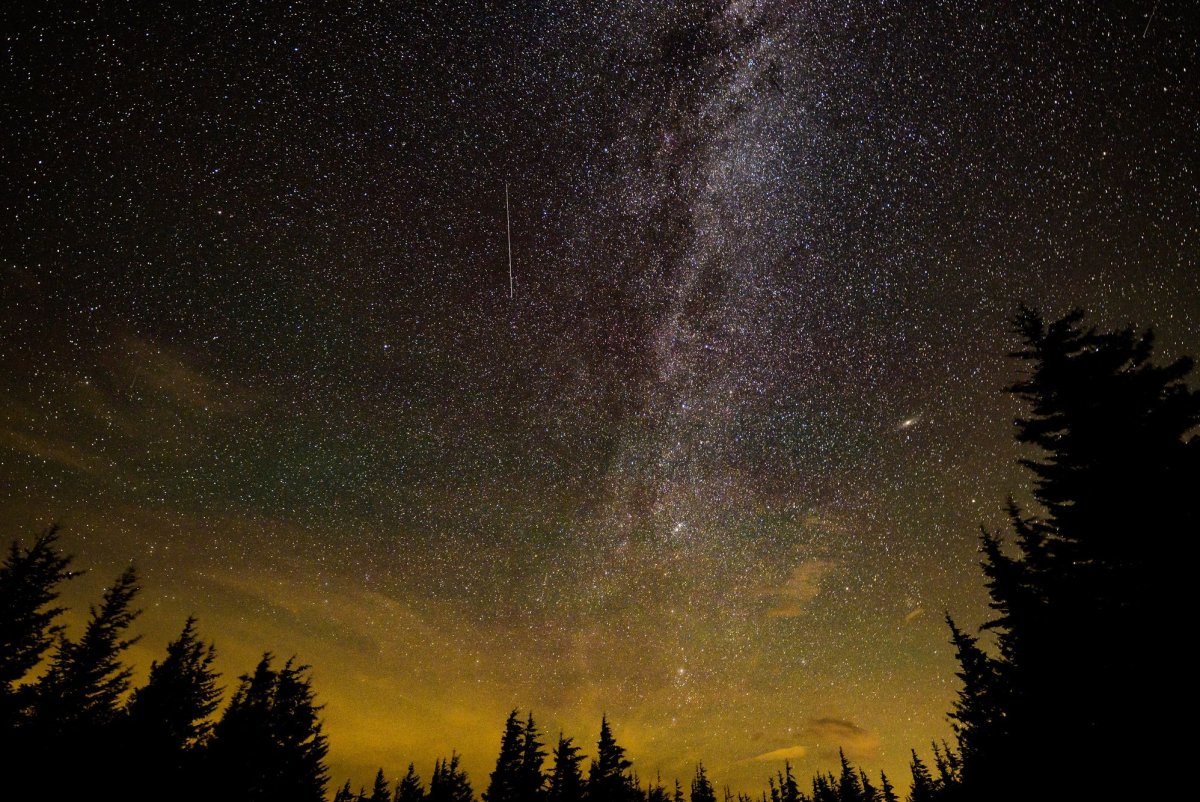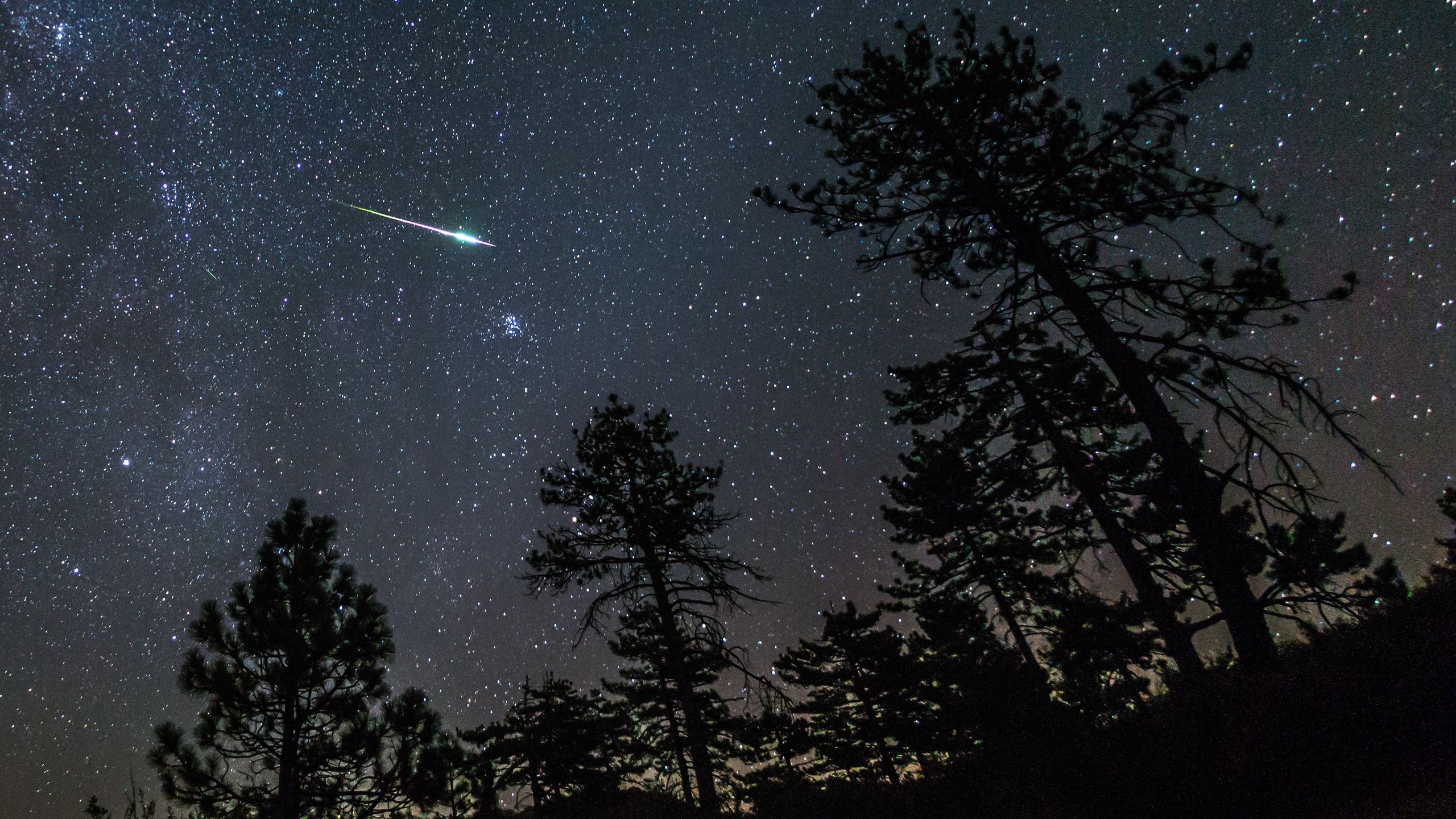
Picture it: A slash of vivid green light splits the starry sky. There for a moment and then gone, leaving nothing but a short-lived glowing trail and a moment of pure joy. You've finally caught it, your first Perseid shooting star of the season.What you saw was the final moment of a story billions of miles and thousands of years in the making. A story that began with that same shooting star locked inside the icy body of the wandering comet 109P/Swift-Tuttle.The 16-mile-wide (26 kilometer) giant of a comet spends its life journeying back and forth between the outer and inner solar system, where its frigid body is heated by the sun, triggering dramatic outbursts of activity. While in close proximity to our star, ice near to the surface of the comet is transformed into gas, skipping the water stage entirely as it escapes out into the vastness of interplanetary space.Embedded within that ice was once a micrometeoroid no larger than a grain of sand, destined to become the Perseid shooting star you saw.The violence of the newborn micrometeoroid's exile was followed by an epoch of utter silence, as its orbit was subtly influenced by the unseen forces of the solar system. It would be easy to think of this as a lonely existence, but we'd be wrong.Our cosmic pebble was joined by millions of others, all shed in the wake of Swift-Tuttle. A great stream of primordial material that threads through the inner solar system, crossing the path of Earth before extending in a great swarm that messily traces the elliptical orbit of their comet progenitor, below the plane of the solar system. Beyond the orbit of Pluto.Each follows its own unique path. Trajectories are shaped by the force of a micrometeoroid's expulsion from the comet's nucleus, along with the gentle push of radiation from the sun and the gravitational tug of the planets.
Billions of miles and thousands of years in the making: This is the life of a Perseid shooting star
A story billions of miles and thousands of years in the making.
739 words~3 min read