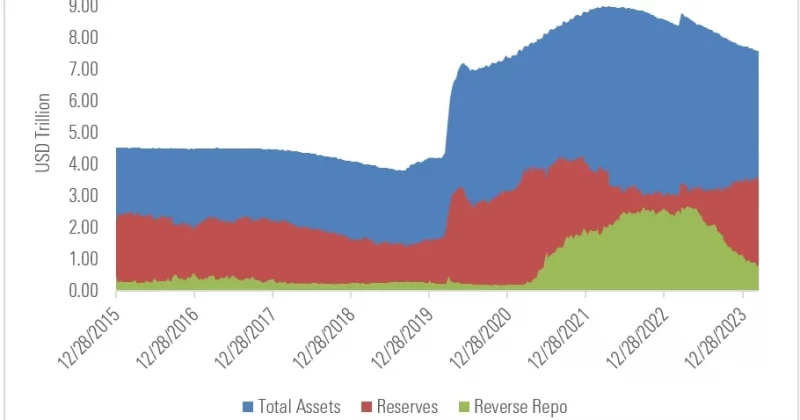
The Federal Reserve accepted $275 million from a single counterparty in its latest fixed-rate reverse repurchase agreement operation, a transaction so small it barely registers on the scale the facility once operated at.
To understand why this number matters, a quick translation: a reverse repo is essentially the Fed borrowing cash overnight from financial institutions, handing over securities as collateral, and returning them the next day with interest. It drains liquidity from the system.
From trillion-dollar tool to operational footnote
Aggregate overnight RRP volumes had already fallen to $100 million by July 17, 2026, according to the research findings. A subsequent operation around July 20 involved just $30 million. The $275 million figure, while larger than those two data points, fits the same pattern: the facility is running on fumes.
The New York Fed has been conducting periodic small-value RRP exercises, including tests with primary dealers as recently as May 2026. These are largely operational readiness drills at this point, not meaningful policy interventions.