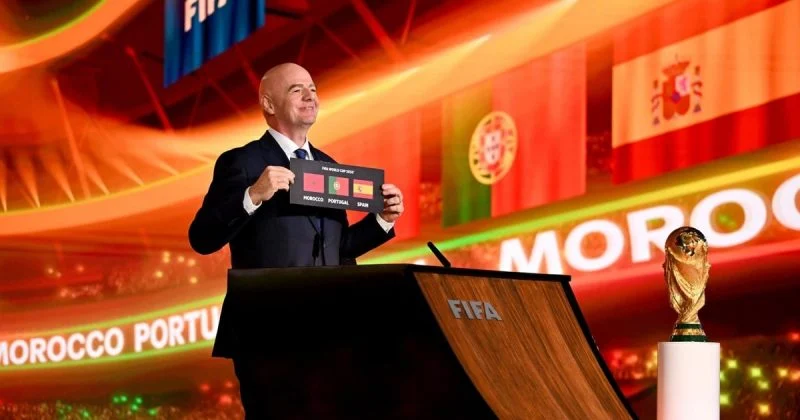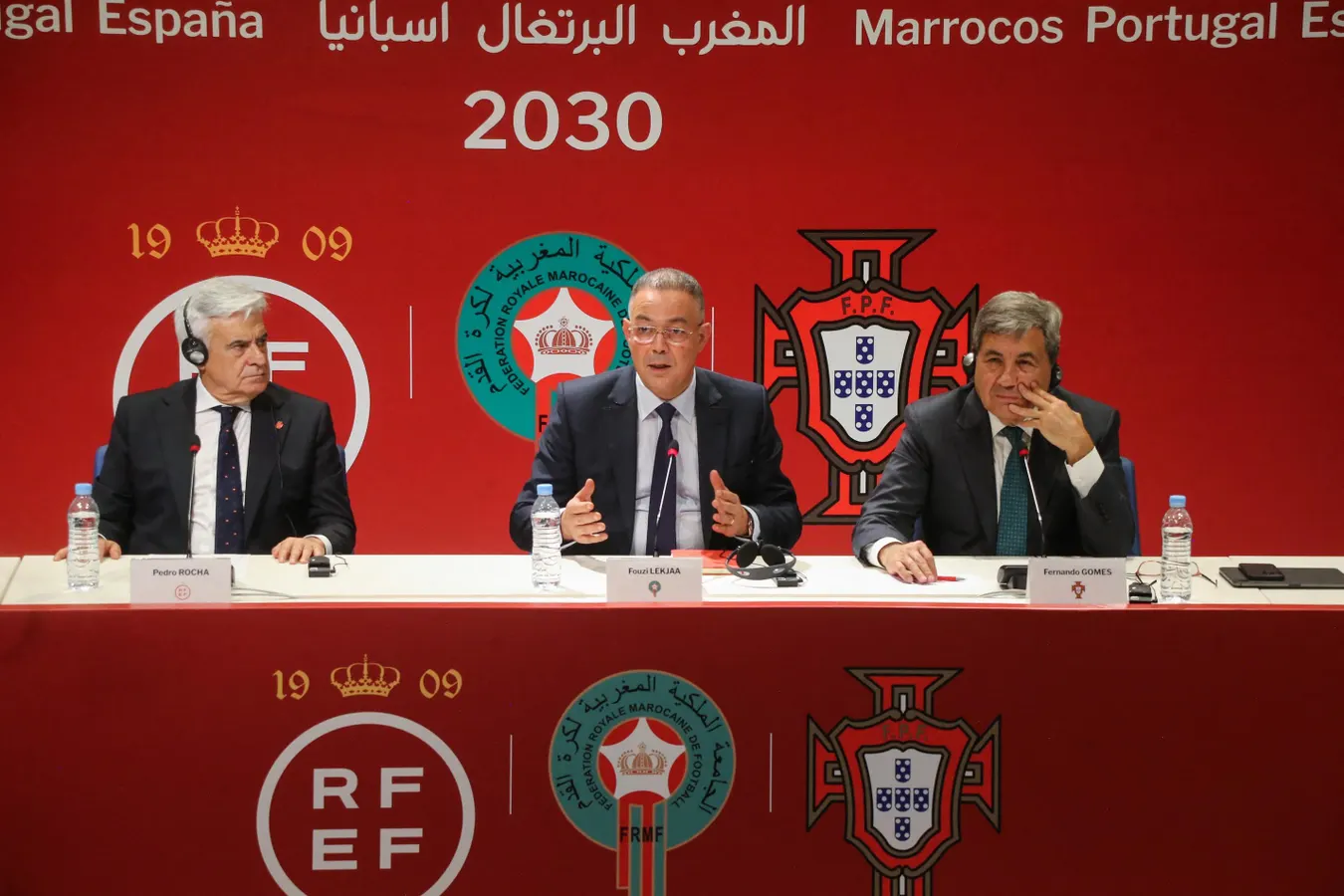
Football Federation chiefs of Morocco Faouzi Lakjaa (C), Spain Pedro Rocha (L), and Portugal Fernando Gomes. World Cup 2030, in Rabat on October 28, 2023. (Photo by AFP via Getty Images)AFP via Getty ImagesFIFA has already shown one way it may sell World Cup 2030: bundle it with another tournament. In the Republic of Ireland, the organization placed the 2026 and 2030 rights into a single tender. The next U.S. auction arrives after a North American World Cup that reset expectations for television and streaming audiences.The numbers give FIFA a strong hand. They do not make the economics simple.The decisive question is not which company can write the largest check. It is which platform has a business model capable of making that check worthwhile.World Cup 2030 Reprices The Spanish-Language AudienceTelemundo and Peacock captured 48% of the combined U.S. World Cup audience during the 2026 group stage, even though U.S. Hispanics account for about 20% of the population. The platforms’ digital average minute audience reached 2 million, up 251% from 578,000 during the 2022 group stage.That is not simply a demographic success story. It changes the value of the rights.ForbesHow Fox Rebuilt Its World Cup Broadcast Into A Record-Breaking MachineBy Maureen KerrA combined English- and Spanish-language package would make Spanish-language demand a pricing floor rather than a secondary sale. An English-language bidder could no longer value the tournament without accounting for the audience Telemundo demonstrated. A Spanish-language broadcaster, meanwhile, would need the financial capacity to acquire and distribute the entire U.S. product.MORE FOR YOUPeacock carried all 104 matches live in Spanish. Telemundo and Peacock then averaged 10.4 million viewers across the four quarterfinals, the highest Spanish-language audience recorded for that stage. Streaming became part of the tournament’s audience growth, not merely another distribution window.World Cup 2030 Tests Five Different Business ModelsFox remains the incumbent with the production experience, advertiser relationships and tournament identity to defend the rights. Its proposed acquisition of Roku, valued at approximately $22 billion in enterprise value, would add first-party viewing data and a direct relationship with more than 100 million global streaming households. It would also create financing and integration demands before the next tournament.ForbesFox’s $22 Billion Roku Deal Can Give Tubi More Ownership On Home ScreensBy Maureen KerrNBCUniversal has the clearest evidence that one tournament can serve several businesses at once: Telemundo advertising, Peacock subscriptions and broadcast reach. Comcast’s planned tax-free separation of NBCUniversal and Sky, however, creates uncertainty over where sports budgets will sit and how aggressively the separated company will spend on future rights.YouTube may have the clearest challenger model. It already sells NFL Sunday Ticket through YouTube TV and its main platform. Features including multiview and key plays allow it to treat a tournament as an interactive subscription product rather than a schedule of broadcasts.Disney and ESPN bring an established sports operation, along with a direct-to-consumer service built around live events. The complication is portfolio pressure. Disney’s 11-year NBA and WNBA agreement runs through the 2035-36 season, adding another major commitment to an already crowded rights budget.Netflix is a different kind of bidder. Its exclusive U.S. agreement for the 2027 and 2031 Women’s World Cups covers every match and all languages, including separate English- and Spanish-language broadcasts. The FIFA agreement gives Netflix a production test and a working relationship with the governing body before the men’s rights return to market.World Cup 2030 Comes With A Time-Zone DiscountThe 2026 records were produced by a tournament staged in Canada, Mexico and the United States. World Cup 2030 will be based mainly in Morocco, Portugal and Spain, with three centenary matches in Argentina, Paraguay and Uruguay.That geography changes the U.S. advertising product. A 9 p.m. summer kickoff in Madrid lands at 3 p.m. on the East Coast and noon in Los Angeles. The matches remain valuable, but fewer will naturally occupy U.S. primetime.This is the discount hidden inside FIFA’s record-audience sales case. The 2026 tournament offered home teams, favorable hours and 104 matches on the continent. The World Cup remains a scarce media property. In 2030, however, its U.S. viewing hours will be less favorable.That scarcity becomes more valuable as generative AI lowers some scripted-production costs. A production tool can simulate a final. It cannot reproduce the uncertainty of one happening live.The winner will not be the company with the largest sports budget. It will be the platform that can make off-peak U.S. hours pay across more than one business.
World Cup 2030 Rights: What It Takes To Justify The Check
FIFA’s World Cup 2030 rights auction will test which platform can turn record demand, Spanish-language growth and off-peak U.S. hours into profit.
734 words~3 min read