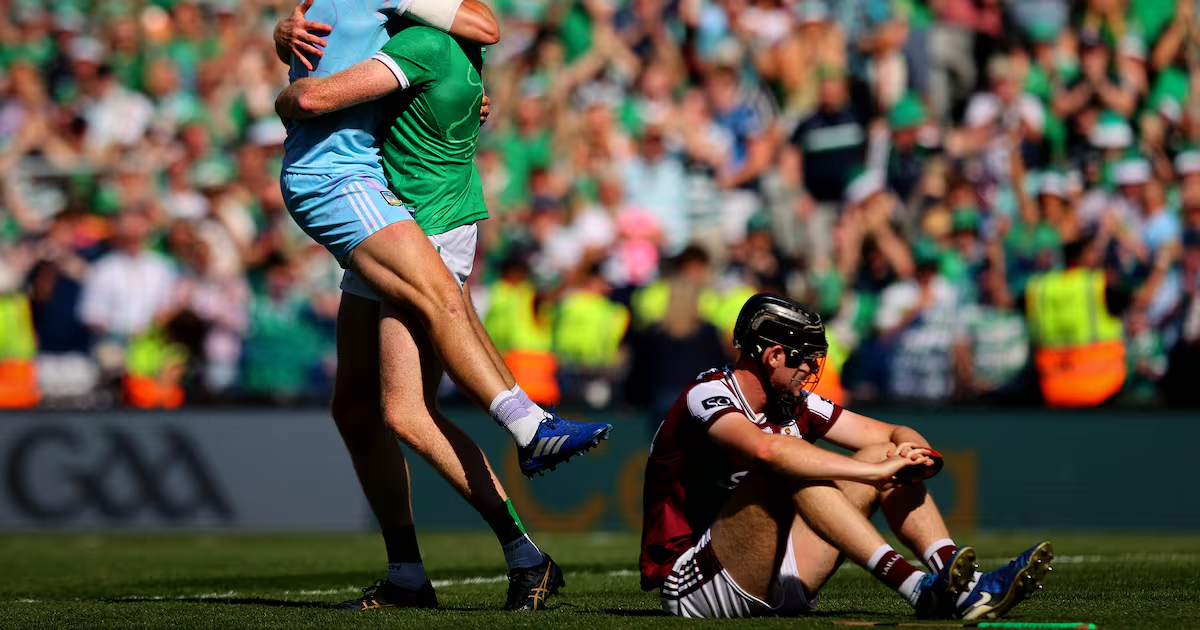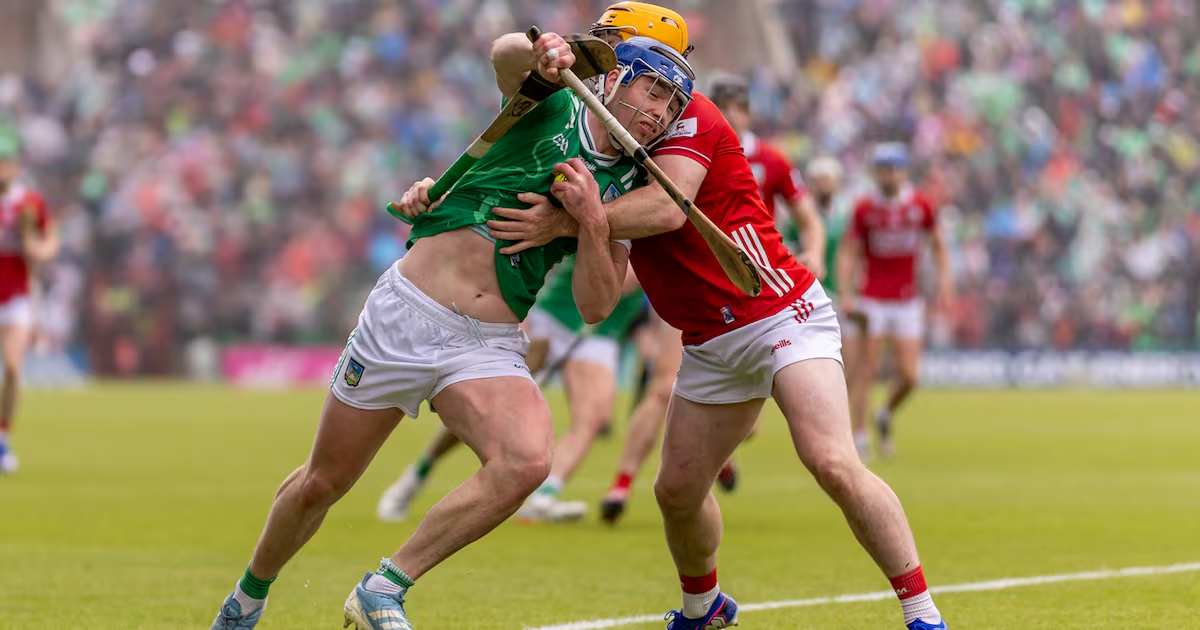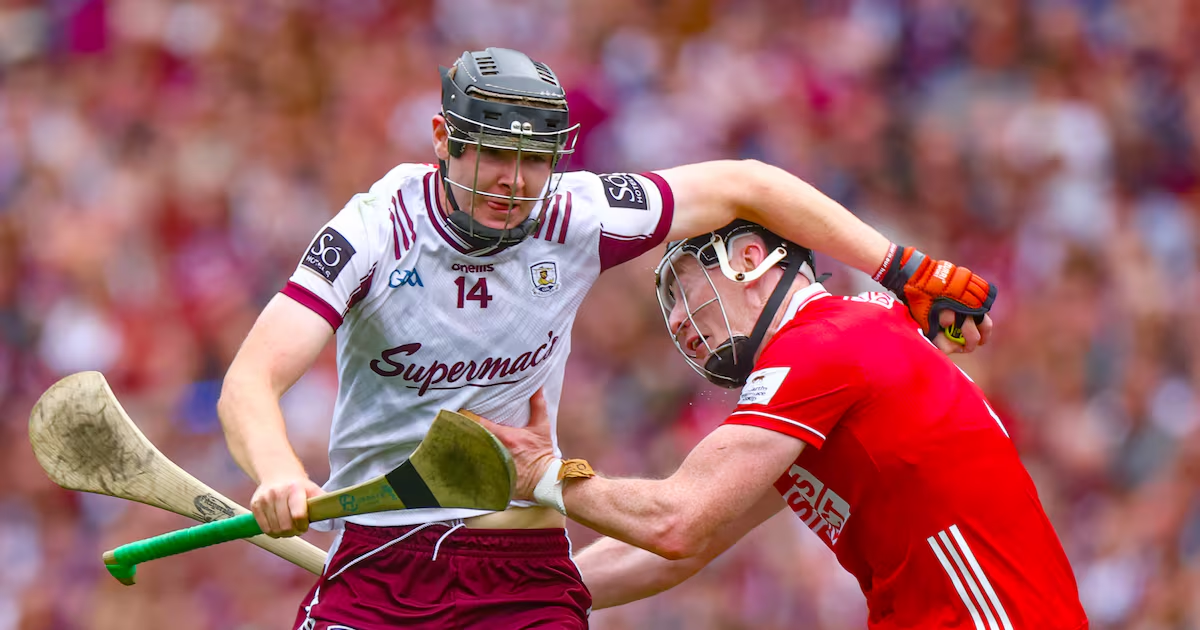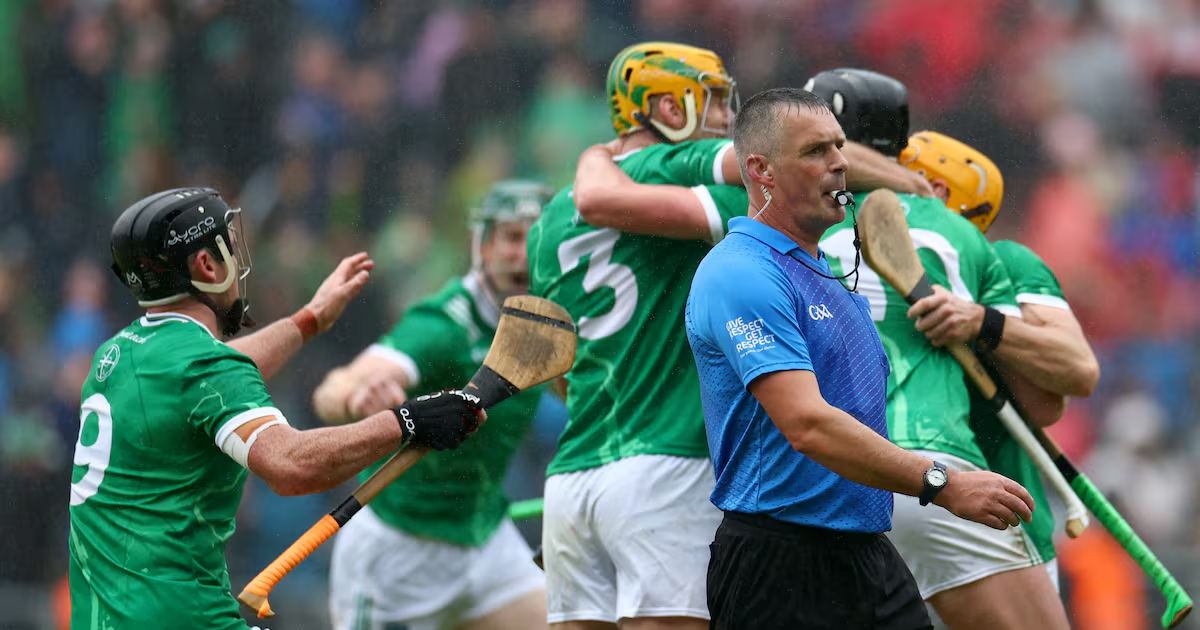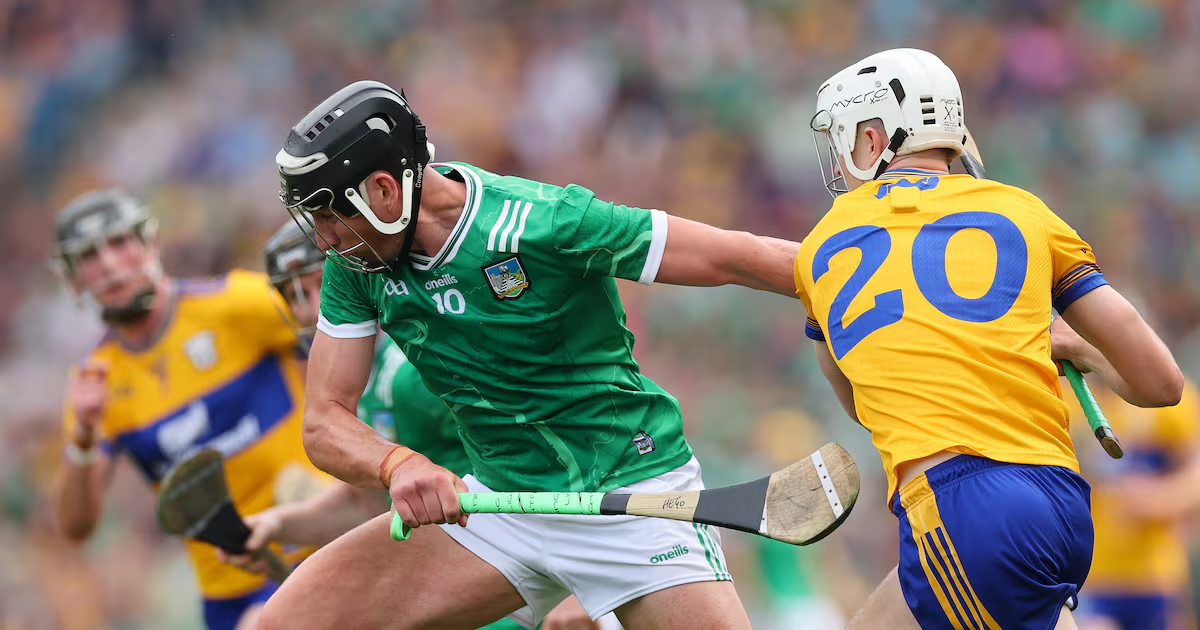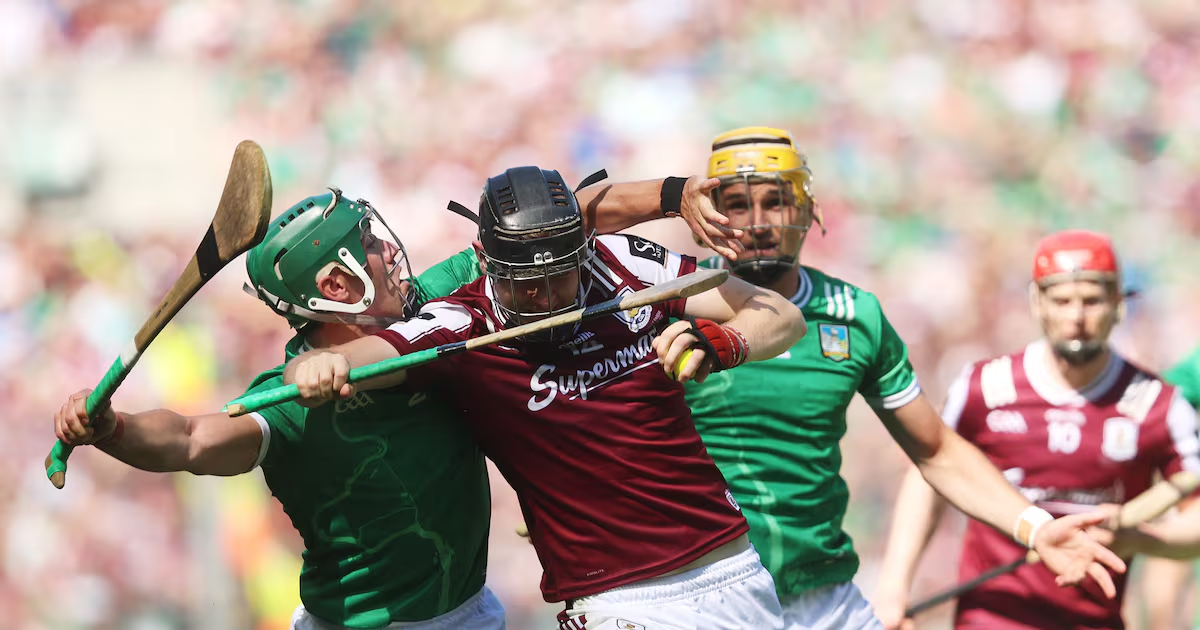
Elite intercounty hurling is increasingly defined by a team’s ability to adapt during a game. While systems and structures provide a framework, championships are often won by teams capable of recognising tactical problems and adjusting under pressure. In the 2026 All-Ireland final, Galway’s inability to modify their attacking structure against Limerick’s relentless defensive pressure became one of the decisive factors behind their 1-29 to 1-18 defeat.Throughout the championship, Galway’s success had been built upon controlling territory through aggressive puckout defence, forcing turnovers high up the field and attacking against retreating defences. Their system functioned effectively because opponents struggled to escape Galway’s press. Once Galway established field position, their half-forward line could support the inside forwards while their defenders squeezed the pitch behind the ball.Limerick dismantled this blueprint almost immediately.Limerick's puckouts and shots from play during the first half of the All-Ireland final. By retaining 78 per cent of their own puckouts and repeatedly breaking Galway’s press, Limerick denied Galway the territorial dominance that had characterised their previous performances. Instead of defending in Limerick’s half, Galway were forced to defend much deeper, fundamentally changing the landscape of the game.Galway struggled to escape the Limerick press in their own half. Here we see Josh Ryan in possession and looking to play into midfield. From a Galway short puckout, above we see Josh Ryan strikes a ball to Darren Morrissey, who is pressed by none other than Will O’Donoghue. The turnover leads to another scoring opportunity for Limerick.The press led by Will O'Donoghue leads to a turnover and a score for Limerick. Rather than adapting their attacking shape, Galway largely persisted with the same structural approach. This proved particularly costly for Jason Rabbitte, who repeatedly found himself isolated against multiple Limerick defenders.Instead of receiving possession with runners arriving off his shoulder, Rabbitte often became the focal point of Galway’s attack without adequate support. Limerick zonal defence recognised this quickly. As soon as the ball entered Rabbitte’s area, defenders immediately compressed around him. The first defender attacked the ball, while second and third defenders blocked the obvious handpass options. The result was not simply effective tackling – it was coordinated defensive trapping.Jason Rabbitte tries to secure possession with three Limerick defenders ready to close in on him. Several sequences illustrated this pattern. Galway attempted to progress possession through central areas, but Limerick’s middle-third pressure forced attackers into contact before support could arrive. With no immediate outlet, the Galway ball-carrier became vulnerable to physical contests, allowing Limerick to launch immediate counterattacks. Galway struggled to launch from their platform into Rabbitte, with just Niland and Rabbitte scoring in the first half. Limerick were winning the battles in the middle third.Galway's puckouts and shots from play during the first half of the All-Ireland final. The turnovers against Galway during the first half of the All-Ireland final. On the day, Limerick produced their most complete performance since the 2021 All-Ireland final. Below we see Aaron Niland trying to run through the middle third and getting turned over in the tackle by Kyle Hayes.Here we see Aaron Niland attempting to carry but losing possession to Kyle Hayes. Limerick recorded 98 tackles compared with Galway’s 65 and generated an extraordinary 1-17 from turnovers. More significantly, 1-11 of those scores originated directly from dispossessing Galway players in the tackle. Their defensive objective was not merely to slow Galway’s attack but to regain possession and attack immediately before Galway could reorganise.The pattern of turnovers against Galway continued in the second half. Diarmaid Byrnes’s turnover on Darren Morrissey perfectly encapsulated this approach. In the picture below we see Adam English tracking and two Limerick covering defenders. Byrnes breaks up play and Kyle Hayes wins the resulting ball to distribute the sliotar inside to Aaron Gillane, who sets up O’Neill for goal.Darren Morrissey gets swallowed up by a combination of Adam English, Diarmaid Byrnes and Kyle Hayes, leading to the Limerick goal. Gillane finds the untracked O’Neill below and he finishes well, low past Darach Fahy.After receiving the pass from Aaron Gillane, Cathal O'Neill finished brilliantly to the net. Similar moments occurred throughout the contest as Gillane, Will O’Donoghue, Peter Casey and others relentlessly hunted Galway’s ball carriers.Galway’s tactical rigidity allowed Limerick to dictate the contest. Rather than stretching the defending champions through width and movement, Galway repeatedly attacked through congested central channels, allowing Limerick to create numerical superiority around the ball and force turnovers.Galway did slightly better against the Limerick puckout in the second half, but Limerick's shooting was efficient. The isolation of Rabbitte reflected this wider issue. Too often he received possession without support, enabling Limerick to trap the ball carrier and launch quick counterattacks. Cian Lynch’s anticipation and quick hands, combined with O’Donoghue’s control of the middle third, prevented Galway from establishing any attacking rhythm.There was a clear contrast with Clare’s All-Ireland semi-final performance. Clare consistently tested Limerick’s full-back line with early, direct deliveries into the inside forwards, forcing one-on-one contests. Galway rarely posed the same threat, instead allowing Limerick’s half-back line to dominate in front of goal.Pushing Cathal Mannion closer to the full-forward line may have occupied O’Donoghue deeper and created more space for runners from midfield. Combined with earlier diagonal deliveries and greater support around Rabbitte, Galway could have stretched Limerick’s compact defensive shape.Ultimately, the final was decided by tactical adaptability. Limerick imposed the terms of engagement through superior puckout strategy, middle-third pressure and relentless turnover creation, while Galway failed to adjust their attacking structure or consistently test Limerick’s defence.♦ Jeffrey Lynskey managed Galway to three All-Ireland minor hurling titles and is a selector with the Laois senior hurling team. He holds an MSc in performance analysis.
Galway’s lack of tactical flexibility helped Limerick dominate the All-Ireland final
Tribesmen repeatedly attacked congested channels, allowing Limerick to create numerical superiority around the ball
938 words~4 min read