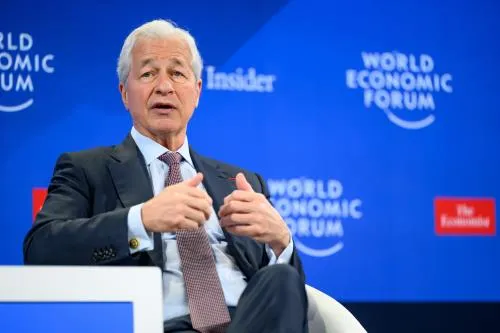
J.P. Morgan Chase CEO Jamie Dimon says he is against investing his personal wealth any further into long-dated Treasury bills because of the potential for a bond market crisis brought on by the U.S.’s $39 trillion in national debt.Dimon has continually lobbied policymakers to take action over the debt—and they have continually disappointed him.In an appearance on the Master Investor podcast, Dimon was asked whether he would be a buyer of long-dated government bonds at the moment. “Personally, no,” he responded. “I know that the inflation numbers were good yesterday … the thing about numbers, you dig into these numbers, I mean really dig into them, and I wouldn’t give them too much credence.”
He continued: “I would not be a buyer, and part of it is interest rates … I mean even if inflation was 2%, the 10-year bond should probably be at 4.5% to 4%, and the short rate should be 3.25% to 3.5%—and they’re almost there today.”
Dimon is speaking about the headwinds that will shape yields on government bonds on the longer end: Inflation expectations and government borrowing.
Long-term Treasuries—10-, 20-, or 30-year bills—behave as a temperature check for the economic outlook. As well as baking in inflation expectations, yields (or returns) on longer-term Treasuries provide lenders with benchmark rates for their loans: The low-risk asset of government borrowing, versus the interest repayments consumers are paying.