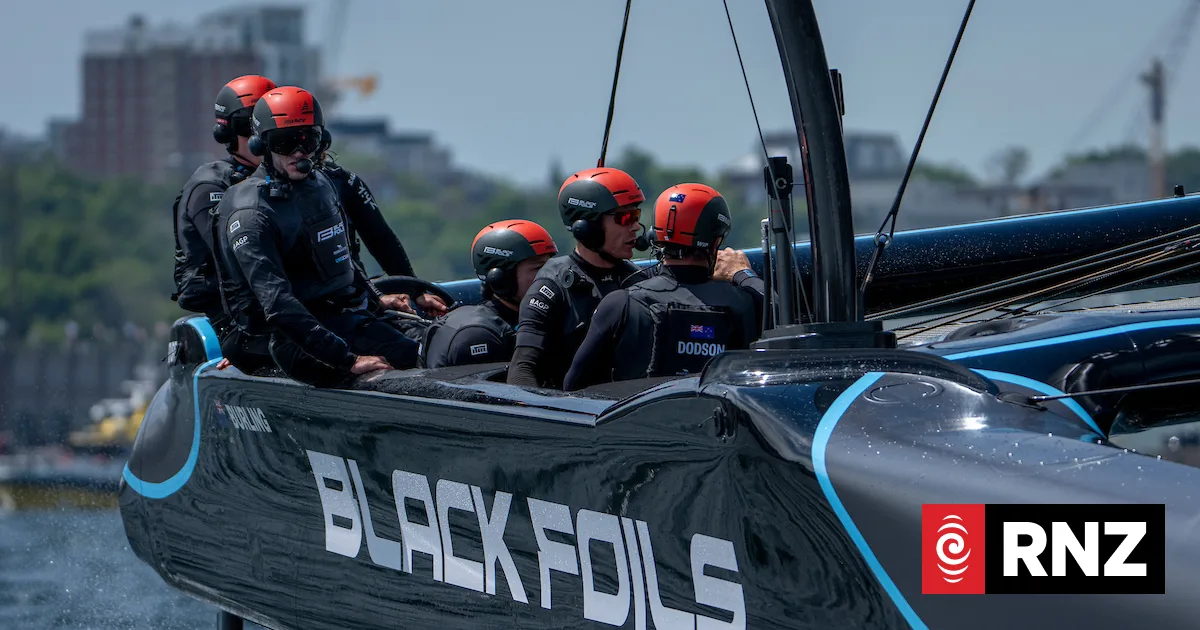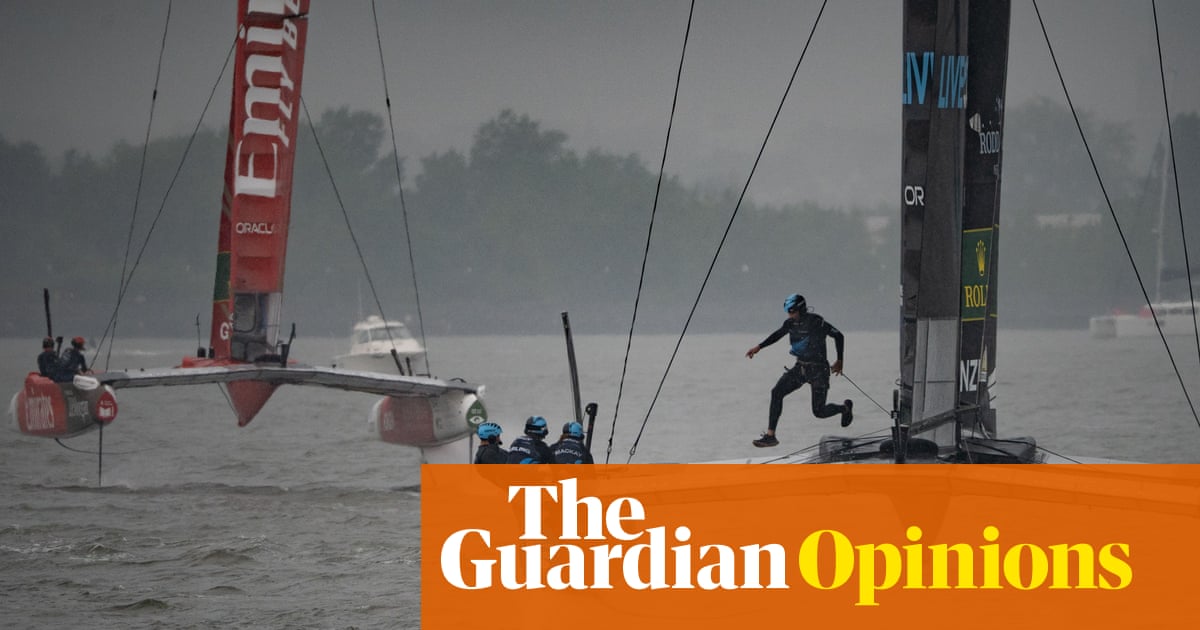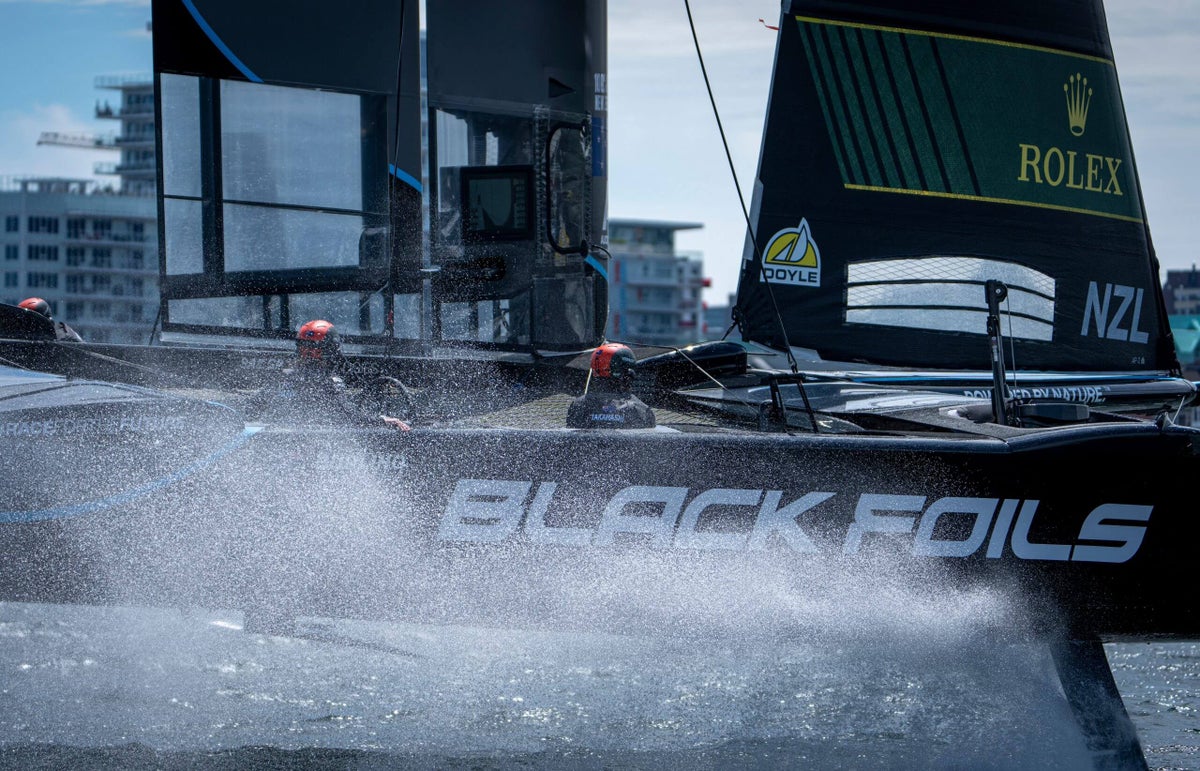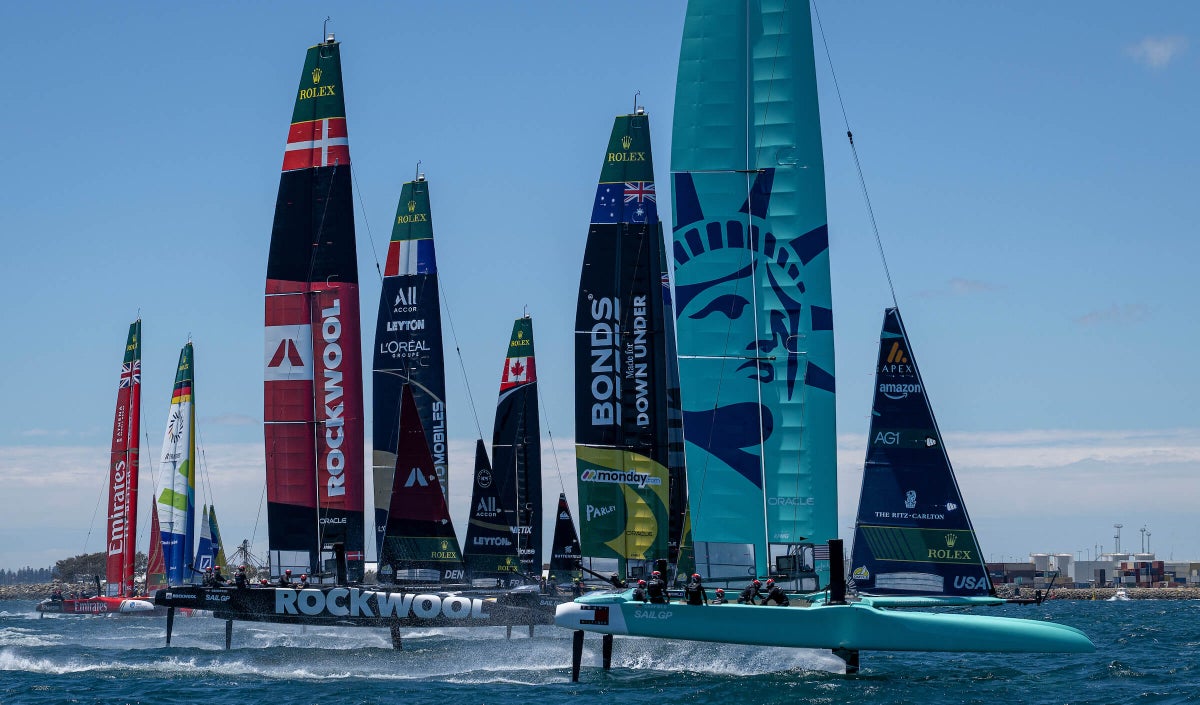
Editor’s note: This story is part of The Athletic’s coverage of SailGP, an international sailing competition that has been likened to Formula 1 on water. Follow SailGP here.For biotech entrepreneur and financier Dr. Greg Bailey, making the decision between investing in a little-known sailing league or a Premier League football team was straightforward.“I want something that will appreciate or make money, which eliminated, in my mind, most of the Premier League football teams,” Bailey told The Athletic. Two years ago, Bailey bought the franchise to the Canadian SailGP team. Since then, all kinds of celebrity investors have moved into this fast-growing grand prix sailing league, such as Kylian Mbappé, France captain and winner of the Golden Boot at the men’s World Cup, and Hollywood stars Anne Hathaway, Hugh Jackman and Ryan Reynolds.Apart from a bit of windsurfing in his youth, Bailey had no prior interest in the sport of sailing. The same is mostly true of the celebrity investors. But Bailey said he enjoys the thrill of sports investment, although it wasn’t a world he knew anything about until 10 years ago.“I’ve been very fortunate in biotech and I had a very successful exit in 2016, so I started getting phone calls from a variety of sports teams,” said the Canadian, referring to when one of the companies he founded, the cancer medication developer Medivation, was acquired by Pfizer for $14.3bn.It turns out that when you make a lot of money, people offer exciting ways to spend it. This was all new to somebody who had grown up in the Toronto suburb of Don Mills as the only child of a single mother.Still, when people came calling with sports investment opportunities, Bailey’s ears pricked up. “I wasn’t looking for it at all. I didn’t think about it. That poor kid from Don Mills never thought, ‘Let’s get involved with a sports team.’ But it was really compelling because of the people you would meet, even in the discussions about whether you wanted to own five percent of the New York Yankees, the Milwaukee Bucks, the Charlotte Hornets, or Premier League football clubs.“Then I had a second exit [sale of another biotech business in 2024] and then it was just like agents calling on steroids.”This is when he first heard of SailGP.Bailey is the sole owner of the Canadian team. (Pablo Porciuncula / AFP via Getty Images)Initially, there was an approach about buying 20 percent of the German team, already majority owned by telecoms entrepreneur Thomas Riedel ,with four-time Formula 1 champion Sebastian Vettel holding a minority stake. But then, a bigger opportunity came.“Somebody [from SailGP management] said to me, ‘You’re Canadian, right? Well, we’re about to disband the Canadian team [when the original owners decided to step away]. Do you want to take a look at that?’ I said, ‘Sure, I’ll take a look.’”While Bailey — who started his career as an ER doctor and is currently involved with life sciences company Juvenescence — was interested, he knew next to nothing about sailing and so a friend introduced him to Phil Kennard, a former sailor and now CEO of the Canadian team.“Phil had 10 years in Formula 1 selling sponsorship, two years in the America’s Cup with Great Britain selling sponsorship, and seven years at the European PGA selling sponsorship. Before all of that, he had sailed at a very high level in the British Olympic team. Phil knew the lay of the land, he knew the people, and I try never to invest in anything unless I have somebody who really understands it significantly better than me. So, we took a look and the numbers seemed to make sense,” Bailey explained.Aside from Bailey’s profitability criterion, the other that he was looking for was uniqueness.“‘Can they go on the boat? Can they meet the team? Can they go to a practice session? Do they get to ride in the boat out on the water?’ SailGP offered that. It also has the Adrenaline Lounge [SailGP’s VIP suite], and now you begin to curate an interesting population for the people we meet there. The average income for [people in] the Adrenaline Lounge is $330,000, and 20 percent make over $800,000. And that becomes very interesting for the potential to syndicate a project.”Team Canada and Team Switzerland compete on the first day of this year’s Australian Grand Prix. (Brendon Thorne / Getty Images)Bailey has found that the SailGP weekends are very useful for networking opportunities, too. But what about the product itself?“I’ve been very impressed with how thoughtful management and Russell Coutts [SailGP founder and CEO] are about the engineering, that the boats really try to keep an even playing field, and those aspects have been very exciting. I’m excited that we have a cost cap [of $10million annually] so that we don’t have the richest team winning all the races,” he said.“The disappointment is that, because of financials, we have to sail in places that don’t have wind and are notorious for not having wind.”A case in point is the end of the 2026 season, with the notoriously light winds of Lake Geneva in September, and November races in Dubai and Abu Dhabi. When the F50 catamarans are foiling, they’re hitting speeds sometimes in excess of 60 mph (100 km/h). When they’re not foiling — as is often the case in Geneva, Dubai and Abu Dhabi — they’re barely touching 15mph.“But I understand that SailGP has got to be sustainable and financially viable, and this is what you have to do at this point in time until we start to get to the media side.“The media pickup has been slower than I expected. I’ve been getting a world-class lesson in the last five years on how the way people watch sports is migrating from conventional media like TV to YouTube and TikTok. They want it in five minutes: ‘Just show me the highlights!’”While his initial investment in the Canadian team was made for hard-nosed reasons, he couldn’t help but be moved by the way Halifax took the event to his heart when SailGP visited the Nova Scotia capital last month. “Just extraordinary,” he said of the 60,000-strong crowd that weekend.“It takes me a little time to wrap my head around it. The fact that the Canadian team was on the verge of being disbanded, and yet to see this remarkable support — and that I was able to play a role in that not happening — and how so many people have come up to thank me, it’s very touching.”Spectators watching from the grandstand on the opening day of the Canada Sail Grand Prix in Halifax, Canada, last month. (Ricardo Pinto for SailGP)While Bailey is enjoying his foray into grand prix sailing, he’s always got one eye on the next investment in sport. He remains wary of the allure of high-level soccer, yet he hasn’t entirely ruled out the prospect of getting involved.“If you look across Europe, there are maybe only seven or eight clubs that actually make money and don’t lose a lot of it. When you’re looking at a football club, most people are looking at it as a real estate play. I said this to a club I was looking at: ‘This is a stadium that happens to have some content called a football club.’ It’s the same way that magazines aren’t really about the articles; the business is selling the ads. This is simply the content to do that.”For all his wariness about soccer, Bailey has been taking a close look at the Portuguese club Braga. “They’ve got a brilliant academy and they actually make money selling players, much like Brentford does in England. There’s one club in England that does it very, very well. Braga did brilliantly well this year, reaching the semifinals in the Europa League.“I have great respect for the president and what he’s able to do with the academy. The European NBA is also intriguing, but the problem with football and the NBA is they’re so well-known and well-established that you are in competition with many other potential investors.”When Bailey first came across SailGP in 2024, it was a relatively unknown league. The downsides were low, and the upside for team franchise owners strong. Sir Ben Ainslie was the first to buy a franchise when he took ownership of the British team in October 2021 for an undisclosed figure, which is believed to have been less than $10million. Current valuations of teams are running between $60 and $80million.One of the aspects of SailGP that likely would have provided Bailey, and other investors, with a great deal of reassurance is that Coutts’ co-founder was Oracle software tycoon Larry Ellison. The 81-year-old is currently ranked the sixth richest man in the world.Bailey said: “Yeah, in fact, a clause that a lot of the teams are looking at is: Larry is a certain age, so what happens next? Is [his son, chairman and CEO of Paramount Skydance Corporation] David Ellison going to be interested in it, or is his daughter going to be interested in it? If that doesn’t happen, what happens then?“You are hoping to get to an inflection point where it becomes sustainable on its own, so that if Larry exited, Liberty Media, a sovereign fund, or somebody else would go, ‘Okay, we’ll snap this up.’ In the first few years, I think you would have struggled to get that, but I think we’re really close to that point now.”
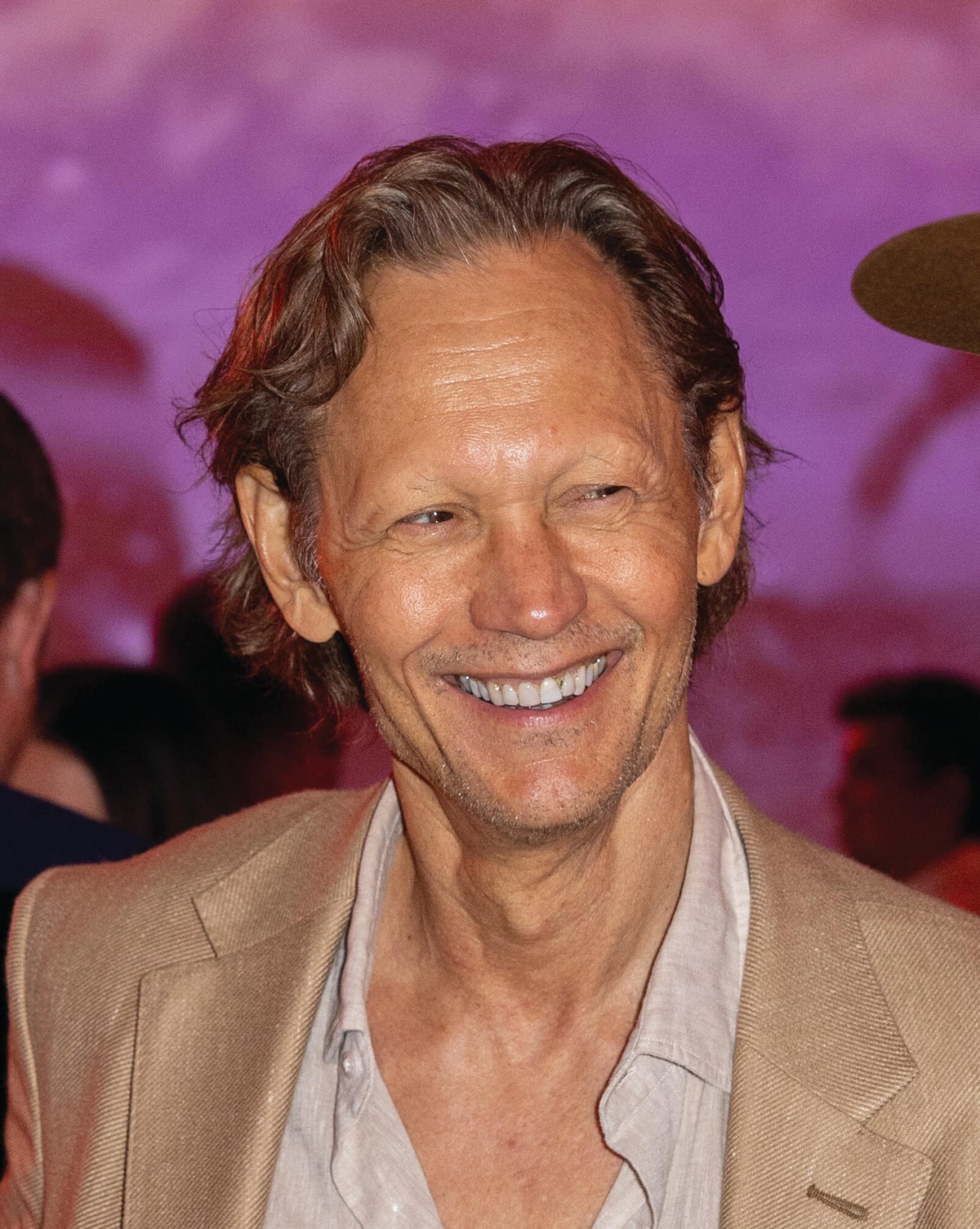
Dr. Greg Bailey could have invested in a Premier League club. He chose SailGP instead
Two years ago, Bailey bought the franchise to the Canadian SailGP team despite no prior interest in the sport of sailing.
1,575 words~7 min read